The most expensive investment decision I ever made cost me nothing in transaction fees. It cost me in the one currency I can never recover: time. I sat on $40,000 in cash for 14 months between late 2008 and early 2010 because every instinct I had screamed that buying was insane. The market had collapsed. Banks were failing. Intelligent people on television were using the word “depression” without air quotes. I waited. I watched. I missed the first 60% of a recovery that ran for a decade.
My instincts were not broken. They were working perfectly — for a different world.
The Brain That Wants to Keep You Alive Is Trying to Keep You Poor
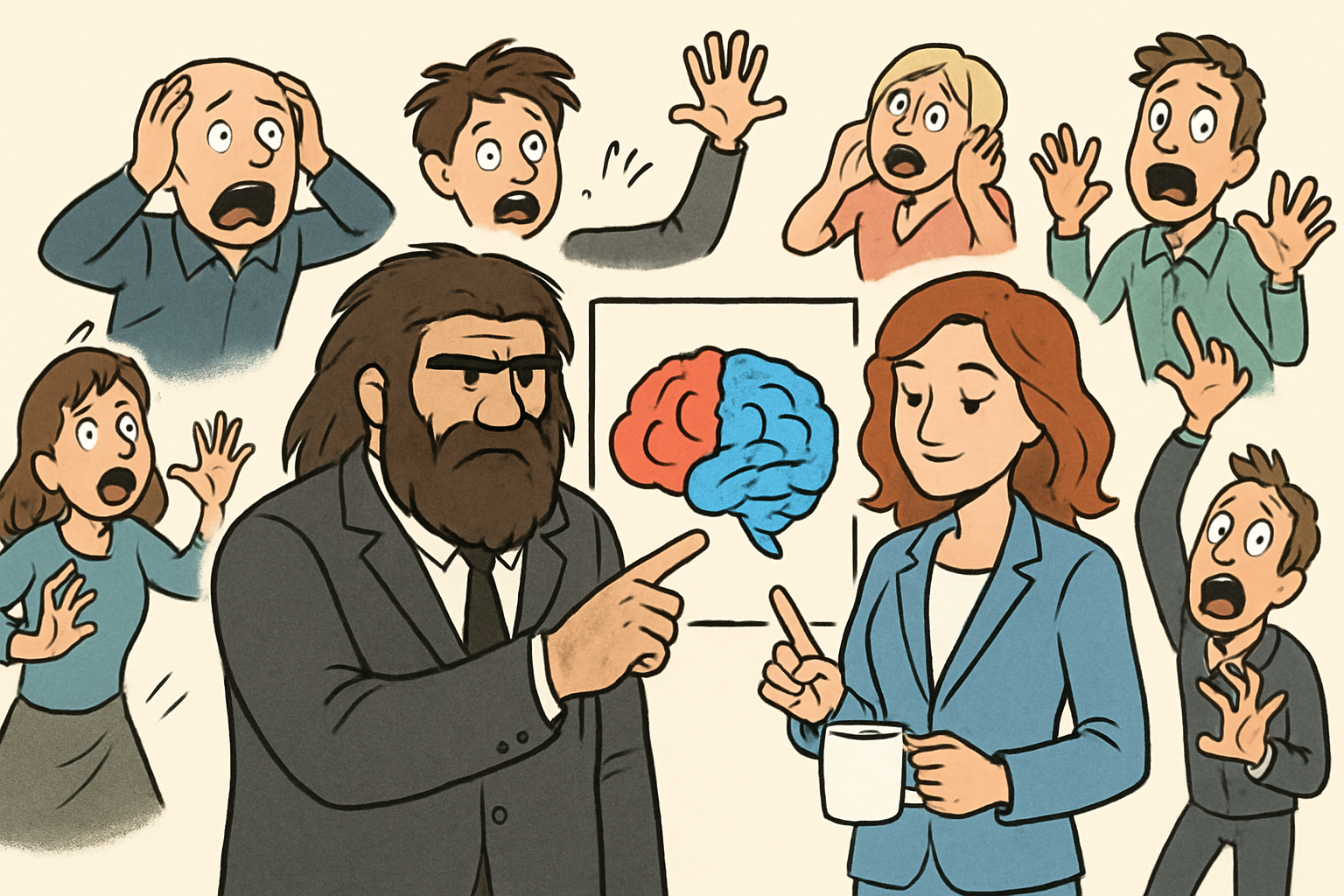
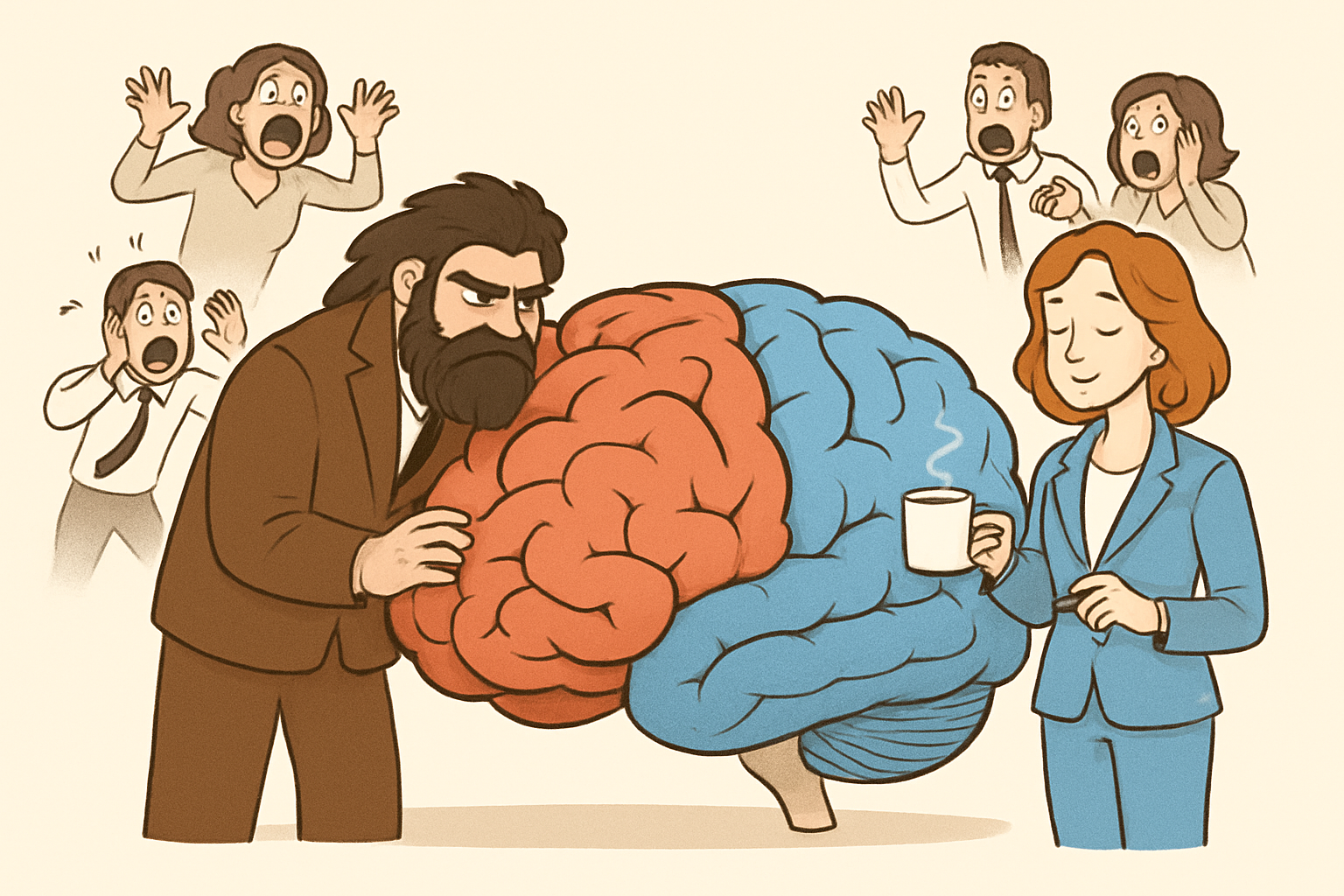
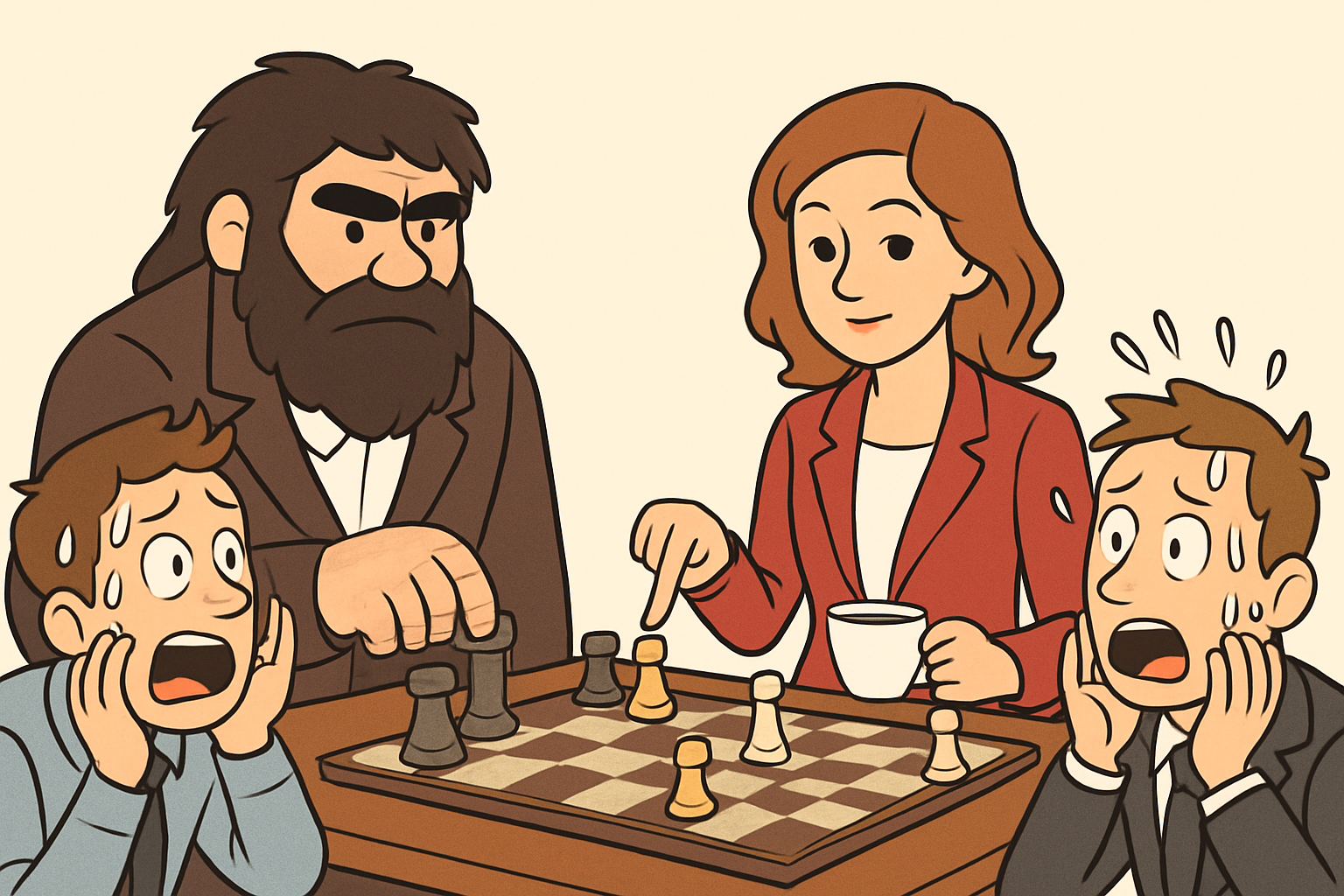
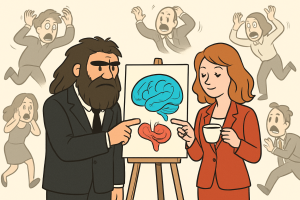
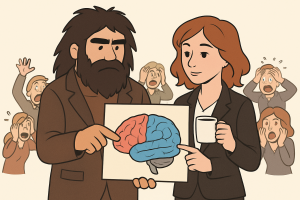
Here is the mechanism nobody explains clearly enough. Your nervous system cannot distinguish between a falling stock price and a charging predator. Both trigger the same cascade: cortisol spikes, tunnel vision locks in, the body screams run. This is loss aversion — the primitive instinct that made your ancestors flee rather than fight when the odds looked bad. It saved the species. It is destroying your net worth.
The research on this is brutal. Dalbar’s 2023 Quantitative Analysis of Investor Behavior found that the average equity fund investor earned 6.81% annually over the 30-year period ending December 2022, compared to the S&P 500’s 9.65% over the same stretch. That gap — nearly 3 percentage points per year — was not caused by high fees or bad stock selection. It was caused by people buying after markets rose and selling after markets fell. Buying euphoria. Selling panic. Running from the predator.
The S&P 500 dropped 57% between October 2007 and March 2009. Think about that. More than half of indexed wealth, gone in 17 months. What did most investors do? They held through the first 20% decline because they were anchored to higher prices — anchoring, the primitive instinct that says the number you first saw is what things are “really” worth. Then, at -40%, loss aversion finally overwhelmed them and they sold. They locked in the destruction. They missed the recovery. The herd instinct told them: everyone is leaving, and the herd is usually right about lions. The herd is almost never right about markets.
I know, I know. You’ve heard the “buy the dip” sermon before. Stay with me here — this is about something more structural than timing advice.
Why Knowledge of Your Bias Is Not a Cure for It
You already know about loss aversion. You’ve read Kahneman. You understand that losses feel roughly twice as painful as equivalent gains feel pleasurable. You can recite the research. And yet.
I had read about all of this in early 2009 — the behavioral finance literature, the historical recoveries, the compounding math. I had spreadsheets. I had a thesis. I sat on my hands anyway, because knowing the name of the lion does not make you unafraid of the lion.
This is the part of behavioral finance that self-help framing gets wrong. It treats awareness as the solution. “Now that you know about your biases, you can overcome them.” This is like telling someone with a fear of heights that gravity is a well-understood physical constant and they should feel fine now. Awareness is necessary. It is nowhere near sufficient.
What actually works is building a system that makes the behavioral error structurally harder to commit — and then holding that system when your primate brain is screaming at you to abandon it.
What Is the Actual Edge, Then?
Does your portfolio survive the emotional stress test, or just the financial one?
Most investors think their edge is analytical. They can read a balance sheet. They understand discounted cash flow. They know what ROIC means. And maybe they do have an analytical edge. But analysis only matters if you can act on it — and most people cannot act on correct analysis when the market is in free fall, because the primitive herd instinct overrides the prefrontal cortex with breathtaking efficiency.
The behavioral edge is different. It is the capacity to feel the fear, name it clearly, and buy anyway. To feel the euphoria of a market that has run 40% in 18 months, name it clearly, and trim anyway. Not because you are predicting what happens next — I don’t predict, and neither should you — but because you understand the structural relationship between panic and opportunity.
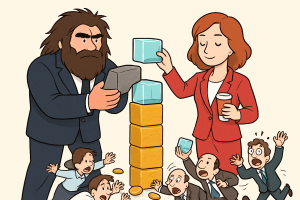
Here is the structural fact: equities exist because businesses generate demand. Capital, at its core, is stored demand — the accumulated expectation that people will keep wanting things: software subscriptions, coffee, insurance, cloud infrastructure. That demand does not evaporate when stock prices fall. What evaporates is the market’s willingness to pay for it rationally. The business keeps operating while the ticker collapses. The fear is about the price, not the underlying reality.
When fear drives prices below the value of the underlying demand, that is not a warning sign. That is the sale.
The Framework: Name the Instinct Before You Execute the Trade
A friend of mine — sharp guy, ran his own engineering firm for a decade — called me in November 2021, excited about a crypto project that had returned 400% in six months. “Everyone in my network is in it,” he said. I asked him what the underlying demand was. He paused. “People want to get in before it goes higher.” That is not demand. That is recency bias wearing a trench coat and calling itself a thesis.
He bought. It was down 80% by June 2022.
The framework I use before any significant capital decision is embarrassingly simple. I ask myself one question first: which primitive instinct is driving this feeling?
The candidates are: fear (sell everything, the world is ending), greed (this can only go up from here), herd (everyone I respect is doing this), recency bias (what happened recently will keep happening), loss aversion (I can’t sell now, I’d be locking in the loss), and anchoring (it used to be worth $X, so it’s cheap now).
Once I name it, I do not try to eliminate the feeling. I use it as a contrarian signal. Strong fear at a fundamentally sound asset? That’s a green light. Strong greed about something I couldn’t have explained six months ago? That’s a red light. The instinct itself becomes data — just inverted.
This is not a prediction model. I am not forecasting that the market will recover, or that the asset will rise. I am observing that behavioral distortion has created a structural opportunity or a structural risk, and I am positioning accordingly.
The Asymmetry Your Instincts Will Never Accept
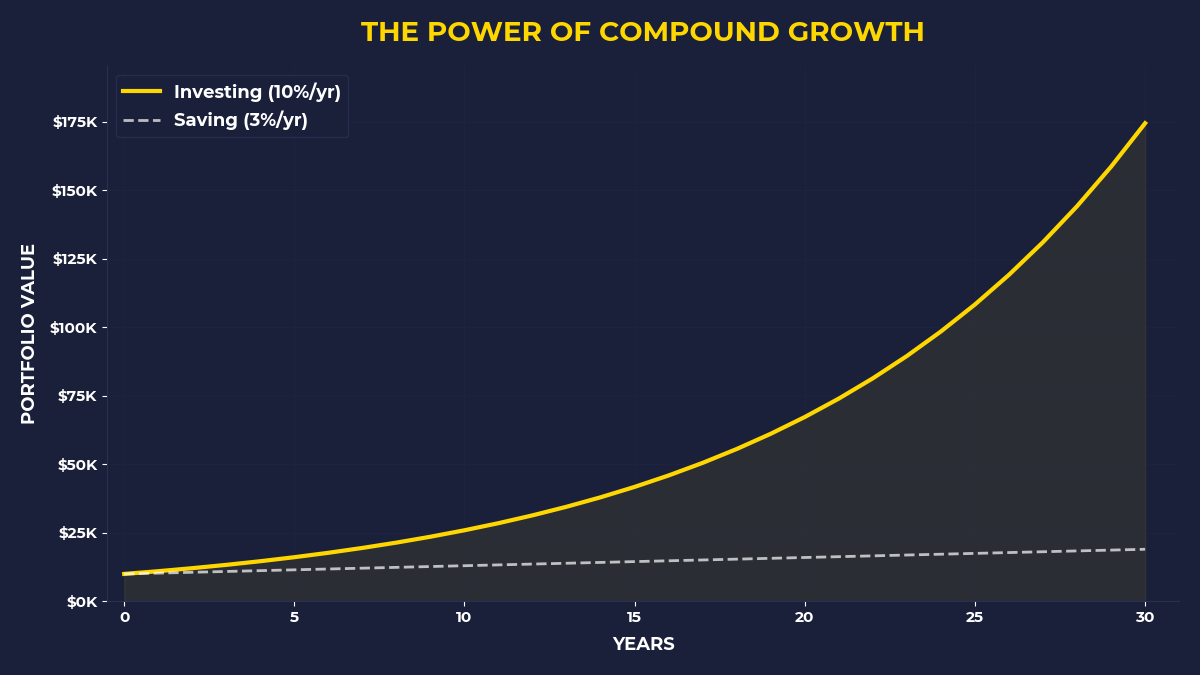
Between March 2009 and February 2020, the S&P 500 returned approximately 529% before the pandemic crash. An investor who had $100,000 at the March 2009 bottom and did nothing — absolutely nothing — sat on roughly $629,000 eleven years later. The investor who sold at the bottom and waited for “certainty” before buying back in typically re-entered somewhere around 2010 or 2011, after missing 60-80% of the initial recovery. Their $100,000 might have become $280,000. Same period. Same index. Radically different outcome, driven entirely by a single behavioral decision made under maximum fear.
The instinct that felt like survival was the most expensive instinct in the portfolio.
The asymmetry is structural. When markets are catastrophically bad, the emotional cost of buying feels infinite — the brain cannot distinguish “uncomfortable” from “fatal.” But the financial cost of not buying during genuine panics is, historically, enormous and compounding. The emotional cost is temporary. The financial cost is permanent.
Your nervous system will never accept this trade-off voluntarily. You have to force it through process.
This Matters Most If You Are Already Sophisticated
If you’re the kind of investor who already knows what a P/E ratio is, already rebalances, already has a long-term horizon on paper — this is specifically for you. The behavioral traps are most dangerous for sophisticated investors because we have the analytical tools to construct elaborate justifications for our primate reactions. I’ve done it. “The macro environment is uniquely uncertain right now” is a sentence I have used to dress up raw fear in a blazer. The more vocabulary you have, the more convincingly you can lie to yourself.
Unsophisticated investors panic nakedly. Sophisticated investors panic in fluent economist.
The solution is not more analysis. More analysis feeds the rationalization machine. The solution is a pre-committed process — rules you set when you are calm, executed when you are not. Dollar-cost averaging into quality positions every month, regardless of how the news feels. A written investment policy statement that requires you to name your behavioral state before any unscheduled transaction. A “pause rule” — no panic selling without a 72-hour waiting period. These are not complicated. They are just uncomfortable to follow when the lion is in the room.
What the Primal Investor Takes Away
Name the instinct before you touch the portfolio. Fear, greed, herd, recency bias, loss aversion, anchoring — one of these is driving every emotional trade. Identify it. Write it down. Then invert it.
Your analytical framework only matters if you execute it under stress. Stress-test your process before the crash, not during it. Pre-commit to rules while you are calm.
The gap between market returns and investor returns averages nearly 3% annually. That gap is entirely behavioral. Close it by doing less, not more, when you feel the most urgency.
Maximum fear at fundamentally sound assets is a structural signal, not a warning. The underlying demand that creates equity value does not disappear when the ticker falls. Price and value diverge under panic. That divergence is the opportunity.
Awareness is not the cure. You already know your biases. Build structural barriers — automatic contributions, mandatory waiting periods, written rules — that make the behavioral error harder to execute in the moment.
Sophistication makes the rationalizations more convincing, not less dangerous. The more fluently you can explain why this time is different, the more suspicious you should be of your own reasoning.
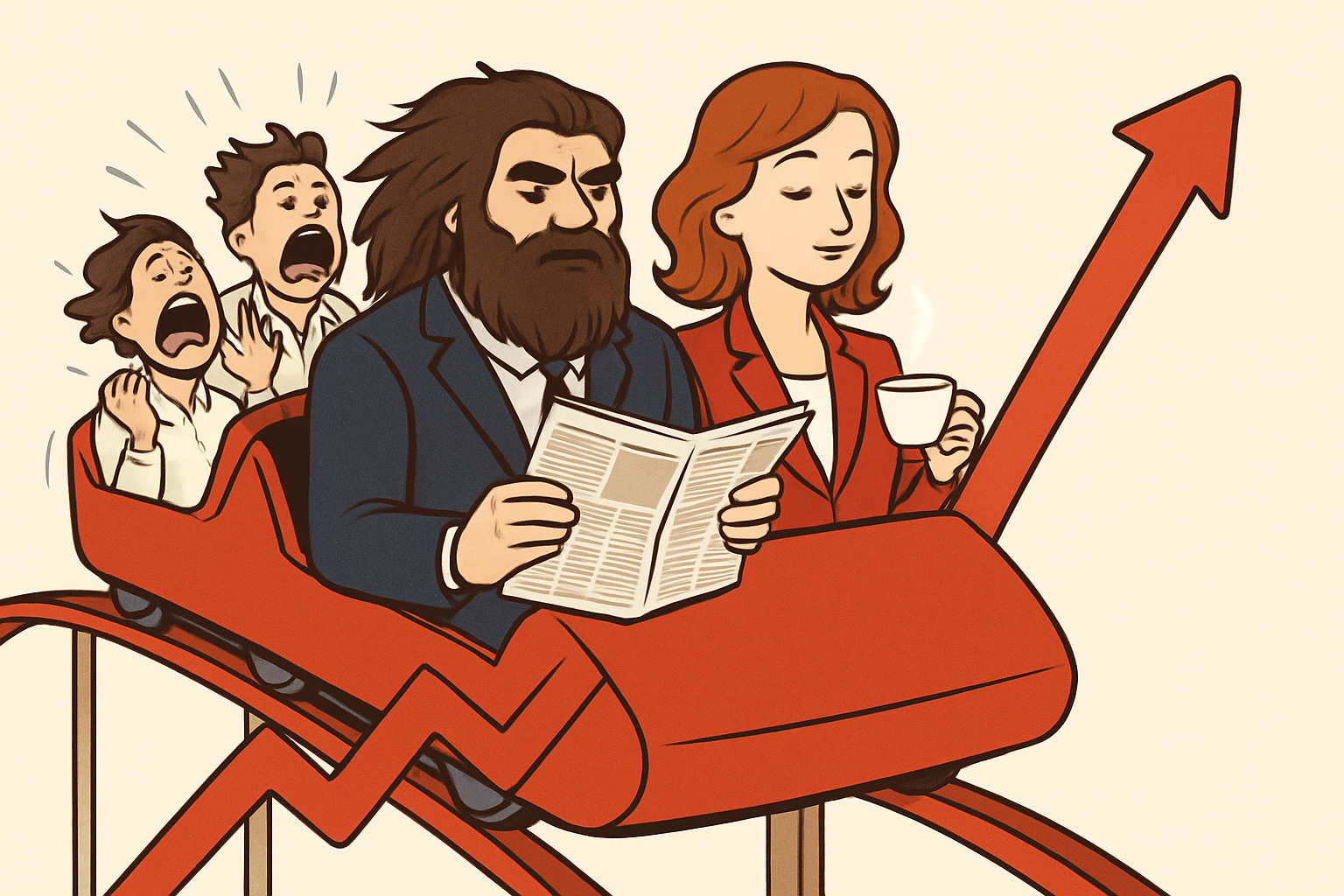
The market does not reward the smartest analysis. It rewards the investor who can hold a correct position through the emotional pressure designed, by evolution, to shake them out of it. Your edge is not your spreadsheet. It is your capacity to feel terrified and act rationally anyway.
That capacity is worth more than every financial model ever built.
🎬 Prefer watching? Check out the video version on YouTube: