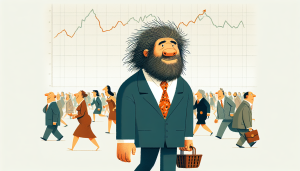
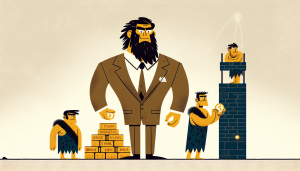
The sophisticated investor collects strategies like rare books—value investing, momentum trading, factor tilts, macro overlays. Each promise of edge carefully catalogued, backtested, optimized. Yet most remain trapped in the same primitive cycle: euphoria at peaks, terror at troughs, mediocre returns stretched across decades.
The problem is not the strategy. The problem is the absence of philosophy underneath it. Strategy answers “what to buy.” Philosophy answers “why we own anything at all.” Without philosophy, every strategy becomes another form of prediction—and prediction is where capital goes to die.
Philosophy is not motivation. It is not mission statement. Investment philosophy is the structural framework that determines which opportunities you can see, which risks you can bear, and which mistakes you cannot afford to make. Get this right, and strategy becomes simple. Get it wrong, and no strategy saves you.
The Philosophy Hierarchy
Most investors invert the hierarchy. They start with tactics (which stocks), move to strategy (which approach), and never reach philosophy (why capital exists at all). This is why the same person can be a “value investor” in 2009, a “growth investor” in 2017, and a “defensive investor” in 2022. No philosophy anchors the decision.
Philosophy sits at the foundation because it defines the game you are playing. Are you renting temporary exposure to price movements, or accumulating permanent stakes in productive assets? Are you predicting the future, or positioning for multiple possible futures? Are you competing for alpha, or capturing the structural returns of human ingenuity?
The Ownership Frame
We believe capital is stored optionality, not money waiting to be deployed. Every dollar held is the right to say yes to asymmetric opportunities and no to everything else. This reframes “investment” entirely. You are not betting on outcomes. You are acquiring stakes in the mechanisms that create those outcomes.
The ownership frame changes everything. Temporary price volatility becomes irrelevant—you own the business, not the quote. Market timing becomes impossible—you accumulate stakes when available, period. Prediction becomes unnecessary—you own the entities that adapt to whatever future arrives.
The Structural Lens
Philosophy reveals structure where others see chaos. In 2008, the panicked investor saw collapsing prices. The philosophical investor saw the greatest transfer of ownership stakes in decades—from weak hands to strong hands, from the leveraged to the patient, from the predictors to the owners.
Structure persists; predictions expire. The structure of compound returns has not changed in centuries. The structure of human innovation continues accelerating. The structure of market cycles remains intact. Philosophy aligns with structure. Strategy chases outcomes.
Where Philosophy Diverges From Strategy
Strategy optimizes for winning. Philosophy optimizes for not losing. This distinction determines everything—from position sizing to time horizon to the very definition of success.
The strategic investor asks: “How can I beat the market?” The philosophical investor asks: “How can I own the market’s long-term structural advantages without getting shaken off?” Different questions yield different behaviors.
The Defensive Foundation
Philosophy recognizes that wealth is built through defense, not offense. The best businesses on earth attack on your behalf every day—Apple expanding into new markets, Microsoft capturing software transitions, Berkshire allocating capital across decades. Your job is to own them and survive their temporary setbacks.
This inverts conventional thinking. Most investors believe they must “do something” to generate returns. Philosophy suggests the opposite: own the right things, then do as little as possible. The edge comes from structural advantages (ownership of compounding machines), not tactical advantages (superior predictions).
The Time Arbitrage
Philosophy exploits the market’s shortest structural inefficiency: time preference. The philosophical investor operates on decades; the market operates on quarters. This creates permanent arbitrage opportunities that no amount of analysis can replicate.
In 2020, when Airbnb’s business model faced existential questions, the strategic investor ran complex scenario analyses. The philosophical investor bought more shares. The question was not whether travel would recover—it was whether you wanted to own a piece of how people experience the world. Structure over prediction.
The Primitive Instinct Problem
Investment philosophy exists primarily to override primate wiring. Every primitive instinct, left unchecked, destroys wealth. Fear sells bottoms. Greed buys tops. Herd behavior chases whatever the tribe chases. Recency bias extrapolates the immediate past into the infinite future.
The sophisticated investor knows these biases exist. The philosophical investor has systems to override them. When fear peaks—2008, 2020, 2022—philosophy provides the framework to buy anyway. When euphoria peaks—1999, 2021—philosophy provides the discipline to sell anyway.
Herd Instinct as Wealth Destroyer
Herd behavior presents itself as safety but functions as systematic wealth destruction. The herd sells after drawdowns (crystallizing losses) and buys after run-ups (eliminating future returns). This pattern repeats because it feels rational in the moment—join the consensus, reduce social risk, avoid standing out.
Philosophy immunizes against herd behavior by redefining risk. The philosophical investor recognizes that permanent loss of capital matters, not temporary loss of consensus. Standing apart from the crowd becomes a source of edge, not anxiety.
The Recency Trap
Recency bias kills long-term thinking. Whatever happened most recently becomes the template for what happens next. The dot-com crash meant “growth stocks are dangerous” for a decade. The 2008 crisis meant “banks are uninvestable” for years. The 2022 inflation spike means “bonds are finished” today.
Philosophy breaks the recency trap by anchoring decisions to permanent principles rather than recent outcomes. Recency bias asks: “What just happened?” Philosophy asks: “What always happens over sufficient time?”
Philosophy in Practice: The Allocation Question
Philosophy determines allocation before you examine a single investment. Without philosophy, allocation becomes an optimization problem—maximize return per unit of risk across asset classes. With philosophy, allocation becomes an ownership problem—what stakes do you want in the world’s productive capacity?
The philosophical framework starts with equity—the only asset class that represents direct ownership of human ingenuity. Bonds represent loans to entities that own the productive assets. Commodities represent bets on scarcity. Real estate represents ownership of specific locations. Only equity represents ownership of the adaptive capacity that creates wealth.
The Concentration Decision
Diversification feels safe but often represents a failure of conviction. The philosophical investor concentrates in areas of highest conviction and highest structural advantage. This does not mean concentrated positions—it means concentrated exposure to the mechanisms that compound wealth over decades.
Warren Buffett’s approach illustrates this distinction. Berkshire Hathaway appears diversified across industries but concentrates completely in one philosophy: owning businesses with durable competitive advantages, competent management, and reasonable prices. Everything else is secondary.
The International Question
Geography matters less than governance. The philosophical investor cares more about ownership rights, rule of law, and management quality than about passport colors. A well-governed business in a developing market often presents better ownership opportunities than a poorly-governed business in a developed market.
This principle explains why many successful long-term investors concentrate in U.S. equity markets despite representing only 25% of global market capitalization. They are not betting on American exceptionalism—they are accessing the world’s deepest pool of transparent, well-governed ownership opportunities.
The AI Era and Investment Philosophy
Artificial intelligence amplifies judgment; it does not replace it. Every investor now has access to the same information, the same analytical tools, the same predictive models. The edge increasingly comes from the quality of questions asked, not the sophistication of answers generated.
Philosophy provides the questions that matter. Which businesses benefit from AI adoption versus which businesses get disrupted by it? Which management teams can navigate technological transitions versus which ones get left behind? Which ownership structures capture value versus which ones leak it to competitors?
The Human Advantage
In a world of algorithmic trading and machine learning, the human advantage shifts to areas machines cannot replicate: patience, conviction, and the ability to act against social pressure. Philosophy strengthens these advantages by providing frameworks that override both primitive instincts and crowd behavior.
The philosophical investor recognizes that AI makes markets more efficient in the short term but potentially more irrational in the long term. Machines can process information faster, but they cannot override the human emotions that create mispricings. Philosophy exploits this gap.
Building Your Philosophical Foundation
Investment philosophy cannot be borrowed—it must be built. You can adopt Warren Buffett’s strategies, but you cannot adopt Warren Buffett’s philosophy without decades of experience validating its principles through multiple market cycles.
Start with first principles. What is capital for? What is ownership worth? What creates lasting value? What destroys it? These questions have no universal answers, but your answers determine everything else.
The Testing Process
Philosophy gets tested in drawdowns, not run-ups. When your positions decline 20%, 30%, 50%—does your philosophy provide a framework for action, or does it dissolve into wishful thinking? The 2022 decline in growth stocks separated philosophical investors from tactical ones. Philosophy bought more; tactics switched strategies.
Test your philosophy against historical episodes. What would you have done in 1973-74, when the Nifty Fifty collapsed? In 2000, when dot-com valuations became indefensible? In 2008, when the financial system nearly froze? Philosophy should provide clear guidance even when conditions seem unprecedented.
The Evolution Balance
Philosophy should evolve slowly. Update it for new information, not new outcomes. The rise of index investing, the growth of private markets, the emergence of cryptocurrency—these developments might change your implementation but should not change your foundational beliefs about ownership, optionality, and time horizon.
Distinguish between philosophical updates (rare, based on structural changes) and strategic updates (frequent, based on tactical opportunities). Philosophy anchors; strategy adapts.
What The Primal Investor Takes Away
- Philosophy precedes strategy. Without philosophical foundations, every approach becomes another form of prediction. Philosophy defines the game; strategy optimizes play within that game.
- Capital is stored optionality, not money. Every dollar represents the right to acquire ownership stakes in productive assets. Frame allocation as ownership decisions, not return optimizations.
- Structure persists; predictions expire. Align with permanent structural advantages—compound returns, human innovation, market cycles—rather than temporary tactical opportunities.
- Defense generates offense. Own businesses that attack on your behalf rather than trying to attack markets directly. The edge comes from surviving drawdowns, not predicting them.
- Override the herd instinct. Philosophy provides frameworks for acting against social pressure when crowd behavior creates systematic mispricings. Stand apart from consensus when conviction demands it.
- Test philosophy in drawdowns. Bull markets validate tactics; bear markets validate philosophy. Your framework should provide clear guidance when conditions seem unprecedented.
The primal investor knows that philosophy beats strategy because philosophy operates at the level of identity, not tactics. You do not deploy an investment philosophy—you become it. Everything else follows.