The primal investor understands a brutal economic truth: most human suffering stems from selling the same hour over and over again. While you repeat tasks for wages, capital owners capture the creative value you generate. This is not accident—it is architecture.
The distinction between repetitive and creative labor explains why societies stratify into the many who serve and the few who own. Repetitive labor trades finite time for finite money. Creative labor builds infinite assets from finite effort. The wage earner renovates someone else’s house, brick by brick, Monday through Friday. The capital owner designs the neighborhood and captures the appreciation. One exhausts energy; the other accumulates optionality.
We will examine why this division persists, how primitive instincts trap intelligent people in repetitive cycles, and the structural path from labor to ownership. The frame that emerges applies beyond careers—it reveals why some activities build wealth while others merely burn time.
The Architecture of Economic Captivity
Every Monday morning, millions of capable humans report to perform tasks they performed last Monday. The factory worker installs the same component. The lawyer drafts the same contract structure. The consultant delivers the same framework to different clients. Each transaction exchanges hours for dollars at a predetermined rate.
This arrangement serves capital beautifully. Repetitive labor is predictable, scalable, and replaceable. The business owner knows exactly what each hour costs and what each hour produces. Risk stays with the owner; predictability goes to the worker. The worker gets certainty; the owner gets leverage.
But repetitive labor contains a hidden trap: it consumes the energy required for wealth building. After eight hours of following instructions, few people have the cognitive bandwidth left for creative projects that might generate equity. The exhausted mind defaults to entertainment, not enterprise. The cycle reinforces itself—repetitive work today makes repetitive work tomorrow more necessary.
Consider the typical construction worker building luxury condominiums. He masters every technique, understands every material, knows every corner-cutting temptation. Yet he builds wealth for the developer while earning enough to rent, not own. His expertise enriches others; his time pays bills. The structure demands repetitive labor while rewarding creative ownership.
The Creative Labor Advantage
Creative labor operates by different rules. The songwriter writes once; the song earns forever. The entrepreneur builds systems once; the systems generate multiple outcomes. The investor chooses assets once; the assets compound over decades. Creative labor front-loads effort to back-load returns.
This explains why entertainers and athletes can accumulate vast wealth despite appearing to “work” fewer hours than average workers. A musician performing for two hours captures value from thousands of audience members simultaneously. The performance scales without additional time input. The construction worker, meanwhile, can only install one fixture at a time, earning proportional compensation.
Creative labor also generates optionality that repetitive labor cannot. The software developer who codes a useful application owns intellectual property. The same developer who codes to corporate specifications owns nothing beyond his paycheck. One path creates assets; the other rents time.
The Compounding Effect
Creative labor compounds because it builds on previous creative work. The novelist’s second book benefits from the first book’s reputation. The entrepreneur’s second venture leverages lessons from the first. Each creative project increases the probability and magnitude of future success.
Repetitive labor, by contrast, resets each day. Yesterday’s perfectly installed brake pads create no advantage for today’s brake pad installation. Twenty years of experience might increase wages marginally, but cannot create exponential returns. The repetitive laborer gets better; the creative laborer gets richer.
How Loss Aversion Traps Intelligent People
Why do intelligent people choose repetitive labor over creative risks? Loss aversion—the primitive tendency to overweight potential losses versus potential gains—creates a powerful bias toward the predictable paycheck.
The monthly salary feels certain, even though it caps upside permanently. The creative project feels risky, even when downside is limited and upside is unlimited. The primal brain, evolved for immediate physical threats, cannot distinguish between missing a meal and missing a mortgage payment. Both trigger identical fear responses that push toward guaranteed income.
This explains why so many talented people remain trapped in jobs they could easily replace with creative ventures. The marketing manager who could start her own agency stays employed because the salary feels “safer” than client revenue. The software engineer who could build profitable applications stays at the corporation because stock options feel more “reliable” than startup equity.
The loss aversion trap deepens with lifestyle inflation. As wages increase, fixed costs increase proportionally. The larger mortgage, the private school tuition, the luxury car payment—each commitment makes creative risk feel more threatening. The golden handcuffs tighten with each promotion.
The Psychological Reversal
Successful capital builders learn to reverse this psychological framing. Instead of viewing creative labor as risky, they view repetitive labor as the ultimate risk—the certainty of remaining captive to others’ systems forever. They recognize that wages provide the illusion of security while guaranteeing economic vulnerability.
Robert Kiyosaki, despite facing bankruptcy and living in a friend’s garage, maintained one discipline: he invested in assets before paying bills. When money was scarce, he took weekend jobs to cover expenses rather than redirect investment capital to immediate needs. This prioritization forced creative solutions while protecting long-term wealth building.
The Capital Starvation Cycle
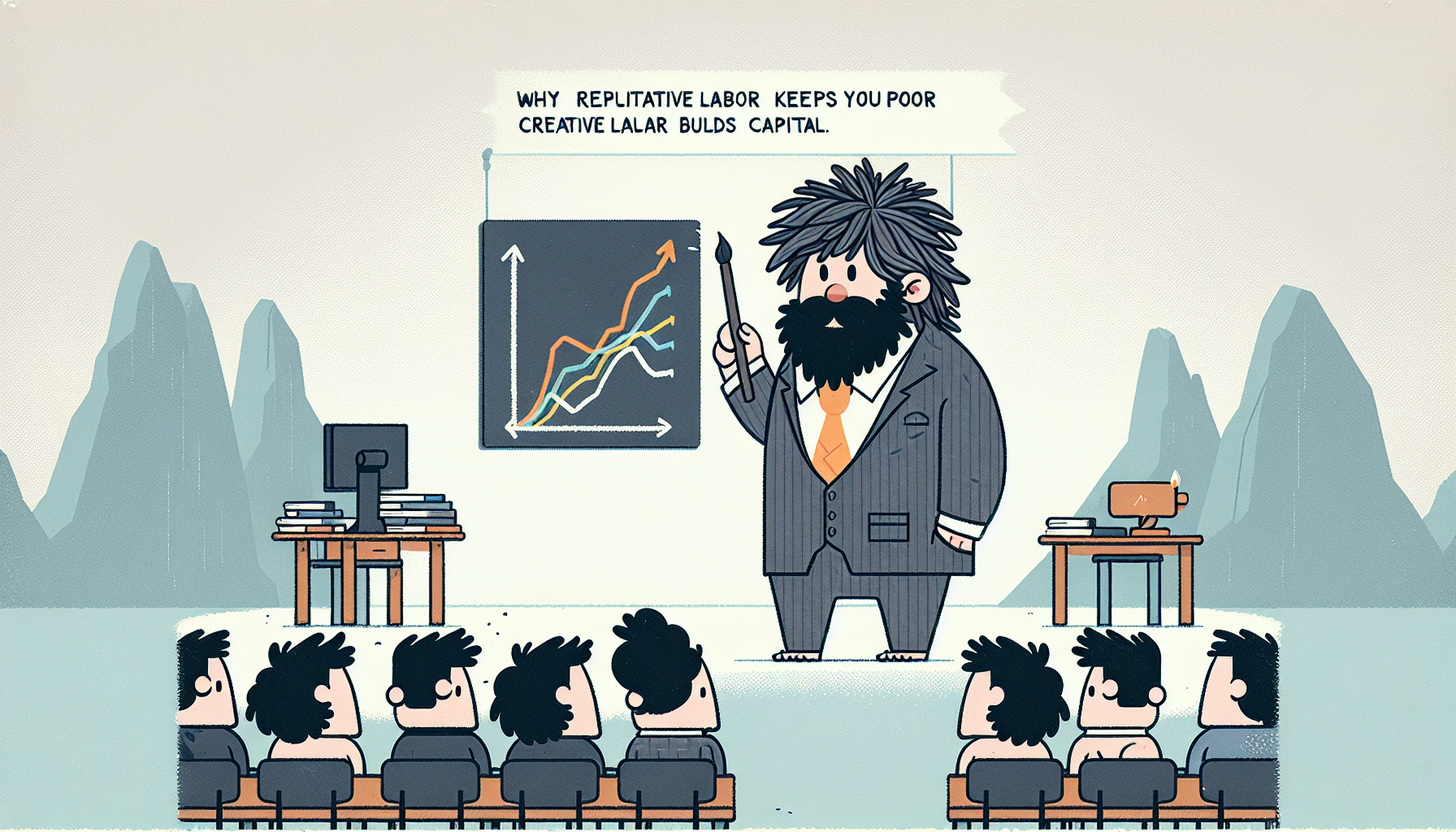
Most people never escape repetitive labor because repetitive labor starves the capital required for creative labor. The typical worker earns enough to cover living expenses with little surplus for investment. Without capital, creative projects remain theoretical.
This creates a vicious cycle. The repetitive worker lacks time to develop creative skills and lacks capital to fund creative projects. Meanwhile, his labor generates surplus that flows to capital owners, who use that surplus to fund their own creative ventures. The gap widens with each transaction.
The primal investor recognizes this cycle and breaks it deliberately. Instead of optimizing for income comfort, she optimizes for capital accumulation. Instead of upgrading lifestyle with each raise, she upgrades her ownership stakes. The lifestyle can wait; the optionality cannot.
The Network Effects
Repetitive labor also limits network development. The factory worker interacts with other factory workers. The office employee meets other office employees. These networks, while valuable socially, rarely generate business opportunities or investment ideas.
Creative labor naturally builds networks with other creators, investors, and entrepreneurs. The independent consultant meets business owners. The startup founder encounters venture capitalists. The real estate investor connects with other investors. These networks multiply creative opportunities while repetitive networks rarely do.
The Structural Path from Labor to Ownership
The transition from repetitive labor to creative ownership requires structural thinking, not motivational thinking. The structure must change before the outcomes can change.
First, create artificial scarcity around time. The repetitive worker sells hours; the creative worker protects hours. This means saying no to overtime that merely increases wage income and yes to evening projects that might generate equity. The goal is not to work more total hours, but to shift the composition toward creative work.
Second, build optionality systematically. Every dollar that goes toward consumption is a dollar that cannot buy options. Every dollar that buys assets is a dollar that creates more options. The repetitive laborer optimizes for lifestyle; the capital builder optimizes for choices.
Third, develop leverage gradually. The employee has no leverage because his income stops when his work stops. The business owner has leverage because systems work without his direct involvement. The investor has leverage because assets appreciate without his active management. Each step up the leverage ladder requires different skills but offers multiplicative returns.
The Skills Transition
Moving from repetitive to creative labor requires different competencies. Repetitive labor rewards efficiency, consistency, and compliance. Creative labor rewards judgment, taste, and strategic thinking. The transition period often feels uncomfortable because old skills matter less while new skills remain underdeveloped.
The primal investor embraces this discomfort as evidence of growth. She knows that feeling confident in repetitive tasks while feeling uncertain in creative tasks is precisely the signal that change is necessary. Comfort with repetition indicates skill stagnation; discomfort with creation indicates skill development.
Why Most People Choose the Comfortable Prison
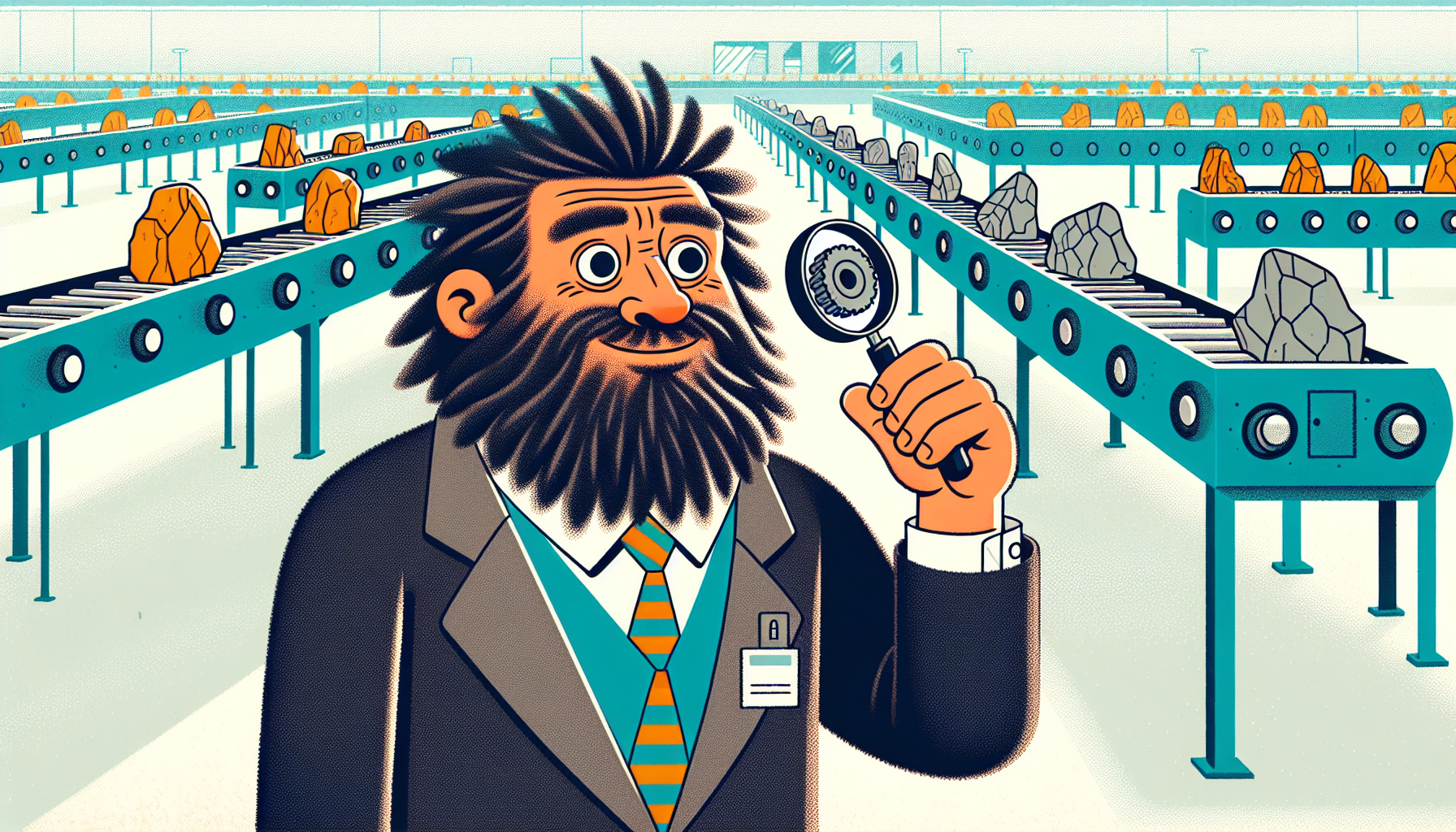
Despite understanding these dynamics intellectually, most people choose repetitive labor because it satisfies immediate psychological needs. The regular paycheck provides identity, structure, and social approval. The creative path offers potential future freedom at the cost of present uncertainty.
The herd instinct reinforces this choice. When everyone around you trades time for money, doing the same feels normal and safe. When few people in your network own significant equity, pursuing ownership feels arrogant and risky. The social proof runs toward employment, not entrepreneurship.
Additionally, repetitive labor provides external validation. The boss says you did good work. The performance review confirms your value. The promotion validates your progress. Creative labor often lacks these external feedback loops, requiring internal motivation and judgment. Many people prefer external validation to internal satisfaction.
The Identity Trap
Perhaps most importantly, repetitive labor becomes identity. “I am an accountant” feels more concrete than “I am building accounting software.” “I am a teacher” feels more respectable than “I am creating educational content.” The employment identity provides social positioning while the creative identity feels uncertain and self-serving.
Breaking free requires rebuilding identity around ownership rather than occupation. The transition from “I work for Google” to “I own technology stocks” or from “I manage marketing” to “I own marketing agencies” represents a fundamental shift in self-concept that most people find uncomfortable.
What The Primal Investor Takes Away
- Energy allocation determines wealth trajectory—repetitive labor consumes the cognitive resources required for creative wealth building, creating a self-reinforcing poverty trap.
- Loss aversion favors fake safety over real security—the predictable paycheck feels safer than creative ownership, but wages guarantee economic captivity while equity offers genuine freedom.
- Capital starvation perpetuates the cycle—without surplus capital, creative projects remain impossible, forcing continued dependence on repetitive labor that generates surplus for others.
- Network effects compound the division—repetitive workers interact with other workers, limiting business opportunities, while creative owners naturally build networks that multiply possibilities.
- The transition requires structural changes, not motivational changes—protecting time for creative work, building optionality systematically, and developing leverage gradually.
- Identity shifts must precede economic shifts—moving from employment identity to ownership identity creates the psychological foundation for wealth building.
The primal investor knows that choosing repetitive labor over creative ownership is choosing present comfort over future freedom. Every hour spent enriching others’ systems is an hour not spent building your own. The primitive brain seeks the certainty of wages; the investor’s brain builds the optionality that makes wages unnecessary.