The Discomfort Is the Point
The best contrarian investors I know spend most of their time feeling wrong. They buy when their stomach churns. They hold when everyone else is selling. They feel like idiots when the talking heads on CNBC make perfect sense.
That discomfort isn’t a bug in contrarian investing — it’s the feature.
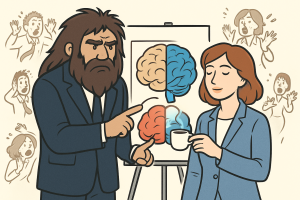
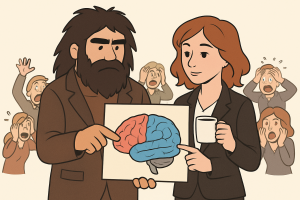
Your brain is a 200,000-year-old survival machine built for the African savanna, not the stock market. It’s designed to keep you alive in a world where being wrong about a predator could get you killed. In that environment, following the tribe wasn’t just smart — it was essential. The outlier who wandered off alone usually became lunch.
But in markets, this same wiring kills returns.
When I first started investing in 2009, I thought contrarian investing meant buying unpopular stocks. I’d find companies everyone hated, do my research, and buy them feeling clever. Then I’d watch my portfolio bleed red for months while the popular stocks everyone loved kept climbing. My brain screamed at me daily: “You’re doing this wrong. Look at everyone else making money.”
I almost quit three times that first year.
Why Your Stone Age Brain Sabotages Modern Investing
Here’s what I learned the hard way: contrarian investing psychology isn’t about being different for the sake of it. It’s about recognizing when your primal instincts are working against you.
The herd instinct served our ancestors well. When everyone ran from the rustling bushes, you ran too. Questions came later. This instinct gets triggered in markets every single day. When everyone’s buying, your brain interprets that as “safety in numbers.” When everyone’s selling, it screams “danger — follow the crowd to safety.”
The problem? Markets aren’t predators. They’re auctions.
In auctions, the crowd is usually wrong about price. When everyone wants the same thing, prices get stupid. When everyone’s selling, prices get stupid in the other direction. The money flows from the many to the few who can resist their own programming.
Between March 2000 and October 2002, the NASDAQ fell 78%. The contrarian investors who bought technology stocks in late 2002 felt insane. Every financial magazine featured cover stories about the “death of the internet economy.” Your brain would have screamed at you to stay away.
Those same stocks returned over 300% in the next five years.
The Behavioral Trap That Kills Returns
Do you know what recency bias costs the average investor?
According to Dalbar’s annual study, the average equity investor returned just 4.25% annually over the 20 years ending in 2019, while the S&P 500 returned 6.06%. That 1.81% difference compounds to hundreds of thousands in missed wealth over a lifetime.
The culprit isn’t fees or taxes — it’s behavioral biases in investing. Specifically, the tendency to extrapolate recent performance into the future. Good times feel like they’ll last forever. Bad times feel permanent.
I watched this play out in real time during the COVID crash in March 2020. My phone buzzed constantly with messages from friends who’d finally decided to “get serious about investing” — right before the market fell 34% in five weeks. They’d spent years watching stocks climb and finally felt safe jumping in.
Then they sold everything at the bottom.
Their brains weren’t broken. They were working exactly as designed. Loss aversion makes losses feel twice as painful as equivalent gains feel good. When you combine that with herd mentality, you get predictable behavior: buy when everyone’s optimistic, sell when everyone’s panicking.
This is why contrarian investing feels wrong most of the time.
What Does Real Contrarian Thinking Look Like?
Real contrarian investment strategies aren’t about being a rebel. They’re about having a different time horizon than the crowd.
When everyone’s focused on the next quarter, you’re thinking about the next decade. When everyone’s worried about this week’s headlines, you’re asking what the business will look like in five years. When everyone’s extrapolating current trends, you’re looking for structural breaks.
Let me be honest — this is harder than it sounds.
In late 2008, while banks were collapsing and everyone was predicting the end of American capitalism, Warren Buffett published an op-ed in the New York Times titled “Buy American. I Am.” The Dow was around 8,000. Financial stocks had been obliterated. The media was full of depression analogies.
Buffett felt wrong too. He said later that he was “dead wrong” about the timing — stocks kept falling for months after his article. But he wasn’t wrong about the structure. American businesses would survive. People would still need banks, insurance, and consumer goods.
The Dow hit 29,000 in 2020.
Why The Crowd Gets Directions From Headlines
Here’s a pattern I’ve noticed: the crowd always gets its investment philosophy from whatever’s been working lately.
In 1999, everyone became a “growth investor” because technology stocks had been climbing for five years. In 2009, everyone swore off stocks forever because they’d been falling for two years. In 2021, everyone became a “HODL” crypto investor because Bitcoin had gone from $4,000 to $60,000.
The crowd doesn’t have principles — it has reactions.
Contrarian investors develop principles before they need them. They decide in advance how they’ll behave when their portfolio falls 20%, 30%, or 50%. They know what they’re buying and why. They have a framework that works independent of market sentiment.
This doesn’t mean contrarian investors are always right. It means they’re wrong for better reasons.
The Capital Structure Most People Never See
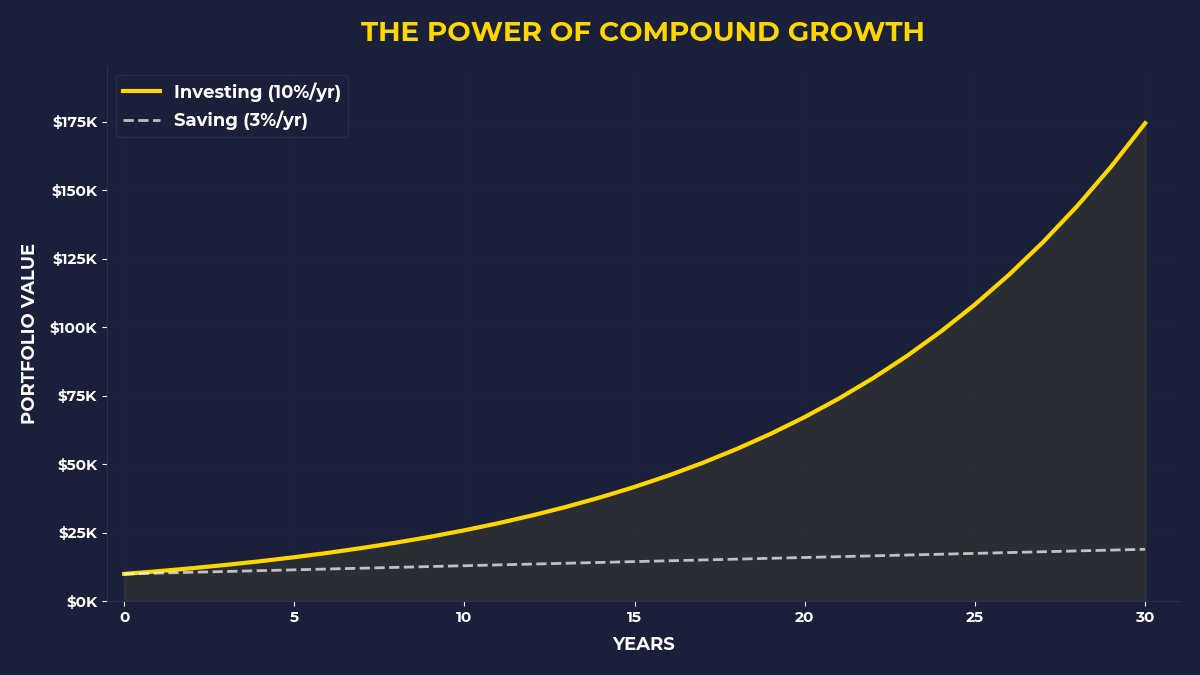
What the crowd misses is that capital isn’t money sitting in accounts — it’s stored demand. When you own shares of Apple, you own a slice of the demand for iPhones, MacBooks, and services that tens of millions of people express every quarter by opening their wallets.
That demand doesn’t disappear because headlines are scary.
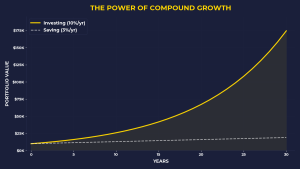
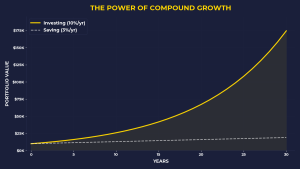
When I was 28, I worked with an engineer who made $120,000 a year but had zero equity investments. He kept everything in savings accounts and CDs because stocks “felt too risky.” Meanwhile, he spent $800 a month on his iPhone plan, Netflix, Amazon Prime, his mortgage interest, and dozens of other bills.
Every month, he sent hundreds of dollars to the shareholders of the companies he was afraid to own.
His fear of volatility was actually fear of ownership. He preferred the certainty of being a customer to the uncertainty of being an owner. His brain told him that paying bills felt safer than collecting profits.
This is exactly backward.
If You’re Still Reading, This Is For You
If you’re the kind of investor who gets nervous when your positions are working, you understand contrarian psychology. If you’ve ever felt guilty about buying when others are selling, you get it. If you’ve questioned your own research because it disagrees with popular opinion, you’re in the right headspace.
The discomfort never fully goes away. I still feel my stomach clench when I buy stocks that are down 40% while financial media runs apocalypse narratives. My lizard brain still whispers that I should wait for “more clarity” or a “better entry point.”
But I’ve learned that clarity is expensive. When everyone agrees the coast is clear, prices reflect that consensus. The edge comes from acting while you still feel uncertain.
The best opportunities disguise themselves as problems.
What The Primal Contrarian Takes Away
• Your discomfort when buying unpopular assets is your Stone Age brain trying to keep you safe — acknowledge it, then act anyway
• The crowd’s investment philosophy comes from whatever worked recently — develop principles that work across different market cycles
• Recency bias costs the average investor 1.81% annually — nearly half their potential returns over 20 years
• Real contrarian investing isn’t about being different — it’s about having a longer time horizon than the panicking crowd
• Capital is stored demand, not money in accounts — own pieces of businesses that customers pay every month instead of just being the customer
• The best opportunities feel wrong precisely because they are opportunities — if they felt right, everyone would already own them
Your brain will never stop trying to protect you from the wrong risks. The key is learning to distinguish between real danger and the discomfort of owning assets while others panic.
That discomfort is expensive to avoid and profitable to embrace.
🎬 Prefer watching? Check out the video version on YouTube:
👉 https://www.youtube.com/@PrimalContrarian
Subscribe for daily insights on capital, wealth, and contrarian thinking.