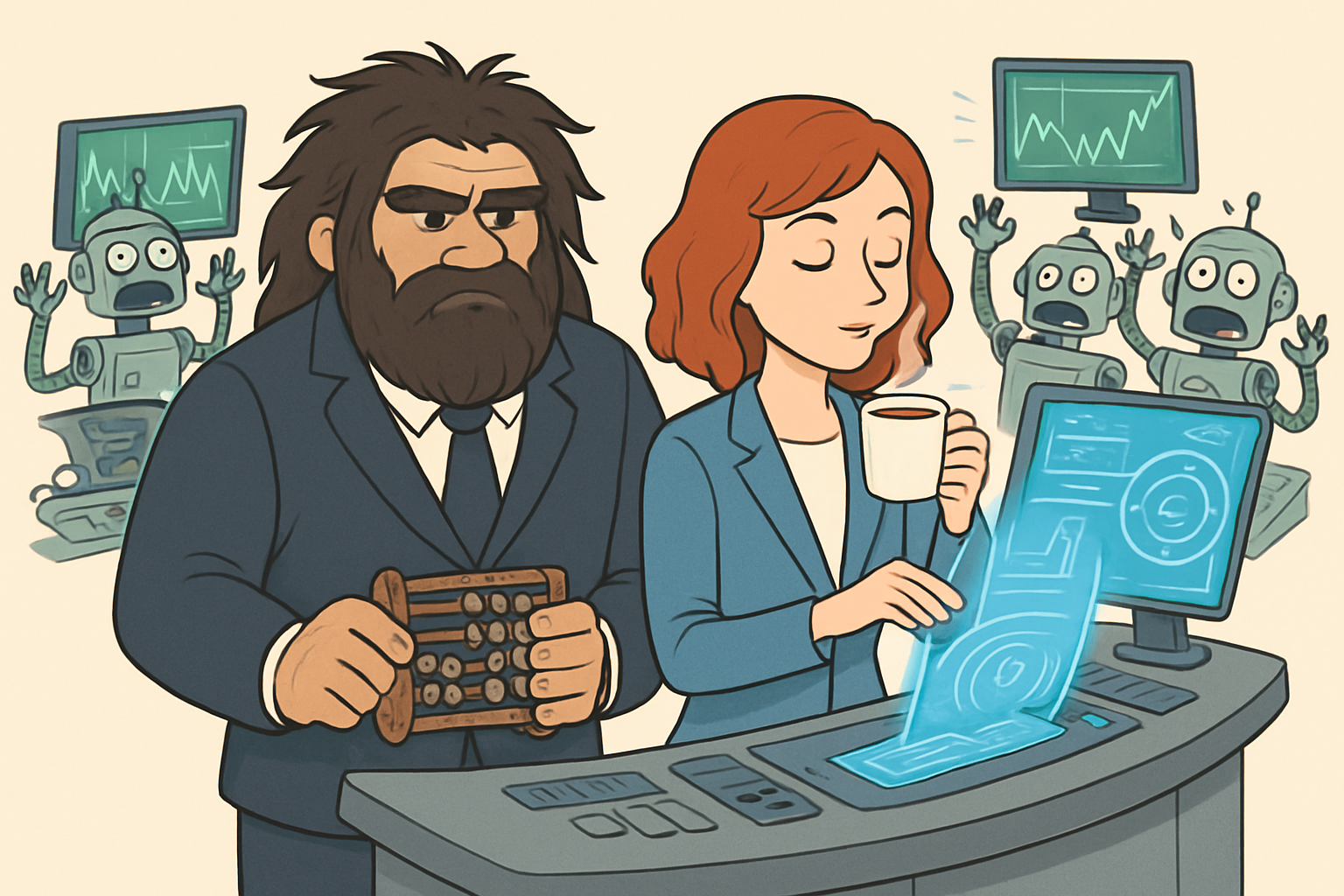
Marcus — 29, graphic designer in Portland — got the email on a Tuesday morning in March. His biggest client was “exploring new creative solutions.” Translation: they’d found an AI tool that could pump out logos in thirty seconds instead of waiting three days for his drafts.
He sat there staring at the screen, coffee getting cold, realizing his $4,200-per-month freelance income had just evaporated. But here’s what really twisted the knife: his client wasn’t just saving money. They were making more of it. While Marcus was about to scramble for new gigs at lower rates, his former client could now serve ten times as many customers.
Same story, different ending.
The AI didn’t just replace Marcus. It made his client a capital owner.
I Watched This Same Pattern Destroy My Friends
Look, I’ve been thinking about capital and technology for years, but AI made everything crystal clear. I watched three friends get blindsided in six months. Sarah, the copywriter who lost her $90K agency job to ChatGPT. Tom, the junior analyst whose spreadsheet work got automated away. Lisa, whose customer service consulting business died when chatbots got good enough.
All three made the same mistake. They treated AI as a temporary disruption instead of permanent restructuring.
Here’s what I realized during those conversations: AI economics isn’t about technology. It’s about who owns the demand.
When Sarah’s agency replaced her with AI, they didn’t reduce their client load. They expanded it. Same when Tom’s company automated his analysis work — they took on bigger projects with the same overhead. Lisa’s clients didn’t stop needing customer service; they just found a way to handle 10x the volume.
The demand was still there. The ownership shifted.
Why AI Creates Capital Owners, Not Just Productivity
Think about what actually happened to Marcus. His client bought access to an AI design tool — let’s say $50 per month. That tool could generate hundreds of logos, social media graphics, and marketing materials. Instead of paying Marcus $1,400 for three custom logos, they could now produce unlimited designs for fifty bucks.
But here’s the part everyone misses: they didn’t pocket the $1,350 savings and call it a day.
They used those savings and that speed to serve more customers. The bakery that could only afford one logo design before? Now they could get a complete brand package for the same budget. The startup that had to choose between a logo and business cards? Now they could have both.
The AI tool became a capital asset. It stored and amplified human demand for design work.
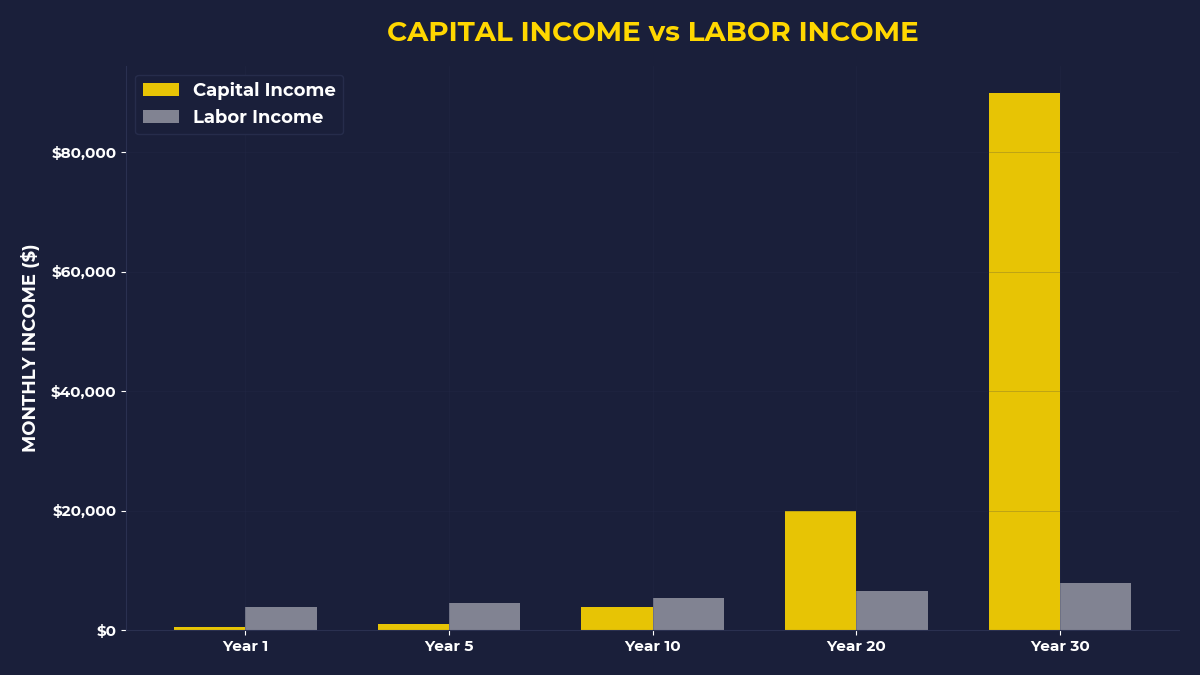
Marcus had been selling his time — 40 hours of design work for $1,400. His client now owned a system that could deliver those same 40 hours of output in 40 minutes. That system could work 24/7. It never got tired, never missed deadlines, never asked for raises.
The client went from being someone who bought design services to someone who owned design production capacity.
The Question Nobody’s Asking About AI Wealth
Everyone talks about which jobs AI will replace. Wrong question.
The right question: How do you end up owning the AI instead of being replaced by it?
I started asking this after watching my friends struggle. Sarah spent three months updating her portfolio and pitching agencies. She was fighting yesterday’s war. Tom enrolled in a data science bootcamp, thinking he needed better technical skills. Lisa tried to compete on price, offering her human customer service at discount rates.
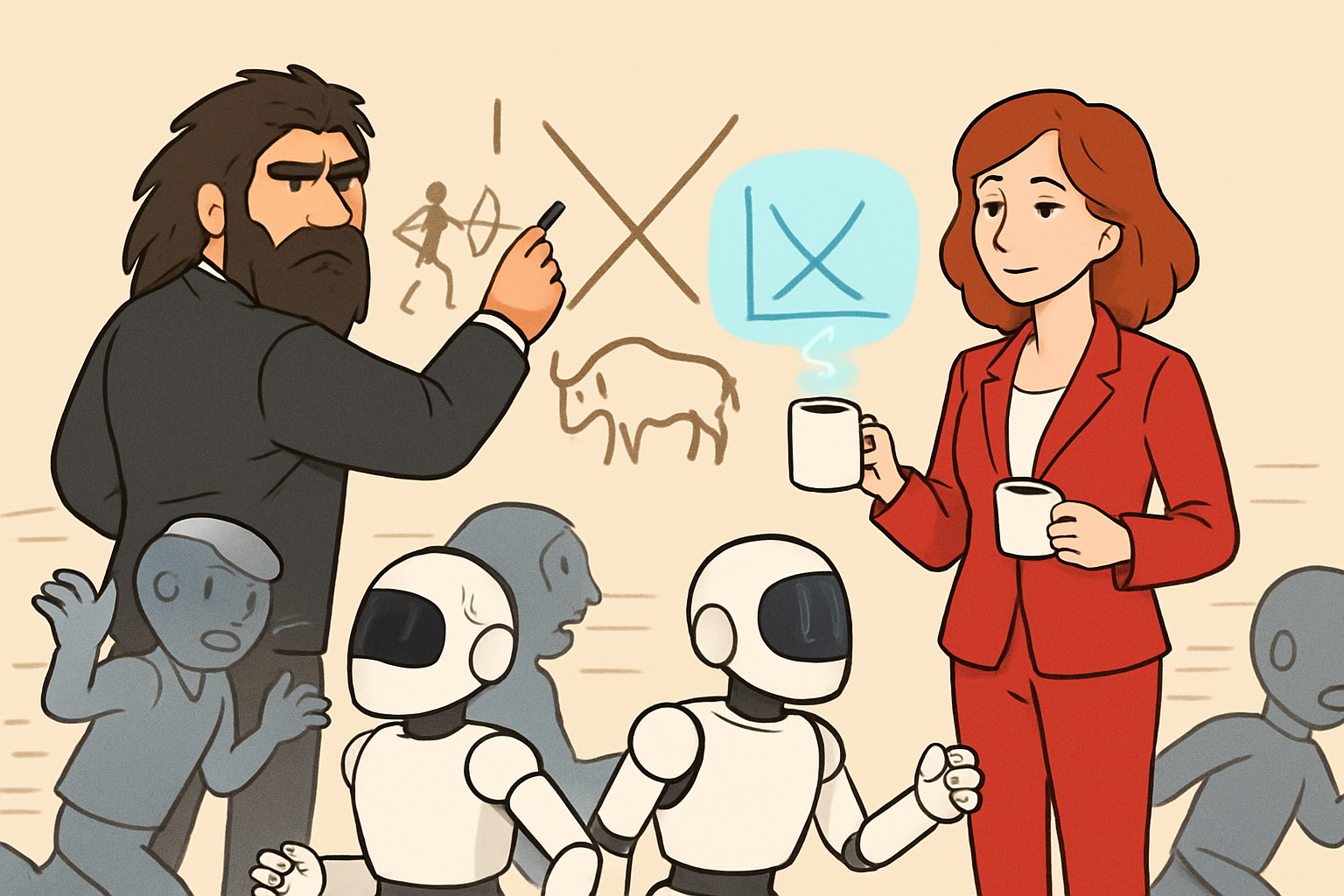
All three were still thinking like workers, not owners.
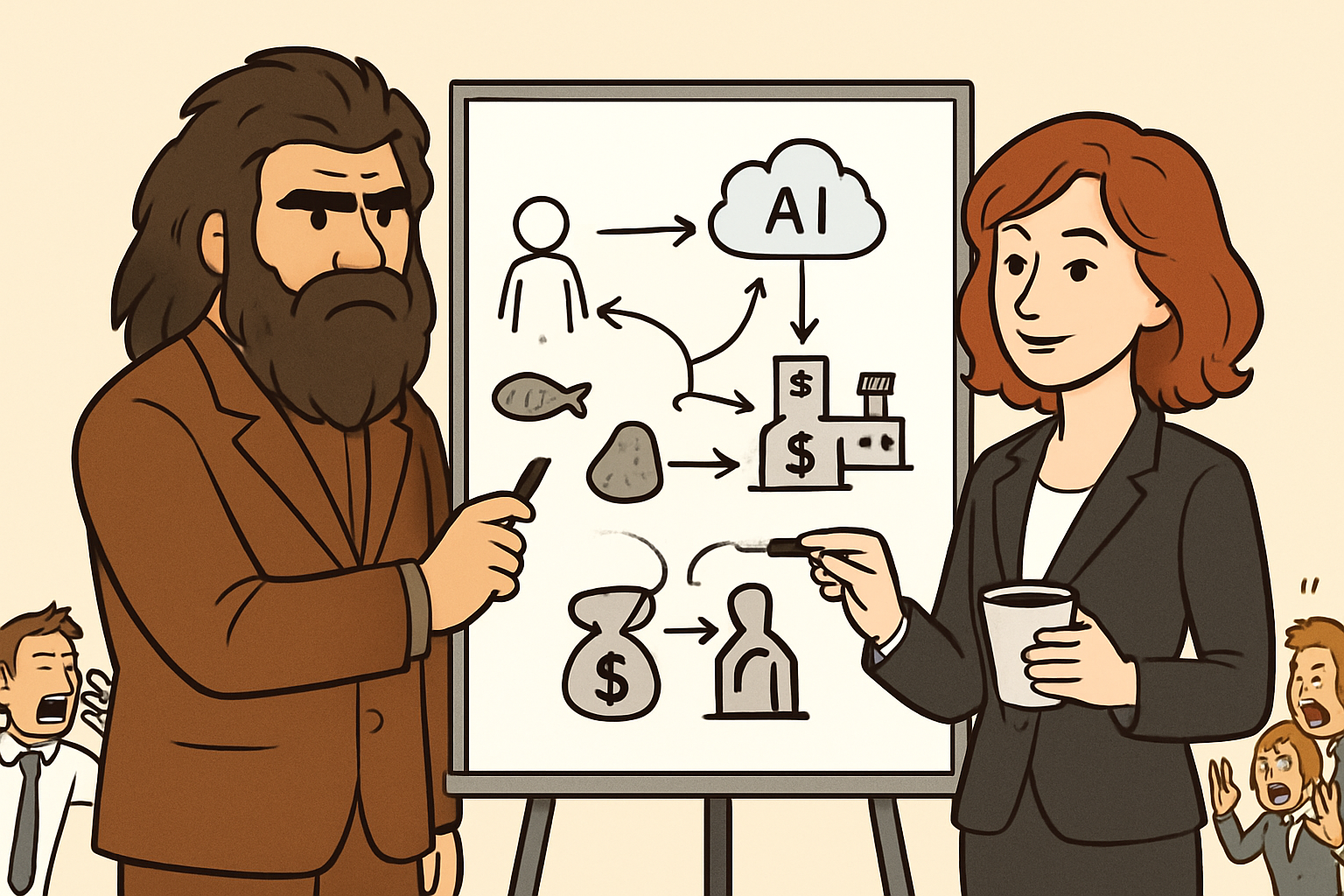
Here’s what I wish I’d told them earlier: AI doesn’t eliminate demand — it consolidates ownership of that demand.
People still need design work, copywriting, data analysis, and customer service. They’ll always need these things. But instead of buying this work from individual humans, they’re buying it from systems that can scale infinitely.
The AI Capital Shift (And Why Most People Miss It)
Let me tell you about Janet — 41, marketing consultant in Austin. When ChatGPT launched, her first instinct was to learn how to use it better. Smart. But then she did something smarter.
Instead of just using AI to write better proposals, she bought equity in companies building AI marketing tools. Instead of competing against AI copywriting, she started investing in the platforms that enable it.
Janet understood something crucial: every dollar that stops flowing to human workers doesn’t disappear. It flows to capital owners.
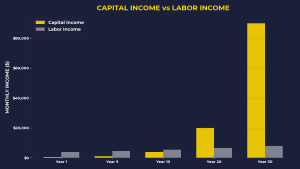
Think about the money Marcus used to earn. That $4,200 per month didn’t vanish when his client switched to AI. Some of it went to the AI platform (maybe $50). Some stayed with the client as increased profit margin. Most of it got redirected into serving more customers.
The total economic value created actually increased. But instead of being distributed between Marcus and his client, it now flowed entirely to his client and the AI platform owners.
Janet positioned herself to capture that flow. Marcus got caught in it.
Why AI Rewards Asset Owners, Not Skill Builders
Here’s the brutal truth about AI economics: your skills are becoming commodities. Your assets are becoming monopolies.
I learned this watching my own industry. I used to spend hours researching market trends, reading earnings reports, analyzing financial statements. Now I can get 80% of that analysis from AI in five minutes. My analytical skills — built over years — became worth almost nothing overnight.
But my stock portfolio? That became more valuable.
Because while AI was making my research skills obsolete, it was making the companies I owned more profitable. Lower labor costs. Higher output. Bigger margins. The same disruption that threatened my human capital strengthened my financial capital.
This is the AI wealth paradox: the more AI replaces human work, the more valuable it becomes to own the systems doing that work.
The Compound Effect of AI Ownership
Remember Warren Buffett’s golf ball story? As a kid, he found lost golf balls and sold them for 6 cents each. Then he used that money to buy more assets — things that generated cash flow without his direct labor.
AI works the same way, but faster. Way faster.
When you own shares in companies using AI to eliminate human workers, you’re essentially collecting the wages those workers used to earn. Every time a company automates away a $50,000 salary, that’s $50,000 in annual cash flow that now belongs to shareholders instead of employees.
Multiply this across every industry AI touches, and you’re looking at the largest wealth transfer in human history. From people who sell their time to people who own systems that replace time.
If You’re Still Trading Time For Money, Pay Attention
Maybe you’re reading this thinking: “Great, so I’m doomed because I don’t have money to invest.” I get it. Three years ago, I was spending 60 hours a week analyzing other people’s portfolios while barely having enough money to build my own.
But here’s what changed everything for me: I stopped asking “What skills should I develop?” and started asking “What systems should I own?”
Instead of trying to become a better analyst, I bought shares in companies that were automating analysis. Instead of learning new software, I invested in the companies making that software. Instead of competing with AI, I positioned myself to profit from it.
The shift was mental before it was financial. Workers think about getting better at their jobs. Owners think about buying better systems.
The One Thing To Remember
AI economics comes down to a simple choice: own the systems that replace human work, or be the human work that gets replaced. Every subscription fee you pay to an AI tool, every productivity gain your employer captures from AI, every human job that gets automated — that’s all cash flow transferring from workers to capital owners. The question isn’t whether this will happen. It’s which side you’ll be on when it does.
Here’s how to start positioning yourself as an AI capital owner instead of an AI casualty:
Buy shares in companies building AI systems instead of learning to use AI tools better. The tool users are workers. The tool owners are capitalists.
Before you spend money improving your skills, spend money buying ownership in systems that scale those skills. Your time has limits. AI systems don’t.
Track where your industry’s money flows when AI eliminates jobs. That flow reveals where the new capital is accumulating — and where you should be investing.
🎬 Prefer watching? Check out the video version on YouTube: