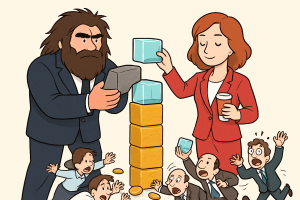
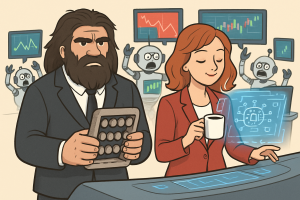
The primal investor confuses capital with money. They see $50,000 in their savings account and believe they possess capital. They count their 401(k) balance and feel wealthy. But capital is not the digits on your screen—capital is stored demand. It is the structural right to capture value from human needs that persist across decades.
This distinction destroys most investment thinking. Money flows to you once, then disappears into rent, food, and Netflix subscriptions. Capital generates money repeatedly because it sits between enduring human demand and the mechanisms that satisfy it. The investor who grasps this reframes every financial decision around a single question: Am I acquiring demand, or am I just moving money around?
The celebrity who records one hit song and lives off royalties for thirty years understands capital intuitively. The wage earner who saves diligently but owns no equity stakes does not. One captures demand; the other chases cash flow. The difference compounds mercilessly.
The Invoice Economy Reveals Who Owns What
Every month, invoices arrive that reveal the true structure of the economy. Your mortgage payment flows to a bank that owns debt secured by real estate demand. Your grocery bill flows to companies that own distribution networks between farmers and consumers. Your streaming subscriptions flow to platforms that own the infrastructure of entertainment demand.
The pattern becomes visible once you see it: persistent human needs create cash flows, and those cash flows flow to whoever owns the capital structures that satisfy the needs. Housing demand generates rent. Food demand generates grocery profits. Entertainment demand generates subscription revenue. Transportation demand generates Uber rides and airline tickets.
Robert Kiyosaki understood this when he lived in a friend’s garage after his business collapsed in the early 1980s. Facing overwhelming bills, he made a counterintuitive choice: pay himself first. Not literally—pay his future capital-owning self first. Before paying any invoice, he invested in assets that would generate future cash flow. Real estate. Stocks. Business equity. Only after securing his position in the demand-capture game would he work side jobs to pay the bills.
The Structural Advantage of Demand Ownership
This wasn’t financial advice—it was structural thinking. The person who pays bills first and invests the remainder acquires capital slowly, if at all. The person who acquires capital first and works harder to pay bills builds optionality rapidly. The first approach optimizes for comfort. The second optimizes for ownership of demand structures.
The primitive brain rebels against this logic because loss aversion makes unpaid bills feel more dangerous than missed investment opportunities. But demand ownership compounds; bill payments disappear. The structural advantage belongs to those who can override their risk-averse wiring long enough to acquire equity stakes in persistent demand.
Why Demand Persists But Cash Flows Disappear
Cash flows are events. Demand is structure. Your salary arrives monthly, but it immediately fragments into dozens of payments to demand-owners: landlords, grocery chains, utility companies, streaming platforms, auto manufacturers. Each payment represents your temporary access to goods and services controlled by capital structures you do not own.
Amazon’s 2022 revenue of $514 billion came from millions of these transactions. Each purchase transferred cash from consumers to Amazon, but the underlying demand—for convenient commerce, cloud computing, digital entertainment—remains intact. The cash flow was temporary. The demand structure is persistent.
This explains why celebrities who experience sudden popularity often remain wealthy decades later, while highly skilled professionals who earn substantial salaries often struggle to build significant wealth. The celebrity captured demand (for their music, performances, or image) that generates recurring revenue streams. The professional exchanges time for money in a structure they do not own.
The Compound Effect of Demand Capture
Netflix demonstrates how demand capture compounds. The company spent $17 billion on content in 2022, but this was investment in demand structures, not expense. Each successful show creates a library asset that attracts subscribers across multiple years. The demand for entertainment remains constant; Netflix’s ownership of entertainment infrastructure captures recurring value from that demand.
The wage earner who subscribes to Netflix participates in the same entertainment demand but captures none of its financial value. They exchange money for temporary access. Netflix exchanges money for permanent ownership of demand-satisfying assets. One transaction depletes wealth; the other builds it.
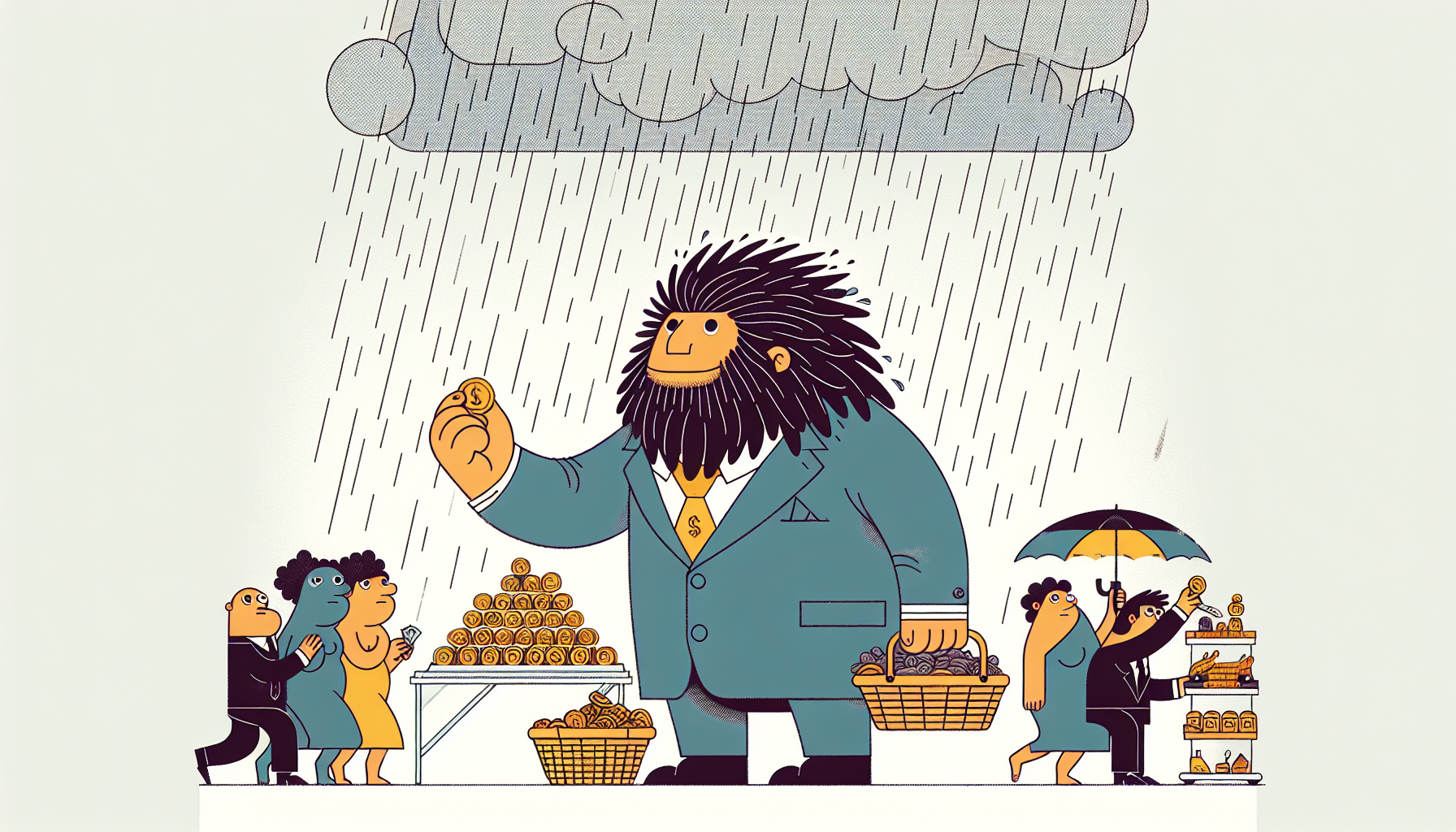
Creative Labor Versus Repetitive Labor
Capital ownership determines which type of work fills your days. Without capital, energy flows toward repetitive labor: showing up, following instructions, exchanging time for money in structures others control. With capital, energy can flow toward creative labor: designing, building, optimizing systems you own.
The difference is profound. Repetitive labor serves someone else’s creative vision. You become a component in their wealth-building machine. Creative labor serves your own vision and builds equity stakes in your own systems. The first creates wages; the second creates capital.
This is why the median American household owns virtually no productive assets outside their home and retirement accounts. Their human capital serves others’ wealth-building rather than their own. They participate in the economy as consumers and employees, rarely as owners of the demand structures that generate sustainable wealth.
The Time Liberation Problem
Humans are naturally creative beings, but creativity requires freedom from survival anxiety. When 70% of your mental energy focuses on earning next month’s rent, little remains for building systems that generate recurring revenue. This creates the poverty trap: without capital, you cannot develop capital. Without time liberation, you cannot engage in the creative labor that builds equity stakes.
Breaking this cycle requires structural intervention, not motivational thinking. You must acquire enough capital to reduce survival anxiety before creativity becomes possible. This means choosing temporary discomfort in service of permanent structural change—exactly the choice Kiyosaki made when he prioritized investment over bill payments.
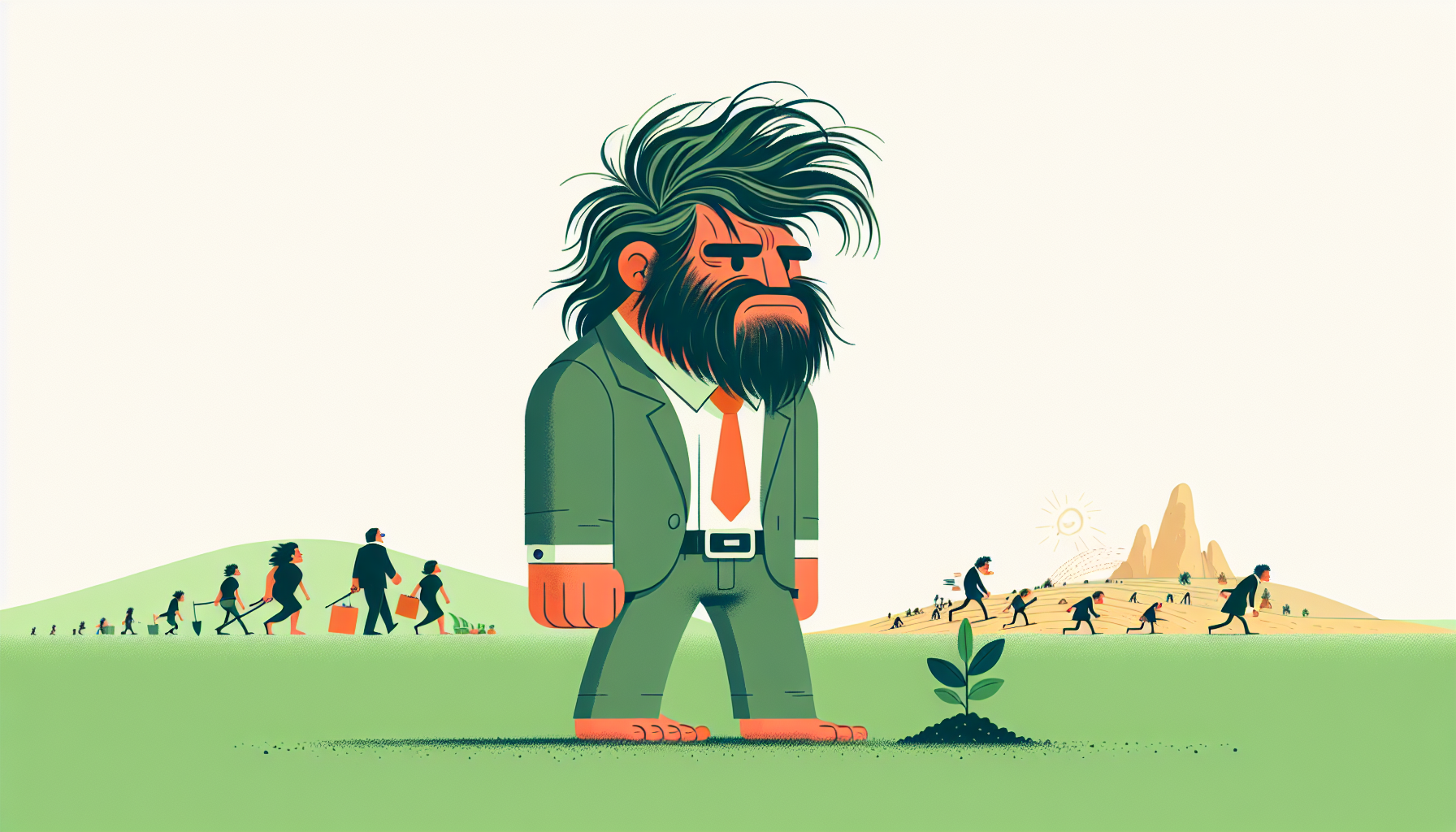
The Optionality Framework for Demand Ownership
Capital as stored demand changes how you evaluate opportunities. Instead of asking “How much cash will this generate?” ask “What demand does this capture?” Instead of optimizing for immediate cash flow, optimize for durable optionality—the right to benefit from demand that may increase over decades.
Apple’s $394 billion in 2022 revenue reflects thirty years of accumulating optionality around computing demand. Each iPhone sale was less important than each step toward owning the infrastructure between human beings and their digital lives. The company built demand-capture mechanisms, not just products.
Individual investors can apply this framework. Index fund ownership captures broad economic demand. Real estate ownership captures housing and location demand. Quality stock ownership captures the specific demand served by excellent businesses. Each equity stake represents stored optionality rather than immediate consumption.
Portfolio as Demand Diversification
A portfolio becomes a collection of demand-capture mechanisms rather than a collection of prices that go up and down. Amazon captures e-commerce and cloud computing demand. Microsoft captures productivity software demand. Real estate captures location demand. Each position represents a different angle on persistent human needs.
This lens eliminates much traditional portfolio anxiety. Price volatility becomes less relevant when you understand that you own structures that capture recurring demand. The question shifts from “What will this be worth tomorrow?” to “Will people still need what this company provides in ten years?”
What The Primal Investor Takes Away
- Capital is stored demand, not money—it’s ownership of structures that satisfy persistent human needs across decades
- Your monthly bills are invoices from demand-owners; building wealth means joining them rather than just paying them
- Pay your future capital-owning self first, then work harder to cover bills—not the reverse
- Without equity stakes, your labor serves others’ wealth-building; with them, you participate in compound value creation
- Portfolio construction becomes demand diversification: own different angles on what humans will always need
- Creative labor becomes possible only after capital reduces survival anxiety and provides time liberation
The economy runs on demand structures, not cash flows. Those who own the structures capture the wealth. Those who merely participate in them as consumers and employees transfer their wealth to the owners. Understanding this distinction transforms every financial decision from short-term cash management into long-term demand ownership strategy.