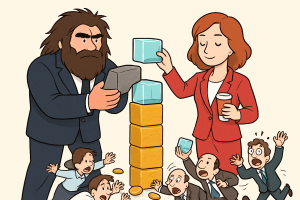
The primal investor watches Warren Buffett’s golf ball story and sees something most miss entirely. At age 11, young Warren collected lost golf balls from hazards and resold them at 50 cents each, six balls for $3. The primitive brain focuses on the hustle—the boy wading into ponds, scrubbing golf balls clean, manning the sales operation. But the structural insight lies elsewhere: Buffett used those earnings to buy his first rental property by age 14. The golf balls were not the business. The golf balls were seed capital for acquiring cash-generating assets.
This distinction separates wealth builders from wealth dreamers. The majority confuse activity with accumulation, effort with equity. They see compound returns as a mathematical concept—8% annually for 30 years equals wealth—rather than a structural requirement: you must own things that generate cash, then use that cash to own more things that generate cash. The compounding happens in ownership, not in effort.
The primitive instinct drives us toward labor intensification when we should pursue asset accumulation. More hours, higher skills, additional certifications—all variations on selling time for money. But time compounds linearly at best. Assets compound exponentially when structured correctly.
Why Hard Work Alone Never Compounds
Harry Larson’s weight scale empire illustrates the ownership principle perfectly. In the 1930s, Larson noticed customers using a penny-operated scale at his local drugstore. The owner explained he rented the machine and kept 25% of revenues—about $20 monthly. Larson invested $175 in three scales, immediately generating $98 monthly. But here’s where compound returns began: Larson used those earnings to buy 67 additional scales. His first three scales funded the purchase of the next 67.
The structural difference is clear. Larson could have worked 70 times harder to earn equivalent income through labor. Instead, he owned 70 income-generating assets that worked on his behalf. Each scale represented stored demand—people’s ongoing need to weigh themselves. The demand existed independently of Larson’s presence or effort.
Consider the contrasting path. A skilled technician earning $50 per hour can work 2,000 hours annually for $100,000 income. To double income, he must double hours (impossible) or double his hourly rate (difficult, capped by market rates for his skills). His income scales linearly with his time and energy input. No compounding occurs because he owns no cash-generating assets.
The Ownership Structure Creates Leverage
Young Buffett’s golf ball operation could have evolved into a compound machine through ownership structure. Instead of personally collecting and cleaning golf balls, Buffett could have hired friends—paying $2 per ball to the collector, $1 per ball to the cleaner, keeping $3 profit per ball sold at $6. With 20 friends working the operation, Buffett earns $60 per ball cycle without touching a single golf ball.
This isn’t exploitation; it’s leverage through ownership. Buffett owns the customer relationships, the sales process, the quality standards, the brand reputation. The friends own their specific labor contribution. Both parties benefit, but only the owner captures compound returns as the operation scales.
The Demand Storage Mechanism
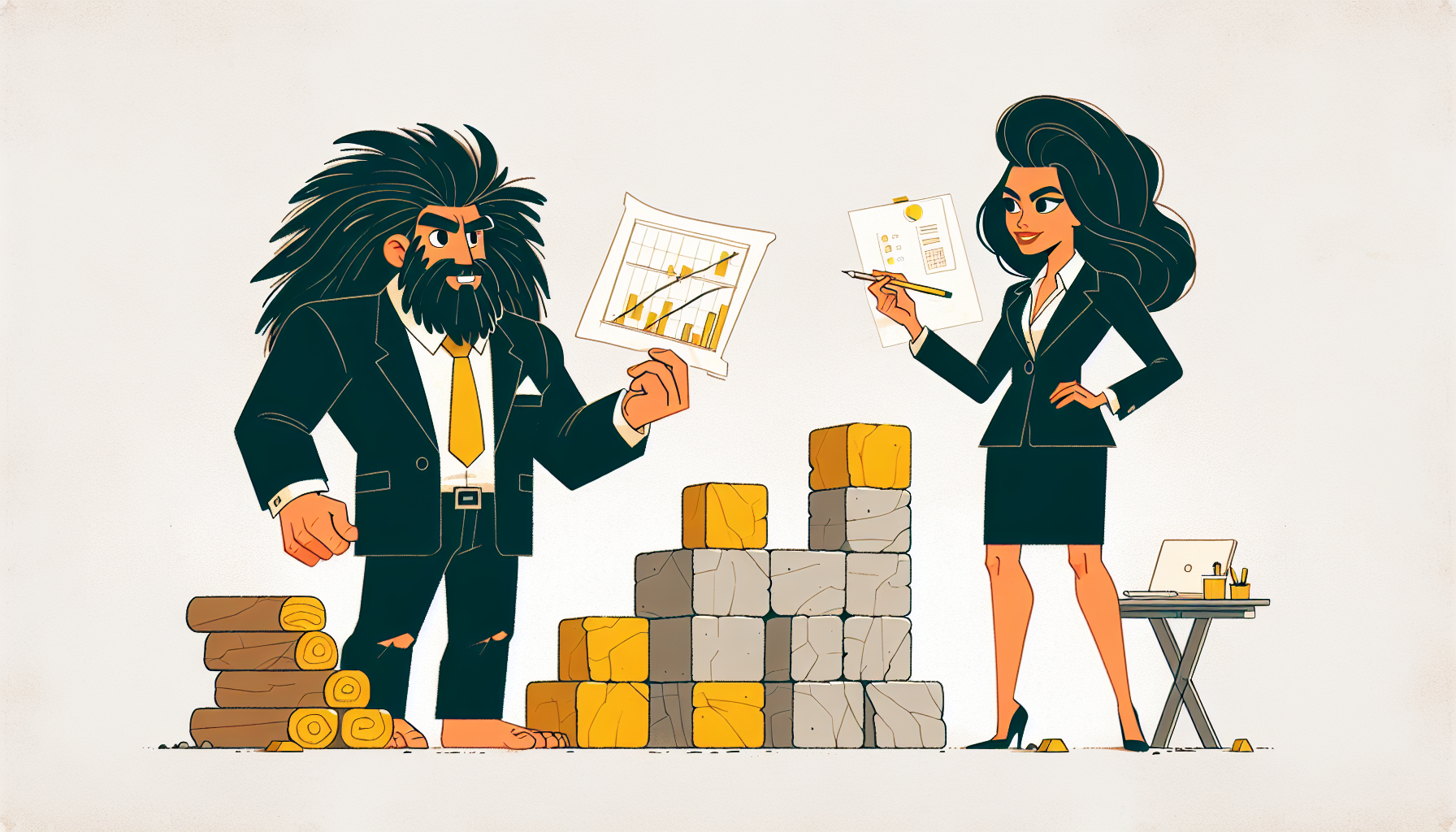
Capital represents stored demand, not stored money. Every successful asset generates cash flow because it satisfies ongoing human demand. Real estate generates rent because people need shelter. Dividend stocks generate payments because companies serve customer demand profitably. Intellectual property generates royalties because audiences demand entertainment, information, or solutions.
The storage mechanism allows demand to compound over time. A single rental property satisfies housing demand for one family. But the cash flow from that property can purchase additional properties, satisfying housing demand for multiple families while generating proportionally larger cash flows back to the owner.
This explains why entertainment celebrities accumulate massive wealth despite their apparent “work” being temporary performances. A hit song stores audience demand permanently. Radio stations, streaming services, and advertisers pay repeatedly to access that stored demand. The artist owns the demand storage mechanism (the song rights), not just the one-time performance labor.
Why Monthly Bills Reveal The Structure
Your monthly expenses itemize exactly how demand storage works. Mortgage payments flow to someone who owns your housing demand. Utility bills flow to companies that own your energy demand. Subscription services capture your entertainment demand. Insurance premiums flow to companies that own your risk mitigation demand. Every bill represents cash flow from your labor to someone else’s assets.
The structural asymmetry is stark: you rent access to assets others own, while they accumulate compound returns from your payments and millions of others like you. Breaking this pattern requires flipping the equation—becoming the receiver of monthly payments rather than solely the payer.
The Asset-First Question
Robert Kiyosaki’s bankruptcy story demonstrates the ownership priority principle. When his wallet business failed and creditors demanded payment, Kiyosaki faced the primitive choice: pay bills first, invest with leftovers. Instead, he inverted the sequence. Every dollar earned went first toward acquiring assets—stocks, real estate, business investments. Only after asset purchases did he address bills, often working additional jobs to cover shortfalls.
The mechanism sounds backwards until you understand compound returns require ownership. Bills consume cash permanently. Assets generate cash indefinitely when chosen correctly. Paying bills first ensures you never accumulate sufficient capital to purchase meaningful assets. Paying yourself first (through asset purchases) ensures asset accumulation precedes consumption.
The question transforms from “What work should I do?” to “What assets should I own?” Work generates linear returns bounded by your time and energy. Asset ownership generates compound returns bounded only by the quality of assets selected and the discipline to reinvest cash flows into additional assets.
The Compound Asset Selection Framework
Not all assets compound equally. The highest-compound assets share three characteristics: persistent demand, pricing power, and scalable operation. Businesses with strong moats satisfy all three criteria—customers need their products consistently, competitors cannot easily replicate their advantages, and operations expand without proportional cost increases.
Public equity markets provide access to these compound machines without requiring direct operational management. Purchasing shares in companies with durable competitive advantages allows individual investors to participate in compound returns generated by professional management teams and established business systems.
Beyond Individual Accumulation
The compound returns from ownership extend beyond personal wealth building. Societies where median citizens own equity stakes in productive assets distribute compound returns broadly rather than concentrating them among a small ownership class. This structural difference explains wealth inequality patterns across different economic systems.
Countries with higher rates of stock market participation, real estate ownership, and small business formation tend toward more distributed wealth accumulation. The median citizen captures compound returns rather than exclusively providing labor inputs to asset owners. This isn’t political theory—it’s structural mathematics applied to societal wealth distribution.
The individual obligation becomes clear: acquire ownership stakes in productive assets, not to extract from others, but to participate in the compound returns that asset ownership enables. Every person without equity stakes subsidizes compound returns for those who do own assets.

What The Primal Investor Takes Away
- Compound returns require ownership of cash-generating assets, not increased work effort or higher wages
- Assets store demand permanently while labor provides demand satisfaction temporarily
- The ownership structure creates leverage—assets work while you sleep, while labor stops when you stop
- Monthly bills reveal who owns the assets you depend on; building wealth means flipping that equation
- The core question shifts from “what work should I do” to “what assets should I own”
- Asset-first allocation (pay yourself before bills) ensures compound accumulation rather than consumption-first spending
The golf ball lesson was never about entrepreneurial hustle. It was about converting labor into asset ownership as quickly as possible, then letting asset ownership generate the compound returns that labor alone cannot produce. Every successful wealth builder follows this same structural pattern, regardless of their starting industry or income level.