I can explain loss aversion to you in two minutes. You’ll nod along, maybe even reference Kahneman and Tversky. You understand that people feel the pain of losing $100 twice as intensely as the pleasure of gaining $100.
Then you’ll hold a losing position for six months because selling feels like admitting failure.
Here’s what I’ve learned after 12 years of managing money: behavioral finance isn’t an academic exercise. It’s not about knowing the biases. It’s about catching yourself in the act — and 97% of investors never develop this skill. They study the theory while their primitive brain makes their investment decisions.
The gap between knowing and recognizing kills more portfolios than market crashes.
When I Discovered My Own Blind Spots
In March 2020, I watched the S&P 500 drop 34% in 33 days. I knew this was a buying opportunity. Every piece of data supported it. Every historical precedent screamed “buy the panic.”
I bought exactly nothing for the first three weeks.
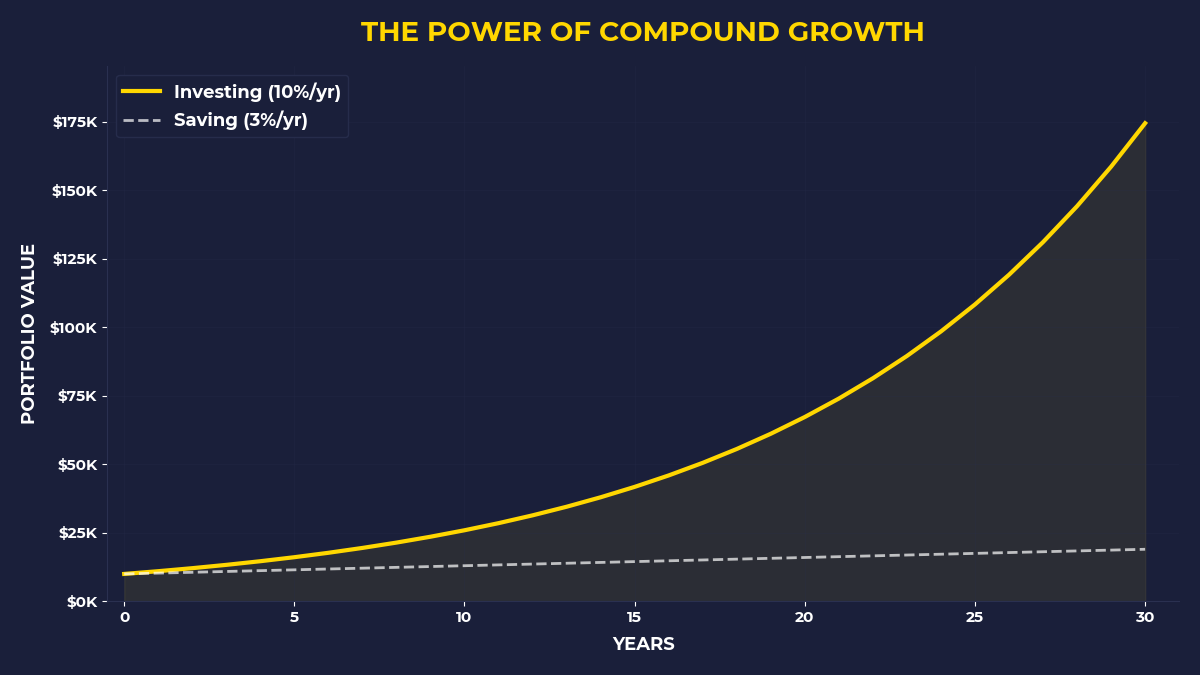
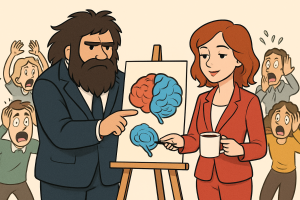
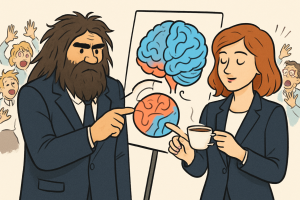
Why? Because my amygdala — the same primitive structure that kept my ancestors alive when sabertooth tigers roamed — was flooding my system with fear chemicals. My rational brain understood the opportunity. My Stone Age brain saw only danger.
I knew about fear-based selling. I’d written about it. But I couldn’t see it happening in my own head until the moment passed.
That’s when I realized the problem with behavioral finance education: it treats biases like external phenomena you can observe and avoid. But biases aren’t bugs in the system — they are the system. Your brain doesn’t malfunction during market stress. It functions exactly as designed.
Just not for building wealth in modern markets.
Why Your Stone Age Brain Sabotages Modern Wealth
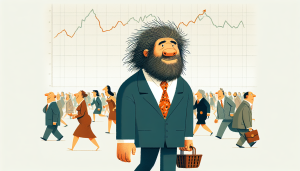
Your brain evolved over 200,000 years to keep you alive in small groups on the African savanna. It did not evolve to evaluate discounted cash flows or assess risk-adjusted returns.
Consider what happens when stocks drop 20%. Your brain processes this as immediate physical danger. Heart rate spikes. Cortisol floods your system. Every instinct screams: “Get to safety. Now.”
This response saved your ancestors from predators. It destroys your portfolio.
The herd instinct that kept early humans safe in groups becomes the momentum chasing that buys tops and sells bottoms. The loss aversion that prevented wasting precious resources becomes the unwillingness to cut losing positions. The recency bias that prioritized recent threats becomes the tendency to extrapolate short-term trends forever.
These aren’t flaws. They’re features. Just features optimized for a world that no longer exists.
The Recognition Gap
Why do intelligent people — doctors, engineers, successful business owners — make predictably bad investment decisions? It’s not intelligence. It’s recognition.
Intelligence tells you that buying during panics and selling during euphoria creates wealth. Recognition tells you that the sick feeling in your stomach when everyone’s selling is exactly what opportunity feels like.
I learned this watching a friend during the 2022 bear market. He’s a brilliant software engineer who can debug complex systems and optimize algorithms. He could recite the entire behavioral finance playbook. But when Meta dropped 76% from peak to trough, he sold at $90 because “it might go to zero.”
Six months later, with Meta trading at $180, he asked me why he always bought high and sold low.
The answer: he never learned to recognize his own fear in real-time.
What Does Recognition Actually Look Like?
Here’s what changed everything for me: I stopped trying to eliminate biases and started learning to recognize them.
When I feel absolutely certain about a market call — whether bullish or bearish — that’s overconfidence bias. The stronger the certainty, the more likely I’m about to be wrong.
When I want to buy more of a position that’s already up 50% “because the story is so compelling,” that’s confirmation bias mixed with momentum chasing. The compelling story exists because I need to justify the position size.
When I check my portfolio five times in one morning during volatility, that’s anxiety disguised as diligence. The checking doesn’t create information. It feeds the stress cycle.
Recognition isn’t about being right. It’s about knowing when your primitive brain has taken the wheel.
Think about that.
The Paradox of Behavioral Finance Knowledge
The most dangerous investors are often those who know just enough behavioral finance to think they’re immune to it.
They read “Thinking, Fast and Slow.” They understand System 1 versus System 2 thinking. They can name a dozen cognitive biases. But knowledge without recognition is just expensive ignorance.
During the dot-com crash from 2000 to 2002, the Nasdaq fell 78%. Professional money managers — people with MBAs and CFA designations who absolutely understood behavioral finance — still chased the bubble up and rode it down. They knew about herd behavior. They just couldn’t see themselves following the herd.
The same pattern played out in 2008. And 2020. And 2022.
Knowing that others panic doesn’t stop you from panicking. It just makes you feel stupid while you panic.
Building Your Recognition System
How do you develop real-time bias recognition? Not through more reading. Through systematic self-observation.
Start with physical awareness. When you’re about to make any investment decision — buying, selling, sizing up, sizing down — pause and scan your body. Tight shoulders? Clenched jaw? Racing heart? Shallow breathing?
These are not random physical sensations. They’re your early warning system.
Next, check your certainty level. If you’re absolutely sure about anything in markets, you’re probably being driven by bias. Markets are complex adaptive systems. Certainty is almost always an illusion.
Finally, notice your information consumption. When you find yourself seeking more and more confirmation for a decision you’ve already made, that’s confirmation bias in real-time. The cure isn’t more information. It’s recognizing the pattern.
I keep a simple investment journal. Not just what I bought and sold, but what I felt when I bought and sold. The patterns become obvious within months.
Why This Matters More Than Ever
If you’re the kind of investor who wants to build real wealth rather than just participate in market theater, bias recognition is your edge.
In an era of algorithmic trading and artificial intelligence, human behavioral patterns have become more predictable, not less. The algorithms are designed to exploit your Stone Age programming. High-frequency trading systems profit from your fear and greed cycles. Social media amplifies herd behavior faster than ever.
The investors who survive and thrive are those who can recognize when their primitive instincts are being triggered — and act contrary to them.
This isn’t about becoming emotionless. Emotions provide valuable information. But they shouldn’t make your investment decisions.
What The Primal Investor Takes Away
• Knowledge without recognition is expensive ignorance — studying behavioral biases doesn’t prevent them
• Your body gives you early warning signals — physical tension often precedes bad investment decisions
• Certainty in markets is usually bias talking — the stronger your conviction, the more likely you’re being driven by primitive programming
• Keep a feeling journal, not just a trading journal — track your emotional state during decisions to spot patterns
• Algorithms profit from your Stone Age brain — developing bias recognition is your competitive edge in automated markets
The market doesn’t care what you know about behavioral finance. It only cares whether you can recognize your own biases while they’re happening. That recognition — not knowledge — separates capital builders from everyone else.
🎬 Prefer watching? Check out the video version on YouTube: