
Your Philosophy Determines Your Bank Account
Most people think investment philosophy is about whether you buy growth stocks or value stocks.
They’re wrong by exactly 180 degrees.
Your investment philosophy is actually the answer to one question: Do you think like someone who owns capital, or someone who sells labor? Everything else — your stock picks, your asset allocation, your retirement planning — flows from that single mental framework. Get the philosophy wrong, and you’ll spend 40 years making other people rich while wondering why your net worth stays stuck.
I learned this the expensive way. When I first started investing, I thought philosophy meant having opinions about companies. I’d research earnings reports, analyze competitive moats, debate whether Tesla was overvalued. Classic mistake. I was thinking like an analyst, not an owner.
The real question isn’t which stocks to buy. It’s whether you understand what capital actually is.
What Investment Philosophy Actually Means
Warren Buffett didn’t become the world’s most successful investor because he picked better stocks than everyone else. He became successful because he understood something most people never figure out: capital isn’t money sitting in your brokerage account.
Capital is stored demand.
Think about it this way. When you pay rent, you’re transferring your cash flow to someone who owns an asset that people need — shelter. When you buy coffee, you’re transferring money to someone who owns a business that serves something people want — caffeine and convenience. When you pay for Netflix, you’re funding someone who owns content that people demand — entertainment.
Every dollar leaving your checking account goes to someone who owns a piece of sustained human demand. That’s what capital is: your claim on the endless flow of human needs and wants.
Most people’s investment philosophy boils down to: “I hope these stocks go up.” Real investors think: “I want to own the things that everyone else has to pay for.”
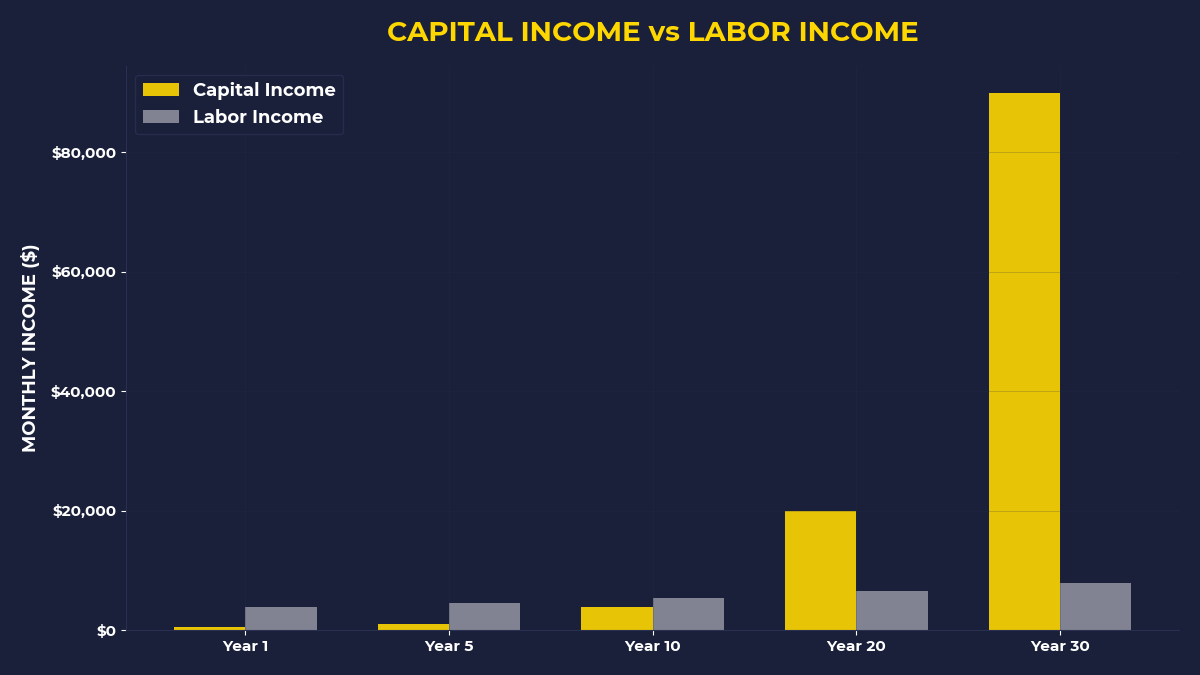
Why Your Brain Sabotages Your Philosophy
Here’s the brutal truth about investment philosophy: your Stone Age brain is actively working against you.
Human beings evolved to think in terms of immediate survival, not compound returns over decades. We’re wired for reciprocity bias — if someone does something for us, we feel obligated to return the favor. In investing, this translates to: “If I work harder, I should get richer.”
But capital doesn’t care how hard you work.
I used to believe that being a good investor meant doing more research, reading more quarterly reports, staying up later analyzing balance sheets. The effort fallacy. My primitive brain was telling me that more labor equals better results. Classic primate thinking.
The shift happened when I realized that the hardest-working people I knew — teachers, nurses, construction workers — weren’t the richest. Meanwhile, people who owned apartment buildings, dividend stocks, or successful businesses made money while they slept. Not because they were smarter or more deserving. Because they owned capital instead of selling labor.
Your investment philosophy either fights this reality or embraces it.

The Capital Question Nobody Asks
Want to know if someone has a capital owner’s investment philosophy or a labor seller’s philosophy?
Listen to the questions they ask.
Labor sellers ask: “What should I do to get rich?” Capital owners ask: “What should I buy to get rich?”
The difference isn’t semantic. It’s structural. When you ask what you should do, you’re thinking about trading more time and effort for money. When you ask what you should buy, you’re thinking about acquiring assets that generate income without your direct involvement.
Consider Warren Buffett’s childhood golf ball business. At age 11, he wasn’t asking “How can I work harder to find more golf balls?” He was asking “How can I buy a system that finds golf balls for me?” The kid hired other children to collect balls while he focused on the sales and distribution. Classic capital thinking.
Or look at the story that influenced young Buffett from “1000 Ways to Make $1000.” A man named Harry Lasson noticed people using a coin-operated scale at a pharmacy. Instead of thinking “I should get a job weighing people,” he thought “I should buy one of those scales.” Within months, he owned 70 scales generating passive income across multiple locations.
Same opportunity. Completely different philosophy. One path leads to a job. The other leads to capital ownership.
Why Most Investment Philosophy Is Backwards
Walk into any bookstore and look at the investing section. You’ll find hundreds of books about stock picking strategies, technical analysis, and market timing. Almost none about developing a capital owner’s mindset.
This gets the entire problem backwards.
Your investment philosophy determines your outcomes far more than your stock selection. A person with a capital owner’s philosophy will get rich buying index funds. A person with a labor seller’s philosophy will stay broke picking individual stocks, because they’re fundamentally thinking about the wrong problem.
Between 2000 and 2020, the average equity fund investor earned 2.9% annually while the S&P 500 returned 7.4% annually. Same stocks. Same time period. The difference wasn’t access to better investments — it was behavior. People bought high during bubbles (greed) and sold low during crashes (fear). Classic primate brain sabotage.
The investors who got rich during those two decades weren’t the ones with the best stock picking philosophy. They were the ones who understood that capital compounds when you don’t touch it.

The Real Investment Philosophy Framework
Here’s the framework that actually matters for building wealth.
First principle: Capital is stored optionality, not money. Money is what you spend. Capital is what gives you the right to say yes to rare opportunities and no to everything else. A million dollars in index funds isn’t just purchasing power — it’s the freedom to take asymmetric bets when they appear.
Second principle: Defense over offense. The best businesses attack on your behalf. Your job as an investor isn’t to predict what will happen. It’s to own things that benefit from whatever does happen. Coca-Cola sold more beverages during the Great Depression than before it. People needed affordable comfort. That’s defensive capital.
Third principle: Never predict, outlast. Markets crash every 7-10 years like clockwork. The edge isn’t forecasting when. The edge is owning quality assets and surviving the drawdowns. Between 1871 and 2012, the U.S. stock market had 20 bear markets. Every single one ended with new highs. Philosophy beats prediction.
Fourth principle: Equity buys back your time. Wages rent your time to someone else. Equity gives you ownership of other people’s productive time. The goal isn’t just to get rich — it’s to reclaim your calendar.

If You’re Still Thinking Like A Worker
Look. I get it.
Everything in our culture trains you to think like a worker, not an owner. Schools teach you to follow instructions and get good grades so you can get a job. Parents tell you to work hard and save money. The entire system is designed to produce reliable employees, not capital owners.
But here’s what nobody tells you: the people getting rich off your labor aren’t necessarily smarter than you. They just have a different investment philosophy. They think in terms of ownership while you think in terms of effort.
This matters most if you’re the kind of person who’s been following conventional wisdom and wondering why your net worth isn’t growing faster. You’re probably doing everything “right” — maximizing your 401k, keeping an emergency fund, buying a diversified portfolio. But you’re still thinking like someone who trades time for money instead of someone who owns income-producing assets.
The shift starts with changing the question. Not “How can I earn more?” but “What can I own that pays me?”
What The Primal Investor Takes Away
• Your investment philosophy determines your wealth more than your stock picks — think like a capital owner, not a stock picker
• Capital is stored demand, not money in your account — own the things that everyone else has to pay for
• Ask “What should I buy?” instead of “What should I do?” — this single question shift changes everything
• Defense beats offense in building wealth — own quality assets that survive crashes and benefit from whatever happens
• Equity buys back your time while wages rent it away — the goal is ownership, not just returns
• Your primitive brain wants you to work harder for money — real wealth comes from making money work harder for you
The people who get rich aren’t the ones with the best investment philosophy books on their shelf. They’re the ones who actually think like capital owners instead of sophisticated employees.
🎬 Prefer watching? Check out the video version on YouTube:
👉 https://www.youtube.com/@PrimalContrarian
Subscribe for daily insights on capital, wealth, and contrarian thinking.