The Day Marcus Realized His Skills Were Worthless
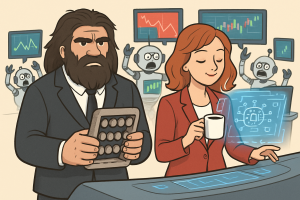
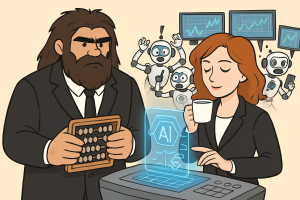
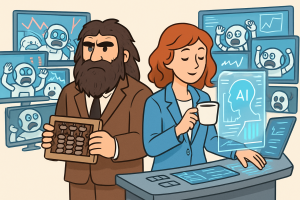
Marcus — 29, software engineer in Seattle — spent three months building the perfect expense tracking app. Clean interface, smart categorization, seamless bank integration. He was proud of the code. Clean, efficient, exactly what users needed.
Then ChatGPT built the same app in 47 minutes.
Not similar. The same. Better, actually — it included features Marcus hadn’t even thought of. The AI didn’t just replicate his work. It made it obsolete before he could even launch.
Marcus stared at his laptop screen that Tuesday morning, watching three months of nights and weekends evaporate. But here’s what really hit him: his day job was next.
The same skills that took him four years to learn, AI was mastering in microseconds. And unlike Marcus, AI never got tired, never demanded raises, never took vacation days.
I Made The Same Mistake Marcus Did
Look, I get it. I spent years thinking my skills were my security.
Back in 2019, I was convinced that learning Python would future-proof my career. I’d stay ahead of automation by becoming the one who built the automation. Smart, right?
Wrong.
I was still thinking like labor. Better labor, smarter labor, but labor nonetheless. I was upgrading my ability to create value for someone else. Meanwhile, the people getting rich weren’t the ones writing better code — they were the ones owning the platforms where code got written.
Here’s what I should have been asking: What if instead of learning to build apps faster, I bought shares in the companies that would eventually replace app builders?
That question changes everything about AI economics.
Capital Doesn’t Care About Your Resume
AI economics works differently than any previous technological shift. Here’s why.
When cars replaced horses, people found new jobs. When computers replaced typewriters, people learned new skills. The pattern held: technology eliminated some work but created different work.
AI breaks that pattern.
AI doesn’t just replace manual labor or routine tasks. It replaces thinking. Pattern recognition. Analysis. Creation. The very skills we thought made us irreplaceable.
But here’s the twist that most people miss: AI doesn’t replace ownership.
The radiologist whose job gets automated doesn’t lose his money if he owns shares in the AI company doing the automating. The graphic designer whose work gets replaced by AI image generation keeps getting paid if she owns stock in Adobe or Nvidia.
Think about that.
Your job disappears, but your capital appreciates. The same technology that destroys your labor income can multiply your investment returns — if you own the right assets.
What AI Actually Creates (Hint: It’s Not Jobs)
Every AI breakthrough creates massive amounts of capital for someone. The question is: will it be you?
When OpenAI’s ChatGPT launched, it didn’t create millions of new jobs. It created billions in market value for Microsoft, Nvidia, and other AI infrastructure companies. The wealth didn’t trickle down to workers — it concentrated among capital owners.
This is AI economics in action. AI creates efficiency, productivity, and profit. But those benefits flow to whoever owns the AI systems, not to whoever used to do the work those systems now handle.
My friend Sarah — 31, marketing manager in Austin — learned this the hard way. She spent six months learning how to prompt AI tools to write better copy. Got really good at it, too. But her company didn’t give her a raise for being more efficient. They just cut two positions from her team.
Sarah added value. The company captured it. The AI shareholders profited from it.
She optimized herself out of future raises while making someone else rich.
The Capital Question That Changes Everything
Here’s the question that separates AI winners from AI casualties: Instead of asking “How can I use AI better?”, ask “What AI demand can I own?”
Every time you use ChatGPT, you’re sending demand to OpenAI. Every time you run code through GitHub Copilot, you’re sending demand to Microsoft. Every time your company buys AI infrastructure, that demand flows to Nvidia, AWS, or Google Cloud.
Most people experience AI as users. They learn to prompt it better, integrate it into their workflow, become more efficient workers. But they never flip the relationship.
They never become owners of the demand they’re creating.
This is exactly what happened during the internet boom. Millions of people learned HTML, became web designers, built e-commerce sites. They added tremendous value. But the real wealth went to whoever owned Amazon, Google, and Microsoft stock.
The pattern repeats with AI, just faster and more concentrated.
Why Your AI Skills Are Making Someone Else Rich
Every hour you spend learning to use AI better, you’re becoming a more efficient worker. That’s not bad — it might save your job for a while. But it’s not building capital.
Capital isn’t created by using tools better. Capital is created by owning the tools everyone else has to use.
When Marcus finally understood this, he made a different choice. Instead of building another app, he took the money he would have spent on development tools and AWS hosting — about $2,000 — and bought shares in the companies building the infrastructure he used to depend on.
Six months later, his app idea was worthless. His AI infrastructure stocks were up 34%.
He stopped trying to compete with AI and started owning it instead.
The Two Classes AI Is Creating
AI economics is splitting the world into two groups: those who own AI capital and those who compete with AI labor.
Group 1 owns shares in companies that build, host, or profit from AI systems. When AI gets better, their wealth grows. When AI replaces workers, their dividends increase. They benefit from every efficiency gain.
Group 2 tries to stay relevant by learning AI skills faster than AI learns their jobs. It’s a race they can’t win permanently.
The cruel irony? Group 2 often works harder, learns more, adapts faster. But Group 1 gets richer.
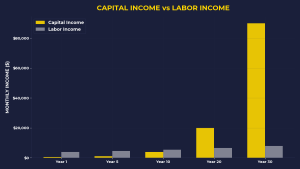
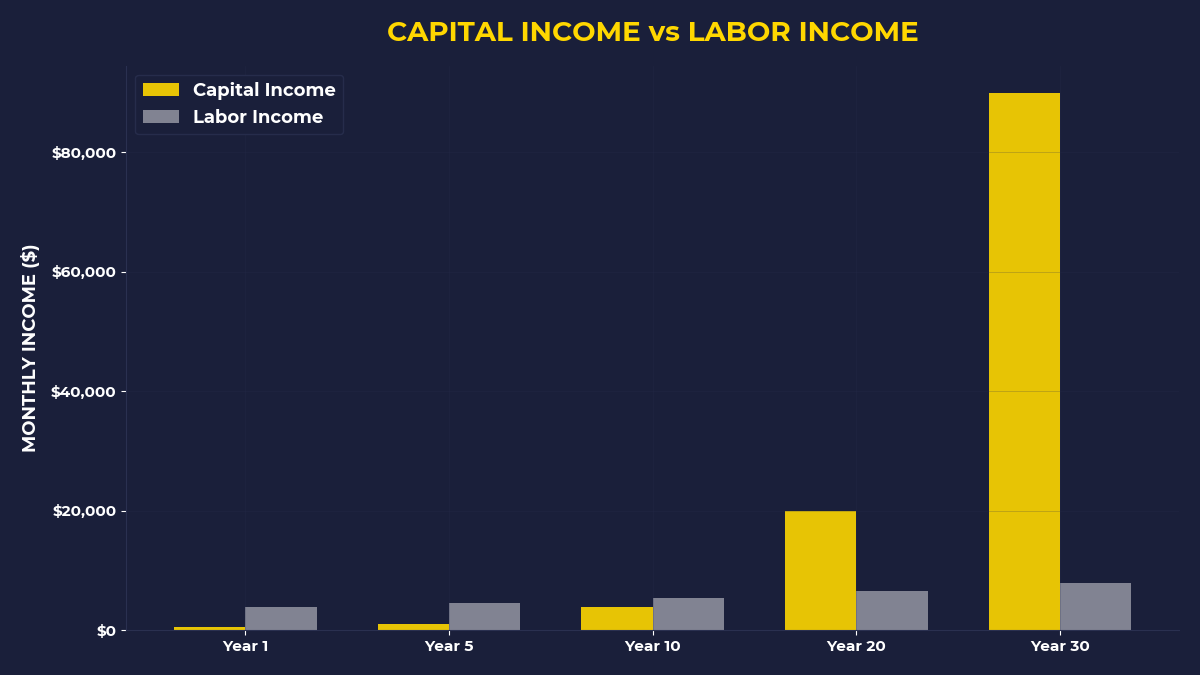
Why? Because capital multiplies while labor just adds up.
When you own shares in an AI company, every improvement in that company’s technology multiplies across millions of users. Your returns compound automatically. When you learn AI skills, you can only apply them during the hours you work.
Your upside is capped by your time. Capital’s upside is unlimited.
What To Buy While Everyone Else Learns Prompts
If you’re someone who sees where AI economics is heading — toward extreme concentration of wealth among capital owners — you still have time to switch sides.
While everyone else is learning to chat with AI more effectively, you can be buying pieces of the companies they’re chatting with.
This doesn’t mean you need to pick individual AI stocks or predict which specific company will dominate. You can own broad exposure to the AI infrastructure that everything else depends on.
The companies that provide the chips, the cloud computing, the data storage, the software frameworks — these are the toll roads of the AI economy. Every AI application pays them, directly or indirectly.
But here’s the key: you have to buy before your job gets automated, not after. Once AI replaces your income, you won’t have capital to invest. The time to build AI capital ownership is while you still have labor income to convert.
The One Thing To Remember
AI doesn’t care about your skills, your experience, or how hard you work. It only cares about demand — who owns it and who creates it. The people getting rich from AI aren’t the ones using it best; they’re the ones collecting money every time someone else uses it. While everyone else is learning to prompt AI better, smart money is buying the systems that process those prompts.
- Open a brokerage account this week and buy $100 worth of AI infrastructure ETFs — before you spend another hour learning AI prompts
- Calculate 10% of your next paycheck and invest it in companies that profit when AI gets adopted, not companies that get disrupted by it
- Stop asking “How can AI make me more productive?” and start asking “What AI demand can I own a piece of?”
🎬 Prefer watching? Check out the video version on YouTube:
👉 https://www.youtube.com/@PrimalContrarian
Subscribe for daily insights on capital, wealth, and contrarian thinking.