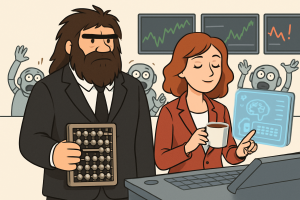
Marcus — 29, software engineer at a mid-sized tech company in Denver — called me three weeks ago, voice tight with confusion. “My company just bought an AI tool that does what our entire junior dev team used to do,” he said. “Management keeps saying it’s about ‘efficiency,’ but I can see the writing on the wall.”
He paused. “Here’s what I don’t get — if AI is going to eliminate jobs, why are tech stocks hitting all-time highs?”
That question hit me like a cold slap. Marcus was staring at the biggest wealth transfer in human history and didn’t even realize it.
I Was Asking the Wrong Questions Too
Look, I made the exact same mistake two years ago when ChatGPT launched. I spent months obsessing over which jobs AI would kill, which skills would become obsolete, whether I needed to learn prompt engineering.
Completely wrong focus.
While I was worrying about AI taking my job, people who owned AI companies were becoming billionaires. While I was learning how to use AI tools better, smart investors were buying shares in the companies making those tools.
Here’s the thing I finally understood: **AI doesn’t just create or destroy jobs. AI creates capital.**
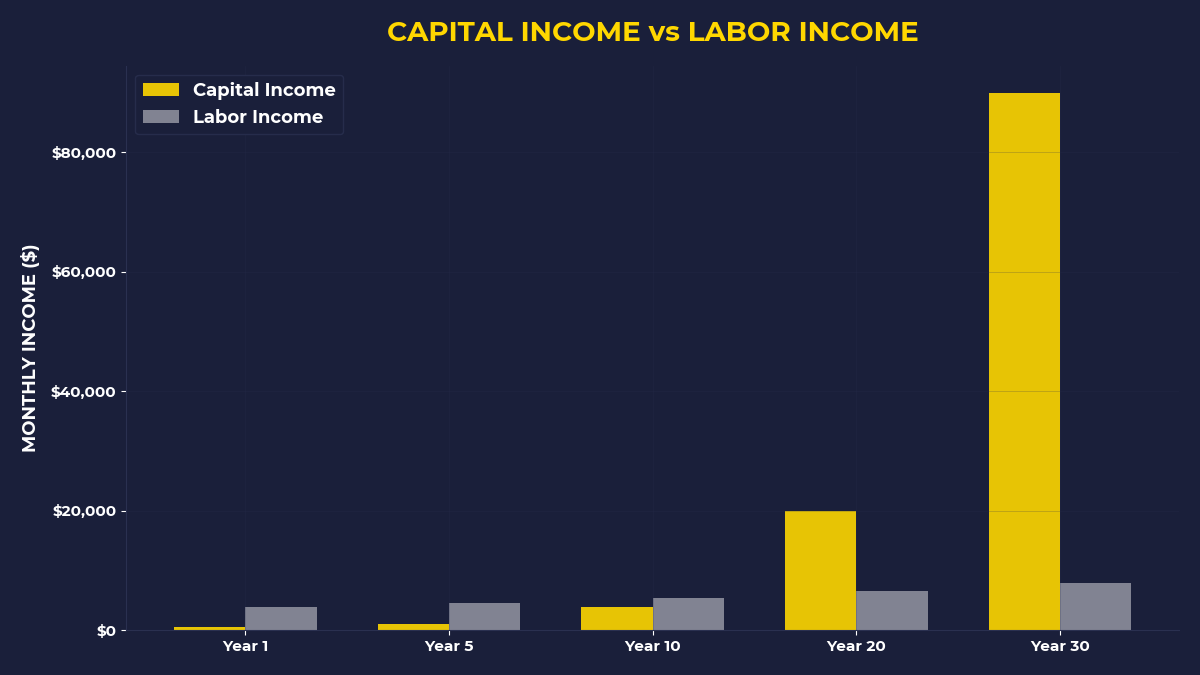
And capital, as I’ve learned the hard way, is the difference between working for money and having money work for you.
The Split Nobody’s Talking About
Every technological revolution creates two groups. The railroad boom created railroad barons and railroad workers. The internet created tech billionaires and everyone else with email jobs.
AI is doing the same thing, but faster and more extreme.
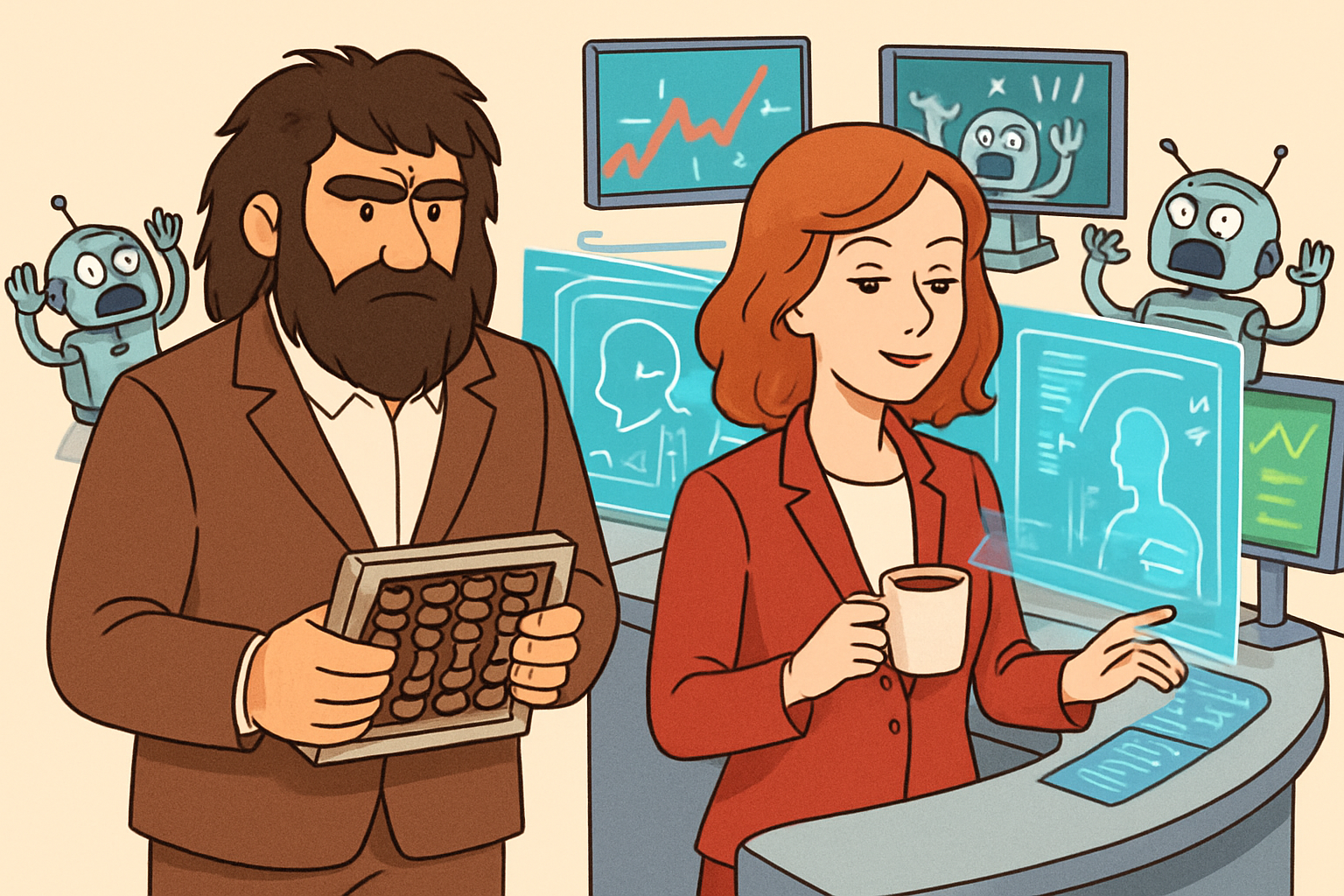
On one side: People who own AI-powered businesses, AI infrastructure, AI-enhanced real estate, shares in AI companies. They’re watching their assets compound as AI amplifies demand for what they own.
On the other side: People who use AI tools to do their jobs better, or worse, people whose jobs get replaced by AI tools owned by someone else.
Which side do you think wins in the long run?
Marcus represents 97% of people. Smart, skilled, completely focused on the wrong question. He’s asking “How do I stay employed in an AI world?” instead of “What AI-related assets should I own?”
Why AI Is Different From Every Other Technology
I used to think technology just made us more productive. You know, computers helped accountants work faster, smartphones helped salespeople stay connected, that sort of thing.
But AI doesn’t just make workers more productive. **AI replaces entire categories of human thinking.** And thinking, unlike manual labor, scales infinitely once it’s digitized.
Think about that for a second.
When a factory installs robots, it still needs supervisors, maintenance workers, quality control. When a company deploys AI that writes code, designs graphics, or analyzes data, what’s left? A few humans to manage the AI and everyone else becomes… unnecessary.
The brutal economics: AI gets better and cheaper every month. Human workers get more expensive and have bad days.
Companies will choose AI. Every single time.
But here’s the part that matters for people like us: someone owns those AI systems. Someone collects the profits when AI replaces human workers. Someone gets rich when AI makes businesses more efficient.
The question isn’t whether this will happen. The question is whether you’ll be an owner or a worker when it does.
The Golf Ball Lesson Applied to AI
I keep coming back to Warren Buffett’s childhood golf ball business because it explains AI economics perfectly.
Young Warren collected lost golf balls and sold them for $6 per dozen. He could have spent his whole life picking up golf balls, getting really good at finding them, maybe even teaching other kids to find them better.
Instead, he used the money to buy assets that generated cash while he slept.
Most people are thinking about AI like Warren picking up golf balls. “How can I use AI to do my job better?” “What AI skills should I learn?” “How can I become indispensable in an AI world?”
These aren’t terrible questions, but they’re worker questions, not owner questions.
Owner questions sound different: “What AI-enhanced businesses should I buy?” “Which companies profit when AI adoption accelerates?” “How do I own a piece of the AI revolution instead of just working in it?”
Here’s what I told Marcus, and what I wish someone had told me earlier: **Every month you spend trying to AI-proof your job is a month you’re not building ownership of AI-powered assets.**
The Compound Effect You Can’t See Yet
AI creates a compound effect that most people completely miss. It’s not just about replacing jobs — it’s about amplifying the returns to capital.
When AI makes a restaurant chain 30% more efficient, who benefits? The workers? The workers get laid off. The customers? Maybe they get slightly lower prices. The shareholders? They get 30% higher profits that compound forever.
When AI helps a real estate company manage properties with fewer humans, rents don’t go down. Profits go up. Shareholders win again.
When AI makes manufacturing cheaper, consumers might save a few bucks. Owners capture the productivity gains.
This isn’t speculation. It’s already happening. The companies deploying AI successfully are seeing profit margins expand while their wage costs shrink. That’s pure capital appreciation.
And it accelerates. Better AI leads to higher profits, higher profits fund better AI, better AI replaces more workers, more automation leads to even higher profits.
The flywheel spins faster every quarter.
What This Means for Your Money Right Now
I remember sitting in my apartment two years ago, watching AI demos and feeling this knot in my stomach. Everything was changing so fast, and I felt like I was falling behind.
Then I realized something simple: I was thinking like an employee instead of an owner.
Employees worry about being replaced. Owners profit when workers get replaced.
You don’t need to become an AI expert. You don’t need to start an AI company. You don’t need to learn to code or understand neural networks.
You need to own pieces of businesses that profit when AI adoption accelerates.
This could be shares in obvious AI companies. It could be real estate in cities where AI companies cluster. It could be businesses that become more valuable when they need fewer employees.
The key insight: **AI doesn’t just create new wealth. It transfers existing wealth from labor to capital.**
From people who work to people who own.
The Question That Separates Owners From Workers
Are you someone who sees change coming and immediately thinks about adapting your skills? Or someone who sees change coming and immediately thinks about owning the change?
Both instincts make sense. But only one builds lasting wealth.
Marcus called me back yesterday. He’s been thinking about our conversation. “I keep seeing AI tools that replace what I do,” he said. “But now I’m asking a different question: who owns these tools? And can I buy shares in those companies?”
Now he’s asking the right question.
The AI revolution isn’t coming. It’s here. Every month you wait to think like an owner instead of a worker is a month of compound growth you’re giving away to people who figured this out earlier.
The One Thing to Remember
**While everyone else debates whether AI will take their job, smart money is buying ownership stakes in the companies deploying that AI.** The wealth transfer isn’t theoretical—it’s happening in earnings reports every quarter. Companies with successful AI integration are seeing profit margins expand as labor costs shrink. Those gains don’t go to workers or consumers. They go to shareholders.
Your move:
Identify three companies in industries you understand that are successfully using AI to reduce costs
Before you spend money on AI training or tools for your job, buy shares in companies that profit from AI adoption
Stop asking “How do I compete with AI?” Start asking “How do I own a piece of the AI economy?”
🎬 Prefer watching? Check out the video version on YouTube: