Lauren — 31, marketing manager in Chicago — had been watching a single index fund for six months. She’d done the research. She’d read the articles. She had $4,200 sitting in a savings account earning 0.4% annually, and she knew exactly what she wanted to do with it. Then March 2020 happened. The market dropped 34% in 33 days, and Lauren did what every rational, research-armed person does when the world seems to be ending.
She did nothing.
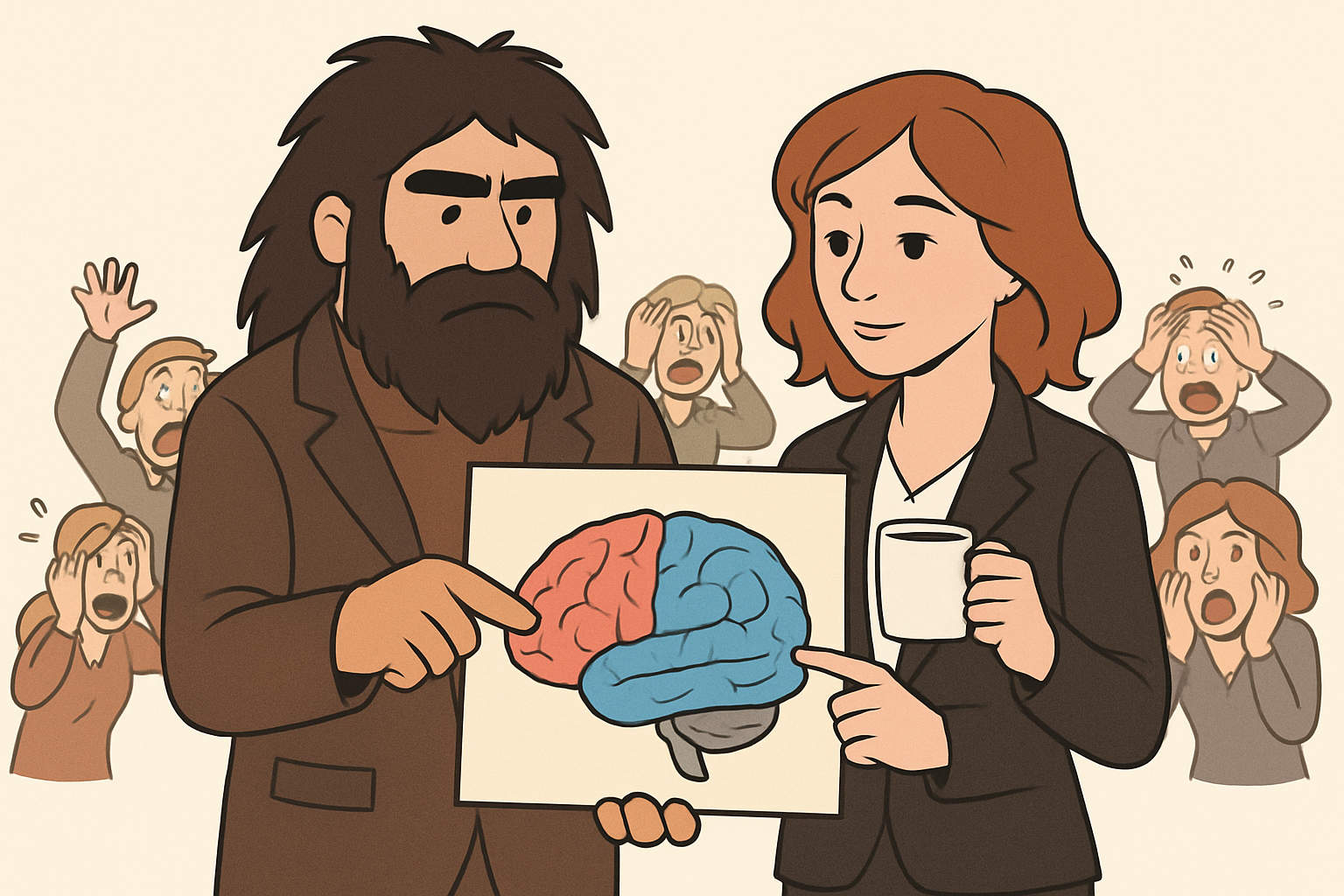
Not just nothing — she actually moved her savings into a second savings account, because it felt safer to have it in two places. The market recovered in eight months. By October 2020, her $4,200 would have become roughly $5,900 if she’d bought in at the bottom. Instead, she had $4,217 and change. The difference wasn’t knowledge. Lauren knew what to do. The difference was a 200,000-year-old brain doing exactly what it was built to do: avoid the thing that feels like a predator.
That’s behavioral finance, stripped of its textbook clothes. It’s the study of why we consistently, predictably, almost comically do the wrong thing with money — not because we’re stupid, but because we’re human.
I Understand Lauren Because I Was Worse
Let me be honest. When I first started paying attention to markets, I was 26 and working a job that paid me just enough to feel like I was making progress. I had maybe $800 in a brokerage account. I’d bought three shares of something — I don’t even remember what — and watched it go up 18% over four months. I felt like a genius. Then it dropped 9% in a week and I sold everything, because losing that gain felt physically unbearable in a way that I cannot fully describe.
That’s called loss aversion. Behavioral economists have put a number on it: psychologically, losing $100 hurts roughly twice as much as gaining $100 feels good. I didn’t know that at 26. I just knew I felt sick, and I wanted it to stop.
What I sold, by the way, was a broad market fund. Between 2009 and 2024, the S&P 500 returned an average of about 15.9% annually. I sold in 2013. The math of what I left on the table still makes me wince.
Here’s the thing. Knowing about loss aversion didn’t automatically fix me. Understanding a trap and avoiding a trap are two different sports. But understanding it did something crucial: it made me suspicious of my own feelings at the exact moments my feelings were loudest.
Your Brain Has One Job, and It’s Not Building Wealth
What does your brain actually want from you?
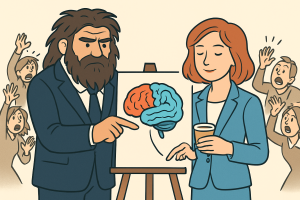
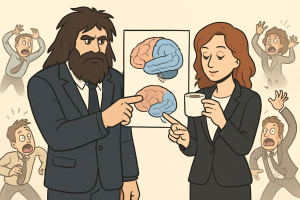
Survival. That’s it. It wants you alive at the end of the day. In 50,000 BC, that meant running from things that looked dangerous, hoarding food when you had it, and sticking with the group because alone was death. Every single one of those instincts maps directly onto a terrible financial behavior.
Running from danger = panic-selling during market drops. Hoarding when you have it = spending your raise immediately instead of investing it. Sticking with the group = buying whatever everyone else is excited about, right at the peak of the excitement.
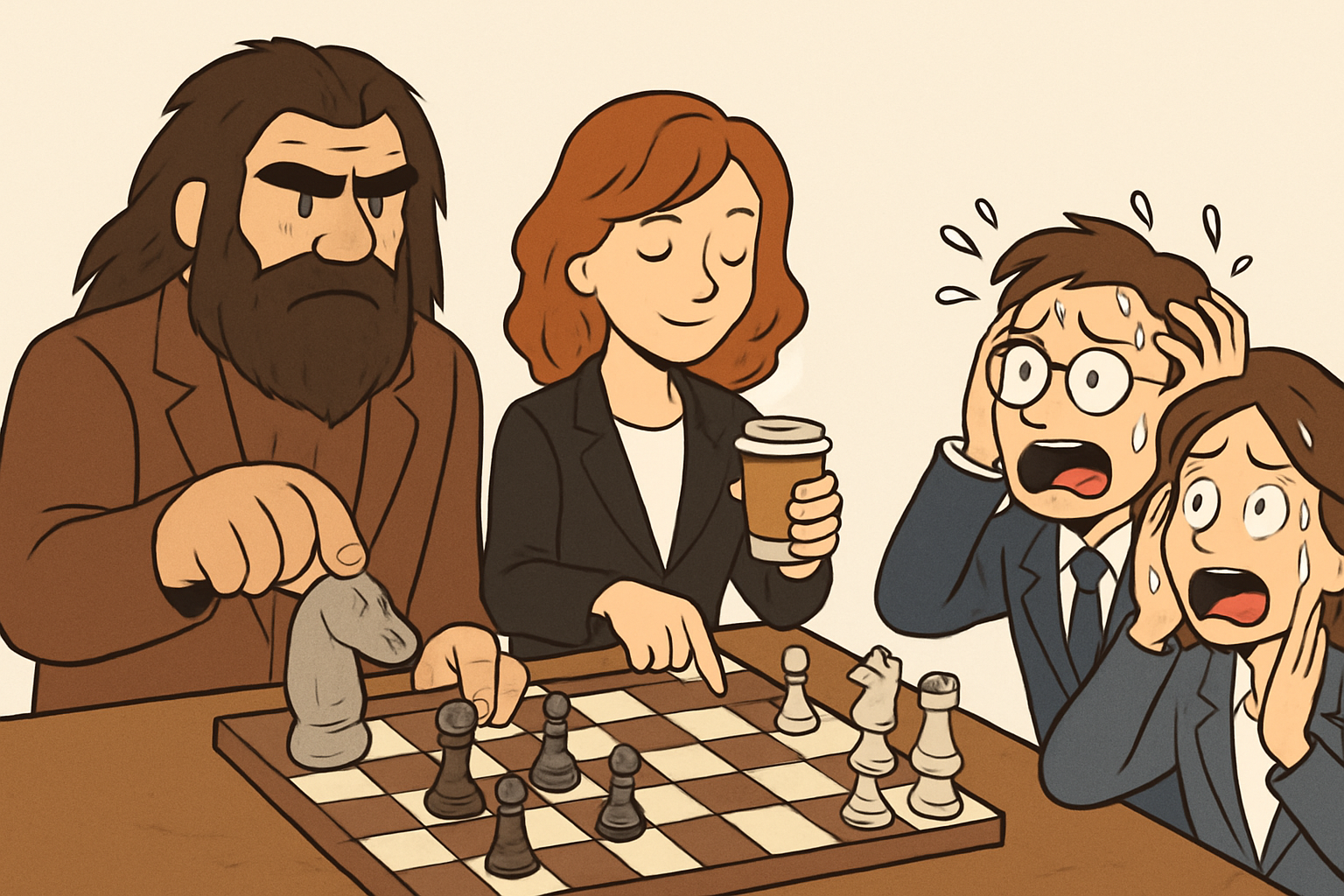
There’s a concept called “herding behavior” — it’s what happens when 10 million Laurens all watch the same news channel on the same bad night and all move their money to the same “safe” place at the same time. The irony is that the crowd moving together is usually what creates the actual danger. They sell at the bottom. They buy at the top. They do this in every single market cycle, decade after decade, and they do it because being wrong together feels safer than being right alone.
The bottom 50% of American households own less than 2% of all stocks. That’s not mostly a story about income. It’s partly a story about behavior — about who stayed in when it felt awful, and who got out when it felt smart.
Lauren’s Second Chapter
About eight months after her March 2020 freeze, Lauren called a friend who’d been investing for a while. Not a finance person — just someone who’d been quietly buying index funds since 2015 and hadn’t touched them. Lauren wanted to understand how her friend had held on.
The friend said something that stuck: “I stopped thinking of it as money. I started thinking of it as a tiny ownership stake in every decent company in America. Companies keep selling things. People keep buying things. The number bouncing around on my screen didn’t change that.”
That’s a reframe. And it sounds simple, almost stupid simple. But here’s what it actually does: it moves your brain from “am I losing money right now?” — which triggers every panic circuit you own — to “do I still own a piece of something people need?” That question has a different answer, almost always.
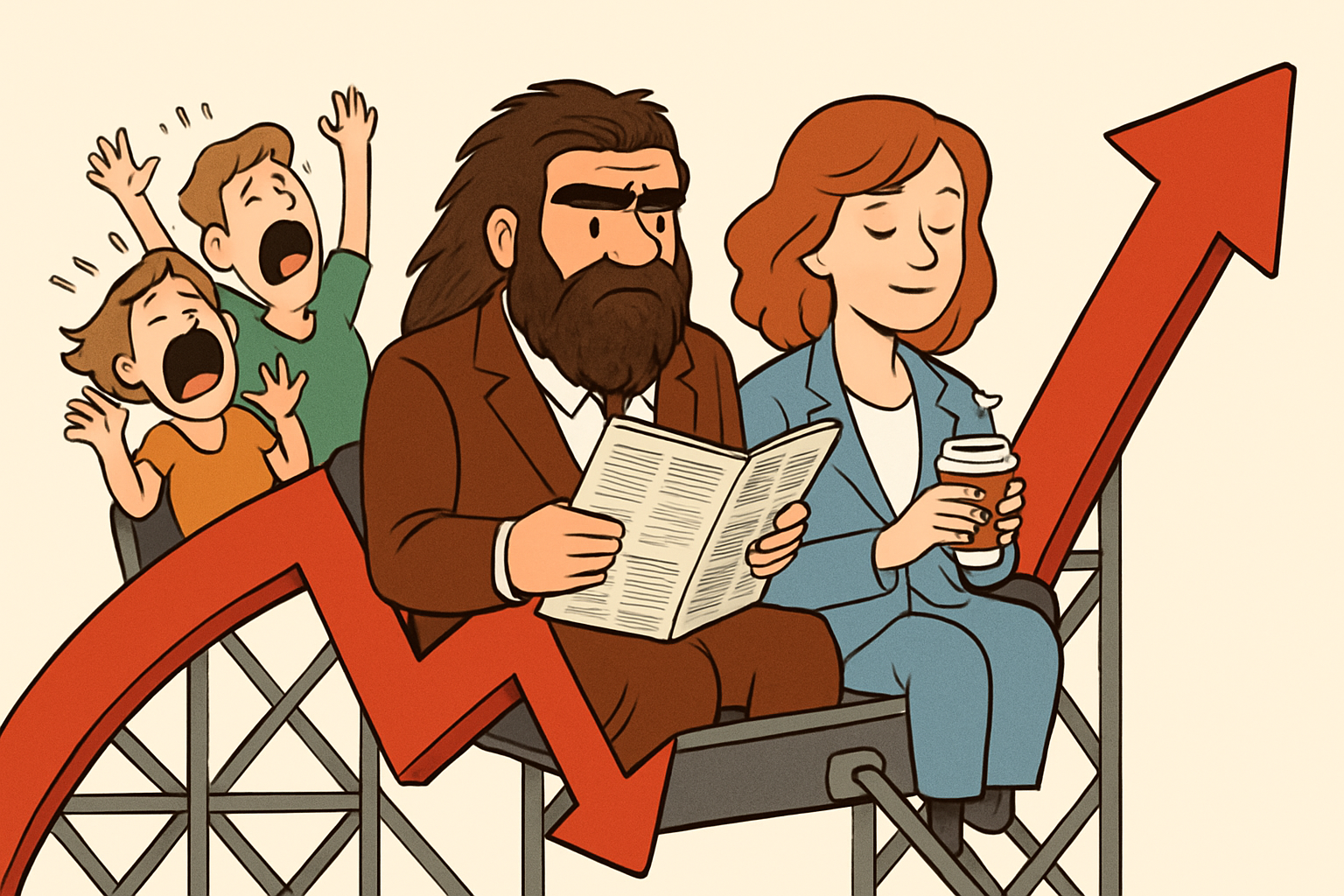
Lauren started buying in January 2021. Not the perfect moment. Not the bottom. But she bought $300 a month for the next two years, total of about $7,200 in, and she didn’t sell when it dipped again in 2022. She built the one skill that behavioral finance tells us most people never actually develop: the ability to feel the fear and not act on it.
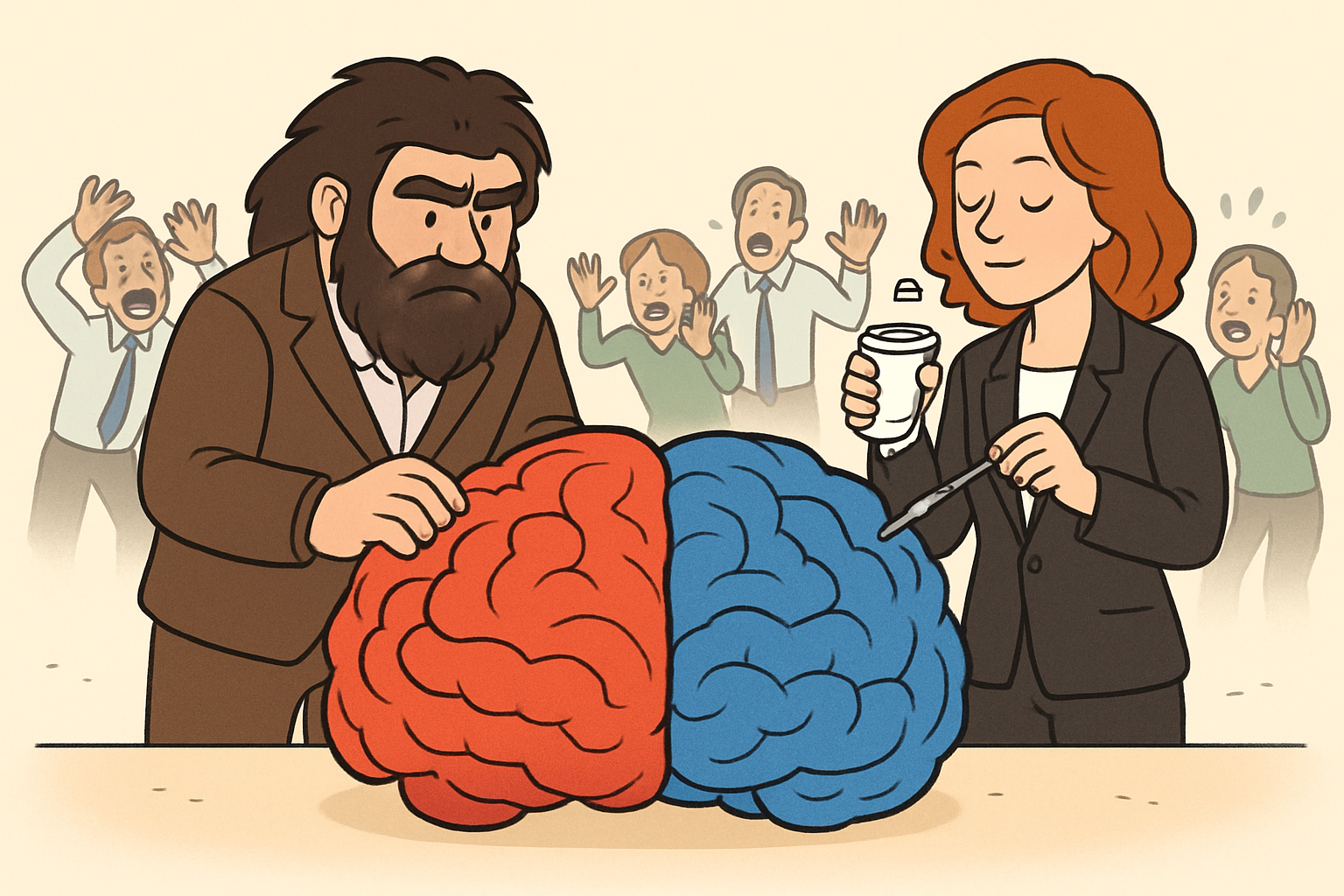
Wild, right? The skill isn’t picking the right stock. The skill is managing your own nervous system.
The Behavioral Trap Nobody Talks About
There’s a less-discussed version of this problem that I think is actually more damaging than panic-selling. It’s what I’d call “productive delay.” It’s when you spend three years reading about investing, listening to podcasts, following finance accounts, feeling very informed — and buying nothing.
I did this too. I went through a phase from about age 28 to 31 where I consumed an enormous amount of financial content and owned almost no actual assets. I could have a conversation about bond duration. I understood what a P/E ratio was. I had opinions about the Fed.
I had $1,100 in actual invested capital.
What was happening? A bias called “analysis paralysis,” wrapped inside another one called “optimism bias” — the belief that the right moment, the right information, the right clarity was just around the corner. It never arrives. Because it’s not a real thing. It’s just your brain inventing a reason to postpone the discomfort of commitment.
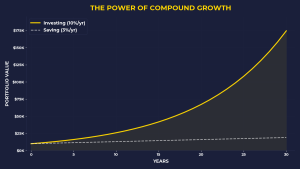
Every month you wait is a month of compounding you give up. At a historically normal 10% annual return, $500 invested today is worth roughly $870 in six years. If you wait three years to invest that same $500, you get to about $665 in six years from now. The delay cost you $205 — on a single $500 investment. Scale that across years and thousands of dollars and the number gets genuinely painful to look at.
What to Actually Do About a Brain That’s Wired Wrong
This is where most behavioral finance content turns into a listicle and loses me. “Be aware of your biases!” Cool. “Diversify your portfolio!” Great. Thanks. Super helpful.
Let me tell you what actually worked for me, and for people I’ve watched figure this out.
The first thing is automation. Not discipline — automation. If your $200 monthly investment requires a conscious decision every month, your brain will find a month to veto it. The market’s down a little, a bill came in weird, you’re tired, you’ll do it next month. Automation removes the decision. The money moves before your feelings have a chance to weigh in. This isn’t a hack. It’s the most important practical thing I know about behavioral finance.
The second is a reframe I already mentioned, but I want to be more specific about it. Stop thinking about the dollar value on your screen. That number is what your primitive brain watches. Instead, track units — how many shares, how many fractions of an ETF, how many claims on real cash flows generated by real businesses. The number of units almost never goes down (assuming you’re not selling). That’s what you want your brain monitoring.
The third is the hardest. You need to make at least one decision that feels wrong. Not reckless — wrong. Buy when the news is terrible. Hold when your gut is screaming. Do one thing, deliberately, that violates your instinct. Not because the instinct is always wrong, but because you need to train yourself to question it. Athletes call this “comfortable being uncomfortable.” Capital owners call it Tuesday.
If You’re Someone Who Already Knows What to Do
If you’ve read this far, you’re not someone who lacks information. You know you should invest. You know time matters. You know waiting is expensive. You’ve probably known all of this for a while.
You’re someone whose problem isn’t knowledge. It’s the gap between knowing and doing — a gap that behavioral science has documented exhaustively, and that your particular brain has widened with a very specific combination of fears that are yours alone.
Maybe it’s Lauren’s freeze — the world looks dangerous and you go still. Maybe it’s my delay — you keep learning instead of acting. Maybe it’s something else: guilt about having money to invest when others don’t, or the feeling that you don’t deserve wealth, or the superstition that making a financial move will jinx something good in your life. I’ve heard all of these. They’re all just your brain doing its job. The job is not your job.
Your job is to own something.
The One Thing To Remember
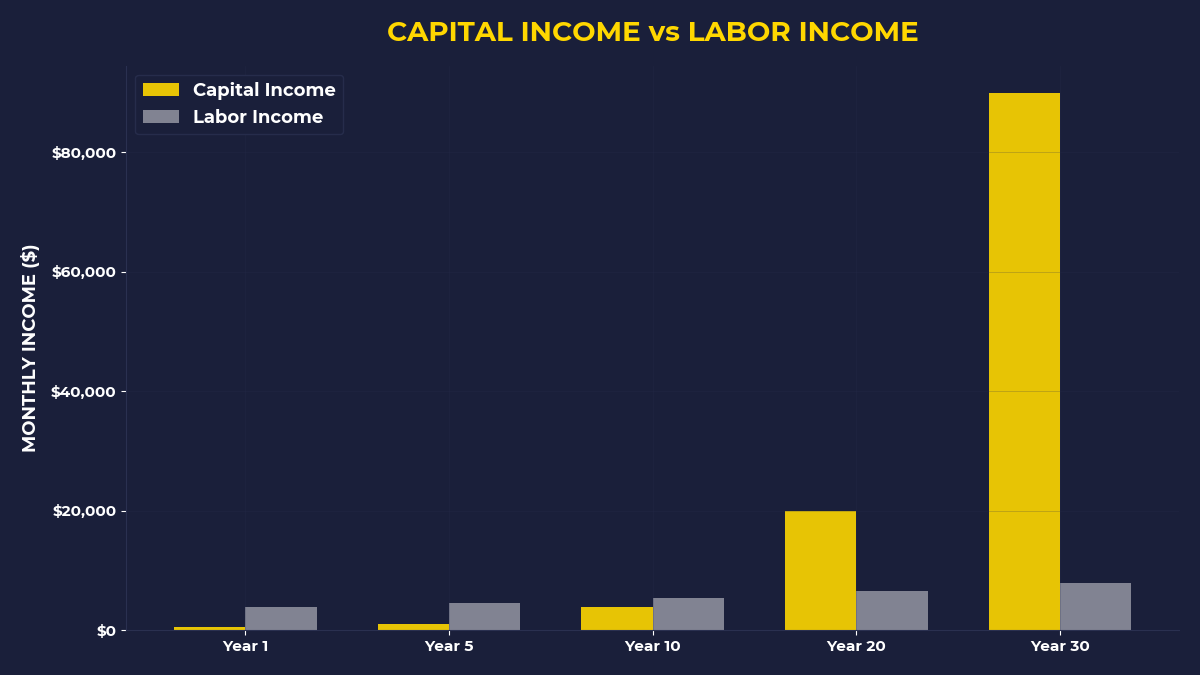
Behavioral finance isn’t a warning label — it’s a map of the battlefield between you and your own future. Every emotional instinct you have about money was designed to keep a prehistoric human alive, not to build wealth in a world where the biggest danger isn’t a predator but a savings account paying 0.4% while inflation eats your purchasing power quietly, year after year. Lauren didn’t fail because she was weak. She failed because her brain worked perfectly and the world had changed around it. Once she understood that, she stopped fighting herself and started working the system instead of against it.
Today, this week: Set up one automatic recurring investment — even $50 a month into a broad index fund. Do it now, before you think about it more. Remove the monthly decision from your brain’s reach entirely.
Next time the market drops: Write down what you feel before you do anything. Fear? The urge to sell? Sit with it for 48 hours. Behavior that survives 48 hours of scrutiny is usually worth doing. Behavior that can’t wait 48 hours is usually panic.
This month: Reframe what you’re buying. You’re not buying a ticker symbol that goes up and down. You’re buying a fractional ownership stake in businesses that collect money from people buying coffee, paying rent, streaming shows, and filling up gas tanks — every single day, regardless of what the number on your screen says.
🎬 Prefer watching? Check out the video version on YouTube: