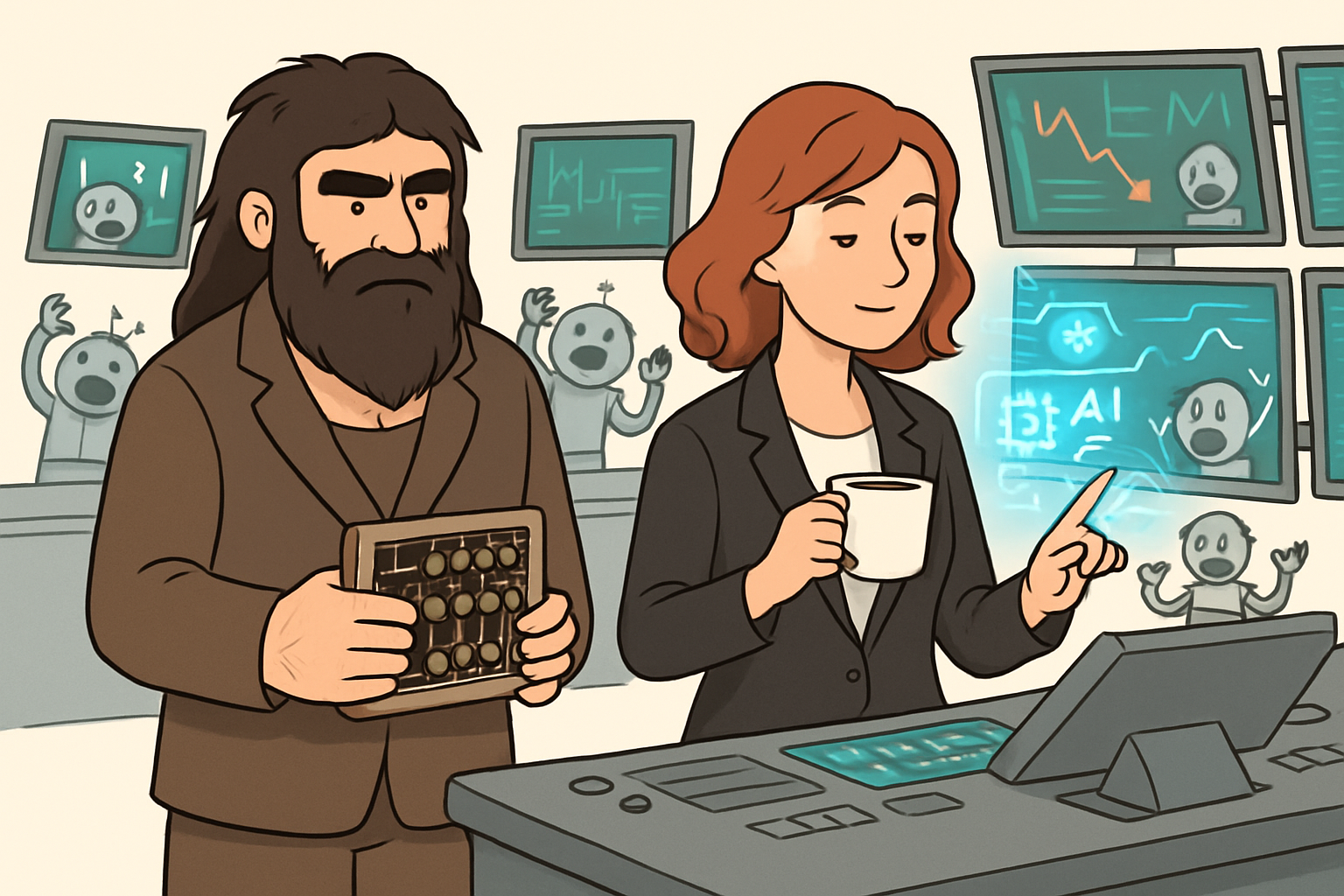
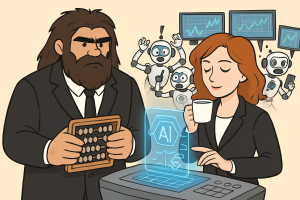
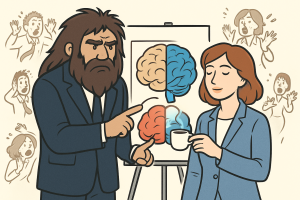
Marcus — 31, marketing manager in Denver — watched his junior colleague get promoted over him last Tuesday. The reason? She’d automated half their department’s workflow using AI tools while Marcus was still manually creating campaign reports.
That night, Marcus called me. “I need to learn AI,” he said. “I’m falling behind.”
Here’s what Marcus didn’t understand yet. Learning AI tools won’t save him. Everyone’s learning AI tools. The people who get rich from AI won’t be the ones who use it best. They’ll be the ones who own it.
And 99% of people — smart people like Marcus — will completely miss this distinction.
I Made the Same Mistake With the Internet
I know exactly how Marcus felt because I lived through this once before.
In 1999, I was 27 and building websites for local businesses. I thought I was riding the tech wave. I charged $3,000 per site and felt like a digital pioneer. I was learning HTML, CSS, JavaScript — all the “essential” skills.
Meanwhile, my college roommate Jeff was buying shares of companies I’d never heard of. Amazon. Google. Microsoft.
“Why don’t you just learn web development?” I asked him. “That’s where the money is.”
Jeff looked at me like I was insane. “Dude, I don’t want to build websites. I want to own the companies that everyone else builds websites for.”
Twenty-five years later, Jeff owns a house in Malibu. I’m still good at building websites.
Capital Versus Labor: The AI Edition
Here’s what’s happening right now with AI, and why 99% of people are positioning themselves on the wrong side.
AI creates two types of economic value: capital and labor.
**AI labor** is using ChatGPT to write emails faster. Building GPT-powered apps. Automating your workflow. Learning prompt engineering. This is what Marcus wants to do. This is what everyone’s racing to do.
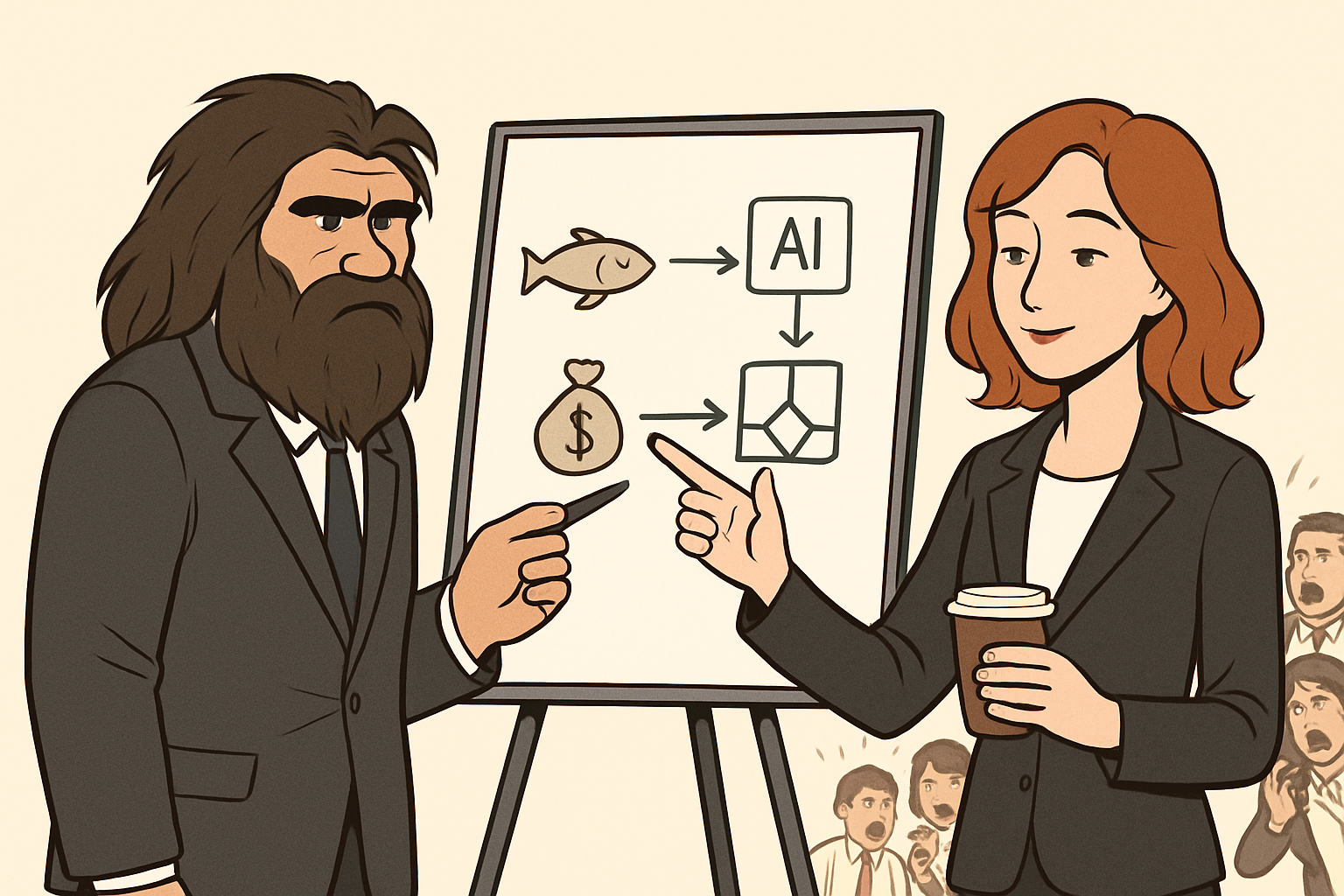
**AI capital** is owning the companies that create the AI systems everyone else uses.
Think about that for a second. Every time Marcus uses ChatGPT to write a report, he’s generating revenue for OpenAI’s investors. Every time someone uses an AI tool to get better at their job, they’re literally paying the people who own the AI infrastructure.
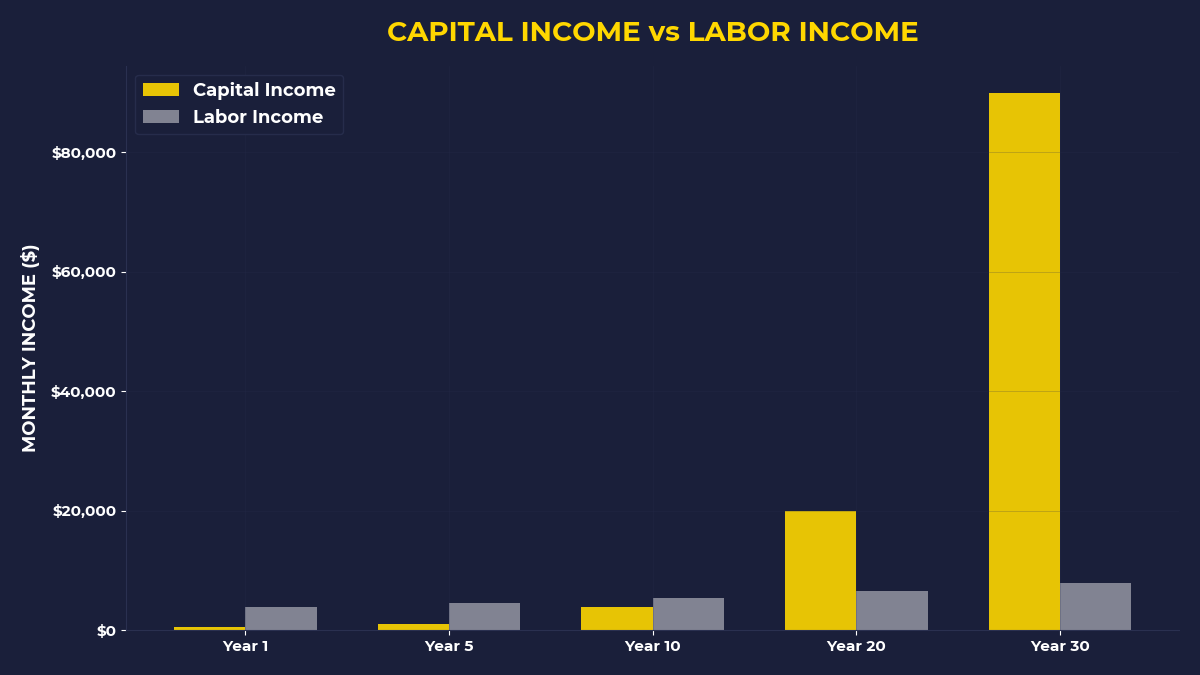
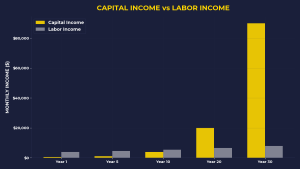
Labor adds. Capital multiplies.
The Demand Storage Revolution
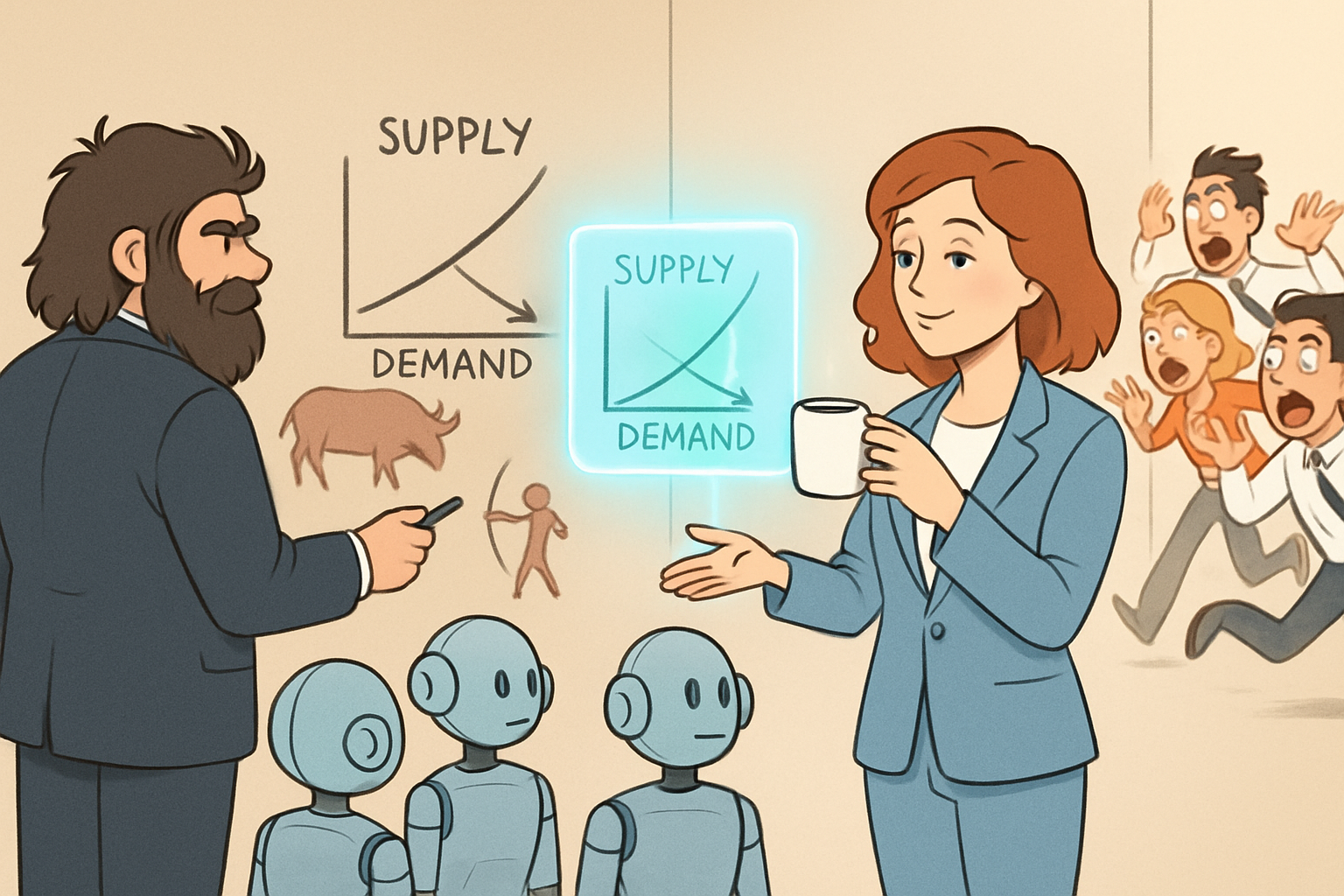
Why does this happen? Because capital isn’t money sitting in a bank account. Capital is stored demand.
When people need what you own, you have capital. When you need what other people own, you’re sending them your capital.
Right now, everyone needs AI. The demand is explosive and growing every day. Marketing teams need it. Developers need it. Students need it. Writers need it. Lawyers need it.
That demand is getting stored in the balance sheets of NVIDIA, Microsoft, Google, OpenAI, Anthropic. The companies that own the infrastructure, the chips, the models, the data centers.
Marcus is trying to become better at using the tools. But every minute he spends learning to prompt ChatGPT better, he’s making OpenAI’s investors richer.
He’s choosing labor. Again.
Why Smart People Always Choose Labor
Here’s the psychological trap that catches 99% of people:
When a new technology emerges, our instinct is to ask: “What should I do with this?”
That’s the labor question. It leads to: “I should learn Python. I should build an AI app. I should become an AI consultant.”
Capital owners ask a different question: “What should I buy?”
The irony? The labor path feels safer. Learning skills feels like something you control. Buying ownership feels risky, abstract, like gambling.
But here’s what actually happens. Marcus spends two years learning AI development. By year three, better AI tools make his skills obsolete. He has to learn new skills. The cycle continues.
Meanwhile, the people who bought NVIDIA stock in 2022 are retired.
The Golf Ball Principle Meets Silicon Valley
Warren Buffett understood this at age 11. He collected lost golf balls and resold them. But here’s the part everyone misses — eventually, he hired other kids to collect the balls while he ran the operation.
He moved from labor (collecting balls) to capital (owning the collection system).
That’s exactly what’s happening with AI right now. Everyone’s rushing to be the kid collecting golf balls. The smart money is buying the golf ball collection companies.
When you learn to use AI tools, you’re the kid in the woods collecting golf balls. When you buy shares of AI companies, you own the collection system.
Every prompt someone types into ChatGPT is like a golf ball getting collected for you.
What Does AI Capital Actually Look Like?
Let me be specific. AI capital isn’t just buying random tech stocks.
AI capital is owning pieces of companies that benefit from AI demand:
• **Infrastructure companies** that provide the computing power (cloud services, chip manufacturers)
• **Platform companies** that own the AI models people actually use
• **Data companies** that control the information AI systems need to function
• **Distribution companies** that control how AI gets delivered to consumers
When you buy a share of Microsoft, you own a tiny piece of every ChatGPT conversation happening right now. When someone pays for Copilot, you get paid.
When you own NVIDIA shares, every AI training run generates revenue that flows to you.
The beautiful thing? You don’t need to understand transformer architectures or learn Python. You just need to own demand.
The $50 Test
Here’s how to know if you’re building AI capital or AI labor.
Next month, before you pay your Netflix subscription, your Spotify bill, or buy your morning coffee — move $50 into buying shares of an AI company.
If this makes you nervous because you “need” that $50 for bills, you’re living in labor mode. You’re sending your money to capital owners every month while learning skills that will be obsolete in three years.
If it feels natural because you’re buying ownership in the systems generating the demand, you’re thinking like a capital owner.
The $50 test reveals everything about your mindset.
The Two-Class Future
AI is creating two economic classes faster than any technology in history.
**Class 1:** People who own AI capital. They wake up richer every day because global AI adoption keeps accelerating. They don’t need to understand how large language models work. They just need to own pieces of companies that profit from AI demand.
**Class 2:** People who provide AI labor. They compete with each other to become better at using tools that get more capable every month. They work harder each year to stay relevant.
The weird part? Most people in Class 2 are smarter, more hardworking, and more skilled than people in Class 1.
But Class 1 asked better questions.
If You’re Someone Who Believes in Meritocracy
If you’re someone who believes hard work and skills should determine success, this probably frustrates you.
I get it. It frustrated me too when I watched Jeff get rich from buying stocks while I was learning “valuable” programming skills.
But here’s the thing about capitalism — it doesn’t reward the hardest workers. It rewards the people who own the systems that hard workers use.
The good news? You can switch sides anytime you want.
Marcus can keep learning AI tools. But he can also start buying AI companies with 10% of his paycheck.
The One Thing To Remember
AI will be the largest wealth transfer in human history. Most people will position themselves as AI laborers — competing to use tools better than everyone else. A small group will position themselves as AI capital owners — profiting every time someone else uses the tools. The difference isn’t intelligence or skills. It’s asking “What should I buy?” instead of “What should I do?”
Here’s what you can do today:
• Move $50 from your entertainment budget to buying shares of an AI infrastructure company before you spend it on anything else
• Ask yourself: “What AI systems do I use daily?” Then research who owns those systems
• Every time you use an AI tool, remember: you’re generating revenue for someone else’s capital. Start capturing some of that value yourself
🎬 Prefer watching? Check out the video version on YouTube: