I mean really looked at them. Not just the totals, but who you’re paying.
Your rent goes to a landlord. Your car payment to a bank. Your phone bill to Verizon. Your Netflix subscription to… well, Netflix. Even that morning coffee sends a few dollars to Starbucks shareholders.
Every single day, you write checks to capital owners. And at the end of the month, after everyone else gets paid, you invest what’s left.
Which is usually nothing.
The Day Everything Clicked
I used to do this too. Pay all my bills first, then scramble to save whatever remained.
Then I read about a guy who lost everything in business. His company failed due to accounting problems. He and his wife got kicked out of their house and had to live in a friend’s garage.
But here’s the weird part: even while living in that garage, facing a mountain of bills and creditors calling daily, he did something that seemed completely insane.
Every time money came in, he paid himself first.
Not the electric bill. Not the credit card company. Not even rent for a proper apartment.
Himself.
He’d take whatever income he earned and immediately buy stocks, start a small business, or acquire some other asset that could generate future income. Only after that would he figure out how to pay the bills.
And when he couldn’t cover all the bills? He’d work nights and weekends doing odd jobs — mowing lawns, cleaning houses, whatever it took.
Sounds backwards, right? Irresponsible, even.
Why This “Backwards” Approach Actually Works
Here’s what I didn’t understand back then: the order you pay bills determines whether you stay trapped or break free.
When you pay bills first, you’re operating from scarcity. You’re saying: “Let me take care of everyone else, and if there’s anything left, maybe I’ll invest it.”
But there’s never anything left.
When you pay yourself first, you’re operating from abundance. You’re saying: “I matter enough to get paid before anyone else. Now let me figure out how to cover the rest.”
This isn’t just psychology — though the psychology matters. It’s about creating pressure that forces you to find solutions.
If you pay bills first and have nothing left to invest, what pressure do you feel? None. You did what you were “supposed” to do.
If you invest first and come up short on bills, what pressure do you feel? Massive pressure to find additional income sources.
That pressure is your friend.
The Invoice System That Controls Your Life
Think about those monthly bills again. They’re not really bills — they’re invoices from capital owners.
Your landlord owns capital (real estate). Your car loan company owns capital (lending business). Netflix owns capital (content library and streaming platform).
Every month, they send you invoices for using their capital. And you pay them like clockwork.
Meanwhile, you own… what exactly?
Your job? Nope. That’s not an asset you own — it’s a service you provide.
Your skills? Maybe, but skills alone don’t pay you when you sleep.
Your savings account? That’s just cash sitting there, probably losing value to inflation.
Here’s the reality check: every dollar you send to someone else’s capital is a dollar you didn’t use to buy your own capital.
The guy living in the garage understood this. He knew that building wealth wasn’t about having money left over after expenses. It was about creating expenses that everyone else had to pay you.
What “Paying Yourself First” Really Means
Let’s be clear about what this actually looks like in practice.
Paying yourself first doesn’t mean buying stuff. It means buying ownership stakes in things that generate ongoing demand.
Could be stocks in companies that millions of people use daily.
Could be starting a small business that solves a real problem.
Could be learning skills that let you create something valuable.
The key is this: whatever you buy should be something that can pay you back over time, ideally without requiring your ongoing labor.
When people need what you own, they send you money. Just like you send money to Netflix because you need their content library.
That’s when you start receiving invoices instead of just paying them.
The Freedom vs. Survival Game
Most people are stuck playing the survival game without realizing it.
In the survival game, you work to pay bills. You wake up Monday morning, trade your time for someone else’s money, and use that money to keep playing another week.
It’s not a bad life. Millions of people live this way. But it’s not freedom.
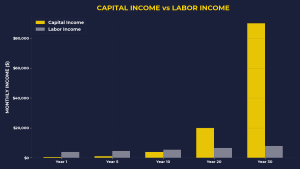
The freedom game works differently. You work to buy assets. Those assets generate income. That income covers your bills. Eventually, the assets generate enough income that your personal labor becomes optional.
Both games require effort. But they’re fundamentally different games with different rules and different outcomes.
The survival game keeps you busy. The freedom game eventually gives you time.
The survival game requires constant effort. The freedom game builds momentum that works even while you sleep.
The survival game makes you valuable to employers. The freedom game makes you independent from employers.
Paying yourself first is how you switch games.
The Creative Life Waiting On The Other Side
Here’s something most people don’t think about: what happens when you don’t have to work for survival anymore?
I’m not talking about retirement. I’m talking about having enough capital that your basic needs are covered by investment income, regardless of your age.
What do you do then?
You get to be creative instead of just productive.
Think about building a house. There’s a huge difference between laying bricks for someone else’s house versus designing and building your own.
When you’re laying bricks for someone else, you’re focused on speed, efficiency, and following instructions. It’s repetitive work that pays by the hour.
When you’re building your own house, you’re thinking about how each room will feel, what materials to use, how the whole structure fits together. You might hire others to lay the actual bricks, but you’re creating something uniquely yours.
That’s the difference between working for survival and working from freedom.
Capital gives you the option to build your own house instead of laying bricks for everyone else.
The One Thing To Remember
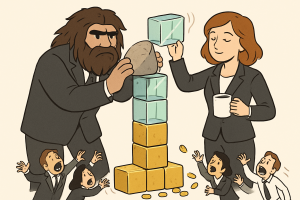
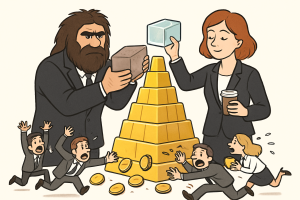
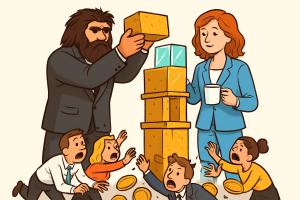
The order you pay determines who you become. Pay bills first, and you’ll always be someone who works for others. Pay yourself first, and you start building the capital that eventually works for you. Yes, it creates pressure in the short term. But pressure creates diamonds, and you need that pressure to force yourself into finding new income sources and building real assets instead of just managing expenses.
Set up automatic transfers to investment accounts before any bills get paid
Track what percentage of your income goes to building your own capital vs. paying others
When money gets tight, find additional income rather than reducing investments