The Phone Call That Changed Everything
Marcus — 29, software developer in Denver — called me at 11:47 PM on a Tuesday in March. I could hear the panic in his voice before he said a word.
“They just announced layoffs,” he said. “ChatGPT can do 70% of what our junior developers do. They’re keeping five people out of twenty-three.”
Marcus wasn’t lazy. He’d been coding for six years, pulling 60-hour weeks, learning new frameworks every few months. The guy lived and breathed software development. But here’s what hit me: Marcus had been building other people’s AI systems for years, and now those same systems were about to replace him.
The irony was almost cruel.
I Made the Same Mistake (And It Nearly Broke Me)
Look, I know exactly how Marcus felt because I was there too. Back in 2018, I spent eight months building machine learning models for a fintech startup. Twelve-hour days. Weekends. I thought I was securing my future by becoming an “AI expert.”
What I didn’t realize was this: I was just a very expensive tool in someone else’s capital-building machine.
The founders sold that company for $47 million eighteen months later. My share? A pat on the back and a LinkedIn recommendation. They owned the capital — the AI system, the data, the customer relationships. I owned nothing except my ability to show up and work.
That’s when it hit me. The AI revolution isn’t creating a skills gap. It’s creating an ownership gap.
The Two-Class System AI Is Building
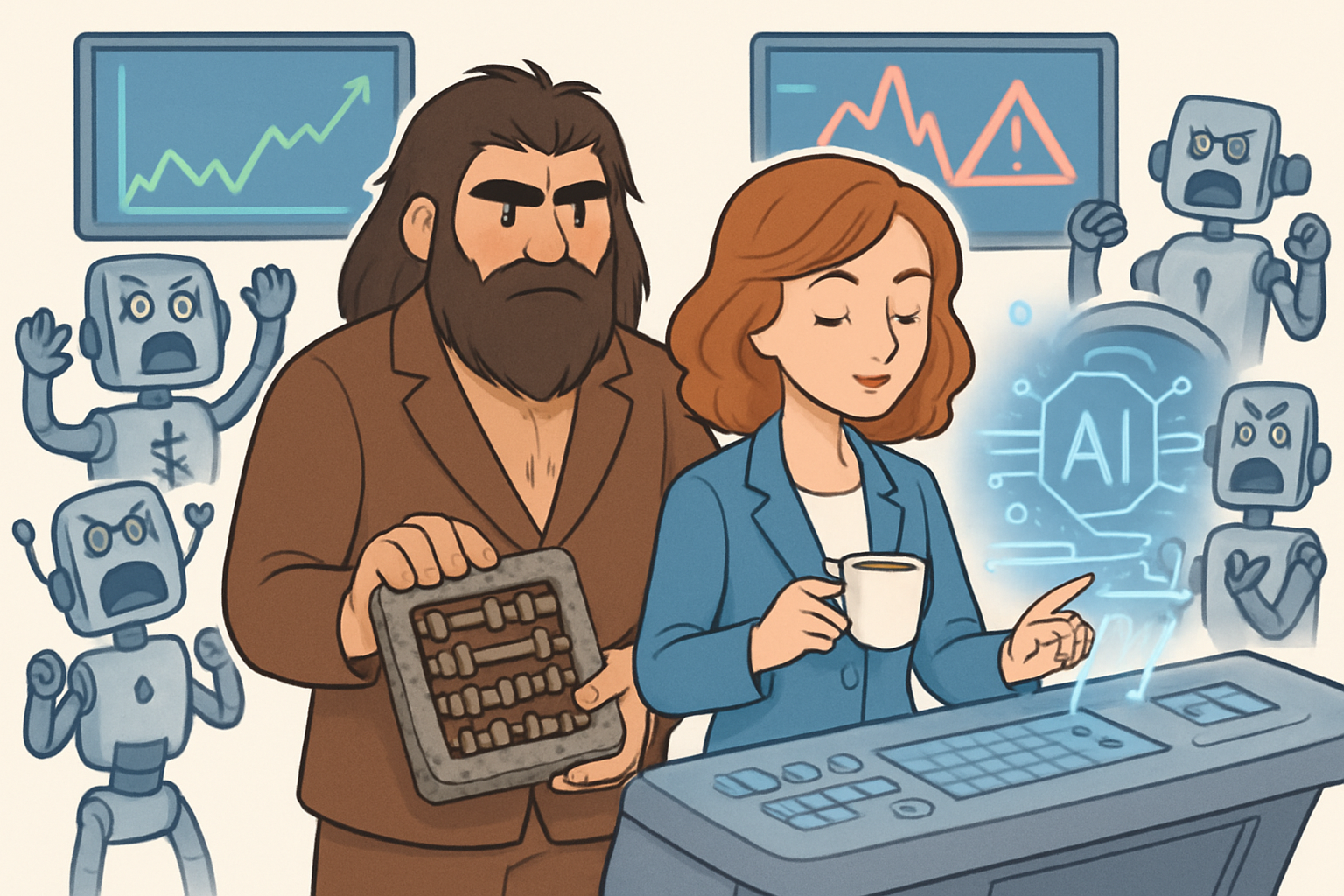
Here’s what most people miss about AI economics: artificial intelligence doesn’t replace people uniformly. It amplifies whoever owns it while making everyone else obsolete.
Think about it. When Netflix’s recommendation algorithm got better, did it hire more movie critics? No. It made movie critics irrelevant while making Netflix shareholders richer. When Tesla’s autopilot improved, did it create more driving instructor jobs? Not even close.
AI follows the same pattern every automation wave has followed for 200 years: the people who own the machines get richer, and the people who compete with the machines get poorer.
But here’s the part that keeps me up at night — this time, the machines are coming for knowledge work, not just factory jobs.
Marcus isn’t competing against other developers anymore. He’s competing against systems that can write code 24/7, never ask for raises, and improve every single day. Systems that someone else owns.
Why Your Skills Won’t Save You (But Your Assets Will)
Let me tell you about Sarah — 31, marketing manager in Austin. When GPT-4 launched, her agency started using it to write client copy. Sarah’s response? She took a $2,000 course on “AI-powered marketing.”
Smart move, right? Wrong.
Six months later, her agency realized they could get better results by training junior marketers to use AI tools than by paying Sarah’s $85,000 salary. Sarah became the most expensive part of a process that AI had already optimized.
Meanwhile, her college roommate Emma took a different approach. Emma used her savings to buy shares in Nvidia, Microsoft, and Google in early 2023. She didn’t learn to use AI. She bought ownership in the companies building it.
Emma’s portfolio went up 67% in eight months. Sarah got laid off in November.
Same intelligence. Same education. Different relationship to capital.
The Question That Reveals Everything
What’s the difference between Marcus, Sarah, and Emma? It comes down to one question they asked themselves when AI started getting serious attention:
“How can I get better at using this technology?” versus “How can I own a piece of this technology?”
The first question makes you a more efficient worker. The second question makes you a capital owner.
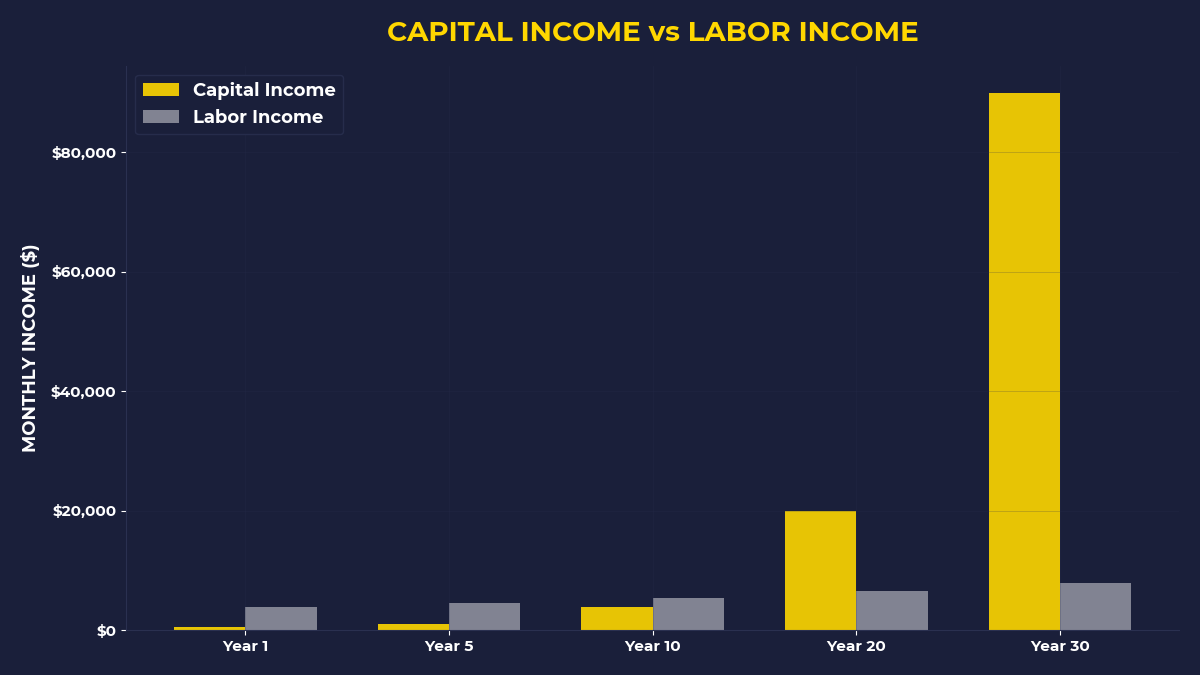
Here’s the brutal truth: AI doesn’t care how skilled you are. It cares about who owns it. Every dollar of productivity AI creates flows to whoever holds the equity in AI companies. Everyone else gets to compete against machines that work for free.
The Capital Storage Insight That Changes Everything
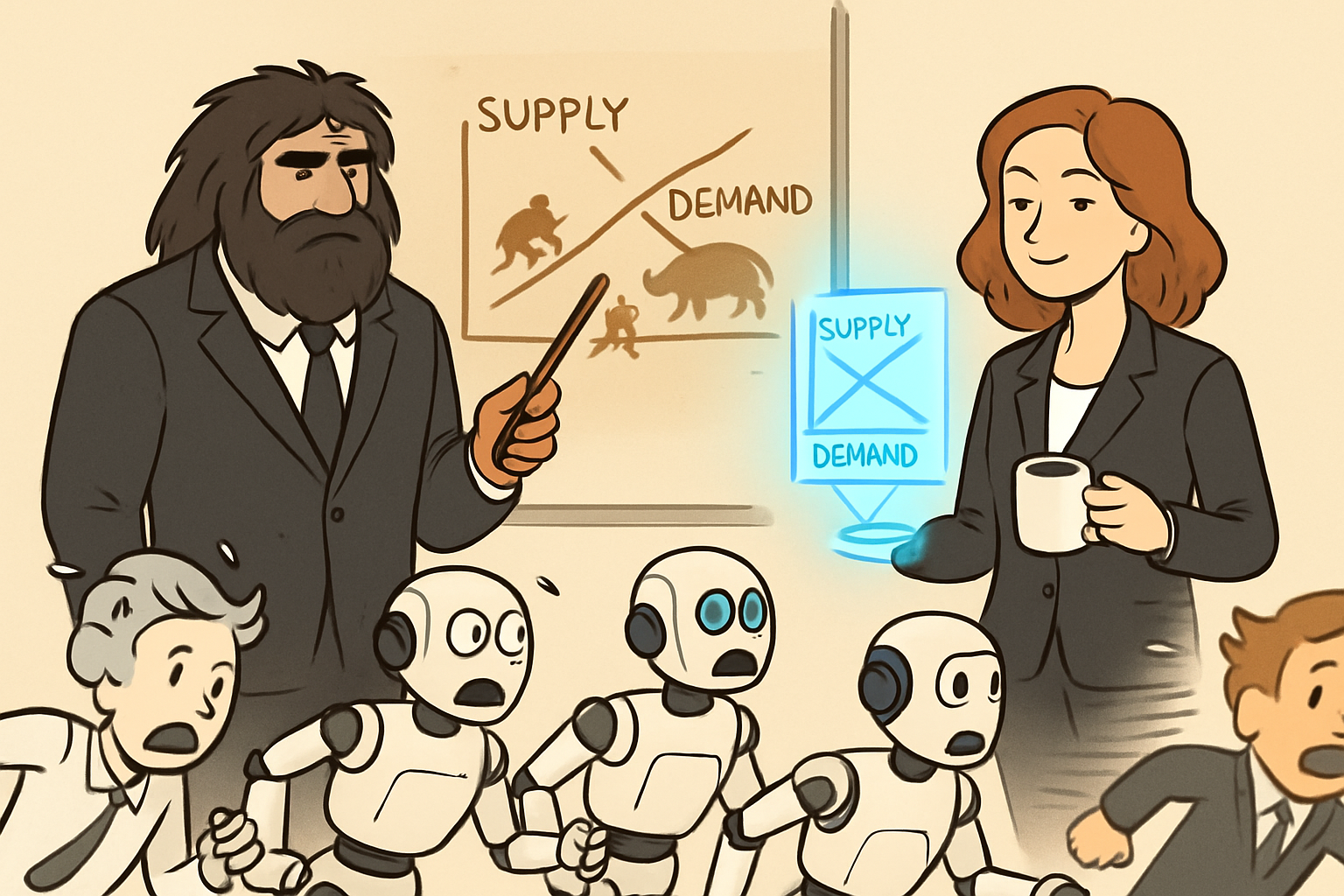
I learned something critical when I started thinking about AI as capital instead of technology: capital is just stored demand.
When people need what you own, you have capital. When you own what people need, demand flows to you automatically.
AI is creating massive demand for computation, data processing, and automated decision-making. The companies that own the AI infrastructure — the server farms, the algorithms, the training data — they’re storing all that demand.
Every time someone uses ChatGPT, Midjourney, or Claude, they’re sending money to Microsoft, OpenAI, and Anthropic shareholders. Every business that adopts AI tools pays subscription fees to AI platform owners. Every efficiency gain AI creates gets captured by whoever owns the AI.
Think about that. Every productivity improvement AI makes in the global economy flows directly to capital owners. Not workers. Not even the smartest workers.
The Compound Effect Nobody Talks About
Here’s what makes AI economics different from previous automation waves: the compound effect works in both directions.
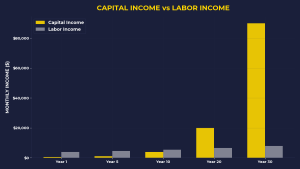
If you own AI capital, your assets get more valuable every time the technology improves. Better algorithms mean higher profits, which mean higher stock prices, which mean more capital to buy more assets.
But if you don’t own AI capital, every improvement makes your labor less valuable. The AI gets smarter, faster, and cheaper while your skills become more replaceable.
I call this the “acceleration trap.” The better AI gets, the wider the gap becomes between owners and workers.
Marcus experienced this firsthand. While he spent months learning new programming frameworks, the AI he was competing against improved every week. He was running up a down escalator.
The Three-Step Switch You Can Make Today
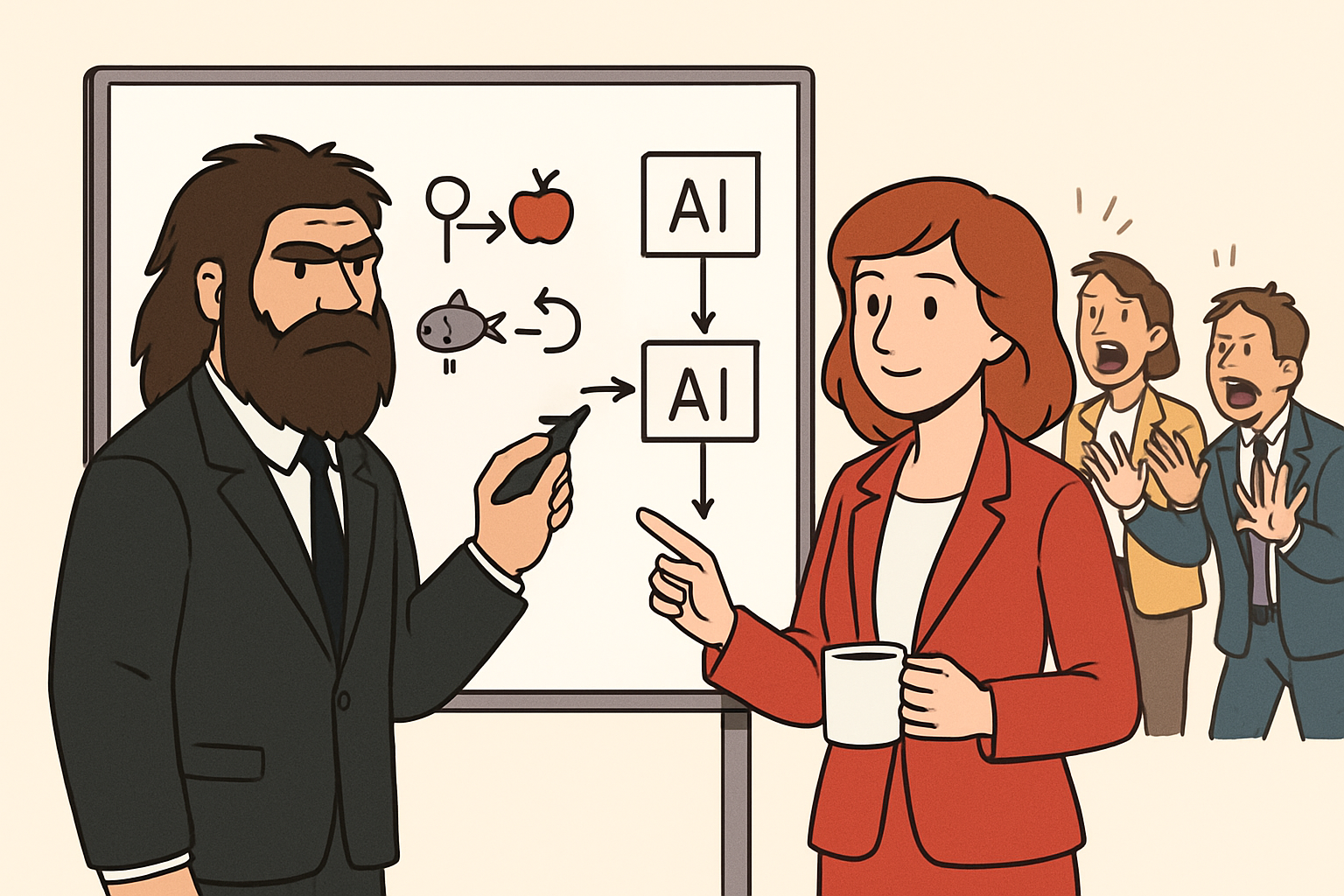
Look, you don’t need to become a tech genius to benefit from AI economics. You just need to switch from competing with AI to owning AI.
Step one: Stop asking “How can I use AI better?” Start asking “Which AI companies are capturing the most demand?”
Step two: Before you pay any bill this month — rent, groceries, Netflix, whatever — move $100 into a brokerage account and buy shares in those companies. Even if it means scrambling to cover expenses. Especially then.
Step three: Every month, increase that amount. Not when you feel comfortable. When you feel uncomfortable. When paying yourself first forces you to find creative ways to cover your bills.
This isn’t about picking the next Apple. This is about recognizing that AI productivity gains will flow to capital owners, not workers, and positioning yourself on the right side of that transfer.
The Time Freedom Connection
What happened to Marcus after that phone call? He took his severance pay — $23,000 — and bought shares in Microsoft, Nvidia, and a few AI-focused ETFs. Not because he believed in the technology. Because he finally understood that the technology was going to make someone rich, and it might as well be him.
Six months later, his portfolio was up 34%. Not life-changing money yet, but something shifted in how he thought about work. For the first time, he had income that didn’t require his daily presence.
He found another development job, but now he sees it differently. His salary funds his capital purchases. His capital generates returns whether he shows up to work or not.
That’s the real AI economics insight: artificial intelligence will create massive wealth, but only for people who own it instead of compete with it.
If You’re Still Trading Time for Money, Read This
This post is for someone specific: you work in knowledge-based field, you’re good at what you do, and you’re starting to worry that AI might make your skills obsolete. You’ve probably thought about taking an AI course or adding “prompt engineering” to your resume.
Stop. Those courses are designed to make you a better employee, not a capital owner.
The AI revolution will create two classes of people: those who own the systems that generate wealth automatically, and those who compete against systems that work for free. The gap between these two groups will be enormous.
Choose your side now, while you still have time.
The One Thing To Remember
AI economics isn’t about technology — it’s about ownership. Every dollar of productivity AI creates flows to whoever owns the AI systems, not to the people competing against them. The question isn’t whether AI will change the economy. The question is whether you’ll own part of that change or be displaced by it.
Your next moves:
- Open a brokerage account this week if you don’t have one
- Buy shares in AI companies with your next paycheck before paying any other bills
- Set up automatic investments so you build capital ownership while AI builds wealth
🎬 Prefer watching? Check out the video version on YouTube:
👉 https://www.youtube.com/@PrimalContrarian
Subscribe for daily insights on capital, wealth, and contrarian thinking.