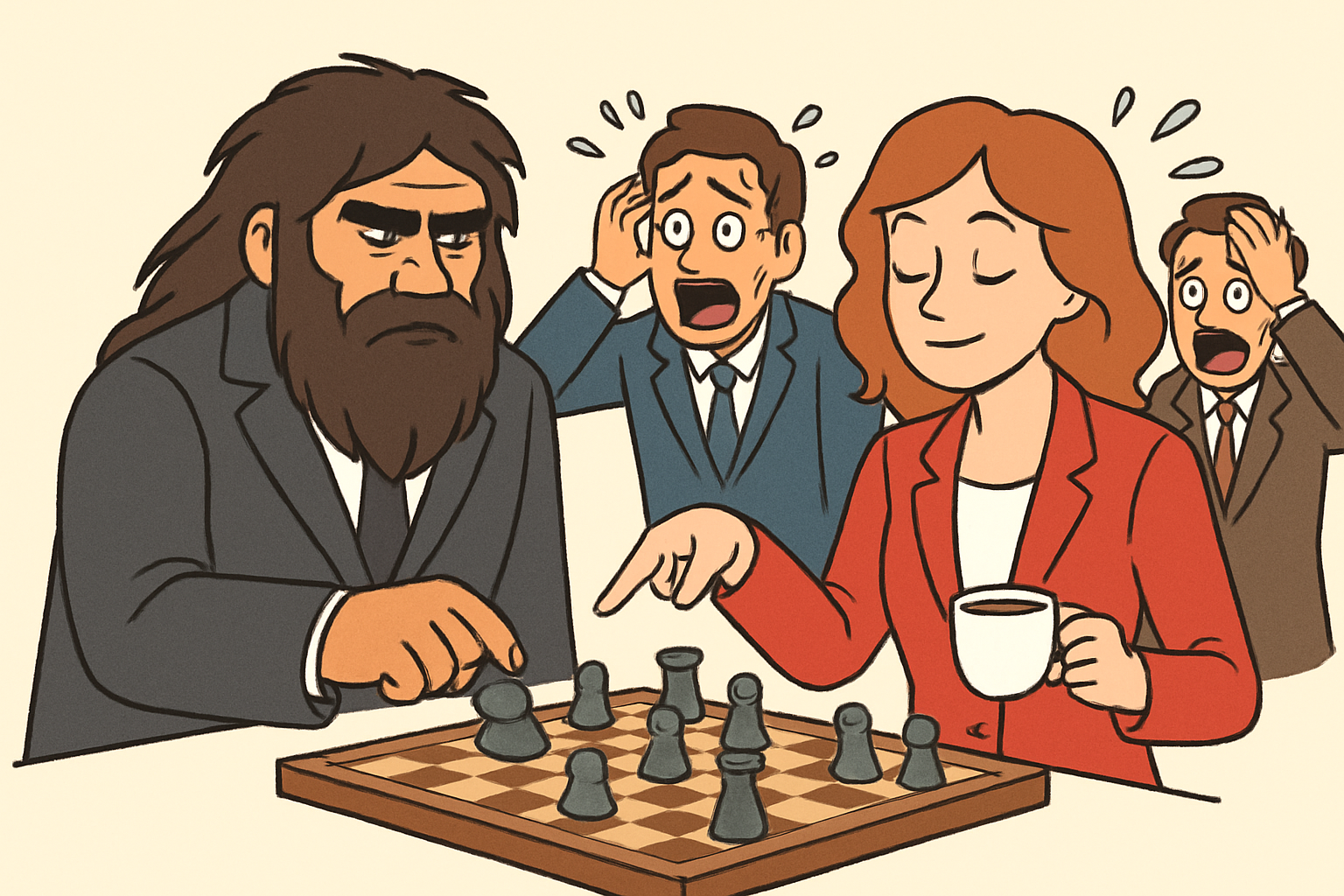
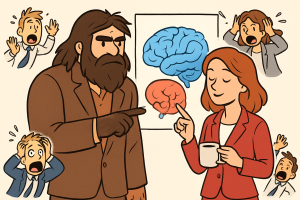
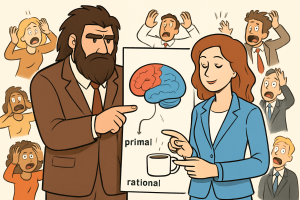
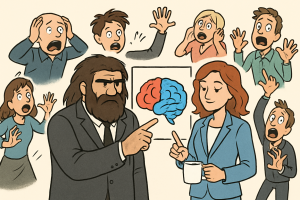
March 9, 2009. The S&P 500 hits 676. Your primitive brain is screaming: “SELL EVERYTHING.” Your rational mind knows this is insane. Your bank account listens to the screaming.
I watched sophisticated investors — doctors, engineers, successful entrepreneurs — dump their retirement accounts at 40-60% losses that week. These weren’t stupid people. They were smart people with stone-age operating systems running their money decisions.
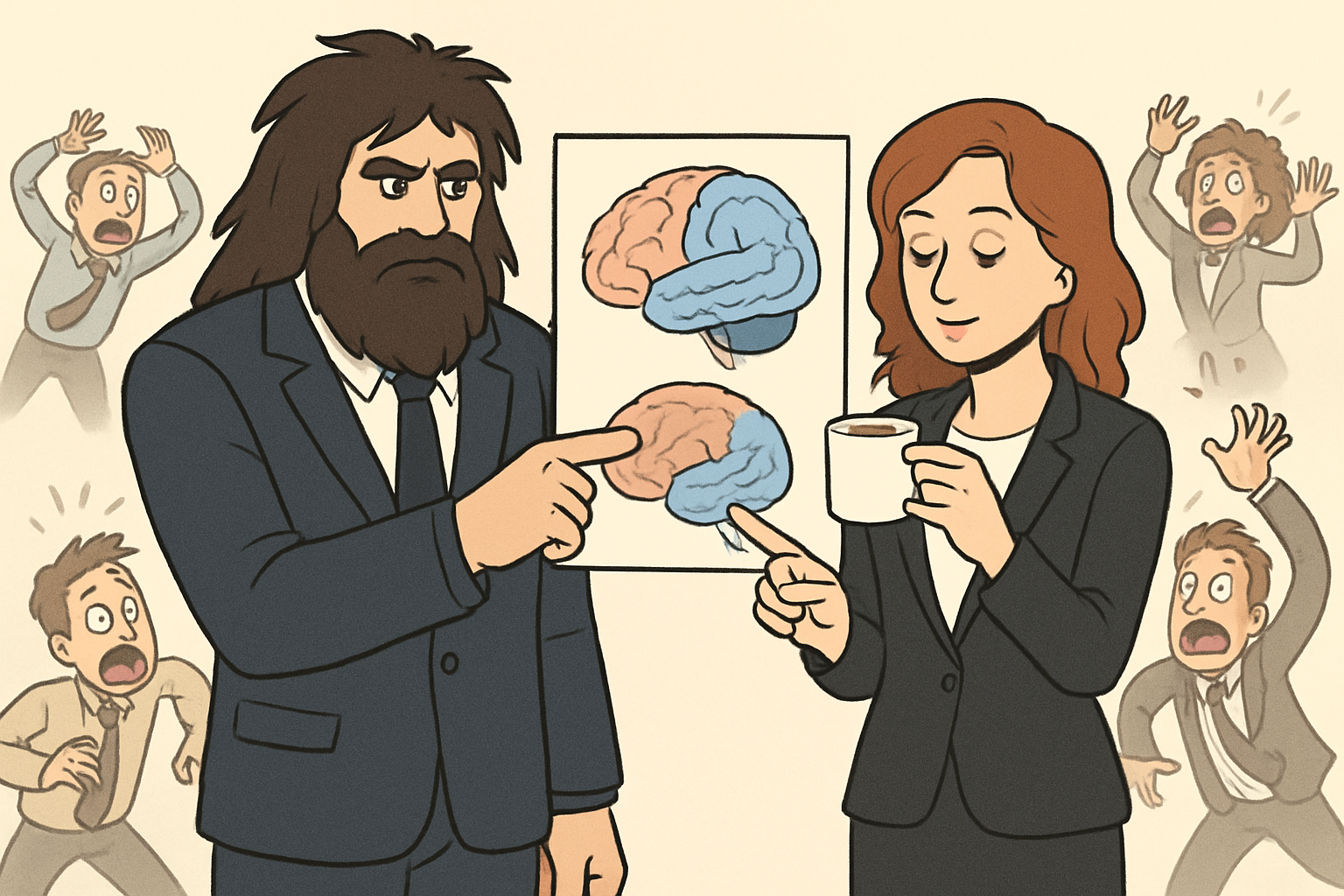
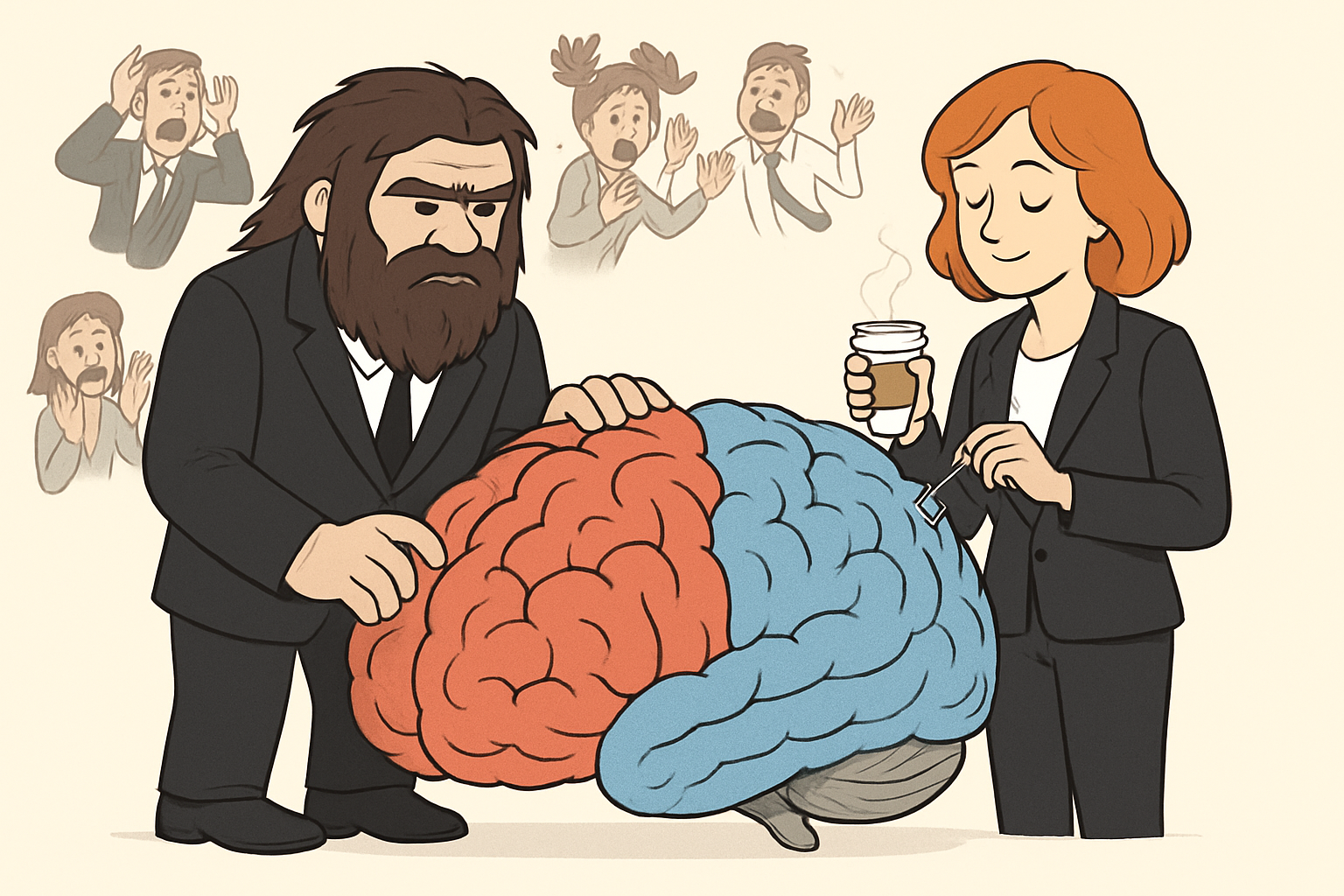
Here’s what nobody talks about when they discuss behavioral finance: your brain isn’t broken. It’s working perfectly. The problem is it’s optimized for survival on the African savanna 50,000 years ago, not building wealth in modern capital markets.
When the Dow dropped 778 points on September 29, 2008 — the largest single-day point decline in history at that time — your amygdala registered the same threat response as if a saber-toothed tiger was charging your cave.
I Used To Think Smart People Made Smart Money Decisions
Let me be honest about my own expensive education in behavioral finance.
In 2000, I was managing a small fund and thought I was immune to behavioral bias because I’d read all the Kahneman and Tversky papers. I understood prospect theory. I knew about loss aversion and anchoring bias. I could explain why other people made irrational decisions.
Then the dot-com bubble burst. The NASDAQ fell 78% from peak to trough between March 2000 and October 2002. And I watched myself make every classic behavioral mistake in the textbook.
I held my losers too long because I couldn’t accept the loss. I sold my winners too early to “lock in gains.” I chased momentum stocks during brief rallies. I froze completely during the worst selloffs, when the best opportunities were staring me in the face.
The knowledge didn’t protect me. Understanding the theory and controlling the impulse are completely different skills.
Your Primitive Brain Runs Your Investment Account
Think about what happens when markets crash. The financial media starts using war metaphors. “Market carnage.” “Bloodbath on Wall Street.” “Investors flee to safety.”
Your brain processes this language literally. It activates the same neural pathways that kept your ancestors alive when actual predators were hunting them. The fight-or-flight response doesn’t distinguish between a charging mammoth and a 20% portfolio decline.
This is why behavioral finance isn’t just an academic curiosity — it’s the invisible force that transfers wealth from emotional investors to patient capital owners.
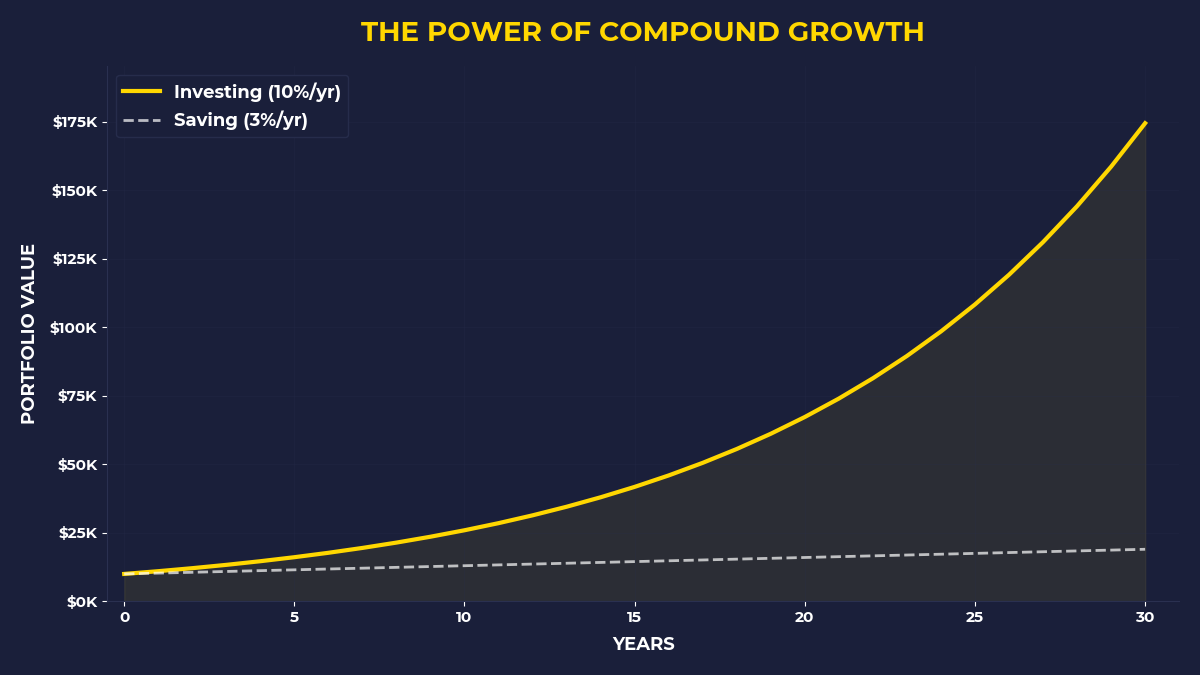
Consider these numbers: According to Dalbar’s 2023 study, the average equity investor earned just 7.13% annually over the 20-year period ending December 31, 2022, while the S&P 500 returned 9.52% annually. That 2.39% gap — compounded over decades — represents millions of dollars in destroyed wealth.
Where does that money go? To the investors who buy when everyone else is selling.
Why Fear Sells Bottoms and Greed Buys Tops
Here’s the cruel irony: your brain’s risk-assessment system is perfectly calibrated for physical threats and completely backwards for financial ones.
When stocks are expensive and everyone is optimistic, your social brain kicks in. You see neighbors getting rich on meme stocks and your FOMO circuits fire. Greed isn’t really greed — it’s herding instinct. Safety in numbers. If everyone else is doing it, it must be safe.
When stocks are cheap and everyone is pessimistic, your survival brain takes over. You see red numbers everywhere and your loss aversion circuits fire. This isn’t cowardice — it’s pattern recognition. Red numbers have historically meant danger.
The problem is that financial markets invert normal risk patterns. High prices create high risk. Low prices create low risk. Your brain cannot internalize this because it contradicts millions of years of survival programming.
Do You Remember How Terrified You Felt in March 2020?
The S&P 500 dropped 34% between February 19 and March 23, 2020. If you bought the exact bottom — March 23 — and held for just one year, you made 74.6%.
But here’s what I remember from client conversations during that period: nobody wanted to buy. Smart people, successful people, people who understood the math were paralyzed by fear.
I had one client tell me: “I know this is probably a good buying opportunity, but what if it goes down another 50%? What if this is different? What if the whole system collapses?”
This is loss aversion in action. The pain of losing $1 feels roughly twice as intense as the pleasure of gaining $1. When markets are crashing, your brain magnifies every possible negative outcome and minimizes every possible positive one.
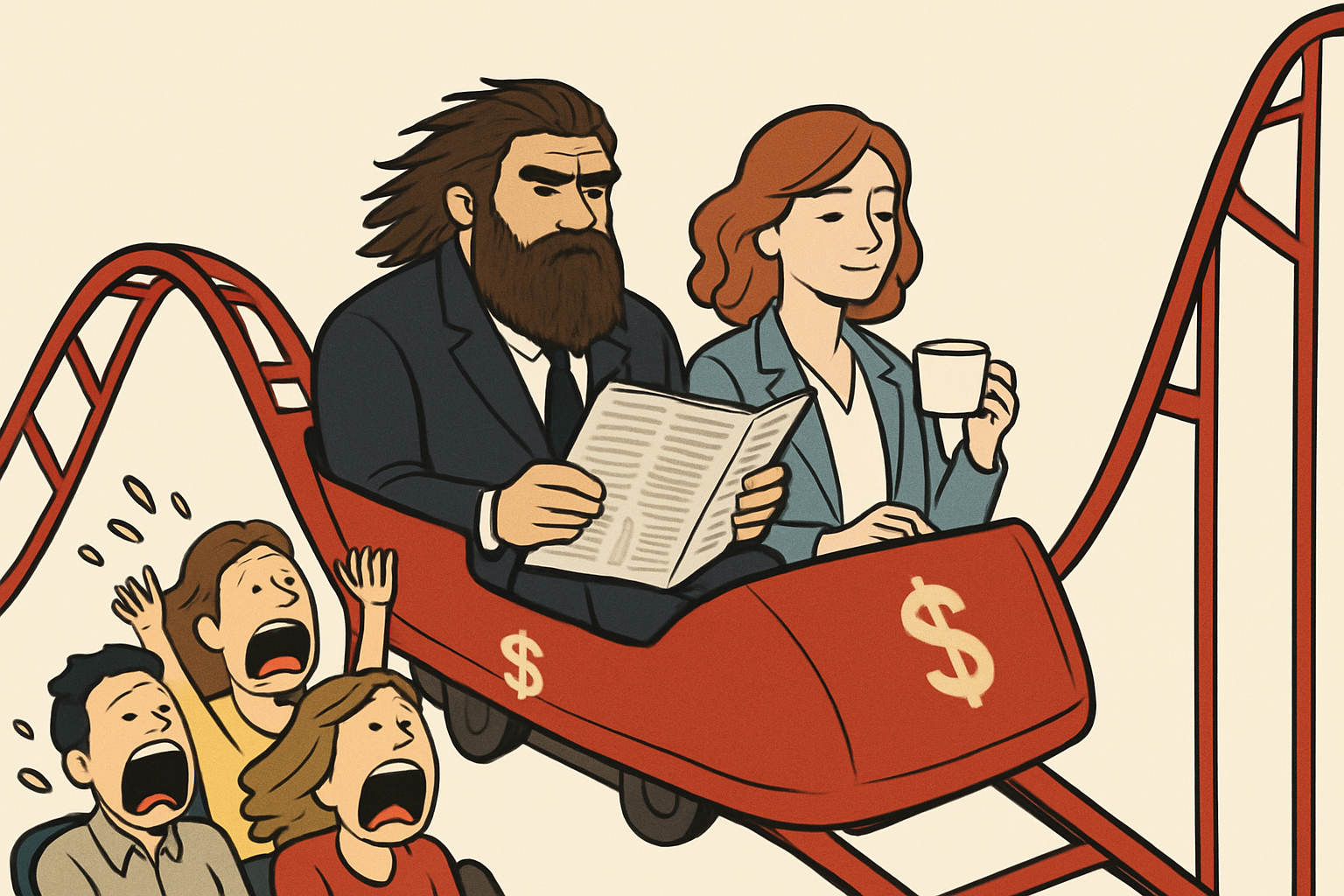
Meanwhile, the investors who bought during that March 2020 panic didn’t feel smart or confident. They felt terrified. The difference is they bought anyway.
The Behavioral Edge: Feel Fear, Buy Anyway
Contrarian investing isn’t about predicting the future. It’s about doing the opposite of what your behavioral programming demands.
When your fear circuits are firing and you want to sell, that’s the signal to buy. When your greed circuits are firing and you want to buy more, that’s the signal to trim positions.
But this isn’t about suppressing emotion — it’s about using emotion as data.
Warren Buffett’s famous advice to “be fearful when others are greedy, and greedy when others are fearful” isn’t a market-timing strategy. It’s a behavioral antidote. When you feel the crowd’s emotion pulling you, do the opposite.
The VIX — often called the “fear index” — spiked to 82.69 on March 16, 2020. Normal levels are around 12-20. When fear is that extreme, your primitive brain is screaming danger. That’s precisely when patient capital gets built.
Why AI Can’t Save You From Your Own Brain
Here’s where it gets interesting. AI can process more information, run more models, and eliminate more cognitive biases than any human investor. But AI can’t eliminate the human behavioral component of markets.
As long as humans are making investment decisions — and they will be for the foreseeable future — behavioral patterns will persist. Fear and greed will continue driving price swings beyond fundamental values.
This creates a permanent edge for investors who can control their behavioral responses. AI amplifies this edge because it can help you identify when your emotional reactions are most likely to be wrong.
But the discipline still has to come from you. The AI can tell you that current market conditions historically signal buying opportunities. Your primitive brain will still scream “danger.” The gap between knowing and doing remains entirely human.
The Capital Question Your Brain Doesn’t Want To Ask
When markets are crashing, your brain asks: “How do I protect what I have?”
When markets are soaring, your brain asks: “How do I get more of what everyone else is getting?”
Both questions lead to wealth destruction. The right question is structural: “What am I buying?”
Remember the young Warren Buffett collecting golf balls and selling them for $6 per dozen? He wasn’t trying to time the golf ball market. He was buying demand — consistent demand from golfers who kept losing balls.
This is why asking “what should I buy?” instead of “what should I do?” rewires your behavioral response. It shifts focus from emotional market reactions to structural value creation.
When you own pieces of businesses that create value regardless of what your emotions are telling you, your primitive brain becomes less relevant to your wealth-building process.
What The Primal Investor Takes Away
• Your fear response during market crashes is a buy signal, not a sell signal — that’s when patient capital gets built at discount prices
• The 2.39% annual performance gap between average investors and market returns represents behavioral tax on emotional decision-making
• AI amplifies behavioral edges but can’t eliminate the discipline required to act against your primitive programming
• When everyone else is asking “how do I protect what I have?” the wealth-building question is “what demand am I buying?”
• Loss aversion makes portfolio losses feel twice as painful as gains feel pleasurable — this asymmetry destroys long-term returns
• The VIX above 30 historically signals fear-driven selling creating buying opportunities for patient capital
Your brain evolved to keep you alive in physical environments with immediate threats. It’s spectacularly bad at building wealth in financial environments with delayed rewards. The edge goes to investors who feel the fear and buy anyway.
🎬 Prefer watching? Check out the video version on YouTube: