Marcus — 31, software engineer in Portland — called me last Tuesday with panic in his voice. He’d just watched his company’s AI tool complete in 4 minutes what used to take his team 6 hours. “They’re not laying anyone off yet,” he said. “But I can see the writing on the wall.”
Then he asked the question that’s keeping millions of people awake at night: “How do I compete with AI?”
I Made the Same Mistake Marcus Is Making
Here’s the thing. Marcus is asking the wrong question entirely.
I know because I spent three months in 2023 frantically learning every new AI tool I could find. Midjourney, ChatGPT, Claude, Stable Diffusion — you name it, I was there at 2 AM watching YouTube tutorials. I thought if I just got better at using AI, I’d be safe.
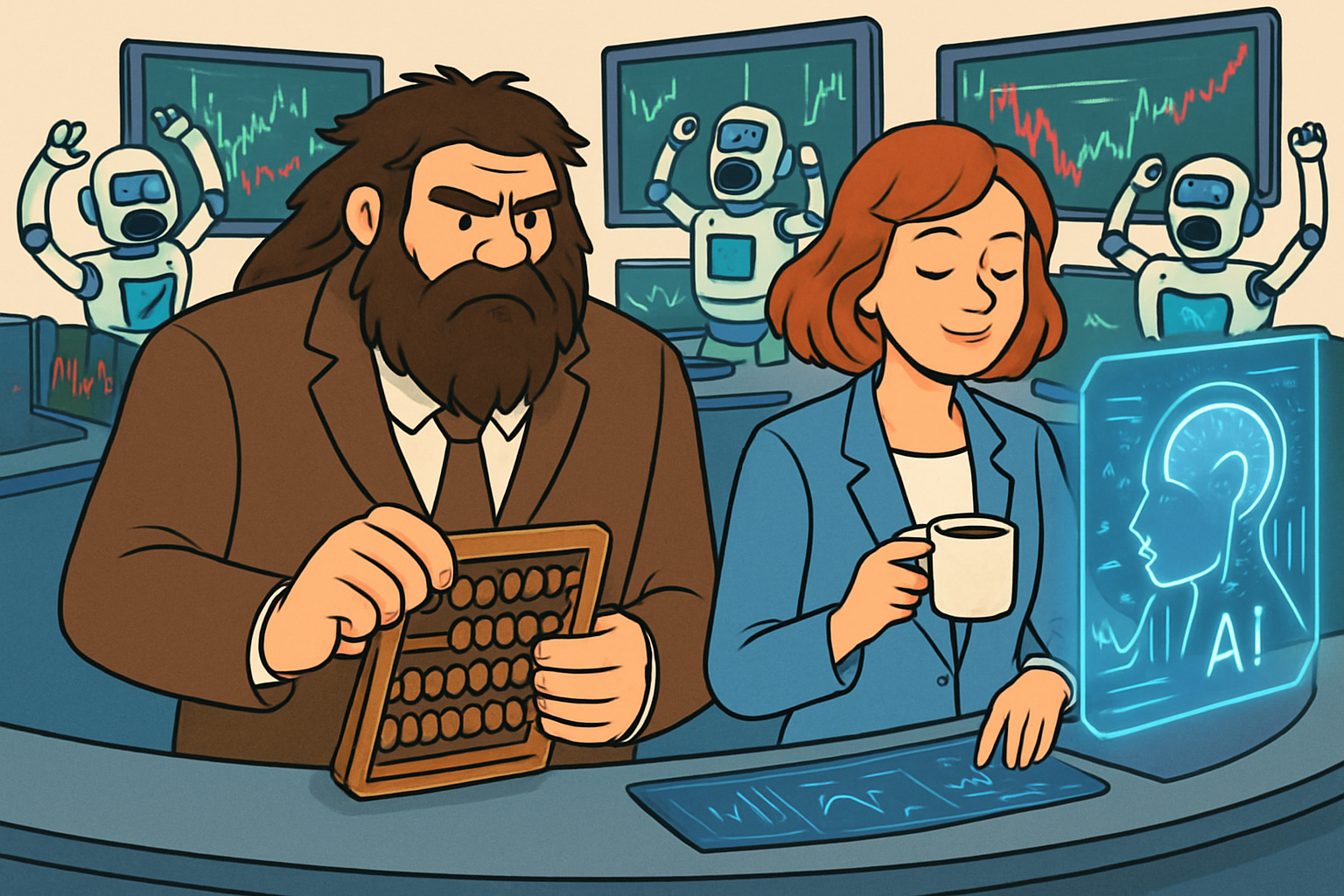
I was approaching it like a worker, not like a capital owner.
The moment I realized this changed everything about how I think about money. I was sitting in my apartment, looking at my brokerage app, when it hit me: I own 247 shares of Microsoft. Every time someone uses ChatGPT, I get paid. Every time a company automates away a human job using Microsoft’s AI services, my shares become worth more.
While I was learning to use the tools, I should have been buying the companies that own them.
AI Doesn’t Create Jobs — It Creates Demand
Most people think AI is a technology story. It’s actually a capital story.
Let me explain what I mean. When Netflix killed Blockbuster, it wasn’t because Netflix had better customer service. Netflix owned the technology that stored and delivered what people wanted — movies — more efficiently than anyone else. The demand for movies didn’t disappear. It got captured by whoever owned the distribution system.
AI works the same way.
Every time someone uses ChatGPT instead of hiring a copywriter, the demand for writing doesn’t vanish. It flows to OpenAI (and Microsoft, which owns 49% of OpenAI). Every time a company uses AI to automate customer service, the demand for problem-solving doesn’t disappear. It gets captured by whoever owns the AI.
The wealth doesn’t evaporate. It transfers.
Marcus earns $127,000 per year writing code. But he doesn’t own any equity in AI companies. When his company’s AI tool makes his team 10x more productive, who captures that extra value? Not Marcus. He still gets his $127,000. The extra value flows to whoever owns the AI — and to his company’s shareholders.
Think about that.
The Question 97% of People Never Ask
Here’s what separates capital owners from everyone else: they ask “What should I buy?” instead of “What should I do?”
When Marcus called me panicking about AI, his first instinct was to learn more skills. Take a course on prompt engineering. Get certified in machine learning. Maybe pivot to AI safety or AI ethics.
All worker thinking.
A capital owner thinks differently. They see AI automating human work and ask: “Which companies own this automation?” Then they buy shares in those companies. They don’t try to compete with the machine. They buy the machine.
I have a friend — Sarah, 28, marketing manager in Austin — who figured this out early. In January 2023, she watched AI tools start handling tasks that used to require entire teams. Instead of panicking, she put $500 per month into NVIDIA stock. She didn’t know anything about chips or GPU architecture. She just knew that if AI was going to eat the world, someone had to make the hardware that feeds it.
NVIDIA went up 239% that year.
Sarah didn’t get smarter about AI. She got smarter about capital.
Why Your Paycheck Shrinks While AI Stocks Soar
Let me show you the exact mechanism that’s transferring wealth from workers to capital owners right now.
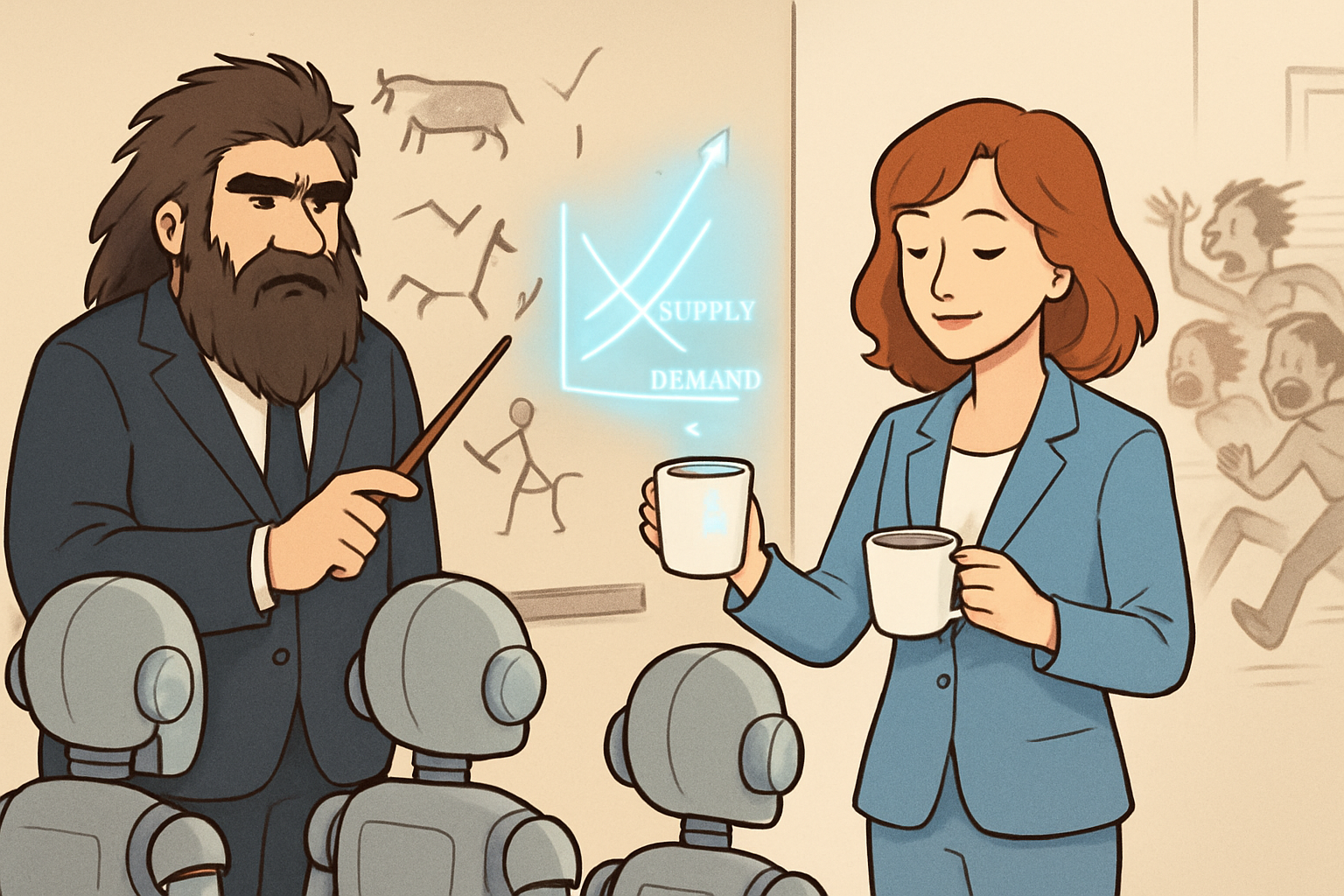
Company X employs 50 customer service reps at $40,000 each. That’s $2 million in annual labor costs. Then Company X implements an AI chatbot that handles 80% of customer inquiries. They lay off 40 people, keep 10, and pay the AI company $300,000 per year for the software.
The math is brutal: Company X saves $1.7 million annually. The laid-off workers lose $1.6 million in combined wages. The AI company gains $300,000 in recurring revenue.
Where did that $1.7 million in savings go? To Company X’s shareholders. And to the shareholders of whatever AI company provided the automation.
If you own shares in Company X, you win. If you own shares in the AI company, you win big. If you’re one of the 40 laid-off workers, you’re looking for a new job in a market where 40% fewer customer service jobs exist.
This is happening in every industry, every month.
The AI Capital Transfer Is Already Underway
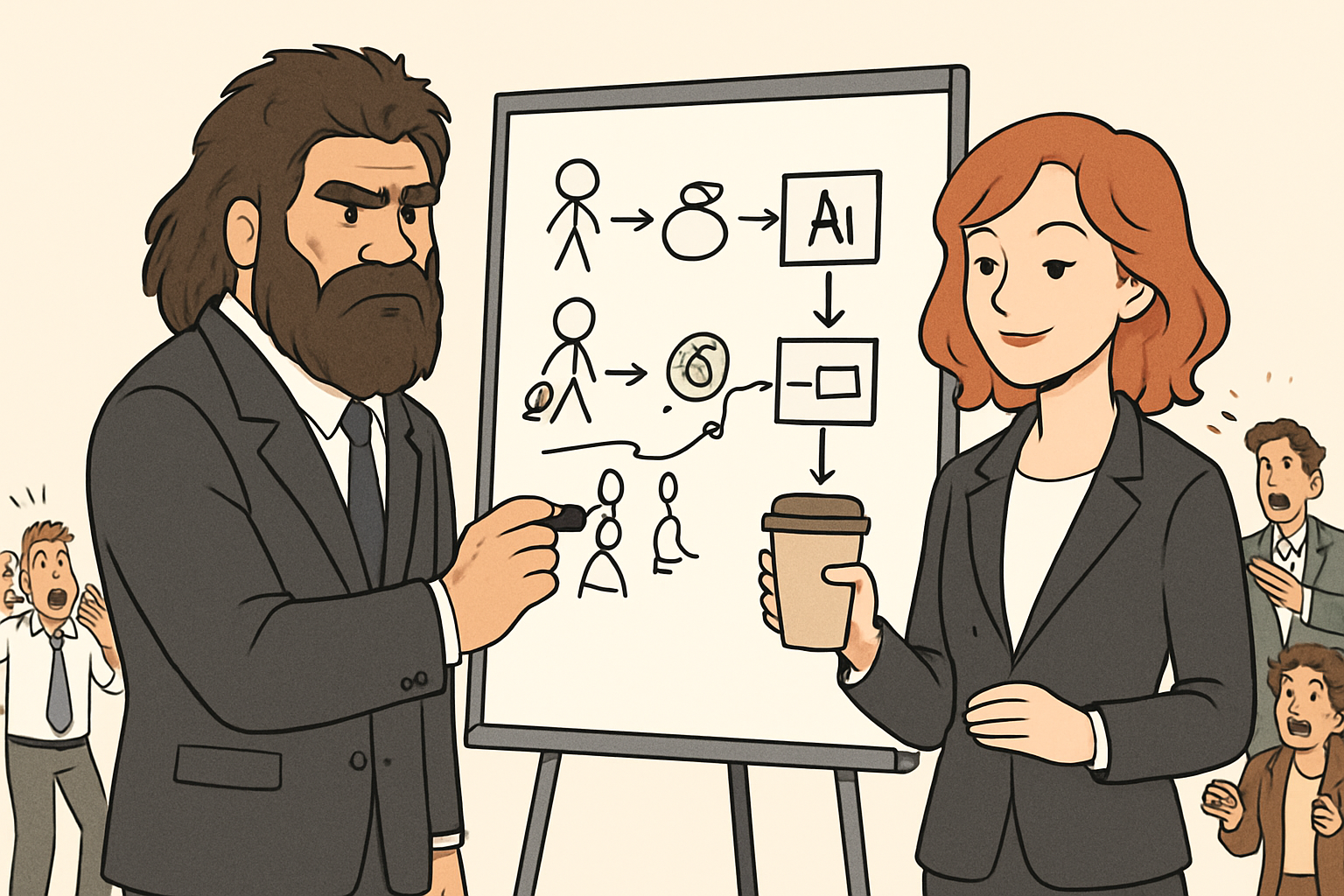
Most people think the AI revolution is coming. It’s already here. The wealth transfer started the moment ChatGPT hit 100 million users.
I started tracking this in early 2023. Here’s what I found:
Between January 2023 and January 2024, the combined market cap of the top 10 AI companies grew by $2.8 trillion. That’s not money created out of thin air. That’s future cash flows being priced in today. Cash flows that will come from replacing human labor with AI systems.
Meanwhile, job postings requiring “AI skills” grew by 42%, but total job postings in AI-affected industries fell by 18%.
Translation: AI is creating some new jobs but destroying far more old ones. And the value of those destroyed jobs isn’t disappearing. It’s flowing to whoever owns the AI.
The people who own AI stocks are getting rich from the same automation that’s making workers nervous about their jobs.

What This Means for Your Money Right Now
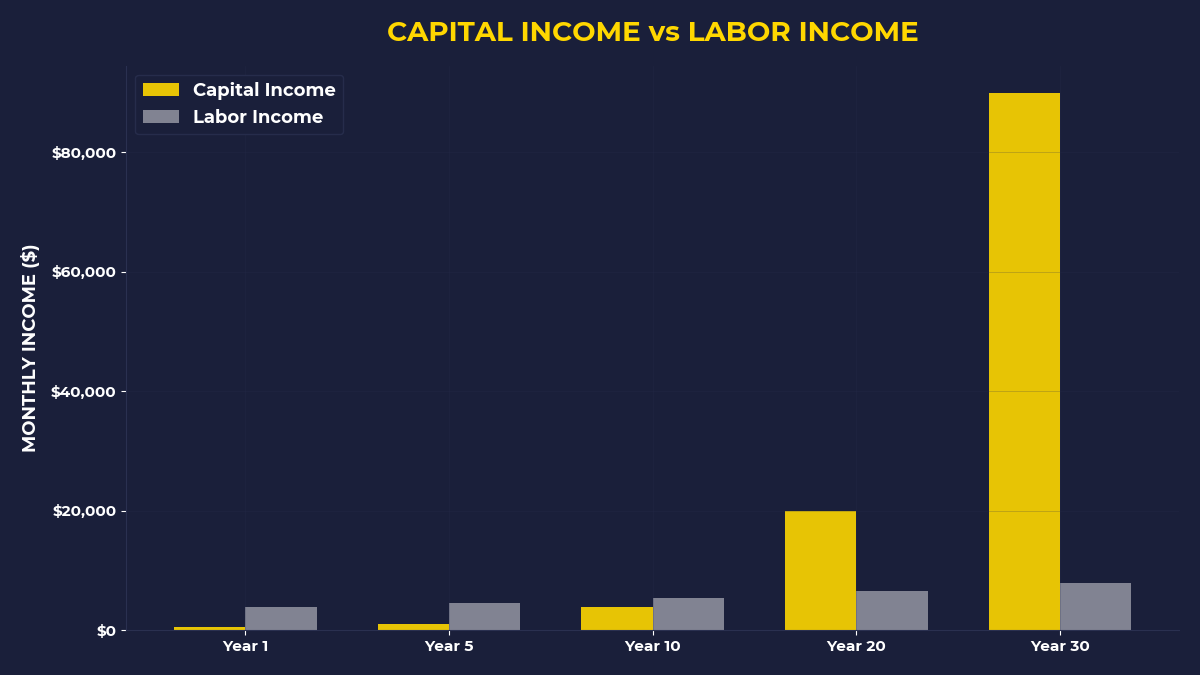
Here’s the uncomfortable truth: if you work for money instead of owning assets that generate money, AI makes you poorer every day.
Not because AI will definitely take your specific job tomorrow. Because AI is systematically transferring the economic value of human labor to capital owners, and most people are on the wrong side of that transfer.
Every month you collect a paycheck but don’t own AI-adjacent stocks, you’re funding your own obsolescence. Your company uses its profits — generated partly by your labor — to buy AI tools that will eventually replace positions like yours. Then those profits flow to the AI companies’ shareholders.
You’re literally paying for the automation of your own job.
Marcus gets this now. After our conversation, he didn’t sign up for another coding bootcamp. He opened a brokerage account and started buying $200 worth of Microsoft stock every month. Same with a small position in NVIDIA. And Amazon, because of AWS’s AI services.
He’s still learning to work with AI tools — that’s smart. But now he also owns pieces of the companies that profit from AI adoption.
The One Thing To Remember
AI doesn’t destroy wealth — it concentrates it. The same economic value that used to be distributed among thousands of workers now flows to a handful of companies and their shareholders. If you’re not a shareholder, you’re not getting your share of the value your own obsolescence creates. The question isn’t whether you’ll be affected by AI. The question is whether you’ll profit from it or just pay for it.
Here’s what to do today:
- Open a brokerage account and buy $50 worth of any major AI company stock (Microsoft, Google, Amazon, NVIDIA). Even if you know nothing about these companies. You’re not betting on your ability to pick winners — you’re betting on AI creating value for capital owners.
- Before you pay any bills this month, invest in AI-adjacent companies first. Yes, even if it means scrambling to cover rent. Especially then. The discomfort you feel choosing assets over expenses is your worker conditioning fighting your capital owner future.
- Ask “what should I buy?” instead of “what should I learn?” every time you read about AI advances. Skills become obsolete. Capital ownership becomes more valuable.
🎬 Prefer watching? Check out the video version on YouTube:
👉 https://www.youtube.com/@PrimalContrarian
Subscribe for daily insights on capital, wealth, and contrarian thinking.