Sarah — 29, marketing coordinator in Denver — spent her lunch break on Thursday calculating how much she’d spent on coffee this year. $1,847. She felt sick. Not because of the amount, but because she’d done this exact calculation six months ago, sworn to stop, bought a $200 espresso machine, and somehow still found herself at Starbucks every morning. Her brain had hijacked her wallet again.
The machine sat on her kitchen counter, pristine and mocking.
The Ancient Code Running Your Financial Life
I know exactly how Sarah felt because I’ve been there too. Three years ago, I sat in my car outside a Best Buy, credit card in hand, trying to talk myself out of buying a 65-inch TV I didn’t need with money I didn’t have. The rational part of my brain was screaming. The primitive part was already imagining Netflix on that beautiful screen.
The primitive part won.
Here’s what I learned later: your brain is running on code that’s 200,000 years old. Back then, if you saw a ripe berry bush, you ate every berry you could find. Tomorrow, there might be no berries. That same wiring fires when you see a sale sign or check your bank balance after payday.
Your ancestors who hoarded resources and spent impulsively when abundance appeared were the ones who survived long enough to pass on their genes. Congratulations — you inherited their neural patterns. But what kept them alive on the savanna is keeping you broke in suburbia.
Why Smart People Make Dumb Money Decisions
Sarah makes $68,000 a year and graduated summa cum laude. She can analyze market trends for her company, spot consumer psychology patterns in campaigns, and optimize conversion funnels. But she can’t stop buying $6 lattes.
This isn’t about intelligence. It’s about operating systems.
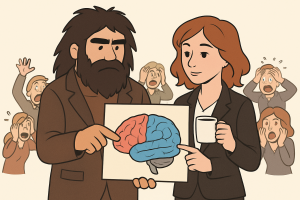
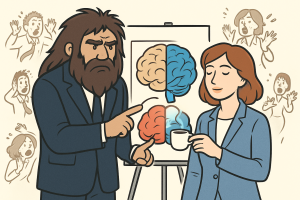
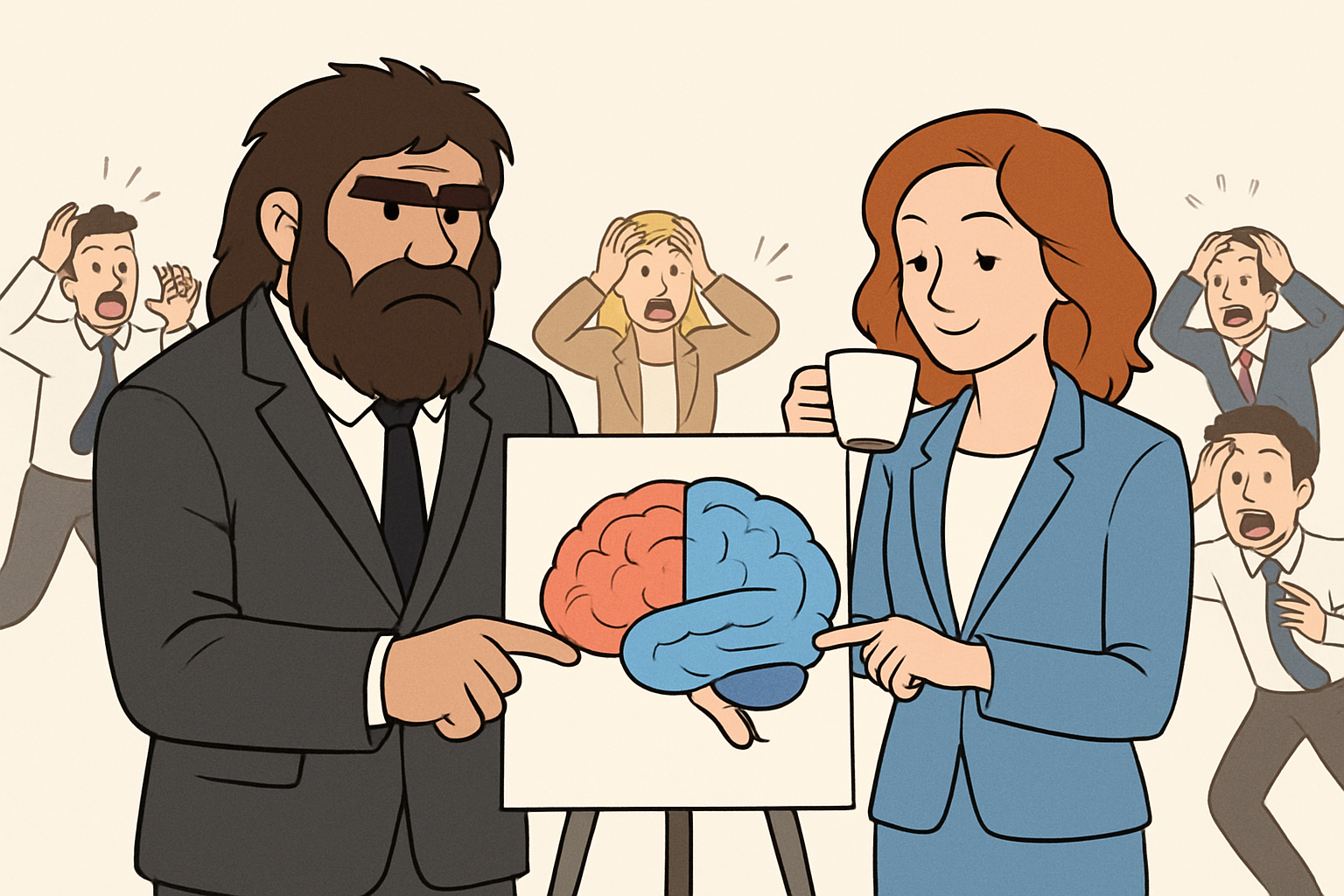
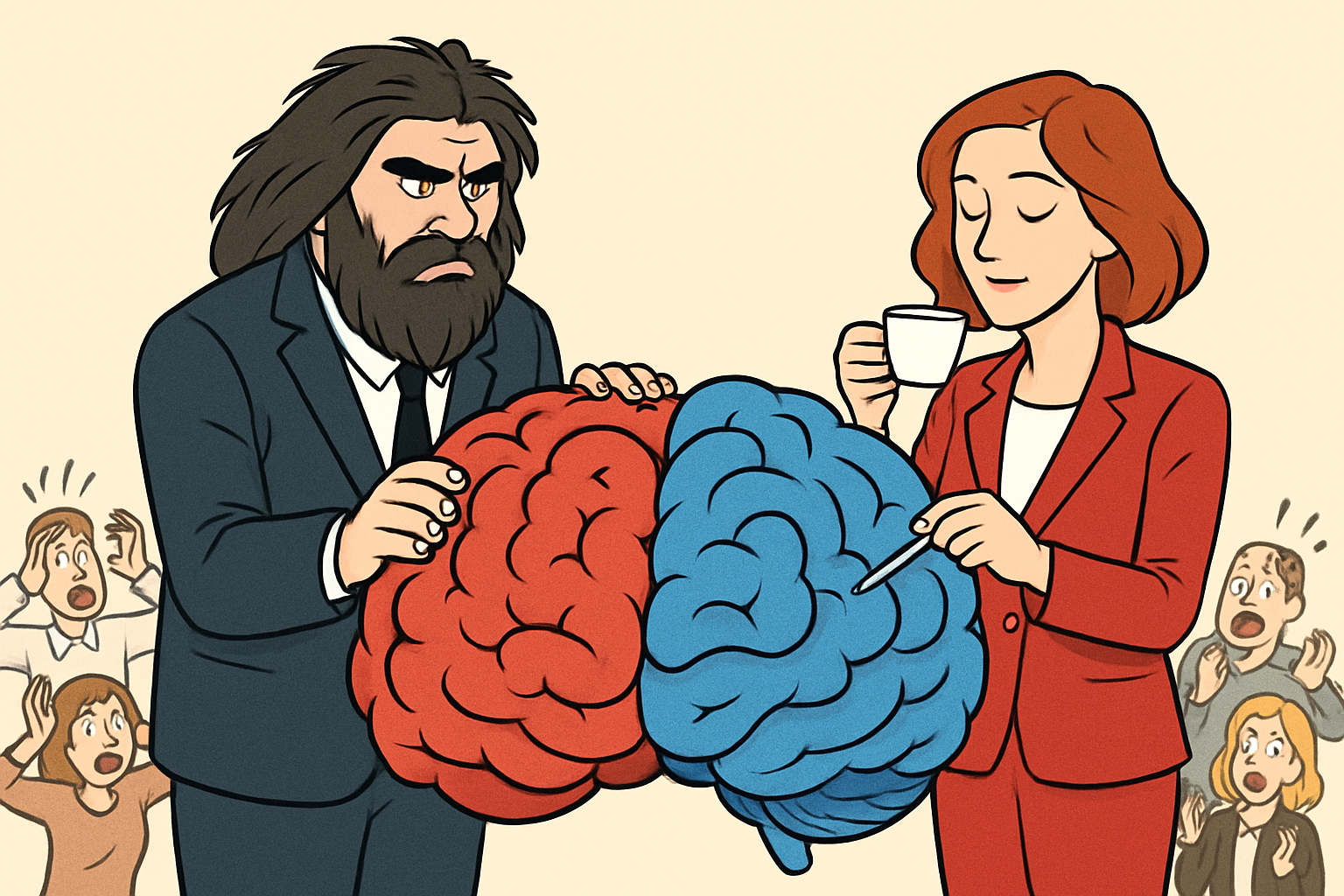
Your rational mind — the part that reads financial advice and makes budgets — lives in your prefrontal cortex. It’s sophisticated but slow and energy-expensive. Your survival brain — the part that grabs the coffee, clicks “buy now,” and avoids uncomfortable conversations about money — lives in your limbic system. It’s primitive but fast and energy-efficient.
Guess which one wins when you’re stressed, tired, or distracted?
The financial industry knows this. Every mall, every app, every ad is designed to bypass your rational mind and trigger your survival brain. The bright colors, the countdown timers, the “limited time offers” — they’re not targeting the Harvard MBA part of your brain. They’re targeting the part that’s still worried about surviving winter.
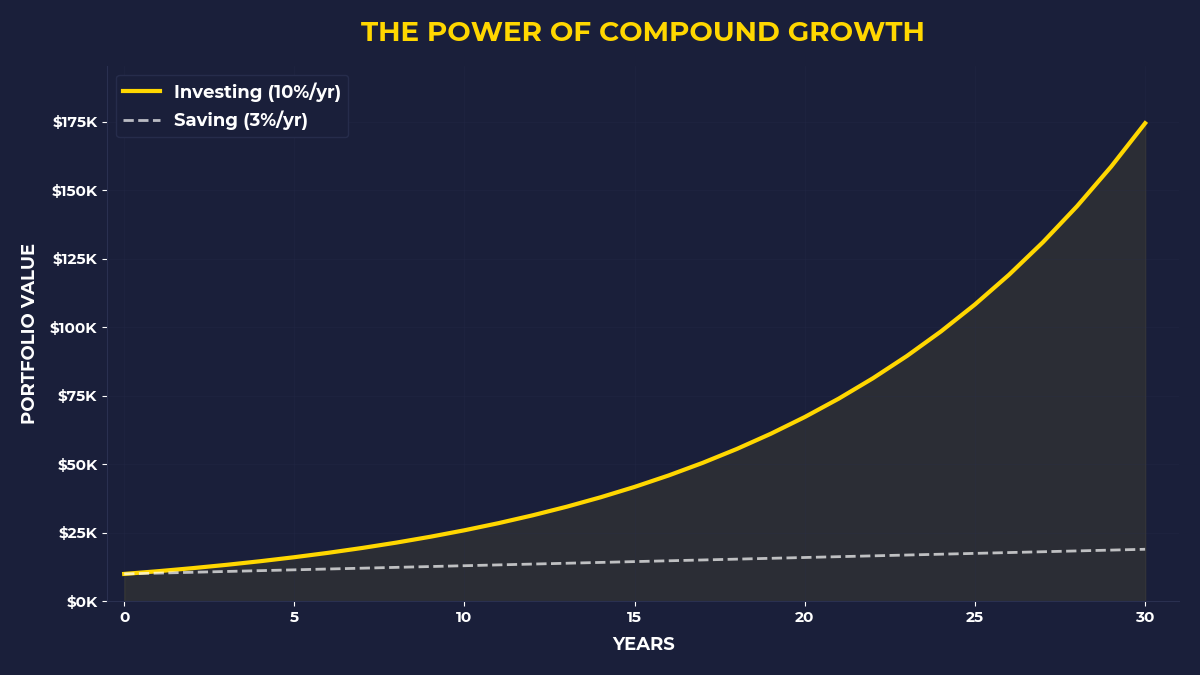
The Three Behavioral Traps That Keep You Poor
After watching my own financial self-sabotage for years, I’ve identified the three behavioral patterns that destroy wealth before it has a chance to compound.
Trap #1: Present Bias
Your brain values immediate rewards exponentially more than future ones. A $500 tax refund today feels more valuable than $5,000 in retirement savings 30 years from now. Mathematically insane. Emotionally inevitable.
This is why people choose a $1,000 bonus over a $2,000 raise. The bonus is concrete and immediate. The raise requires abstract math about future paychecks.
Trap #2: Loss Aversion
Losing $100 feels roughly twice as bad as winning $100 feels good. This made sense when losing resources meant death, but now it makes you cling to cash instead of investing it. Your brain interprets every stock purchase as a potential loss, even when the math says you’ll likely gain.
I watched my friend Mike keep $47,000 in a savings account earning 0.5% while complaining about inflation. When I asked why he wouldn’t invest it, he said, “What if I lose it all?” His brain couldn’t compute that inflation was already losing it for him — just slowly and invisibly.
Trap #3: Social Proof Dependency
You look to others to determine what’s normal and safe. If your coworkers lease BMWs, you’ll feel pressure to do the same. If your friends rent apartments, buying a house feels risky. If everyone around you lives paycheck to paycheck, building wealth feels weird and antisocial.
The crowd isn’t trying to get rich. They’re trying to fit in.
The Moment Everything Changed
Sarah’s breakthrough came three months later, but not where you’d expect. She was walking past the Starbucks, about to go in for her usual, when she noticed something. A homeless man was asking for change outside. She realized she was about to spend more on coffee than he’d collect in coins all day.
The absurdity hit her.
Not the moral absurdity — the mathematical one. She was spending 3.5% of her daily income on a beverage she’d consume in 20 minutes. If someone making $200,000 a year did the equivalent, they’d spend $20 on every cup of coffee.
That reframe broke the spell. She started seeing her financial choices through a different lens: not as individual purchases, but as systems running in the background of her life.
How To Reprogram Your Financial Operating System
You can’t fight 200,000 years of evolution with willpower. But you can hack your own brain by working with your behavioral patterns instead of against them.
Here’s what actually works:
Make Future You Visible
Your brain can’t visualize abstract future benefits, so make them concrete. Don’t think “retirement savings.” Think “the rent check I won’t have to worry about when I’m 65.” Don’t think “emergency fund.” Think “the freedom to quit a toxic job without panic.”
I started calculating everything in terms of “years of freedom purchased.” That $1,200 iPhone? At my current expense level, that’s 3.2 weeks of time freedom I’m trading for a slightly better camera.
Wild how that reframes things.
Automate Before You Think
Your future self will make the same behavioral mistakes your current self makes. Don’t rely on future discipline. Set up systems that bypass your decision-making entirely.
Sarah automated $300 per month to an investment account the day after her paycheck hits. She never sees the money, so her brain never gets the chance to spend it. The coffee addiction still exists, but it’s now funded by what’s left over, not what comes first.
Change Your Social Environment
Stop trying to build wealth while surrounded by people who think being broke is normal. Your brain will always revert to the group average.
Find people who talk about compound interest at dinner parties. Join communities where owning assets is normal, not weird. Your behavior will automatically adjust to match the new normal.

The One Financial Behavior That Changes Everything
Here’s the truth nobody wants to admit: most financial advice fails because it fights against human nature instead of working with it.
But there’s one behavioral shift that makes all others possible. Instead of asking “Can I afford this?” start asking “What is this preventing me from buying?”
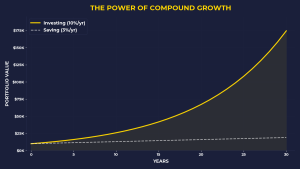
That $6 latte isn’t just $6. It’s shares of stock you won’t own. It’s compound interest you won’t earn. It’s future income you won’t receive. When you see every purchase as an opportunity cost, your brain starts calculating differently.
Sarah still buys coffee sometimes. But now she sees it clearly: she’s trading future freedom for present comfort. Most days, she chooses freedom.
If You’re Someone Who Keeps Making The Same Money Mistakes
This post is for you if you’re tired of your own financial patterns. If you’ve read the books, made the budgets, and downloaded the apps — but somehow still end up in the same place every month. If you’re smart enough to see the problem but can’t seem to solve it.
You’re not broken. You’re not weak. You’re not bad with money.
You’re running on ancient software in a modern world. The solution isn’t more discipline — it’s better programming.
The One Thing To Remember
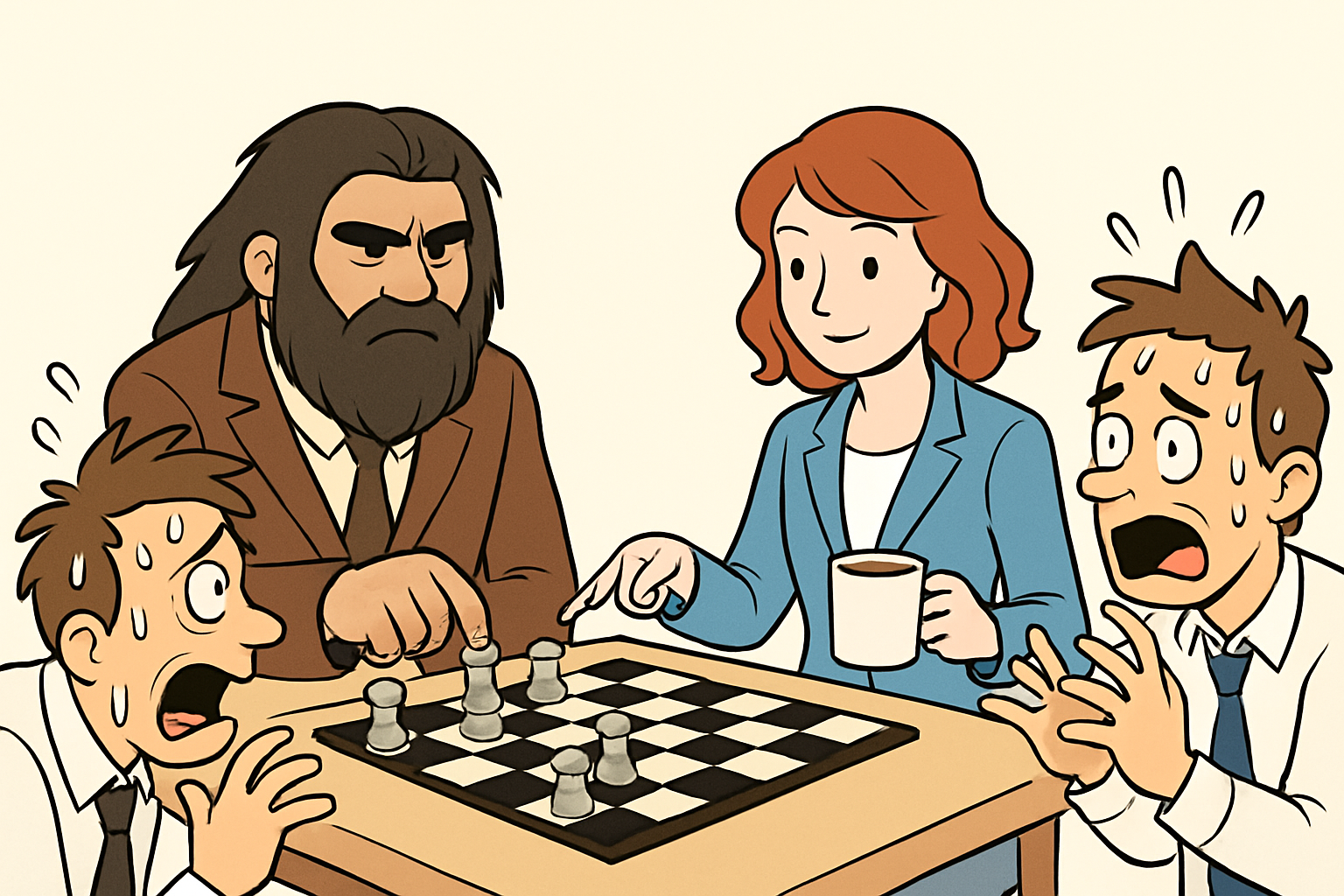
Your brain is wired to make decisions that helped your ancestors survive, not decisions that help you build wealth. Every financial choice is a battle between your 200,000-year-old survival brain and your rational mind. You can’t win this battle with willpower alone — you need to reprogram the system. Change your environment, automate your good decisions, and make future benefits visible today.
Here’s what to do right now:
• Calculate how much you spent on your biggest unnecessary expense category last month — be brutally honest
• Set up an automatic transfer of half that amount to an investment account for next month
• Find one person in your life who talks about building wealth like it’s normal, and have coffee with them this week
🎬 Prefer watching? Check out the video version on YouTube:
👉 https://www.youtube.com/@PrimalContrarian
Subscribe for daily insights on capital, wealth, and contrarian thinking.