The Coffee Shop Revelation
Marcus — 29, software engineer in Denver — sat across from me at a Starbucks on a Tuesday morning, scrolling through his Robinhood app with the same expression people wear when checking WebMD symptoms. “I don’t get it,” he said, turning his phone toward me. “I’ve been investing for three years. Reading everything. Following the smart money. And I’m basically flat.”
He pulled up his portfolio. Apple, Microsoft, some ETFs, a few trendy stocks he’d heard about on podcasts. All good companies. All reasonable choices. All bought at prices that made perfect sense at the time.
But here’s what Marcus didn’t realize: his investment philosophy wasn’t his own.
It belonged to his broker, his favorite finance YouTuber, and the marketing departments of a dozen financial services companies. They were getting rich from his philosophy. He wasn’t.
I Used to Think Smart Investing Meant Following Smart People
Look, I get it. Ten years ago, I was Marcus.
I had subscriptions to three investment newsletters, followed every Warren Buffett quote like scripture, and could recite the efficient market hypothesis by heart. My investment philosophy was a patchwork of other people’s ideas, stitched together into something that felt sophisticated but never quite worked.
Here’s the thing I didn’t understand then: most investment philosophies are designed to make money for everyone except the investor.
The broker makes money when you trade. The fund manager makes money from your fees. The newsletter writer makes money from your subscription. The only person not making consistent money? You.
I remember sitting in my apartment in 2019, looking at my brokerage account after another year of “smart” investing. I’d outperformed my savings account by maybe 3%. Meanwhile, my rent had gone up 8%, my health insurance premium jumped 12%, and my student loan balance seemed frozen in time despite monthly payments.
That’s when it hit me: I was playing someone else’s game with someone else’s rules.
The Investment Philosophy Nobody Teaches
Want to know what changed everything for me? I stopped asking “What should I invest in?” and started asking “What should I own?”
Sounds like the same question, right? It’s not even close.
Most investment philosophy focuses on asset allocation, risk tolerance, and market timing. All fine concepts. But they miss the fundamental point: investing is about transferring from the group that pays to the group that gets paid.
Think about yesterday. How much money left your bank account? Rent or mortgage payment — that’s $1,200 to $3,000 flowing to property owners. Grocery bill — maybe $80 to shareholders of food companies. Netflix, Spotify, your cell phone bill — another $100+ to various capital owners.
Every day, you send money to people who own things. The investment philosophy that actually works is simple: switch sides.
Marcus was buying stocks like he was collecting baseball cards. Apple because it’s a great company. Microsoft because everyone says it’s safe. Tesla because his coworker made money on it once.
But he never asked the crucial question: “Am I buying a piece of the machine that collects money from people like me?”
Why Your Investment Philosophy Feels So Complicated
Here’s something I learned the hard way: complexity in investing usually means someone else is making the money.
The financial industry has turned investment philosophy into this elaborate maze of terms and strategies because confusion is profitable. While you’re trying to figure out your risk tolerance and rebalancing schedule, they’re collecting fees and commissions.
Real investment philosophy can be written on a napkin.
Warren Buffett’s mentor, Benjamin Graham, had a simple approach: buy pieces of profitable companies when they’re trading for less than they’re worth. Hold them until they’re not. That’s it.
But simple doesn’t sell newsletters. Simple doesn’t require expensive advisors. Simple doesn’t generate trading commissions.
So they’ve convinced you that successful investing requires constant research, perfect timing, and sophisticated strategies. Meanwhile, the most successful investors I know follow rules so basic they sound boring.
The One Question That Changes Everything
Ready for the investment philosophy that actually works?
Before you buy anything, ask yourself: “Will this make me money while I sleep?”
Not “Is this a good company?” Not “Is this trending?” Not “What do the experts think?”
Will this specific purchase generate cash flow that doesn’t require your time?
Marcus bought Apple stock because it’s a great company. True. But Apple doesn’t pay him rent every month. It doesn’t send him dividend checks that cover his groceries. It just sits there, hoping to be worth more someday.
Meanwhile, his landlord owns a building that generates $3,600 a month from three units. His landlord’s investment philosophy is brutally simple: own things that people pay to use.
Same with the companies in Marcus’s portfolio. Apple makes money because millions of people pay $1,000+ for phones every year. Microsoft makes money because businesses pay monthly subscriptions for Office 365. Tesla makes money because people finance $50,000 cars.
Those companies don’t just exist — they collect. Every day.
But Marcus was buying them like he was collecting trophies, not like he was buying a piece of the collection system.
What Capital Actually Looks Like
Let me tell you about Sarah — 31, marketing manager in Austin. Last year, she bought a duplex for $340,000. Lives in one side, rents out the other for $1,800 a month.
Her tenant pays her mortgage.
While Marcus studies investment philosophy articles and worries about market volatility, Sarah’s building generates cash flow every single month. Rain or shine. Bull market or bear market. Recession or boom.
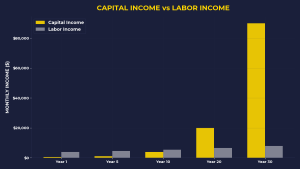
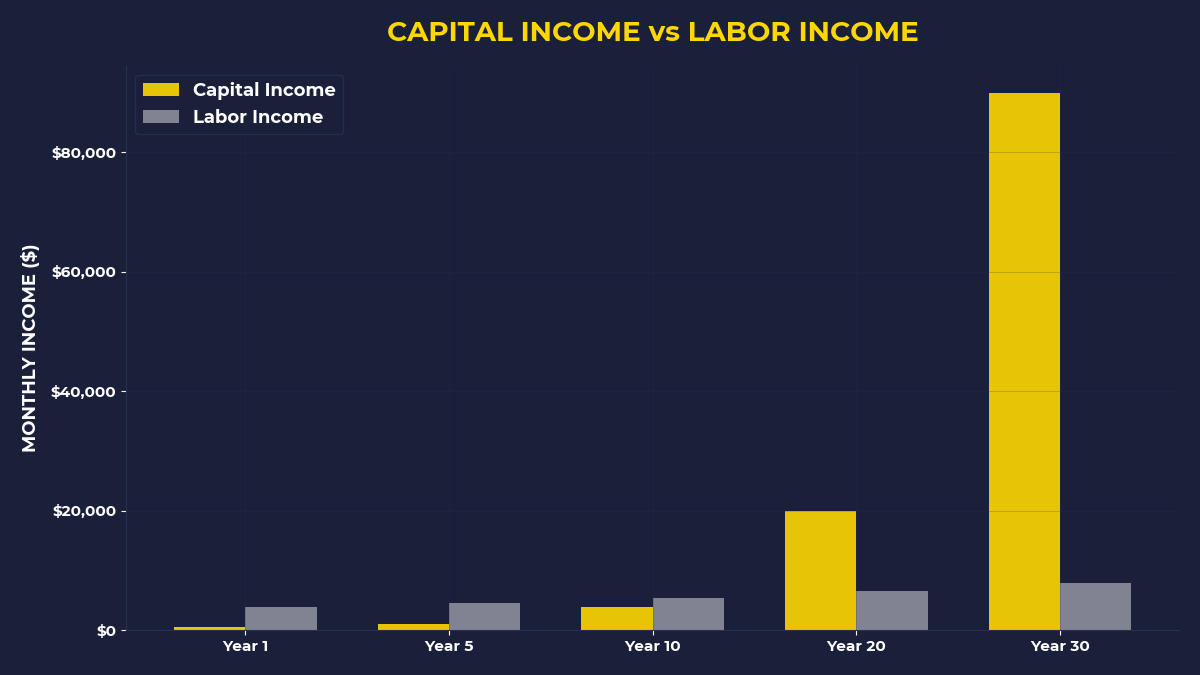
That’s what capital looks like. Not numbers on a screen. Not shares in a retirement account you can’t touch for 30 years. Cash flow that hits your bank account regardless of what you do that month.
The investment philosophy that actually builds wealth isn’t about finding the next Amazon. It’s about owning pieces of systems that people can’t avoid paying for.
Rent. Food. Transportation. Communication. Entertainment.
These aren’t investment categories — they’re invoice categories. Every month, millions of people get invoices for these things. Your investment philosophy should be about owning slices of the companies that send those invoices.
Why This Feels Wrong (And Why That’s Perfect)
When I first explained this to Marcus, he looked uncomfortable. “That feels… predatory,” he said.
I get that reaction. Most of us were raised to think that making money without working is somehow wrong. But here’s the uncomfortable truth: you’re already part of this system.
You’re just on the wrong side of it.
Every monthly bill you pay is someone else’s passive income. Your car payment is an asset on someone’s balance sheet. Your streaming subscriptions fund someone else’s retirement account.
The moral choice isn’t to opt out — you can’t. The moral choice is to stop sending 100% of your cash flow to other people’s capital and start redirecting some of it toward your own.
This isn’t about becoming a slumlord or exploiting people. It’s about owning pieces of systems that already exist and that already profit from your own daily life.
If You’re Tired of Investment Philosophy That Sounds Like Homework
Maybe you’re like Marcus was — smart, responsible, doing everything the financial advice industry tells you to do, and somehow still feeling broke.
Maybe you’ve read the books, followed the gurus, and optimized your portfolio allocation, but your net worth moves slower than your rent increases.
Maybe you’re tired of investment philosophy that requires spreadsheets and market research but never seems to generate enough money to actually change your life.
If that sounds familiar, here’s what I want you to consider: your current investment philosophy might be working exactly as designed. Just not for you.
The One Thing To Remember
Investment philosophy isn’t about picking the right stocks or timing the market or diversifying across asset classes. It’s about choosing which side of the money flow you want to be on. Right now, you’re on the paying side. Every month, you send money to landlords, corporations, and service providers. They use your money to buy more assets that generate more cash flow from people like you. The only investment philosophy that matters is this: stop being the person who pays, and start being the person who gets paid.
- Before you pay any bill this month, put $50 into a dividend-paying stock or REIT. Even if it means you have to scramble to cover expenses. Especially then.
- Look at last month’s biggest expense (probably rent or mortgage). Find one company that profits from that expense category and buy shares this week.
- Stop asking “Is this a good investment?” and start asking “Will this pay me while I sleep?” Only buy things that pass the sleep test.
🎬 Prefer watching? Check out the video version on YouTube:
👉 https://www.youtube.com/@PrimalContrarian
Subscribe for daily insights on capital, wealth, and contrarian thinking.