Marcus — 31, software developer at a fintech startup in Seattle — called me last Tuesday night. His voice had that edge people get when they’re about to confess something embarrassing.
“I’ve been doing contrarian investing for three years,” he said. “Reading all the books, buying when others sell, selling when others buy. The whole Warren Buffett playbook.”
Then came the pause.
“I just realized I’m down 23% while my index fund friends are up 47% over the same period. What the hell am I doing wrong?”
Marcus had stumbled onto the biggest lie in investing: that contrarian investing means doing the opposite of what retail investors do. He thought he was being contrarian by buying beaten-down tech stocks during corrections and selling during rallies. Classic contrarian behavior, right?
Wrong.
He was following the crowd without realizing it.
I Made The Same Mistake (And Lost $18,000 Learning It)
I know exactly how Marcus felt because I was there too. Back in 2019, I was 28 and convinced I was the smartest person in every room — especially investment rooms.
I’d read The Intelligent Investor twice. I subscribed to value investing newsletters. I bought stocks that were “hated by Wall Street.” When everyone was buying growth stocks, I was buying beaten-down energy companies and department store chains.
I felt so contrarian. So independent.
The market kept climbing while my portfolio kept bleeding. Over 18 months, I watched $18,000 of my savings evaporate while my “sheep” friends who bought boring ETFs made money hand over fist.
That’s when it hit me: I wasn’t being contrarian at all. I was following a different crowd — the crowd of people who read the same value investing books, followed the same gurus, and made the same mistakes thinking we were special.
True contrarian investing isn’t about buying what’s cheap or unpopular.
It’s about buying what the majority literally cannot buy.
What True Contrarian Investing Actually Looks Like
Here’s the thing nobody tells you about contrarian investing strategy: the real contrarians aren’t buying different stocks than everyone else.
They’re buying different asset classes entirely.
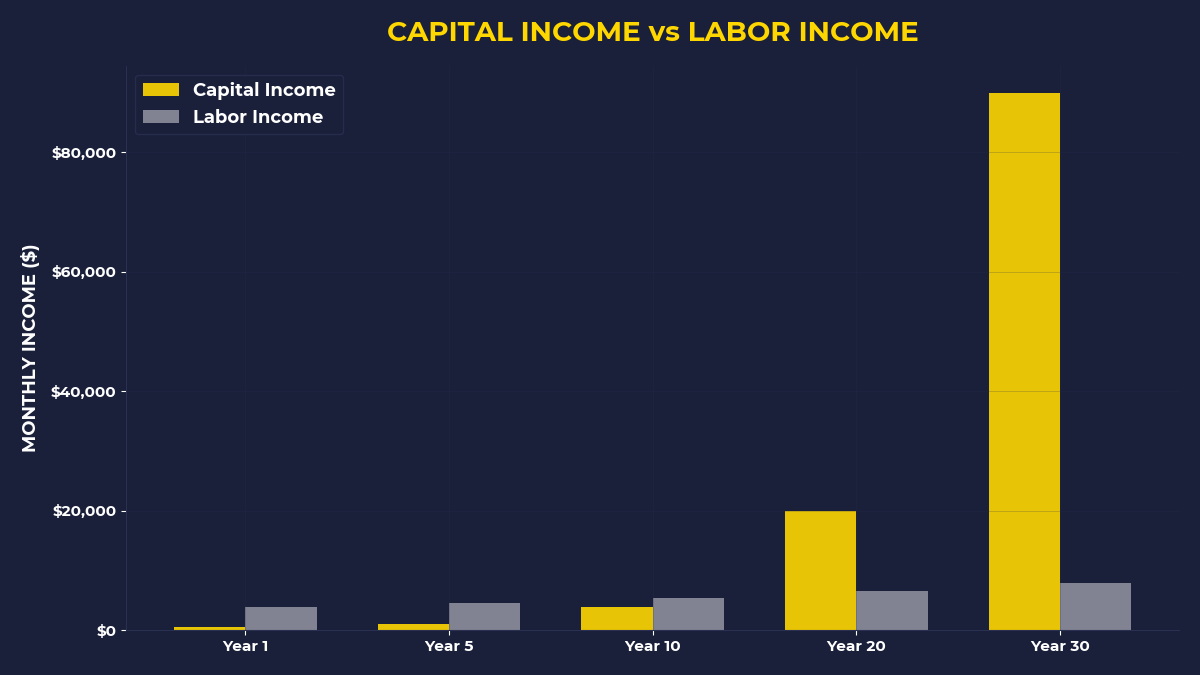
While 87% of Americans are sending their paychecks to landlords, mortgage companies, and credit card companies every month, contrarians are buying the assets that generate those cash flows.
Think about that for a second. The crowd is renting apartments. Contrarians buy apartment buildings.
The crowd is paying monthly subscriptions to Netflix, Spotify, and software companies. Contrarians buy shares of those companies.
The crowd works for companies. Contrarians own pieces of companies.
This isn’t about picking individual stocks or timing markets. It’s about being on the other side of the most basic financial transaction in capitalism: the transfer of money from workers to capital owners.
Why Your Brain Tricks You Into Fake Contrarianism
Your brain is wired to find patterns and follow rules. When you read that contrarians “buy when others sell,” your brain creates a simple rule: do the opposite of retail sentiment.
But this misses the deeper structure.
The real crowd isn’t the people buying and selling stocks. It’s the 73% of Americans who live paycheck to paycheck, sending their money to asset owners every single month without ever becoming asset owners themselves.
When Marcus was buying beaten-down individual stocks, he thought he was being contrarian. But he was still playing the same game as everyone else — trying to pick winners and losers within the stock market.
The actual contrarian move? Buying any equity at all.
Because here’s what I learned after losing that $18,000: most people never buy assets. They buy liabilities disguised as lifestyle choices.
The Apartment Building Revelation
Last year, I had coffee with Sarah — 29, marketing manager in Austin — who’d just bought her first rental property. Not a house to live in. A duplex to rent out.
“Everyone thought I was crazy,” she told me. “My friends said real estate was overpriced. My parents said I should save for a bigger emergency fund first. My boyfriend said it was too risky.”
Sarah ignored all of them. She put down $35,000 and bought a $175,000 duplex in an emerging neighborhood.
Eighteen months later, she’s collecting $2,400 in monthly rent while her mortgage payment is $1,100. That’s $1,300 in monthly cash flow, or $15,600 per year.
But here’s the kicker: the property is now worth $225,000.
While her friends were debating which growth stocks to buy, Sarah made a truly contrarian play. She bought the asset that generates the cash flow her friends pay with their rent checks.
That’s contrarian investing psychology in action.
The Question That Separates Real Contrarians From Fake Ones
Do you want to know if you’re actually being contrarian or just following a different crowd?
Ask yourself this: “Am I buying what creates the bills everyone else pays, or am I buying what everyone else thinks will go up in price?”
If you’re trying to predict price movements — even contrarian price movements — you’re still in the speculation game.
Real contrarians buy demand itself.
They buy the apartment buildings that generate rent payments. The dividend stocks that generate income from companies everyone uses. The index funds that capture the growth of the entire economy.
They’re not trying to outsmart the market. They’re trying to own the market.
Why This Approach Feels Wrong (But Works)
I know what you’re thinking. Buying boring index funds or rental properties doesn’t feel contrarian. It feels… normal.
That’s exactly the point.
The most contrarian thing you can do in a culture obsessed with day trading, crypto speculation, and get-rich-quick schemes is to buy boring assets that pay you money every month for decades.
While everyone else is chasing the next GameStop or trying to time Bitcoin peaks, you’re collecting dividends and rent payments like a 65-year-old retiree.
That’s profoundly contrarian.
Because the crowd isn’t looking for steady income. The crowd wants excitement. They want to feel smart. They want to beat the market.
You want to own the market.
The One Thing To Remember
True contrarian investing isn’t about buying different stocks than everyone else. It’s about buying assets while everyone else buys experiences, gadgets, and monthly subscriptions. The real crowd never becomes owners — they stay renters, borrowers, and subscribers their entire lives. The most contrarian thing you can do is refuse to join them.
If you’re ready to stop following fake contrarian gurus and start building real wealth:
Before you pay any bill this month, move $200 into a total stock market index fund — even if you have to eat ramen for a week
Start looking at every monthly payment you make as potential income you could own instead
Stop asking “What stock should I buy?” and start asking “What asset class generates the cash flows I’m currently paying?”
🎬 Prefer watching? Check out the video version on YouTube: