The Morning David Realized He Was Working Backwards
David Martinez — 31, software engineer in Denver — sat in his car outside his apartment complex at 7:23 AM, staring at his phone. His rent had just auto-debited. $1,847 gone. Before he’d even had his coffee, before he’d written a single line of code, before he’d earned a penny that day, his landlord had already claimed the biggest chunk of his paycheck.
The electric bill would hit tomorrow. Netflix tonight. His car payment was scheduled for Thursday. By the time David actually got paid on Friday, 73% of his money was already spoken for.
He’d been doing this dance for eight years.
David makes $87,000 a year. Good money. But every morning, he sends cash to someone else’s pocket first. The landlord owns the building David lives in. The electric company owns the grid David depends on. Toyota Financial owns the car David drives to work.
David owns his laptop. Maybe.
I Used To Be David (And Probably So Did You)
I know exactly how that feels because I lived it for years. At 28, I was making decent money but never seemed to get ahead. I’d budget, cut expenses, optimize my spending — but every month started the same way. Everyone else got paid before I even woke up.
Here’s the thing that took me way too long to figure out: the game isn’t about earning more money. It’s about changing the order of who gets your money first.
Most financial advice tells you to pay yourself first. Save 10%. Build an emergency fund. All good advice. But it misses the deeper pattern. You’re still playing in a system where your money flows to capital owners all day, every day. And you’re collecting the leftovers.
I remember the exact moment this clicked for me. I was looking at my bank statement — this was January 2019 — and I started adding up all the money that left my account without me actively deciding to spend it. Rent, insurance, subscriptions, loan payments, utilities. It came to $2,847 per month.
That’s $34,164 per year flowing automatically to people who owned things I needed.
The Real Contrarian Move
True contrarian investing isn’t about buying when stocks are down. It’s about reversing the fundamental flow of your money.
Think about Warren Buffett’s early story — the one about collecting golf balls as a kid. Young Warren would find lost golf balls around the golf course, clean them up, and sell them in packs of 12 for six dollars. But here’s the part most people miss: Warren didn’t spend that money on toys or candy. He used it to buy more assets. First more golf balls. Then pinball machines. Then farmland.
The pattern? Warren paid himself first. Before he paid for anything else, he invested in things that would pay him back.
This sounds simple, but it goes against every instinct we’ve been trained to have. We pay the landlord first because we need shelter. We pay the electric company first because we need power. We pay the car loan first because we need transportation.
But what if we flipped it?
What Happens When You Pay Capital First
David’s story has a twist. Six months after that morning in his car, he made a decision that felt completely backwards. Instead of paying his bills first, he started moving money into a brokerage account the moment his paycheck hit. $400 every two weeks, before rent, before anything.
This meant scrambling sometimes. Working weekend gigs. Eating ramen for a few days. His credit card balance went up temporarily.
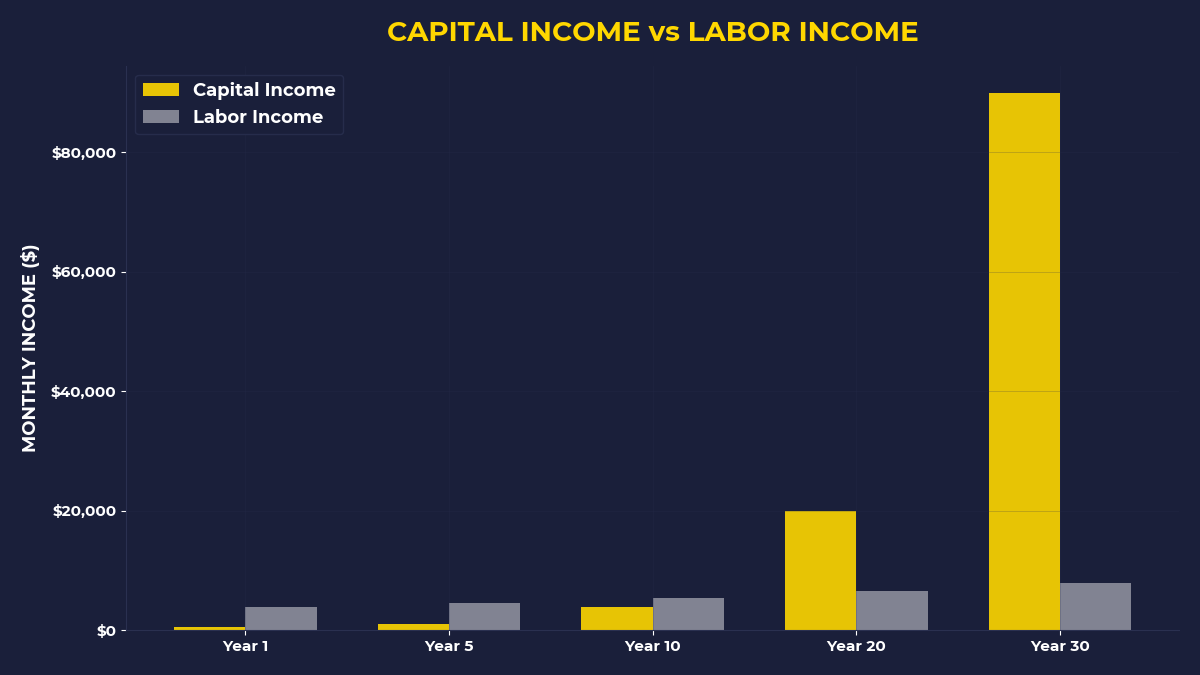
But something interesting started happening. After four months of this, David owned $3,200 worth of index funds. Those funds owned tiny slices of hundreds of companies. For the first time in his adult life, David was on the receiving end of the cash flow. Microsoft’s profits, Apple’s profits, Amazon’s profits — tiny fractions were now flowing to David.
It was maybe $12 per month at first. Nothing dramatic. But David was finally playing both sides of the equation.
The Question That Changes Everything
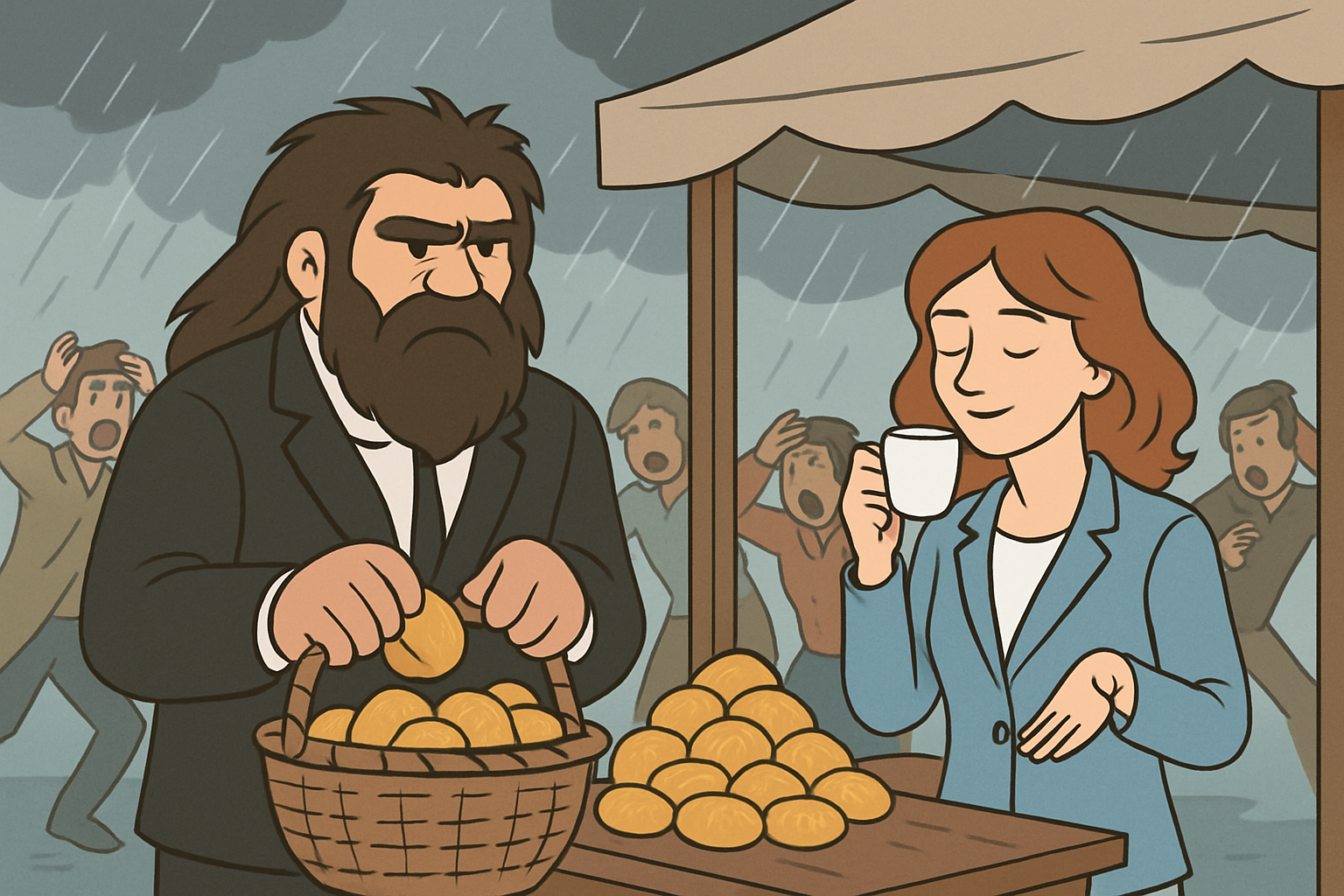
Have you ever noticed that rich people ask different questions than everyone else?
Most people ask: “How can I afford this payment?” Rich people ask: “How can I get other people to make payments to me?”
Most people ask: “What should I do to make more money?” Capital owners ask: “What should I buy that will make money while I sleep?”
This isn’t about becoming a real estate mogul or starting a business empire. It’s about shifting your brain from thinking like someone who pays capital owners to thinking like someone who is a capital owner.
When David looks at his $1,847 rent payment now, he doesn’t just see an expense. He sees a cash flow going to someone who owns an asset he needs. And he asks: “What asset can I buy that creates cash flow like this?”
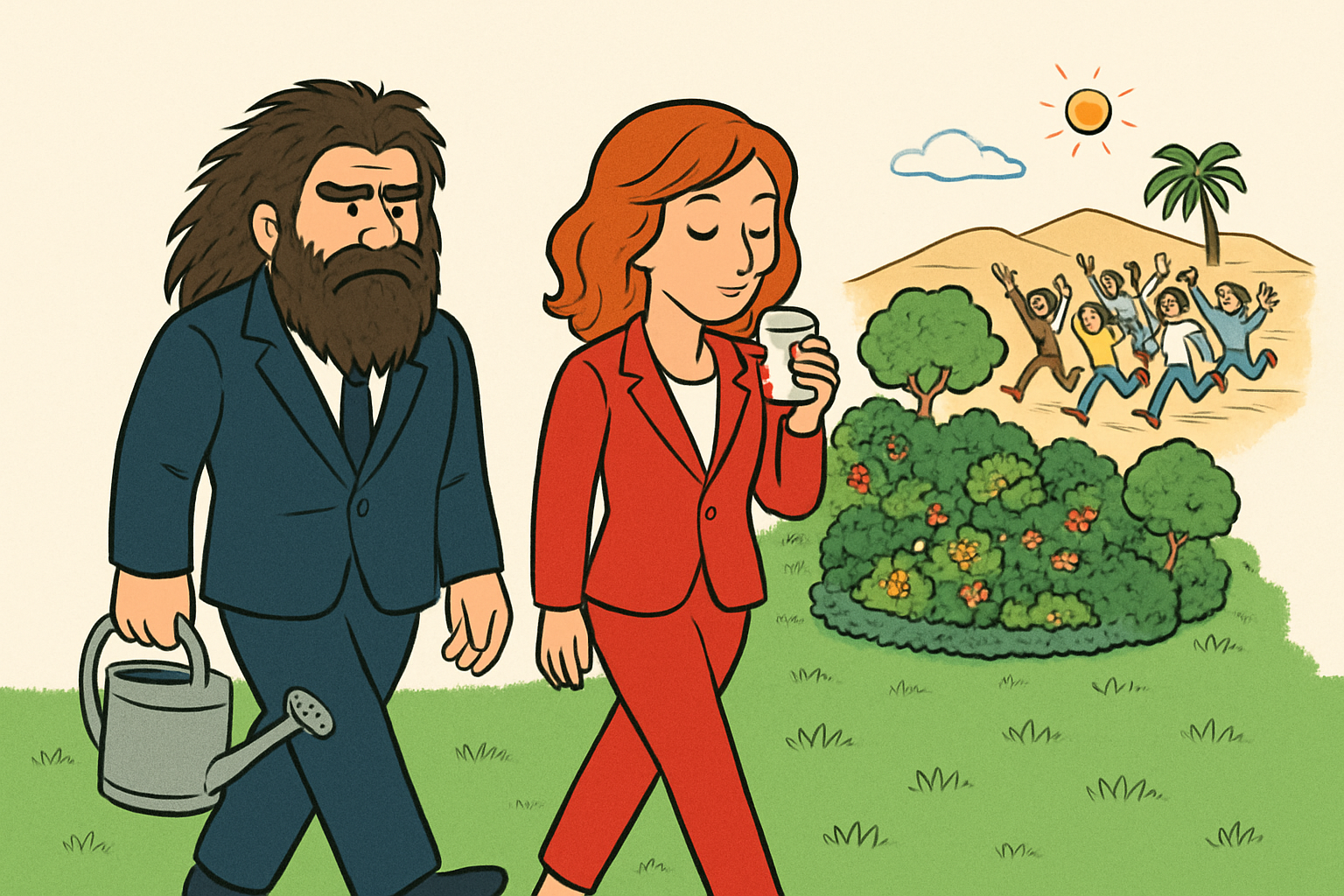
REITs. Dividend stocks. Index funds that own pieces of every major company. Even a simple S&P 500 fund means David owns tiny slices of the companies everyone else pays every day.
The Compound Effect of Ownership
Here’s where this gets powerful. David’s been following this backwards approach for 18 months now. His investment account has grown to $16,800. Nothing spectacular, but meaningful.
But the real change isn’t the dollar amount. It’s the mindset. David now thinks like someone who owns capital, not someone who just pays capital owners.
When his car lease was up, instead of signing a new lease payment, he bought a three-year-old Honda with cash and invested the difference. When his rent went up, instead of just accepting it, he started researching house-hacking strategies.
The ownership mindset is contagious. Once you start seeing yourself as a capital owner instead of just a worker, every financial decision changes.
The Uncomfortable Truth About Money Flow
Look at your bank statement from last month. Add up every automatic payment, every bill, every subscription, every loan payment. That number represents cash flowing from you to capital owners.
Now look at the money that flowed to you without you actively working for it. Dividends, interest, rental income, business profits. For most people, that number is zero.
This is the fundamental asymmetry of wealth. Some people send money to capital owners every day. Other people receive money from everyone else every day.
The contrarian insight is this: you can be on both sides of that equation simultaneously. You can pay rent to a landlord while owning REIT shares that collect rent from other tenants. You can make car payments while owning auto manufacturer stock that profits from everyone else’s car payments.

Start With One Dollar
If you’re someone who’s tired of watching your money disappear before you can make real choices with it, here’s the most contrarian thing you can do: pay yourself before you pay anyone else. Not after. Before.
This feels wrong. Your brain will resist it. Bills are “responsible.” Investing feels “risky.” But here’s what I learned: staying on the paying side of capitalism is the riskiest position of all.
David started with $50 per paycheck. That was scary enough. But six months later, when his investment account started paying him dividends, even tiny ones, something clicked. He wasn’t just working for money anymore. Money was starting to work for him.
The One Thing To Remember
Every morning, capital owners wake up to money flowing into their accounts while they sleep. Not because they’re special or lucky, but because they own pieces of the systems everyone else pays into every day. The most contrarian investment strategy isn’t about picking stocks or timing markets — it’s about switching from the paying side to the receiving side of the wealth equation, even if you start with one dollar.
- Before paying any bill this month, move $25 to a brokerage account and buy index fund shares
- Calculate how much you sent to capital owners last month (rent, loans, utilities, subscriptions) and set a goal to own assets that generate 1% of that amount
- Every time you make a payment to someone else’s asset, ask: “What asset can I buy that creates cash flow like this?”
🎬 Prefer watching? Check out the video version on YouTube:
👉 https://www.youtube.com/@PrimalContrarian
Subscribe for daily insights on capital, wealth, and contrarian thinking.