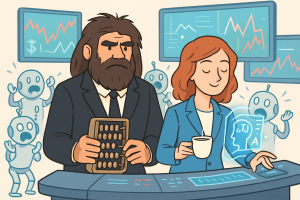
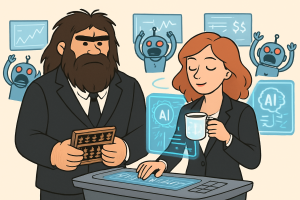
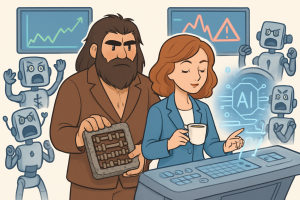
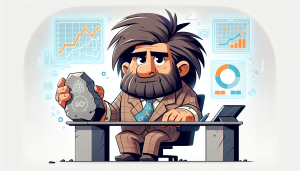
Marcus — 29, graphic designer in Denver — called me at 11:47 PM last Tuesday. His voice had that shaky quality you get when reality hits sideways.
“They replaced me with MidJourney,” he said. “Twelve years of design experience. Gone. The junior designer they kept? She just prompts the AI now.”
Marcus earned $67,000 annually creating marketing materials for mid-size companies. Good work. Steady clients. The kind of creative job that felt immune to automation until it wasn’t. His replacement costs $20 per month in software subscriptions and produces designs in minutes that used to take him hours.
The kicker? Marcus had been excited about AI tools just six months earlier.
He thought they’d make him more efficient, more valuable. Instead, they made him obsolete. The company kept one designer to manage the prompts and let four others go. Do the math — that’s 80% cost reduction overnight.
I Made The Same Mistake
I know exactly how Marcus felt because I lived through a smaller version of this in 2018.
I was freelance writing for financial blogs, charging $150 per 1,500-word article. Good money for someone who could knock out two pieces per day. Then GPT-3 happened. Clients started asking why they should pay me when AI could write “good enough” content for pennies.
Here’s the thing. I was thinking like an employee, not an owner.
I focused on defending my job instead of understanding the shift happening underneath everything. While I was polishing my portfolio and pitching clients on “human creativity,” smarter people were buying shares in the companies building these AI systems.
Between January 2023 and November 2024, NVIDIA stock went from $143 to over $750. Microsoft added $500 billion in market cap. Even boring enterprise software companies with AI features doubled in value.
I was worried about losing $300 per day in writing income. The people who owned pieces of these companies were gaining thousands per day in asset appreciation.
Capital Is Stored Demand
Want to understand what’s really happening with AI economics?
Every technology shift creates two groups: those who own the tools and those who get replaced by them. The printing press made scribes obsolete but created fortunes for people who owned printing equipment. The assembly line eliminated craftsmen but enriched factory owners.
AI follows the same pattern, just faster and bigger.
When Marcus lost his job, that demand for graphic design didn’t disappear. It got concentrated. The same marketing materials still need to get created. The same brands still need visual identity. The demand just flows to whoever owns the AI systems that can fulfill it efficiently.
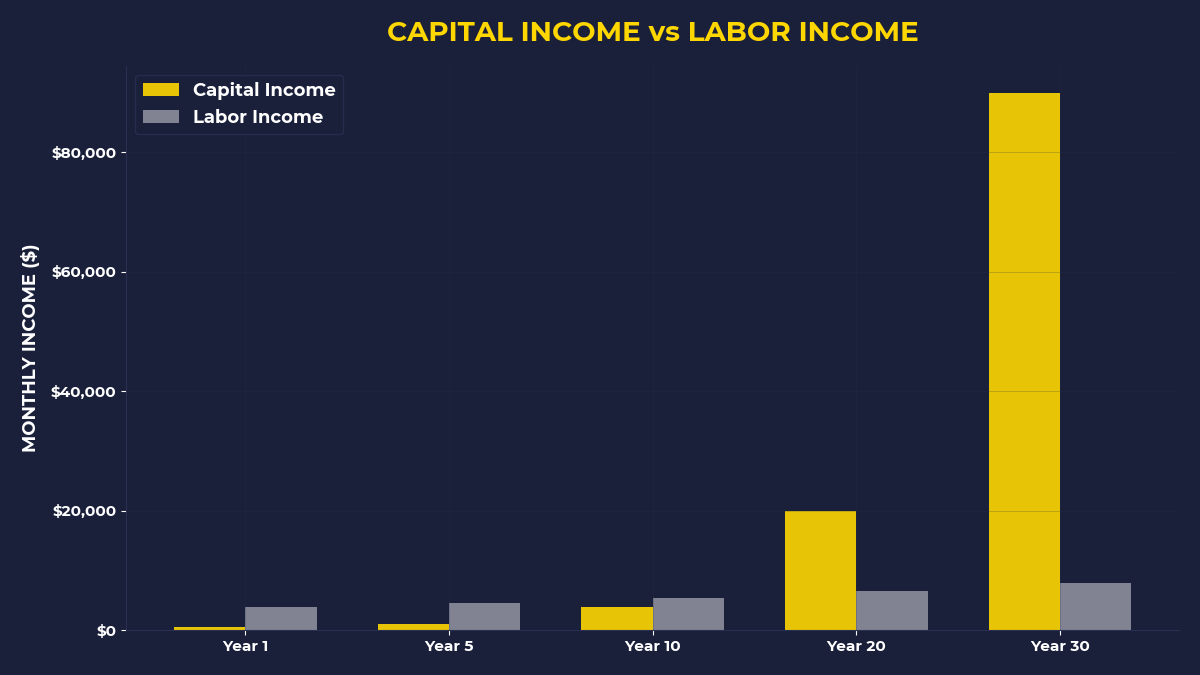
This is what capital actually is — stored demand waiting to be released. Marcus had skills. The people who own MidJourney and similar platforms have capital. Skills get disrupted. Capital gets paid.
Think about what happened: Four designers’ worth of demand now flows to one person plus the AI platform. The platform owners capture most of that value. The remaining human captures a small piece. Everyone else gets nothing.
The Question Nobody Asks
After Marcus told me his story, I asked him what he planned to do next.
“Learn new skills,” he said. “Maybe UX design or video editing. Something AI can’t do yet.”
Wrong question entirely.
The right question isn’t “What skills should I develop?” It’s “What should I own?” Marcus was still thinking about what to do instead of what to buy. He was planning to run faster on the same treadmill instead of stepping off onto the escalator.
Here’s what I learned during my own AI disruption: Every hour you spend getting better at something AI will eventually automate is an hour you didn’t spend acquiring ownership in the systems doing the automating.
I spent months improving my writing speed and research abilities. Complete waste of time. I should have been buying shares in companies developing language models, content platforms, and AI infrastructure.
The people getting rich from AI aren’t the people using it better. They’re the people who own it.
Two Futures Diverging
Look around right now and you’ll see the split happening in real time.
Group One: People fighting to stay relevant in their current roles. They’re learning to prompt AI better, trying to prove human creativity still matters, upskilling into areas that feel safe from automation. They’re focused on what they can do.
Group Two: People positioning themselves as owners of AI-generating assets. They’re buying stock in companies building AI systems, starting businesses that use AI to replace expensive human labor, creating products that get better as AI improves. They’re focused on what they can own.
The wealth gap between these groups will be staggering.
A software engineer earning $120,000 annually might feel comfortable because “AI can’t code yet.” But the people who own shares in AI development companies are making more per day from asset appreciation than that engineer makes per month from labor.
Marcus could spend two years learning UX design and maybe get his $67,000 salary back. Or he could take $5,000 and systematically buy shares in companies that automate creative work. In five years, which approach creates more wealth?
The One Asset Nobody Teaches You to Buy
Most people think AI economics is about technology. It’s actually about ownership structure.
Every AI system that replaces human work creates a cash flow. That cash flow goes to whoever owns the system. The question is whether you’re sending that cash flow to someone else or collecting it yourself.
Right now, while everyone argues about AI safety and job displacement, you can still buy ownership stakes in the systems doing the displacing. Not just the obvious plays like NVIDIA or Microsoft. Any company that successfully uses AI to replace expensive human labor becomes more valuable.
A restaurant chain that automates order-taking. A accounting firm that uses AI for basic tax prep. A medical practice that automates appointment scheduling and basic diagnosis. A marketing agency that uses AI for content creation and ad optimization.
The pattern is always the same: human labor gets converted into capital returns. You can be on either side of that conversion.
I started buying shares in companies adopting AI tools about eighteen months ago. Not because I understand the technology — I don’t. But because I understand the economic pattern. When human work gets automated, the savings flow to asset owners.
What This Means for You
If you’re someone who works for a living instead of owning assets for a living, AI creates urgent pressure to switch sides.
Not because your specific job will definitely get automated — though it might. But because the entire economy is reorganizing around who owns the systems versus who gets replaced by them.
Marcus is 29. He has probably 35 working years left. He can spend those decades trying to stay one step ahead of AI automation, constantly retraining and reskilling as each new technology makes his current abilities obsolete.
Or he can spend the next five years systematically acquiring ownership in the systems doing the automating.
The people who own capital don’t worry about AI taking their jobs. They hope it takes everyone else’s jobs faster, because that means more cash flow directed toward their assets and less toward expensive human labor.
The One Thing to Remember
AI doesn’t create unemployment — it creates a transfer of wealth from people who work to people who own. The technology itself is just the mechanism. The real change is who captures the economic value that used to go to human workers. Every job that gets automated represents demand that now flows to asset owners instead of wage earners. You can choose which side of that transfer you want to be on, but you have to choose soon. The window for buying ownership stakes at reasonable prices won’t stay open forever.
Here’s what you do this week:
• Open a brokerage account if you don’t have one and buy $100 worth of shares in any company successfully using AI to reduce labor costs
• Calculate how much you spend monthly on services that are getting automated (design tools, writing software, customer service platforms) and redirect that money into owning those companies instead of paying them
• Ask yourself one question before making any career move: “Does this put me on the side that owns the automation or the side that gets automated?”
🎬 Prefer watching? Check out the video version on YouTube: