Marcus — 29, software engineer in Portland — works 55 hours a week at his startup, runs food delivery on weekends, and just launched a freelance web design business. He makes $127,000 a year combined and feels like he’s sprinting on a treadmill that keeps speeding up.
Last month he called me at 11 PM, frustrated. “I’m doing everything right,” he said. “Multiple income streams, side hustles, grinding every day. But I’m more tired than ever and my bank account barely grows.”
I asked him one question: “What did you buy this month?”
Long pause. “Buy? Like, what do you mean? I bought groceries, paid rent, upgraded my laptop for the freelance work…”
“No,” I said. “What did you buy that will pay you back?”
Another pause. “I… don’t think I understand.”
I Was the Ultimate Grind Culture Casualty
I know exactly how Marcus felt because I lived that life for three years straight. Wake up at 5 AM, hit the gym, work my day job, rush to my evening consulting gigs, squeeze in “networking events,” fall into bed at midnight, repeat.
Everyone told me I was “hustling.” I felt productive. Busy meant important, right?
Here’s what nobody mentions about grind culture: it’s the most expensive way to stay poor. You’re burning calories, burning time, burning mental energy — all to generate cash that immediately flows to other people. Your landlord. Your car payment company. Your grocery bill. Your Netflix subscription.
The math is brutal. I was working 70-hour weeks to generate cash flows for everyone except me.
That’s when I met David.
The Laziest Millionaire I’ve Ever Met
David — 41, owns a bunch of laundromats in Memphis — might be the laziest person I know. He sleeps until 9 AM, plays golf three times a week, and takes month-long trips to Costa Rica.
He makes more in a month than Marcus makes in six.
When I first met David, I assumed he inherited money or got lucky with crypto. I was wrong. He started with $3,000 and a different question than everyone else.
Most people ask: “How can I work harder to make more money?”
David asked: “What can I buy that will make money while I sleep?”
That question changed everything for him. And it should change everything for you too.
In 2018, David was managing a retail store for $45,000 a year. Instead of picking up extra shifts or starting a side hustle, he spent three months researching coin-operated businesses. He found a beat-up laundromat for sale, negotiated it down to $3,000, and bought it.
The place was a mess. But people needed clean clothes.
Within six months, that laundromat was generating $800 a month in profit. David took that $800 and bought another laundromat. Then another. By year three, he owned twelve.
Now his laundromats generate $47,000 a month while he plays golf.
What Separated David From Everyone Else?
David understood something most people never learn: capital is stored demand.
Think about it. People in Memphis need clean clothes whether David shows up or not. That need — that demand — exists 24/7. David’s laundromats capture that demand and convert it into cash flow.
He didn’t create the demand. He bought access to it.
That’s the difference between workers and owners. Workers create value with their time and energy. Owners buy access to other people’s demand.
Warren Buffett figured this out when he was twelve. He collected golf balls from the local course and sold them back to golfers for 50 cents each. But the brilliant part wasn’t the hustle — it was what he did with the money.
He bought a pinball machine and put it in a barbershop. The machine made money while Warren slept. He took that money and bought more pinball machines. By age 15, he owned a paper route, several pinball machines, and was buying stocks.
Warren wasn’t working harder than other kids. He was working differently.
The Question That Reveals Everything
Here’s a simple test. Look at where your money went last month.
How much went to rent or mortgage payments? That money flowed to someone who owns real estate.
How much went to groceries? That money flowed to shareholders of Walmart, Kroger, or Amazon.
How much went to your car payment? That money flowed to Ford, Toyota, or Tesla shareholders.
How much went to Netflix, Spotify, your phone bill? All of it flowed to capital owners.
Now ask yourself: How much of your money flowed back to you?
If you’re like most people, the answer is close to zero. You’re working full-time to generate cash flows for other people’s assets.
The laziest people I know figured out how to flip this equation.
The Laziest Wealth Strategy Ever Created
I know what you’re thinking. “I can’t buy laundromats. I don’t have $3,000 to invest. This doesn’t apply to me.”
Wrong.
The laziest wealth strategy works at any income level. It’s so simple it feels stupid.
Before you pay any bill this month, buy something that pays you back.
Start with $25. Buy a share of an S&P 500 index fund. Congratulations — you now own tiny slices of Apple, Microsoft, Amazon, and 497 other companies. Their employees work while you sleep. Their profits flow to you.
Next month, do it again. And again.
This is so lazy it barely counts as investing. You’re not researching companies, timing markets, or making complex decisions. You’re just redirecting money that was going to capital owners anyway.
But here’s the key: you have to do it before paying bills. Not after.
Most people pay rent, groceries, car payments, subscriptions — then invest whatever’s left over. Which is usually nothing.
The lazy approach flips this. Pay yourself first. Then figure out how to cover the bills.
Why Your Brain Fights This
Your brain is programmed to prioritize immediate survival over long-term wealth building. When you see bills, it panics. “Pay the rent! Buy groceries! Don’t let anything bad happen!”
But this programming keeps you trapped in a cycle where you’re always working for other people’s capital.
The lazy approach forces a different conversation with your brain. When you buy assets first, your brain has to get creative about covering expenses. Maybe you cook dinner instead of ordering DoorDash. Maybe you negotiate your phone bill. Maybe you find a cheaper apartment.
These adjustments feel like work. But they’re actually investments in your future laziness.
The Compound Laziness Effect
Here’s what happened to me when I started asking “what should I buy?” instead of “what should I do?”
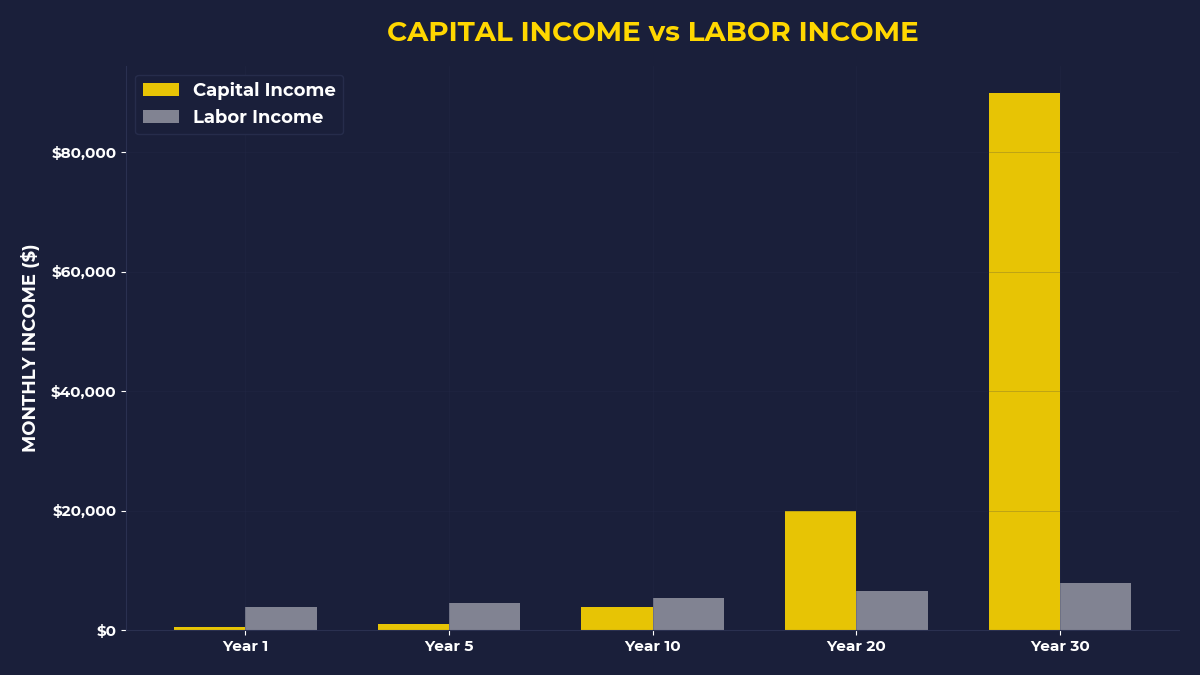
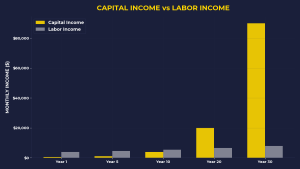
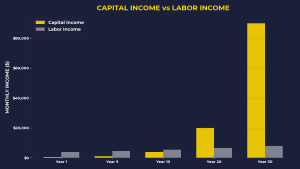
Year one: I bought $200 worth of index funds per month. Felt like nothing was happening.
Year two: My dividends covered my Netflix subscription. Still felt small.
Year three: My dividends covered my car insurance. Started to feel real.
Year five: My dividends covered my rent. This changed everything.
Today, my assets generate enough cash flow that I work because I want to, not because I have to. I’m lazier than I’ve ever been and wealthier than I ever imagined.
The compound effect isn’t just about returns. It’s about compound laziness. Each dollar you redirect from bills to assets makes your future self a little lazier.
If You’re Someone Who Values Your Time
This approach isn’t for everyone. If you genuinely love working 70-hour weeks, if you find meaning in the grind, if you never want to retire — ignore everything I’ve said.
But if you’re someone who values time freedom over busy work, who would rather own assets than trade hours for dollars, who wants to build wealth without burning out — then start asking the lazy person’s question.
Not “how can I work harder?” but “what should I buy?”
The One Thing To Remember
Capital is lazy people technology. It lets demand work for you while you do other things. The hardest working people I know are often the poorest because they’re too busy creating value to capture it. The laziest people I know are often the wealthiest because they bought access to other people’s demand. Your next dollar can either pay someone else’s bills or start working for your future self.
Before paying any bill this month, buy $25 worth of an index fund
Ask “what should I buy?” instead of “what should I do?” when you want more money
Redirect one monthly expense (coffee, subscription, etc.) into asset purchases for 90 days
🎬 Prefer watching? Check out the video version on YouTube: