Marcus — 29, software engineer in Denver — called me last Tuesday night sounding defeated. He’d just finished reading another productivity book, this one promising to unlock his “wealth-building potential” through better morning routines and networking strategies.
“I’ve read seventeen of these books this year,” he said. “I wake up at 5 AM, meditate, journal, optimize my calendar, attend networking events twice a week. My LinkedIn is on fire. But my bank account looks exactly the same as it did twelve months ago.”
Marcus was asking the question 97% of people ask when they want to build wealth: What should I do?
The Question That Keeps You Broke
I know exactly how Marcus felt because I spent three years trapped in the same loop. I was 26, working 60-hour weeks as a marketing manager, reading every success book I could find. The 7 Habits. Think and Grow Rich. The 4-Hour Workweek. I had color-coded calendars and productivity apps that would make a Fortune 500 CEO jealous.
Here’s what all those books taught me: wake up early, set goals, develop skills, build relationships, work harder, work smarter, think positive.
All variations of the same question: What should I do?
And for three years, I did everything. I networked until my business card collection could wallpaper a small room. I took online courses in finance, sales, and digital marketing. I optimized my resume so perfectly that recruiters started calling me unsolicited.
My salary jumped from $45,000 to $72,000. I felt successful.
But every month, the same thing happened. Rent check: $1,400 to my landlord. Car payment: $380 to Toyota Financial. Student loan: $340 to Navient. Groceries, utilities, insurance, Netflix, Spotify — a parade of companies collecting pieces of my paycheck before I even saw it.
I was earning more money and still living paycheck to paycheck.
The Question Capital Owners Ask Instead
The breakthrough came from an unlikely source: Warren Buffett’s childhood.
Most people know Buffett as the world’s greatest investor. What they don’t know is how he thought about money when he was twelve years old, collecting lost golf balls around Omaha country clubs.
Young Warren would spend hours crawling through bushes and wading into water hazards, collecting balls that golfers had abandoned. He’d clean them up and sell them back to golfers for 50 cents per dozen — about 75 cents in today’s money.
Here’s what’s remarkable: Buffett didn’t think, “How can I become a better golf ball finder?” He didn’t optimize his crawling technique or network with groundskeepers.
Instead, he thought: What should I buy?
He used his golf ball profits to buy a pinball machine, which he placed in a barbershop. The machine generated quarters while he slept. When it made enough money, he bought a second machine. Then a third.
By age 15, he’d bought a 40-acre farm in Nebraska.
The farm generated rent payments while he focused on school.
Why This Question Changes Everything
Think about every piece of financial advice you’ve ever received. Your parents, teachers, career counselors, even most financial advisors — they all focused on the doing question.
“Get good grades so you can get a good job.”
“Work hard and you’ll get promoted.”
“Develop valuable skills and you’ll earn more money.”
All true. All focused on what you should do.
But here’s what nobody tells you: every successful person eventually transitions from asking “what should I do?” to asking “what should I buy?”
When you ask “what should I do?” you’re thinking like an employee. When you ask “what should I buy?” you’re thinking like an owner.
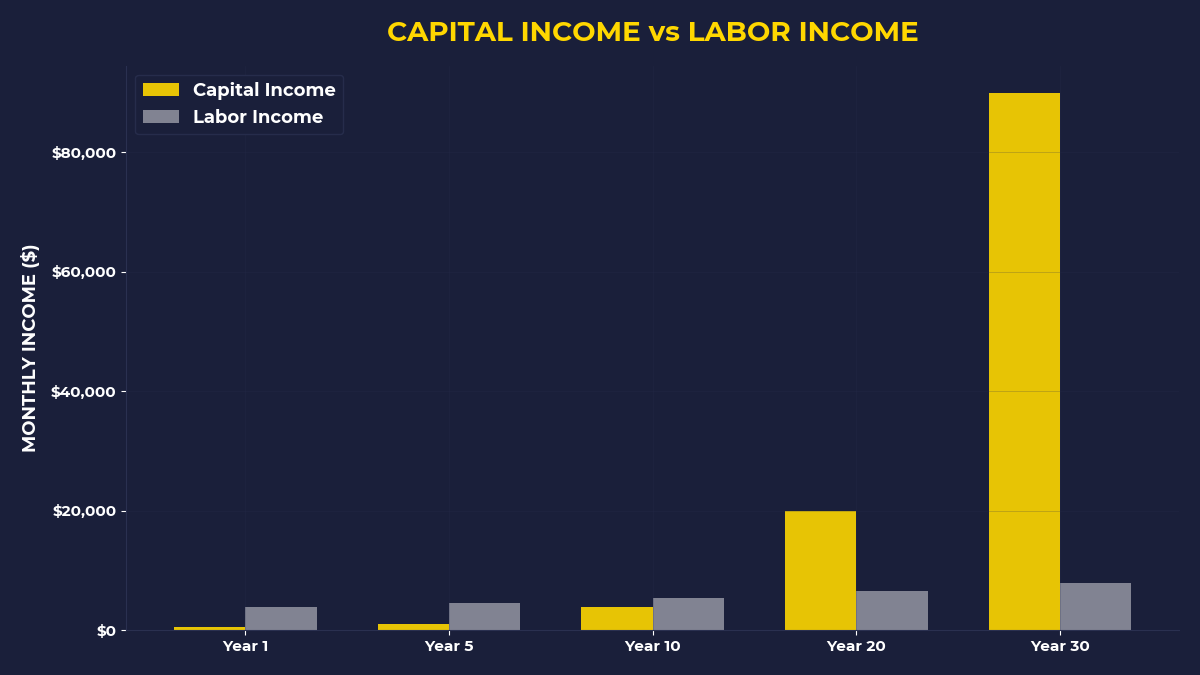
Employees trade time for money. Owners collect money while they sleep.
The Laundromat Test
Let me show you the difference with a simple example.
Imagine you want to get into the laundromat business. Most people would ask: “What should I do to run a successful laundromat?”
The answers focus on execution: Find a good location. Learn about commercial washers and dryers. Understand detergent costs. Master customer service. Handle the books yourself to save money.
This thinking leads to becoming a self-employed operator. You own a job, not a business.
But when you ask “what should I buy?” your brain shifts completely.
You start thinking about systems instead of skills. Should I buy an existing laundromat or build from scratch? Which equipment generates the highest return per square foot? Should I buy multiple locations and hire managers? Can I buy coin-operated machines that require minimal supervision?
The “buying” question automatically introduces leverage. Instead of doing everything yourself, you’re buying systems that work without you.
Here’s the kicker: you don’t need to start a laundromat to apply this thinking.
What You Can Buy Starting Today
The most accessible answer to “what should I buy?” is shares of companies.
When you buy stock in Microsoft, you’re buying a piece of a system that generates $200 billion in annual revenue. You own a tiny slice of 220,000 employees’ productivity. You collect dividends while 220,000 people go to work every day.
When you buy an S&P 500 index fund, you’re buying pieces of 500 different cash-generating systems. Every time someone uses Google, shops on Amazon, drinks Coca-Cola, or pays their Visa bill, you collect a fraction of that transaction.
But here’s where most people get it wrong: they treat investing like a side hobby instead of their primary wealth-building strategy.
Remember Marcus, the software engineer I mentioned at the beginning? When I explained this concept to him, his first response was: “But I can barely save $200 a month after my expenses.”
That’s exactly the problem.
The Capital Owner’s Money Rule
Here’s what I learned from studying how wealthy people actually build wealth: they pay themselves first, not last.
Most people follow this sequence: earn money, pay all their bills, save whatever’s left over.
Capital owners follow this sequence: earn money, buy assets, figure out how to pay the bills with what’s left.
I know this sounds backwards. It felt wrong when I first tried it.
But here’s what happens when you flip the sequence: you force yourself to find creative ways to cover your expenses instead of creative ways to spend your income.
When Marcus has $200 left after expenses, he has no pressure to increase his income. When he puts $400 toward assets and has to cover a $200 shortfall, suddenly he’s motivated to freelance on weekends, negotiate his salary, or find a side income stream.
The pressure creates action.
The Compound Effect of Ownership Thinking
Six months after our conversation, Marcus called me with an update.
He’d started putting $400 a month into index funds before paying any other bills. The first month was brutal — he had to do freelance web development projects just to cover groceries. But something shifted in his thinking.
“I stopped seeing my salary as spending money,” he told me. “Now I see it as asset-buying money that happens to cover my expenses too.”
He’d also started a small side business building websites for local restaurants. But instead of spending that income, he was using it to buy more index funds and a few individual stocks in companies he understood.
The change wasn’t just financial. Marcus had developed what I call “ownership vision” — the ability to see income-generating opportunities everywhere.
He noticed his apartment complex had no laundry facilities and started researching coin-operated machines. He saw local food trucks struggling with online ordering and pitched them website solutions. He started viewing every problem as a potential business system he could buy into or create.
The One Thing To Remember
Every wealthy person you admire made the same mental shift at some point: from asking “what should I do?” to asking “what should I buy?” This isn’t about starting a business or becoming an entrepreneur — it’s about thinking like an owner instead of an employee. When you ask the ownership question, you start seeing opportunities to collect money instead of just earn it.
• Before you pay any bill this month, move $100-500 into a brokerage account and buy index funds
• Write down three problems you encounter regularly and ask: “What could I buy to solve this for many people?”
• Next time you receive financial advice, ask yourself: “Is this person teaching me what to do, or what to buy?”
🎬 Prefer watching? Check out the video version on YouTube: