The most expensive question you can ask is: “What should I do to make more money?”
I spent my twenties asking this question obsessively. I read every productivity book, took every course, networked like my life depended on it. I optimized my morning routine, learned new skills, and worked 70-hour weeks. The harder I worked, the busier I got. But something was wrong. My bank account wasn’t growing proportionally to my effort.
Then I met someone who changed everything with one sentence: “Stop asking what you should do. Start asking what you should buy.”
This isn’t semantic wordplay. It’s the difference between renting your time forever and buying your freedom back. The question “what should I do” traps you in labor. The question “what should I buy” leads you to leverage.
Why Your Brain Defaults to Labor
Here’s the thing about human wiring: we’re programmed to trade effort for reward. Our ancestors survived by hunting, gathering, building shelters with their hands. The harder they worked, the more they ate. This instinct served us for 200,000 years.
It’s killing us now.
When faced with financial pressure, your primal brain activates what I call the “work harder” circuit. Rent due? Work more hours. Car payment looming? Pick up a side hustle. Credit card debt growing? Find a better job, work weekends, optimize your LinkedIn profile.
But here’s what nobody tells you: every hour you spend working harder is an hour you don’t spend thinking about what to buy. And while you’re grinding, someone else is buying the business that employs you, the apartment building you rent from, the stocks that pay dividends while you sleep.
They’re asking a different question entirely.
The Golf Ball Principle That Changed Everything
Warren Buffett understood this at age 13. While other kids were asking “how can I make money,” young Warren asked “what can I buy that people want?”
He found lost golf balls around local courses and sold them for 6 cents each. Simple enough. But here’s where it gets interesting: Buffett could have spent every afternoon crawling through bushes, maximizing his golf ball collection output. Instead, he took the money and bought something else — a pinball machine.
He placed it in a barbershop. The machine earned money while Warren was at school. Then he bought another machine. Then another. By high school, he owned multiple revenue streams that worked without him.
Same principle, different question. Instead of “how can I work harder,” he asked “what can I buy that generates cash flow?”
The golf balls taught him labor. The pinball machines taught him leverage.
What Happens When You Ask the Wrong Question
I watch brilliant people destroy their wealth potential with this question every day. They ask “what should I do” and immediately start optimizing the wrong variables.
A software engineer asks what she should do and decides to learn machine learning on nights and weekends. She spends 400 hours over two years mastering new skills. Her salary increases from $120,000 to $150,000. She’s proud of the 25% raise.
Meanwhile, her neighbor asks “what should I buy” and purchases a duplex for $300,000 with 20% down. The rental income covers the mortgage plus $400 monthly. In two years, the property appreciates to $380,000. He’s made $80,000 in equity plus $9,600 in cash flow, all while sleeping.
Same time investment. Different question. Different outcome.
The engineer optimized her human capital. The neighbor bought leverage.
The Hidden Cost of Self-Improvement
Look, I’m not against learning or growing. Skills matter. But here’s what the productivity industrial complex won’t tell you: every hour spent improving yourself is an hour not spent acquiring assets.
This creates what I call the “self-improvement trap.” You get addicted to becoming better instead of buying better. You read about morning routines while missing real estate deals. You optimize your resume while stock prices compound without you.
The cruelest part? Self-improvement feels productive. Your brain releases dopamine when you complete a course or read a book. But learning without ownership is just expensive entertainment.
Think about it: if you spent the next five years becoming the world’s best widget-maker, you’d still be trading your time for money. But if you spent those same five years buying widget-making businesses, you’d own the output of hundreds of widget-makers.
Which path leads to freedom?
How Rich People Think About Laundromats
When most people consider starting a laundromat, they think: “I’ll rent a space, install the machines myself, and work there daily to keep costs down. If I work hard enough, it’ll succeed.”
This is “what should I do” thinking. It leads to self-employment, not wealth.
Someone asking “what should I buy” approaches the same opportunity differently. They research locations with the highest demand density. They compare existing laundromats for acquisition versus building new. They design systems so the business runs without their daily presence.
Most importantly, they think in multiples from day one. If one location generates $4,000 monthly profit, what about five locations? How do they buy the second laundromat with profits from the first?
This is compound capital formation. The first person bought themselves a job. The second person bought a system that buys more systems.
The Simplest Version: Just Buy the Market
You don’t need to become a real estate mogul or business owner. The easiest application of “what should I buy” is stupidly simple: buy pieces of the best companies on Earth.
When you purchase shares in Microsoft or Apple or Amazon, you’re buying the output of thousands of brilliant employees. While you sleep, teams in Seattle and Cupertino are solving problems, creating products, generating revenue. You own a slice of their effort.
This is leverage without management. You asked “what should I buy” and the answer was “pieces of businesses better than any I could build.”
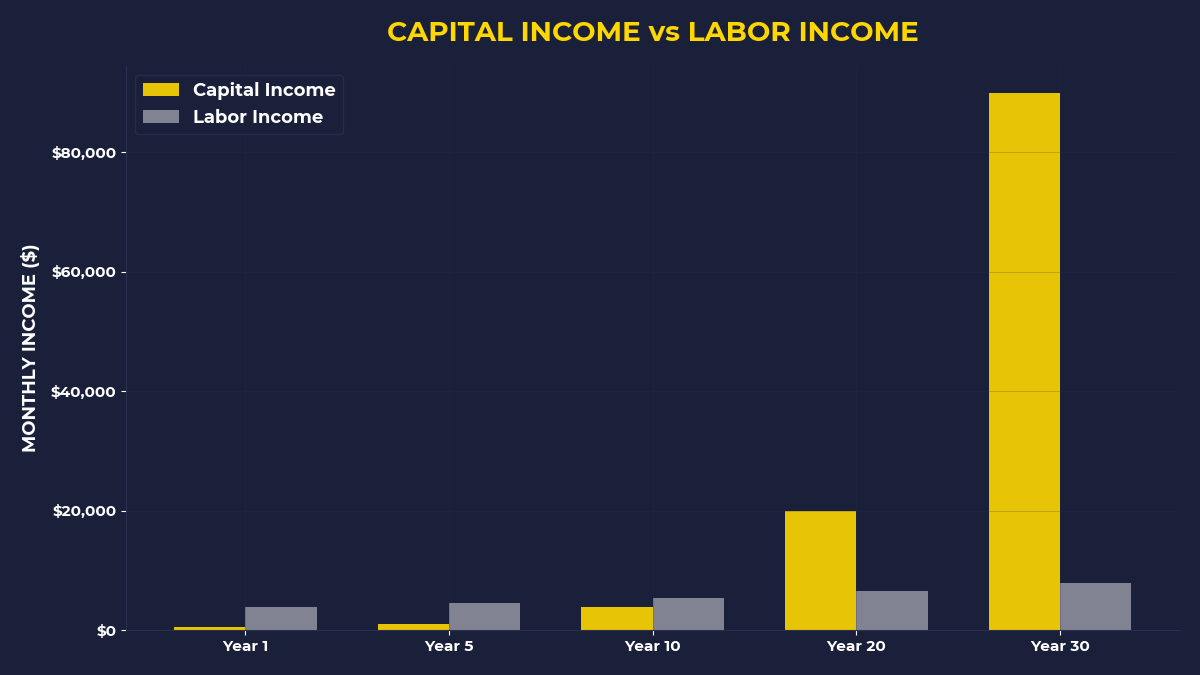
Since 1957, the S&P 500 has averaged 10.5% annual returns. A $500 monthly investment compounds to over $1.3 million in 30 years. That’s what happens when you consistently ask “what should I buy” instead of “what should I do.”
The market doesn’t care how hard you work. It only cares that you showed up to buy.
Why This Mental Shift Feels Uncomfortable
Switching from “what should I do” to “what should I buy” triggers loss aversion in your brain. Buying something means spending money now for uncertain future returns. Working harder feels safer because effort has immediate feedback.
But safety is an illusion. Every paycheck depends on someone else’s decision to keep employing you. Every hour you don’t own assets is an hour someone else’s assets are growing without you.
The uncomfortable truth: asking “what should I buy” requires accepting that your time alone isn’t enough. You need to own things that work when you don’t.
This isn’t nihilism about human effort. It’s realism about human limits.
The Compound Interest of Asking Better Questions
Here’s what nobody tells you about changing your default question: it compounds.
When you ask “what should I do,” you optimize for immediate action. When you ask “what should I buy,” you start seeing opportunities everywhere. You notice businesses with recurring revenue. You spot undervalued assets. You think in systems instead of tasks.
I started asking this question three years ago. First, I bought dividend-paying stocks instead of taking expensive courses. Then I bought a small rental property instead of working overtime. Last month, I bought shares in a business instead of starting a side hustle.
Each purchase generates cash flow that funds the next purchase. This is what compound interest actually means: your money making money that makes more money.
But it started with a question flip.
What The Primal Investor Takes Away
• Replace “what should I do to make money” with “what should I buy that makes money”
• Every dollar spent on self-improvement could buy part of a cash-flowing asset
• The market rewards ownership more than effort — own pieces of great businesses
• Leverage means buying other people’s work, not just working harder yourself
• Start with index funds if you’re overwhelmed — it’s still asking the right question
• Your time has limits, but compound returns don’t
The question you ask determines the life you build. Most people stay busy asking how to work harder. A few get rich asking what to buy next.
Which question will you ask tomorrow?
🎬 Prefer watching? Check out the video version on YouTube: