
Marcus — 29, software developer in Seattle — called me last Tuesday at 11:47 PM. His voice had that familiar edge of someone who’d just done the math and realized they were screwed. He’d been making $95,000 for three years, living what looked like a decent middle-class life, and somehow had $1,200 in his savings account. “I do everything right,” he said. “I budget. I meal prep. I drive a used Honda. Where the hell does my money go?”
I knew exactly where it went because mine had disappeared the same way for years.
The Questions That Keep You Broke
Most people ask the wrong questions about money their entire lives. Marcus was asking the same three questions I used to ask: “How can I make more?” “What expenses can I cut?” “What should I do to get ahead?”
These feel like smart questions. Productive questions. The kind ambitious people ask.
They’re also the questions that keep you sending your paycheck to other people forever.
I learned this the hard way in 2019. I was 31, making decent money as a marketing manager, and completely mystified by my own financial situation. I’d read every personal finance blog, optimized my budget down to the dollar, and even tried that envelope method where you put cash in different categories. My net worth? Basically zero. Meanwhile, my landlord was building equity with my rent check, Verizon was profitable because of my phone bill, and Netflix was growing subscriber revenue with my $12.99.
The pattern was everywhere once I saw it.
Every single month, I was writing checks to people who owned things. They owned my apartment building. They owned the electric company. They owned the coffee shop where I bought my morning latte. They owned the streaming services, the insurance companies, the grocery stores.
I owned nothing that paid me back.
The Questions That Build Capital
Rich people ask different questions. Not because they’re smarter or more disciplined, but because they think about money fundamentally differently. Where most people think about what they should do, wealthy people think about what they should own.
Here are the three questions that changed everything for me:
Question 1: “What should I buy instead of what should I do?”
This sounds simple but it rewires your brain. When I first heard this reframe, I was planning to start a freelance writing business. The normal approach would be: “What services should I offer? How should I price them? What should I do to get clients?” All action-focused questions.
The capital-focused version: “What assets could generate writing income without me writing every piece? Could I buy an established content agency? Could I purchase a newsletter with existing subscribers? Could I acquire the domain and content archives of a defunct blog in my niche?”
Instead of asking how to work harder, I started asking what to buy that would work for me.
Question 2: “Where is demand flowing, and how do I capture it?”
Think about your daily life. You wake up in an apartment someone else owns. You check apps that other people built. You buy coffee, groceries, gas — all from businesses other people own. You’re constantly creating demand. The question is: are you capturing any of it?
Warren Buffett understood this as a kid selling golf balls. He didn’t ask “How can I work harder to find more golf balls?” He asked “How can I own the system that collects and sells golf balls?” Eventually, he wasn’t picking up balls at all — he had other kids doing it while he took a cut.
Demand flows somewhere every single day. The question is whether you’re on the receiving end or the sending end.
Question 3: “How do I compound ownership instead of effort?”
This is where most people get tripped up. They think success comes from working harder, staying later, learning more skills. All that effort compounds into… more effort.
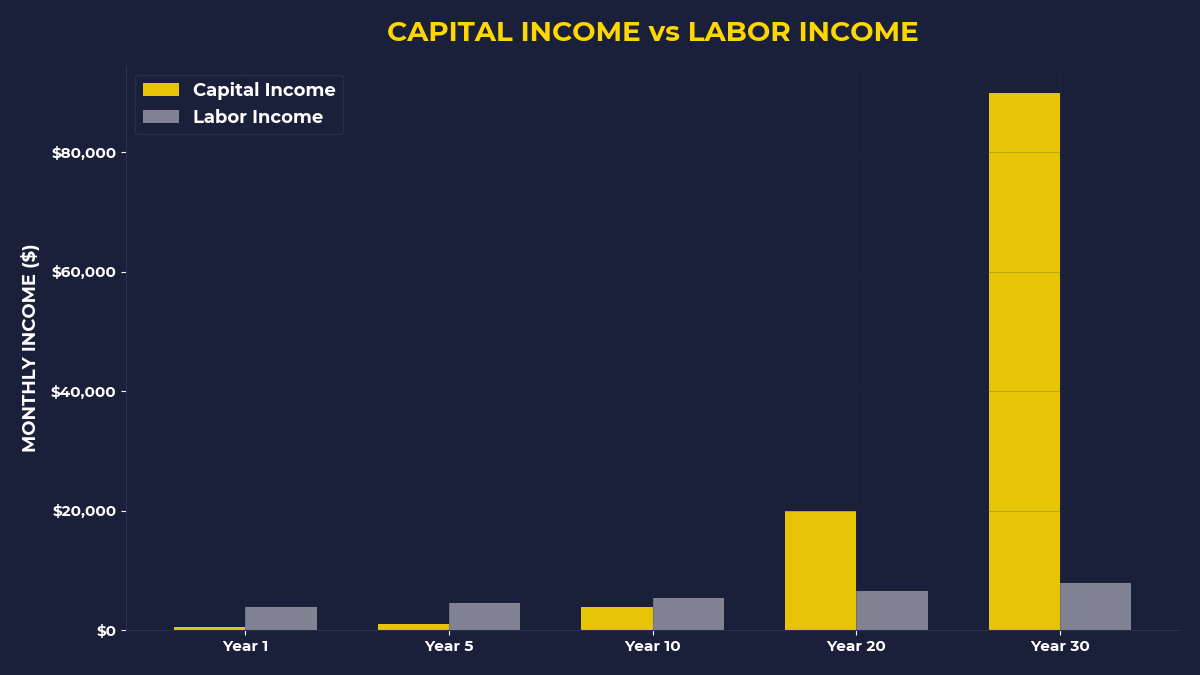
Capital compounds differently. When you own something that generates cash, you can buy more of it. The cash flow from two rental properties buys a third. The dividends from 100 shares buy 10 more. The profits from one business fund a second business.
Marcus was compounding effort. He’d stay late to impress his boss, take weekend coding bootcamps to level up his skills, side hustle as a freelancer when he got home. More skills, more hours, more effort. His income went from $75K to $95K in three years.
Meanwhile, his landlord bought the building in 2018 for $2.1 million, and it’s now worth $2.8 million. Plus she collected $180,000 in rent each year. She didn’t learn new skills or work weekends.
She owned an asset that people needed.
How This Plays Out in Real Life
Let me tell you about Sarah, a teacher I met last year. She makes $52,000 annually — not exactly Silicon Valley money. But Sarah asked the right questions.
Instead of “How can I make more as a teacher?” she asked “What can I buy that generates income while I teach?” She started with a duplex. Bought it with an FHA loan, lived in one side, rented the other. The rental income covered most of her mortgage.
Two years later, she refinanced and bought a second duplex. Then a third. Now she owns four rental units, and the cash flow from all four is $2,800 monthly. That’s more than her take-home pay from teaching.
Sarah still teaches because she loves it. But she doesn’t have to.
That’s the difference. When you ask “What should I buy?” instead of “What should I do?” your money starts working instead of just sitting there.

The Uncomfortable Truth About Investment Philosophy
Here’s what nobody tells you about building wealth: it’s not about being smarter or working harder. It’s about switching sides in a game most people don’t realize they’re playing.
Every month, you send money to capital owners. Your rent check, your car payment, your Netflix subscription, your grocery bill — all of it flows to people who own assets. The goal isn’t to send less money (though that can help). The goal is to become someone who receives it.
Most investment philosophy focuses on portfolio optimization, risk management, asset allocation — all important stuff. But it misses the fundamental question: Are you thinking like an owner or a worker?
Workers ask: “How do I make more money?”
Owners ask: “How do I buy assets that generate money?”
Workers ask: “What skills should I learn?”
Owners ask: “What systems can I purchase or build?”
Workers ask: “How do I budget better?”
Owners ask: “How do I capture more of the demand I’m already creating?”
Your Money Is Already Working — Just Not For You
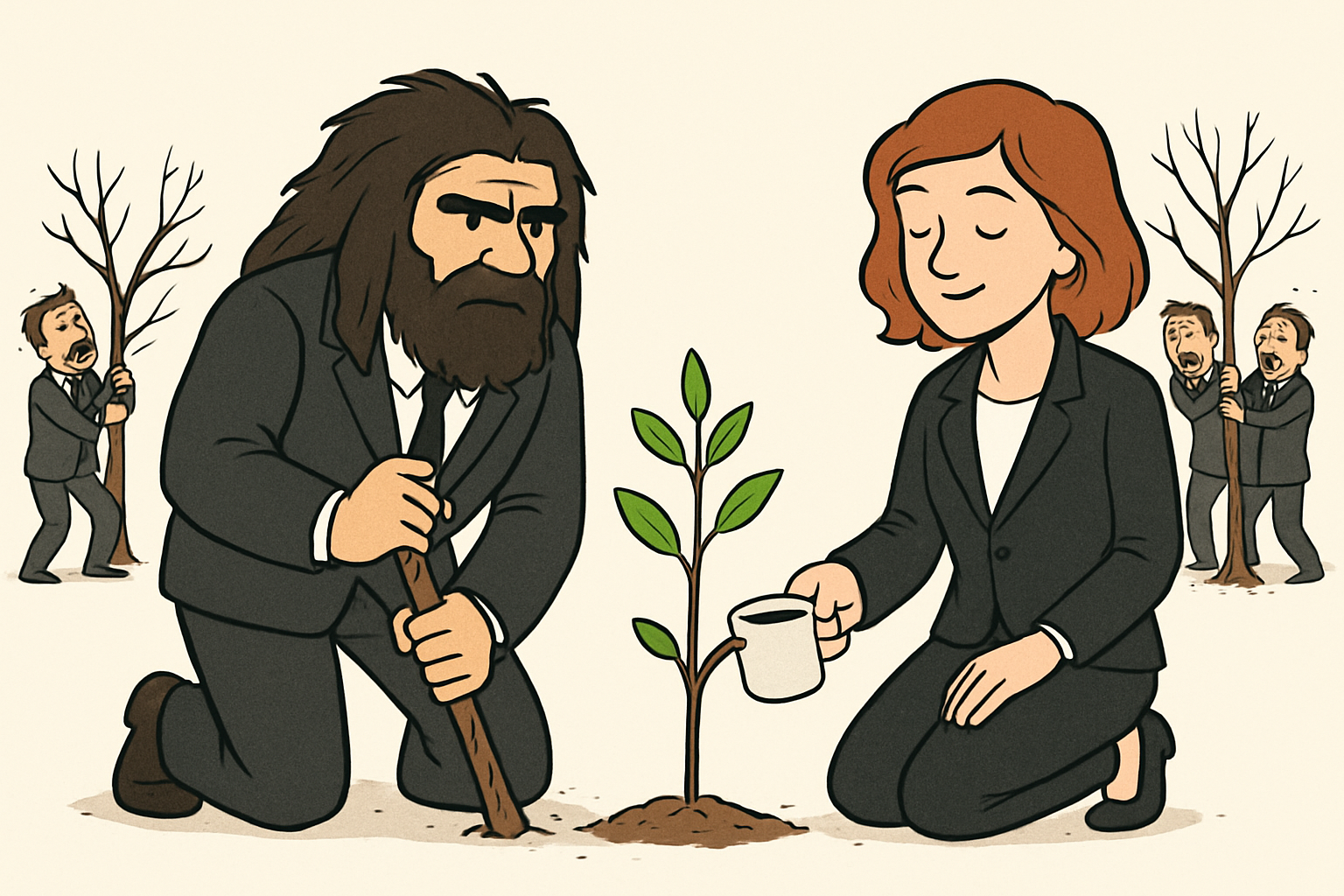
Think about this: your rent payment is working incredibly hard. It’s generating return on investment, building equity, creating cash flow. Just not for you. It’s working for your landlord.
Your car payment is working too. It’s funding loan growth, generating interest income, supporting a profitable business model. Just not for you. It’s working for the bank.
Even your savings account is working. That $5,000 sitting there “safely” is being lent out by your bank at 7% while they pay you 0.5%. Your money is generating a 6.5% profit margin. Just not for you.
The money is already working. The question is: for whom?

If You’ve Never Owned an Income-Generating Asset
If you’re someone who’s spent years optimizing budgets and side hustles but never actually owned something that pays you back, this might feel overwhelming. Where do you even start?
Here’s the thing: you don’t need to buy rental properties or start a business tomorrow. You can start by owning tiny pieces of businesses that are already working.
When you buy stock in Apple, you own a piece of a company that generates $365 billion in annual revenue. When you buy an S&P 500 index fund, you own pieces of 500 profitable companies. Their employees work, their customers pay, their profits flow to you as dividends and appreciation.
It’s not as exciting as becoming a real estate mogul, but it’s the same principle: your money works instead of just sitting there.
The One Thing to Remember
The difference between rich and poor isn’t income — it’s ownership. Rich people own assets that generate cash flow. Poor people own expenses that consume cash flow. The moment you start asking “What should I buy?” instead of “What should I do?” you begin thinking like a capital owner instead of a worker. And that shift in investment philosophy changes everything.
• Before paying any bill this month, move money into a brokerage account and buy index funds or dividend stocks
• Replace one “What should I do?” question with “What should I buy?” this week
• Look at your three biggest monthly expenses and ask: “How could I own the other side of this transaction?”
🎬 Prefer watching? Check out the video version on YouTube:
👉 https://www.youtube.com/@PrimalContrarian
Subscribe for daily insights on capital, wealth, and contrarian thinking.