The richest person you know spends their morning asking a different question than you do.
While you’re wondering “What should I do today to make money?”, they’re asking “What should I buy today to make money?” This isn’t semantics. It’s the difference between renting your life and owning it.
I learned this the expensive way. Back in 2015, I was grinding 60-hour weeks at a tech startup, convinced that working harder would eventually make me wealthy. I optimized my productivity, networked relentlessly, and even picked up freelance work on weekends. My bank account grew slowly. My stress levels grew faster.
Then a colleague — same salary, same hours — mentioned he’d bought a duplex the year before and was using the rental income to buy index funds. While I was asking “How can I work more efficiently?”, he was asking “What can I buy that works for me?”
The gap between our net worth today isn’t even close.
Why Your Brain Defaults to the Wrong Question
Here’s what nobody tells you about money: your primate brain is wired to trade time for resources. For 200,000 years, humans survived by hunting, gathering, and working with their hands. The equation was simple — more effort equals more food.
This hardwiring runs so deep that most people never question it. They instinctively believe the path to wealth is working harder, getting promoted, or starting a side hustle where they trade more of their time for slightly more money.
But capital doesn’t follow primate logic.
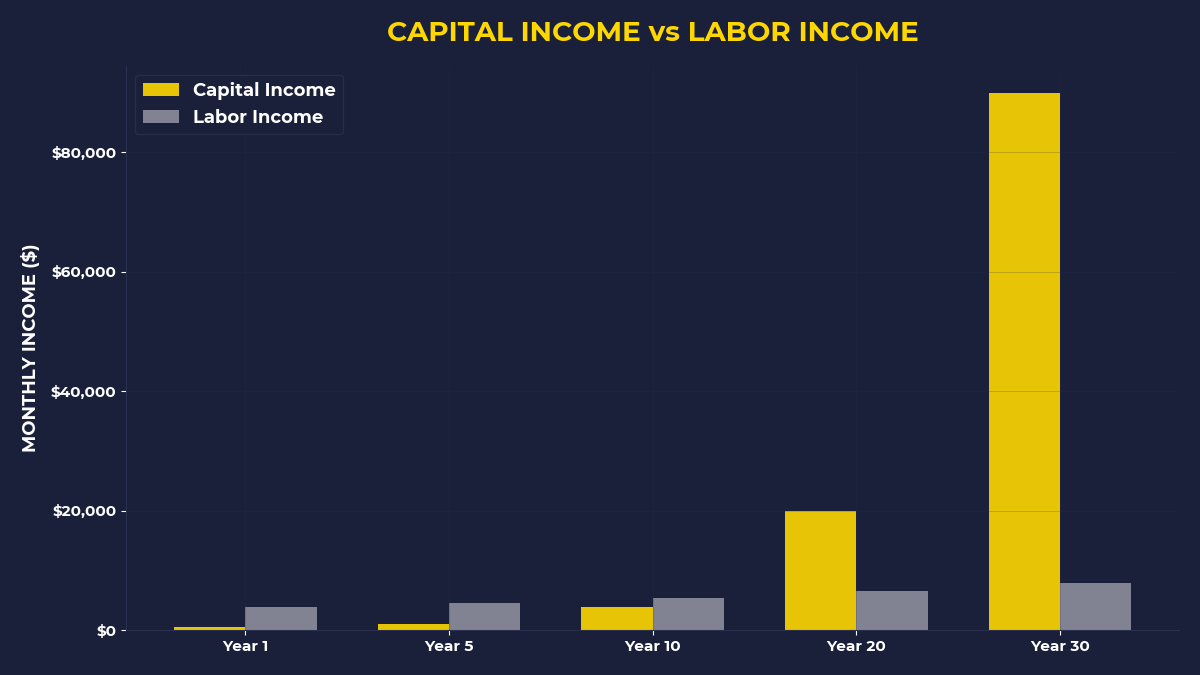
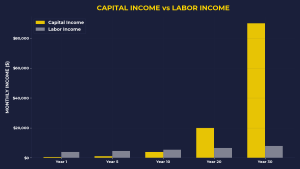
Capital multiplies while you sleep. Labor just adds up while you’re awake. When you ask “What should I do?”, you’re thinking like a hunter-gatherer. When you ask “What should I buy?”, you’re thinking like a capital owner.
The recency bias makes this worse. You see people around you working hard — your parents, your friends, your colleagues. The successful ones seem to work even harder. So you conclude that success equals effort. You never see the capital working behind the scenes because capital is invisible.
The Golf Ball Principle That Changed Everything
Warren Buffett understood this at age 6. He collected lost golf balls from the local course and sold them for 6 dollars per dozen. That’s hunter-gatherer logic — trade effort for money.
But here’s the part most people miss: Buffett could have hired his friends to collect the balls while he focused on finding buyers and improving the system. Instead of making 6 dollars per dozen through his own labor, he could have made 2 dollars per dozen from each friend’s labor.
With 10 friends collecting balls, he’d make 20 dollars for every dozen they found. Instead of working harder, he’d own the system that worked.
This is what I call the Golf Ball Principle: every business starts with someone asking “What work needs to be done?” But wealth comes from asking “What system can I buy or build that does this work?”
The compound effect is staggering. If Buffett collected 100 dozen balls personally, he’d make 600 dollars and be exhausted. If his system collected 100 dozen balls, he’d make 2,000 dollars and have time to build another system.
The Scale Test That Reveals Everything
Want to know if you’re thinking like an owner or a worker? Apply the Scale Test to any income opportunity.
If you doubled your hours, could you double your income? If yes, you’re trading time for money. If no, you own something that scales independently of your time.
A lawyer billing by the hour fails the Scale Test. A lawyer who owns a law firm with associates passes it. A consultant fails. A consultant who builds a course that sells while they sleep passes.
I used to think I was being smart by taking on more freelance projects. I was just creating more jobs for myself. The Scale Test forced me to ask: “What could I buy or build that generates income when I’m not working?”
The answer led me to index fund investing, then dividend-paying stocks, then eventually small rental properties. Each purchase moved me further from the “do more work” trap.
What Famous Singers Know That You Don’t
Think about why celebrities make millions while hardworking people stay broke. It’s not because singers work harder than teachers or engineers. Many singers are lazy. Many teachers work 70-hour weeks.
The difference? When a song becomes popular, it generates demand. That demand creates a cash flow system that works 24/7. The singer owns the intellectual property — the capital asset that captures this demand.
Meanwhile, the hardworking teacher trades time for money. No matter how excellent their lessons, their income is capped by the hours they can work.
This isn’t fair. But it’s structural.
The teacher asking “How can I become a better teacher?” will improve but stay poor. The teacher asking “What can I buy that generates income while I teach?” will build wealth. Maybe it’s index funds. Maybe it’s a side business selling teaching materials. Maybe it’s real estate.
The question changes everything.
The Leverage Trap Most People Fall Into
Here’s where most people go wrong with the “what should I buy?” question. They buy things that require their constant attention.
They buy a rental property, then spend weekends fixing toilets. They buy a franchise, then work 80 hours a week running it. They’re still trading time for money — just with more steps and more stress.
Real leverage means buying assets that work without you. Index funds work without you. Dividend aristocrat stocks work without you. REITs work without you. Intellectual property works without you.
The goal isn’t to buy a job. It’s to buy cash flows that compound while you focus on buying more cash flows.
Why the Rich Get Richer (And How You Can Too)
The wealthy understand something most people miss: every dollar you earn faces a choice. It can buy consumption that makes someone else richer, or it can buy assets that make you richer.
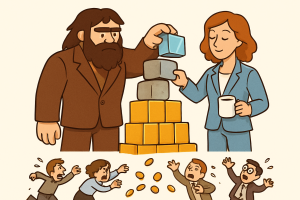
When your paycheck arrives, everyone has their hand out. The mortgage company, the car dealership, the grocery store, the streaming services. These are all capital owners collecting from you.
But before you pay anyone else, ask: “What can I buy for myself?”
This doesn’t mean skip your rent. It means automate investments before the money hits your checking account. Pay yourself first by buying assets that pay you later.
I started with 50 dollars per month into a low-cost index fund. Nothing fancy. Just asking the right question: “What can I buy that will grow while I sleep?” instead of “How can I earn more money to spend?”
That 50 dollars became 150. Then 300. Then 500. Not because I worked harder, but because I owned pieces of businesses that worked on my behalf.
The Two Types of Problems Money Solves
Most people think money solves spending problems. They need money to pay bills, buy cars, take vacations. So they ask “How can I make more money to buy more things?”
But capital owners know money solves time problems. They need money to buy freedom from trading time for income. So they ask “What can I buy that gives me back my time?”
These are completely different games with completely different strategies.
The spending game has no finish line. The time game has a clear endpoint: when your assets generate enough cash flow to cover your expenses, you win. You can choose how to spend your time instead of selling it.
What The Primal Investor Takes Away
• Before asking “How can I work harder?”, ask “What can I buy that works for me?”
• Apply the Scale Test to every income opportunity — if it doesn’t work without your time, it’s just another job
• Pay yourself first by automating asset purchases before money hits your checking account
• Look for assets that generate cash flow without requiring your constant attention
• Remember that capital owners collect from workers, not the other way around — choose which side you want to be on
The 97% will keep asking the wrong question. They’ll work harder, optimize their time, and wonder why wealth stays out of reach. The 3% will ask what to buy, accumulate assets, and watch their money work harder than they ever could.
Which question will you ask tomorrow morning?
🎬 Prefer watching? Check out the video version on YouTube: