Marcus — 29, software engineer in Denver — called me on a Tuesday night in October. His voice had that tight quality you get when you’re trying not to sound panicked.
“I’ve been investing for three years,” he said. “I read all the books, I have my philosophy mapped out, I dollar-cost average into index funds. But I just calculated my net worth and I’m basically nowhere. My rent went up $400, my car needs new tires, and my portfolio is down 8% this year.”
Then he asked the question that breaks my heart every time: “What am I doing wrong?”
Nothing, I told him. And that was exactly the problem.
I Used to Think Exactly Like Marcus
I know exactly how Marcus felt because I was there too. Twenty-six years old, convinced that having an “investment philosophy” made me sophisticated. I had spreadsheets tracking my asset allocation. I could explain the efficient market hypothesis over drinks. I felt smart when I rebalanced quarterly.
And every month, I watched my paycheck disappear.
Rent: $1,200 to my landlord. Car payment: $380 to the bank. Groceries: $400 to the grocery chain. Netflix, Spotify, utilities — dozens of small charges flowing to dozens of capital owners. By the time I was done paying everyone else, I had maybe $200 left for my “sophisticated” investment strategy.
Here’s what I wish someone had told me: I wasn’t building an investment philosophy.
I was building someone else’s retirement plan.
Why Your Investment Philosophy Is Actually Their Wealth Plan
Think about that for a second. Every dollar you send out in bills is flowing to someone who owns the capital behind that service. Your landlord owns the building. The bank owns your loan. The grocery chain owners get a piece of every purchase.
They’re not smarter than you. They’re not working harder than you.
They just asked a different question.
While you’re asking “How should I invest?”, they asked “What should I own?” While you’re building a philosophy about markets, they built systems that capture your cash flow. Your monthly budget is basically a list of invoices you send to capital owners, every single month, like clockwork.
The moment I understood this, everything changed. I realized that traditional investment philosophy — the kind they teach in books and blogs — starts from the wrong place. It assumes you’ll have money left over to invest after you pay for life.
But capital owners flip that script entirely.
The Question That Separates Owners From Everyone Else
Want to know what Warren Buffett was thinking when he picked up golf balls as a kid? Not “How can I invest this money?” He was thinking: “What can I buy that people need?”
Used golf balls. Demand was right there — golfers losing balls every day, willing to pay for cheaper replacements. Buffett found them, cleaned them, sold them for $0.50 each. Then he took that money and bought more assets. Pinball machines. Later, rental properties. Eventually, entire businesses.
Each purchase captured someone else’s demand and converted it into his cash flow.
Here’s the pattern: Instead of developing an investment philosophy for building wealth, successful capital owners develop an acquisition philosophy. They don’t ask “Where should I put my savings?” They ask “What should I buy that pays me back?”
The difference is everything.
How Capital Owners Actually Think About Money
Let me tell you about Sarah, a friend who owns three laundromats in Phoenix. When people ask about her investment philosophy, she laughs. “I don’t have an investment philosophy,” she says. “I have a buying philosophy.”
Sarah doesn’t dollar-cost average into the S&P 500, though she probably should. Instead, she thinks like this: “What do people need every week, regardless of the economy?” Answer: clean clothes. “What asset captures that demand?” Washing machines in the right location.
Her first laundromat cost $75,000. It generates $3,200 monthly after expenses. Instead of spending that cash flow on lifestyle inflation, she reinvested it. Eighteen months later, she bought the second location. Two years after that, the third.
Now she makes more from those machines than she ever made at her corporate job. And here’s the kicker: she works maybe 6 hours a week managing them.
Sarah’s not following some complex investment philosophy for building wealth. She’s following the same pattern Buffett used with golf balls, just scaled up.
Are You Building Wealth or Just Hoping?
This is where most people get uncomfortable. Because owning laundromats or rental properties feels harder than buying index funds. It is harder. But that difficulty is exactly what creates the opportunity.
Everyone can open a brokerage account and buy the S&P 500. Which means everyone does. The edge gets competed away. Your returns become average by definition.
But not everyone is willing to research local laundromat markets, negotiate with sellers, and learn commercial real estate. Most people prefer the comfort of a “sophisticated” investment philosophy to the messiness of actually owning productive assets.
Their loss. Your opportunity.
I’m not saying you should quit your job and buy laundromats tomorrow. But I am saying that if you want to build real wealth, you need to start thinking like Sarah instead of like the financial media.
The Contrarian Investment Philosophy That Actually Works
Here’s my contrarian investment philosophy strategies in one sentence: Pay yourself first, then pay everyone else, then scramble to make it work.
I learned this from Robert Kiyosaki’s story about living in a friend’s garage. Even when he was broke, even when creditors were calling, he paid himself first. Not because he was irresponsible, but because necessity forced him to find creative ways to generate cash flow.
When you pay all your bills first and invest what’s left over, you remove the pressure that forces creative thinking. You stay comfortable in your wage-earner mindset. But when you pay yourself first — when you buy assets before you pay rent — you force yourself to think like a capital owner.
You have to find ways to generate money. You have to solve problems. You have to create value. Exactly the mindset shift that separates owners from everyone else.
Does this sound risky? Good. It should. Because the “safe” path — working hard, saving diligently, following traditional investment philosophy — is actually the highest risk of all. It’s the risk of spending 40 years making other people wealthy while you accumulate crumbs.
If You’re Someone Who Gets It
This approach isn’t for everyone. If you’re someone who wants a “set it and forget it” investment philosophy, there are hundreds of blogs that will teach you about asset allocation and modern portfolio theory. They’re not wrong, just limited.
But if you’re someone who’s tired of watching your paycheck disappear into other people’s pockets, if you’re someone who wants to flip the script and start capturing cash flow instead of just hoping for market appreciation, then you need to start thinking like a capital owner.
If you’re someone who’s willing to do things that feel uncomfortable because the comfortable path leads to a lifetime of financial mediocrity, then keep reading.
Because the wealthy don’t get wealthy by having better investment philosophies. They get wealthy by asking better questions.
The One Thing To Remember
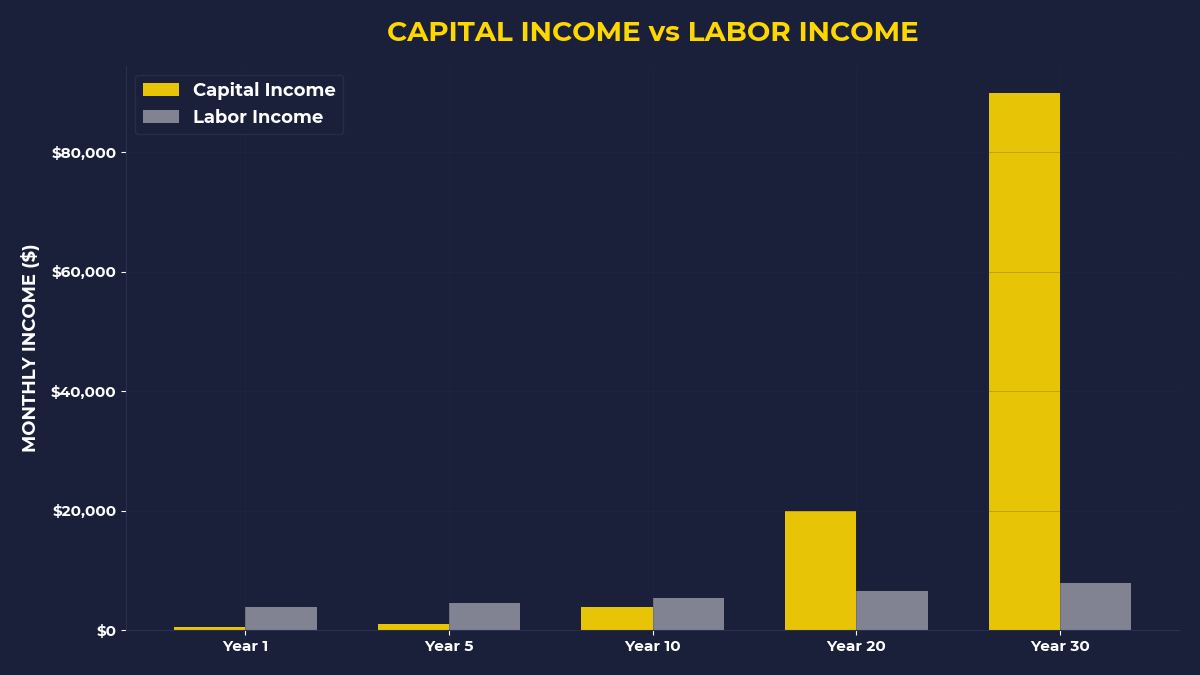
Every month, you’re already investing thousands of dollars. You’re just investing in other people’s assets instead of your own. Your rent payment is an investment in your landlord’s real estate portfolio. Your car payment is an investment in the bank’s loan portfolio. Your grocery bill is an investment in the supply chain owners’ profit margins. The only question is: when do you start redirecting some of that cash flow toward assets you own?
Here’s how to start:
Before you pay any bills this month, buy one share of something. Anything. Even if it’s a $50 REIT or a fractional share of Amazon. The goal isn’t the amount — it’s rewiring your brain to pay yourself first.
Ask “What should I buy?” instead of “What should I do?” Every time you’re tempted to work harder for more money, ask what asset you could buy that would work for you instead.
Study one person who owns the type of assets you interact with daily. If you rent, study a local real estate investor. If you buy coffee every day, study how coffee shop owners think. Steal their buying philosophy, not their investment philosophy.
🎬 Prefer watching? Check out the video version on YouTube: