Marcus — 28, software engineer at a mid-size fintech company — spent three months building an AI chatbot for customer service. He worked weekends, learned new frameworks, debugged until 2 AM. The tool was brilliant. It cut response times by 73% and saved his company roughly $180,000 per year in support costs.
His bonus? $3,500.
Meanwhile, his company’s stock jumped 12% that quarter, adding $2.3 million to shareholder value. Marcus owned zero shares.
I Built the Wrong Thing for Ten Years
Look, I get it. I was Marcus once, minus the chatbot.
Back in 2019, I spent eight months building what I thought was a revolutionary productivity app. I learned React Native, figured out database architecture, designed the user interface myself. The app was genuinely useful — it helped freelancers track their time and automatically generate invoices.
I was so proud of what I’d built. And so broke from building it.
Here’s the thing I missed completely: while I was building, companies like Notion, Monday.com, and dozens of others were scaling similar solutions. They had capital, teams, distribution networks. I had code and hope.
The app made $847 in revenue before I shut it down. Those companies? Notion alone is worth $10 billion today.
I was building when I should have been buying.
Why Everyone Gets AI Economics Backwards
Walk into any coffee shop near a tech hub right now. Half the laptops have ChatGPT open, the other half have some AI tutorial running. Everyone’s learning prompt engineering, building GPT wrappers, creating AI workflows.
It feels productive. It feels like preparation.
It’s actually the opposite of wealth building.
Think about that customer service chatbot Marcus built. Who captured the value? The company shareholders. Who did the work? Marcus. Who learned the skills? Marcus. Who owns the ongoing cash flow from that $180,000 annual saving?
Not Marcus.
This is the fundamental pattern of AI economics that most people miss completely. Building AI tools makes you more valuable as an employee. Buying AI capital makes you an owner.
The difference isn’t subtle — it’s the difference between trading your time for money and having money work for you.
What AI Capital Actually Looks Like
When I say “buy AI capital,” I don’t mean picking individual AI stocks and hoping for the best. Though if you want to own a piece of the companies actually capturing AI value — Microsoft, NVIDIA, Google — that’s not terrible.
But here’s what I really mean: stop asking “What AI skill should I learn?” and start asking “What AI demand can I own a piece of?”
My friend Sarah figured this out faster than I did. She’s a graphic designer, 31, works at a marketing agency in Denver. When AI image generation exploded in 2022, everyone told her to learn Midjourney and Stable Diffusion to stay relevant.
Instead, she bought shares in Adobe.
While her coworkers spent months mastering new AI art tools, Sarah watched Adobe integrate AI into Photoshop and Illustrator. Her Adobe shares are up 47% since then. Her coworkers? They’re faster at creating mockups now, but they’re still trading hours for dollars.
Sarah owns a tiny slice of every designer in the world becoming more productive with Adobe’s AI tools.
That’s capital thinking.
The Compound Interest of Demand Ownership
Here’s the pattern most people never see: AI doesn’t eliminate demand, it creates new kinds of demand. And demand is what capital feeds on.
Take content creation. Everyone thinks AI will kill writing jobs. Maybe it will. But it’s also creating massive demand for AI-powered content platforms, AI editing tools, AI content management systems.
The content creators are learning to prompt better and write faster. The platform owners are collecting subscription fees from millions of users.
One group is optimizing their labor. The other group owns the infrastructure that labor depends on.
I learned this lesson the expensive way with that failed productivity app. While I was coding features, companies like Zapier were buying smaller automation tools and integrating them into their platform. They weren’t building everything from scratch — they were buying proven demand and scaling it.
When Zapier added AI features in 2023, their valuation hit $5 billion. The individual developers who built those original automation tools? Most of them are still building.
Why Your AI Skills Are Actually Someone Else’s Moat
Every hour you spend learning to build AI tools is an hour you could spend identifying which companies are capturing AI demand. And that hour of learning makes you more valuable to those companies — not more competitive with them.
Marcus, that engineer from the opening story, spent three months becoming an expert at building customer service chatbots. Guess what happened next? His company started bidding for bigger contracts specifically because they had AI capabilities.
Marcus made his company more competitive. The shareholders captured that competitive advantage.
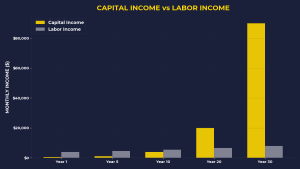
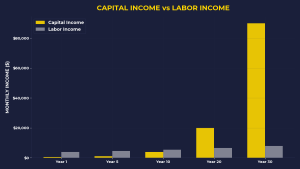
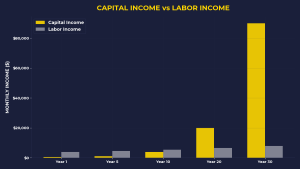
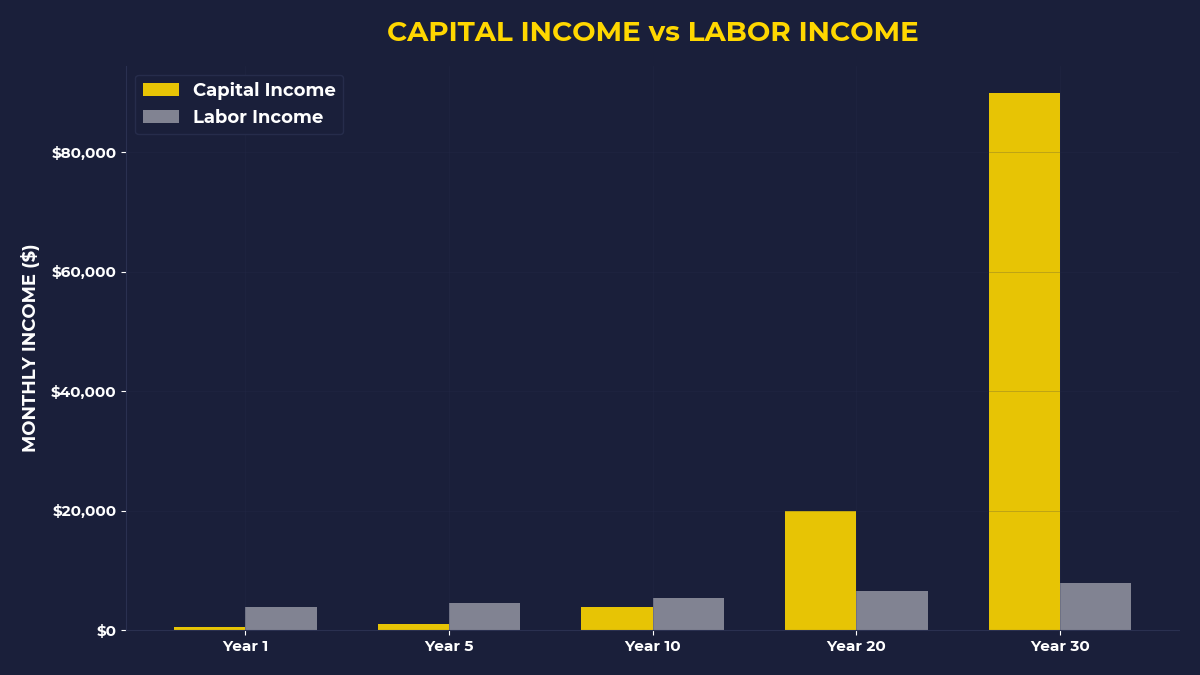
This isn’t cynical — it’s just how capital works. Skills are labor. Ownership is capital. Labor gets paid once. Capital gets paid repeatedly.
Think about that for a second.
The chatbot Marcus built will save his company $180,000 every year for probably the next five years. That’s $900,000 in value. Marcus got $3,500 once.
If Marcus had taken that same three months and focused on buying shares of companies building AI infrastructure instead of building AI tools himself, which path creates more wealth over time?
The Question That Changes Everything
Are you someone who’s been told that learning AI skills is the path to financial security? That prompt engineering or machine learning will future-proof your career?
I’m not saying those skills are worthless. I’m saying they’re labor, not capital.
The wealth-building question isn’t “What AI skills should I learn?” It’s “What AI demand should I own?”
When everyone else is racing to become better AI workers, you could be buying pieces of the companies those workers make more valuable.
The One Thing To Remember
Building AI tools makes you a more valuable employee. Buying AI capital makes you an owner. The gap between those two outcomes isn’t small — it’s the difference between trading time for money and having money work while you sleep. Everyone else is optimizing their labor. You can own the infrastructure their labor depends on.
• Before you spend another weekend learning a new AI framework, put $100 into an ETF that holds major AI companies
• Instead of building the next AI side project, research which companies are capturing AI demand and buy shares
• Stop asking “What should I build?” and start asking “What should I buy?”
🎬 Prefer watching? Check out the video version on YouTube:
👉 https://www.youtube.com/@PrimalContrarian
Subscribe for daily insights on capital, wealth, and contrarian thinking.