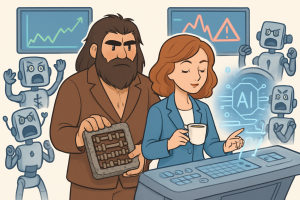
Marcus — 29, marketing coordinator in Denver — spent $12,000 on an AI coding bootcamp last spring. Six months of nights and weekends learning Python, machine learning frameworks, and neural networks. He graduated with a certificate, a GitHub portfolio, and exactly zero job offers.
Now he works the same job for the same $47,000 salary.
Meanwhile, his neighbor Jennifer — a dental hygienist who can barely use Excel — bought $200 worth of NVIDIA stock every month during Marcus’s bootcamp. Her portfolio is up $3,400. She never wrote a line of code.
I know exactly how Marcus feels because I made the same mistake in 2018. I spent eight months learning blockchain development, convinced I was positioning myself for the future. I could build smart contracts, deploy tokens, and debug Solidity code. The future felt inevitable.
The problem? I was building tools while other people were buying demand.
Why Your AI Skills Are Someone Else’s Wealth Plan
Here’s what no one tells you about AI economics: the people getting rich aren’t the ones learning the skills. They’re the ones owning the capital that uses those skills.
Every hour Marcus spent in Python tutorials, someone else spent buying shares in the companies that will hire Python developers. While he learned to optimize algorithms, they learned to optimize ownership structures.
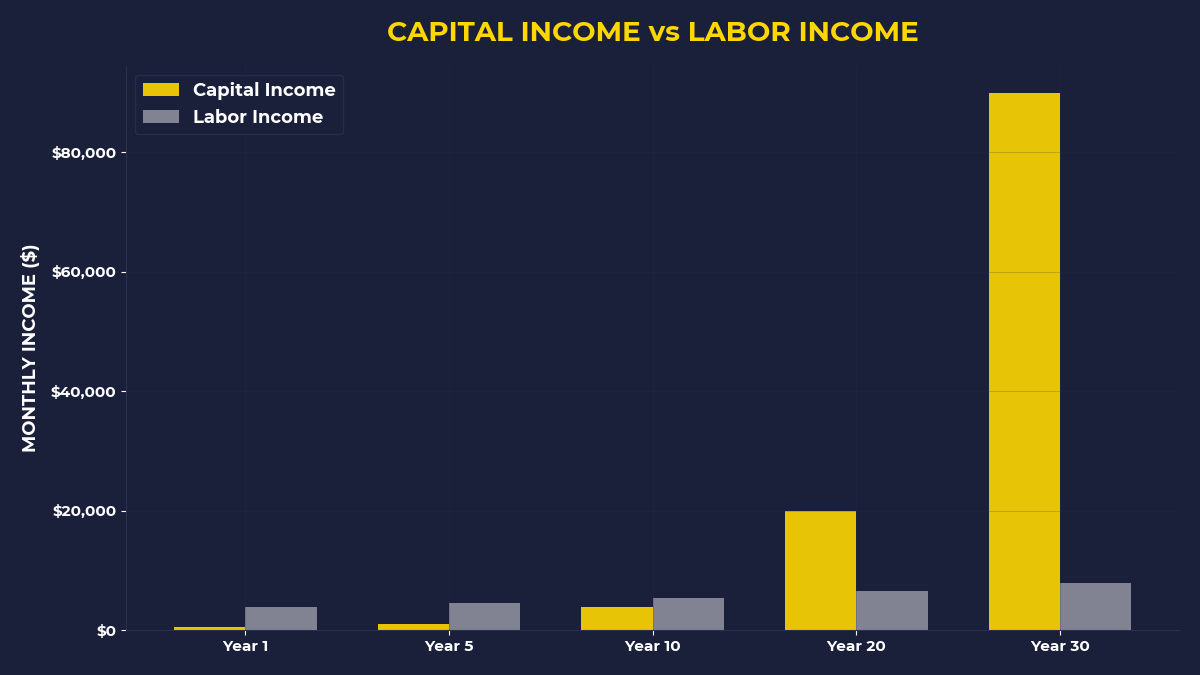
Think about that. Marcus can now build AI models that generate $50,000 in value per month. But he’ll get paid $4,000 for building them. The other $46,000 flows to whoever owns the company, the data, the servers, and the customer relationships.
This isn’t some grand conspiracy. It’s just how capital works.
When I finally figured this out, I was sitting in a coffee shop in Austin, watching a software engineer explain to his girlfriend why he deserved a raise. He was automating processes that saved his company $200,000 annually. His raise request? $5,000.
I realized something uncomfortable: his company wasn’t paying him for the value he created. They were paying him for the time he spent creating it.
The Vending Machine Principle
Let me tell you about my friend Sarah — 26, graphic designer in Portland. Last year she spent three months learning AI image generation. Midjourney, Stable Diffusion, the whole stack. She can create professional-quality artwork in minutes now.
But here’s what happened next. Instead of freelancing with her new AI skills, she bought a 20% stake in a local print shop for $8,500. Then she automated their design process using the AI tools she’d learned.
Now the print shop processes 40% more orders with the same staff. Sarah gets 20% of the additional profit — about $900 per month — without touching a computer.
She turned her AI skills into capital instead of labor.
This is the vending machine principle. You can stock vending machines for $15 per hour, or you can own the vending machines and collect quarters while you sleep. AI skills are stocking. AI ownership is collecting quarters.
Most people are learning to stock.
What Does It Mean to Buy AI Demand?
When I say “buy AI demand,” I don’t mean cryptocurrency speculation or trying to pick the next Google. I mean identifying where sustained demand for AI capabilities already exists and acquiring ownership stakes in those cash flows.
Every mid-size company needs customer service automation. Instead of becoming the person who builds chatbots for $75 per hour, what if you owned a piece of the company that sells chatbot subscriptions for $500 per month?
Every marketing agency needs content generation. Instead of becoming the freelancer who writes AI-generated copy, what if you owned shares in the platform that agencies pay $200 monthly to access?
Every accounting firm needs document processing automation. Instead of becoming the consultant who implements it, what if you owned equity in the software company that licenses it?
The pattern is always the same: people need something, someone builds it, someone else owns it.
Why Most People Get This Backwards
I understand why Marcus chose the coding bootcamp. Our culture worships skill development. We’re conditioned to ask “What should I learn?” instead of “What should I own?”
It feels safer to invest in yourself than to invest in assets. You control your skills. You can’t control stock prices or business outcomes.
But here’s the trap: skills are labor. Labor gets paid once. Capital gets paid repeatedly.
Marcus will need to re-learn AI frameworks every 18 months as the technology evolves. Jennifer just needs to hold her stocks while companies use their capital to hire people like Marcus.
When GPT-5 makes GPT-4 skills obsolete, Marcus starts over. Jennifer’s ownership position adapts automatically.
The Compound Effect of Owning vs. Building
Let’s play out both scenarios over five years:
Marcus masters AI development. He lands a $85,000 job by year two, reaches $120,000 by year five. He’s earned roughly $500,000 total. But he’s still trading hours for dollars, just at a higher rate.
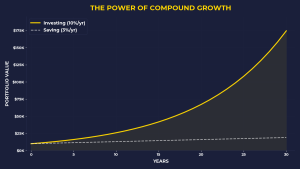
Jennifer buys $200 monthly in AI-adjacent stocks. Assuming modest 12% annual returns, she has $15,000 invested and a portfolio worth about $18,500 by year five. But here’s the key: that portfolio generates approximately $2,200 in annual dividends without her working.
By year ten, Marcus might earn $150,000 annually — still trading time for money. Jennifer’s portfolio could be worth $60,000, generating $7,200 annually in passive income.
Same starting point. Different question. Completely different outcome.
If You’re Someone Who Thinks They Missed the AI Wave
You haven’t missed anything. The wealth creation phase is just beginning.
AI adoption follows the same pattern as every technology revolution: early chaos, then consolidation into profitable businesses. We’re entering the consolidation phase. This is when ownership becomes valuable and skills become commoditized.
The early internet rewarded webmasters and HTML coders. But the lasting wealth went to people who owned Amazon stock, not people who could build websites.
The mobile revolution rewarded iOS developers and app designers. But the lasting wealth went to people who owned Apple stock, not people who could code Swift.
AI will follow the same pattern.
The One Thing To Remember
AI economics rewards ownership, not effort. While everyone else learns to build AI tools, you can start buying AI demand today. The companies creating that demand are already public, already profitable, already distributing cash to their owners. Every month you spend learning skills is a month you could be accumulating ownership.
Your next moves:
Open a brokerage account this week if you don’t have one
Start with $50 monthly into a broad technology ETF that includes AI companies
Ask “What should I buy?” before asking “What should I learn?”
🎬 Prefer watching? Check out the video version on YouTube: