The Hardware Store Revelation
Marcus — 28, electrician in Denver — worked 60-hour weeks and still couldn’t afford the down payment on a house. Last Tuesday, he stopped by the hardware store to pick up wire nuts for a job. The owner, Dave, was sitting behind the counter reading a fishing magazine while his teenage nephew rang up customers.
Marcus had been shopping there for three years. He’d never seen Dave actually work.
That afternoon, Marcus watched Dave disappear into the back office while a steady stream of contractors bought supplies. The cash register kept ringing. Dave kept reading. The nephew kept stocking shelves and making change.
Something clicked for Marcus that Tuesday. He realized Dave wasn’t lazy — Dave was smart. While Marcus traded his sweat for dollars, Dave had built something that generated dollars without his sweat.
This is the paradox that breaks most people’s brains about money.
I Used to Think Effort Equaled Wealth
I spent my twenties believing in the mythology of hard work. Get up early. Stay late. Outwork everyone. The harder I pushed, the more I’d earn.
Pure bullshit.
I was 26, working in corporate consulting, pulling 70-hour weeks and making good money. But I was trapped in the same cycle as Marcus. Every dollar I earned required another hour of my life. When I stopped working, the money stopped coming.
Here’s what I couldn’t see then: I wasn’t building wealth. I was just getting paid well to help other people build theirs.
The partners at my firm? They owned equity in something that generated revenue while they slept. The clients I was helping? They owned businesses, real estate, or stock portfolios that grew without their constant presence.
I was the hardest-working broke person I knew.
Capital Is Stored Demand
Think about every bill that hits your bank account this month. Rent to your landlord. Car payment to the bank. Netflix subscription to Reed Hastings. Grocery bill to Kroger shareholders. Coffee money to Howard Schultz.
Every single transaction represents demand flowing from your wallet to someone who owns the thing you need.
That’s all capital is — ownership of something people consistently want.
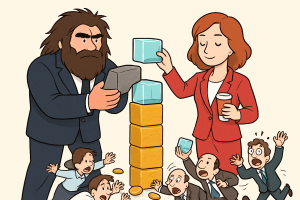
The hardware store owner doesn’t work harder than the electrician. He just owns the thing electricians need. Every wire nut Marcus buys transfers a small piece of demand from Marcus’s labor to Dave’s capital.
Warren Buffett figured this out when he was 11 years old. He bought a pinball machine for $25, placed it in a barbershop, and collected the coins. While other kids delivered newspapers for nickels, Warren owned the thing that generated nickels automatically.
The pinball machine worked. Warren didn’t.
Why Lazy People Win
Here’s the uncomfortable truth: lazy people are often forced to think differently about money because they can’t rely on outworking everyone else.
When you’re naturally lazy, you ask better questions. Instead of “How can I work harder?” you ask “How can I work less?” Instead of “What should I do?” you ask “What should I buy?”
That second question is everything.
Robert Kiyosaki tells a story about being evicted from his apartment after his business failed. He and his wife were living in a friend’s garage. Bills were piling up. Creditors were calling.
What did he do? He took his next paycheck and bought silver coins before paying a single bill.
Then he picked up extra work — mowing lawns, painting houses — to cover the bills he couldn’t pay.
Most people think this is insane. “Pay yourself first” sounds irresponsible when you’re broke. But here’s what Kiyosaki understood: if you always pay everyone else first, you’ll never have capital. You’ll just have an endless cycle of bills.
The lazy approach? Buy the asset first. Figure out the bills second.
Compound Interest Requires Ownership, Not Effort
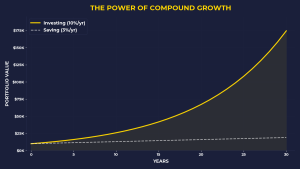
Einstein supposedly called compound interest the eighth wonder of the world. But most people miss the critical detail: compound interest only works if you own something that compounds.
Your salary doesn’t compound. Your hourly wage doesn’t compound. Your effort doesn’t compound.
Ownership compounds.
Take Harry Larson’s story from the 1930s. He noticed people using a coin-operated scale at the local pharmacy. Seven people in twenty minutes, each paying a nickel. He asked the pharmacist about it and learned the scale generated about $20 per month in revenue.
Harry bought three scales for $175 and started earning $98 monthly. But here’s the key: he used that $98 to buy more scales. Eventually, he owned 70 scales across the city.
Harry wasn’t working 70 times harder. He was earning 70 times more because he owned 70 income-producing assets.
The scales worked. Harry collected.
Can You Become a Capital Owner Without Starting a Business?
Absolutely. The easiest path is buying pieces of businesses that already exist.
When you buy shares of Microsoft, you own a tiny slice of every software license they sell. When you buy Berkshire Hathaway stock, you own a piece of Warren Buffett’s entire portfolio of businesses.
The key is thinking like an owner, not a trader. You’re not betting on stock prices. You’re buying productive assets that generate cash flow.
Here’s a simple test: Can the thing you’re buying operate and generate money without your constant presence? If yes, it’s capital. If no, it’s just expensive labor.
A rental property that produces $2,000 monthly rent while you sleep? Capital.
A consulting business that requires your personal expertise for every project? Expensive labor.
An index fund that owns pieces of 500 companies? Capital.
A cryptocurrency that just sits in your wallet hoping someone pays more for it later? Speculation.
The One Asset Nobody Teaches You to Buy
Time freedom.
That’s what capital actually buys. Not stuff. Not status. Time.
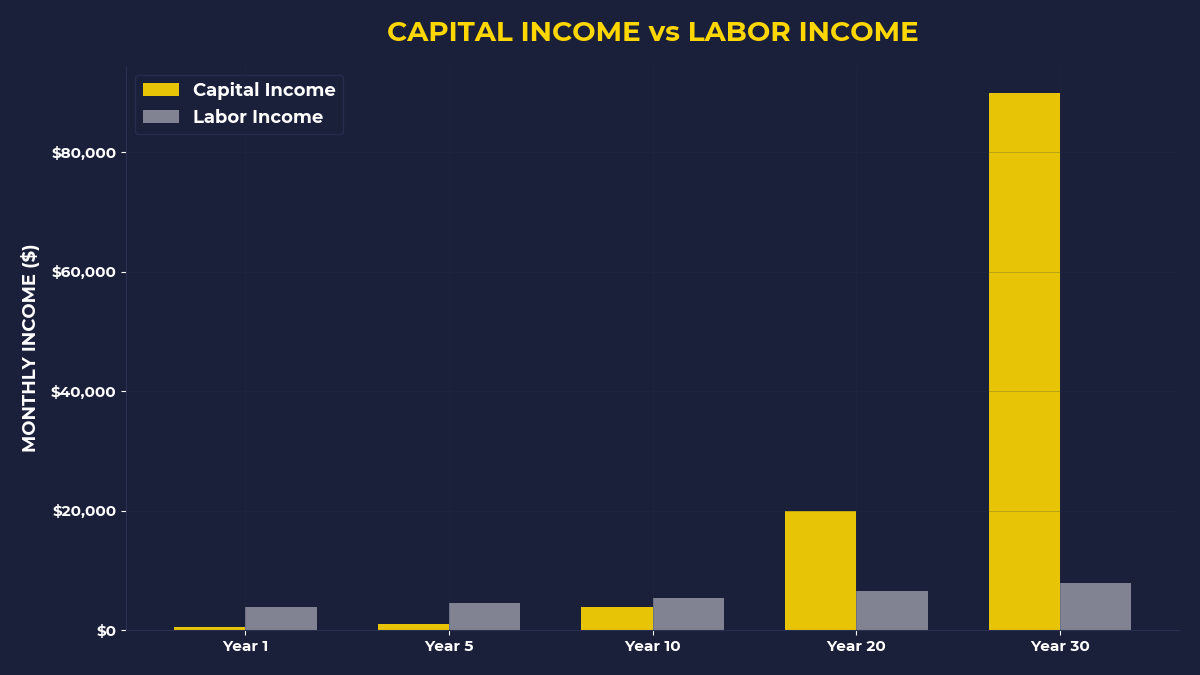
When Marcus the electrician works 60 hours, he gets 60 hours of pay. When Dave the hardware store owner takes a fishing trip, his store keeps generating revenue.
Dave bought his time back. Marcus is still renting his out by the hour.
The laziest people understand this instinctively. They don’t want to work harder or longer. They want to work less and earn more. So they buy ownership in things that work without them.
This is why some of the wealthiest people you’ll meet are also some of the most relaxed. They’re not grinding 80-hour weeks. They’re not optimizing their morning routines or hustling through weekends.
They bought their way out of the time-for-money trade.
If You’re Someone Who’s Tired of Trading Time for Money
This post is for you if you’ve ever felt like you’re working harder than your bank account suggests. If you’ve ever wondered why your boss seems less stressed than you despite working fewer hours. If you’ve ever looked at successful people and wondered what they know that you don’t.
It’s not that they’re smarter or more disciplined. They just asked different questions and bought different things.
The One Thing To Remember
Capital is just ownership of demand. Every month, you send money to people who own things you need. The goal isn’t to work harder or save more — it’s to switch sides. Instead of just sending money to capital owners, become one. Buy pieces of businesses, real estate, or index funds before you pay your bills. Then use whatever extra work you need to do to cover the bills. Over time, the assets will work harder than you ever could.
- Before paying any bill this month, transfer $100 to a brokerage account and buy an index fund
- List every monthly expense and ask: “Who owns this?” (Your landlord, your car company, Netflix, etc.)
- Replace the question “How can I work harder?” with “What can I buy that works without me?”
🎬 Prefer watching? Check out the video version on YouTube:
👉 https://www.youtube.com/@PrimalContrarian
Subscribe for daily insights on capital, wealth, and contrarian thinking.