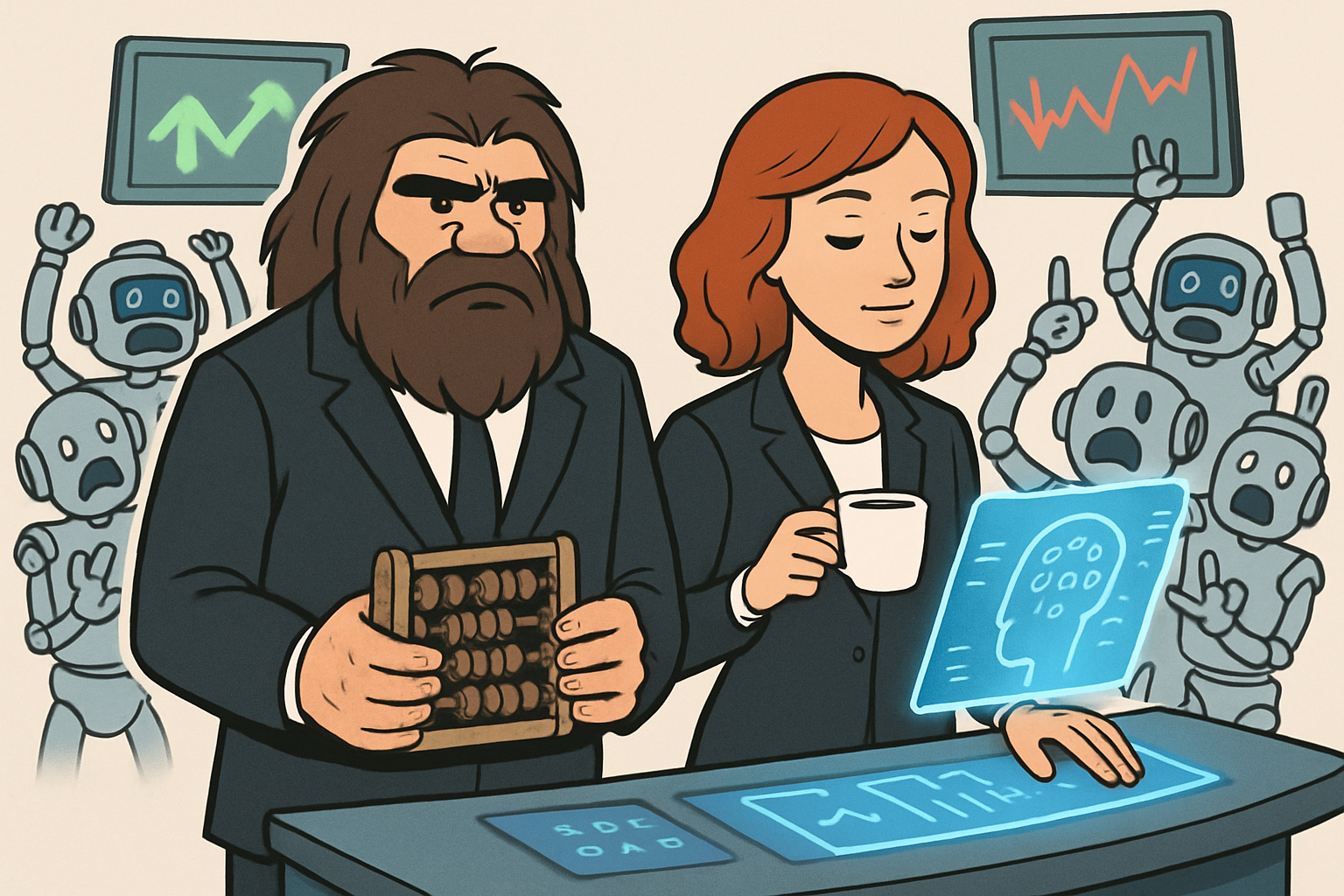
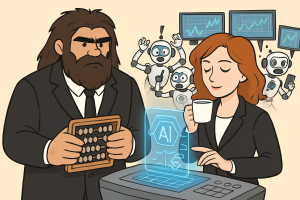
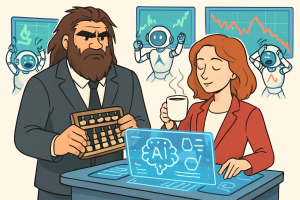
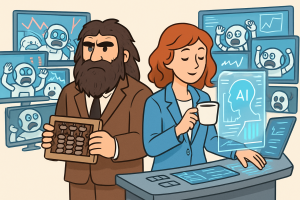
The robots aren’t coming for your job. They’re coming for your income stream. And most people are watching it happen with the same fascination they’d have for a car wreck — horrified but unable to look away.
I used to think artificial intelligence was a distant threat, something my kids might worry about in 20 years. Then I watched ChatGPT replace three junior analysts at a hedge fund I know within six months of launch. Not layoffs. Replacements. The work still gets done, but the paychecks vanish.
Here’s what nobody talks about in all the breathless AI coverage: this isn’t about technology disruption. It’s about capital concentration. The people who own the AI systems will capture the productivity gains. The people who compete with AI systems will compete on price until the price reaches zero.
Your primitive brain wants to believe that hard work and skill will protect you. Evolution wired you to think that being better at your job means job security. But capital doesn’t care about your work ethic.
Why This Time Really Is Different
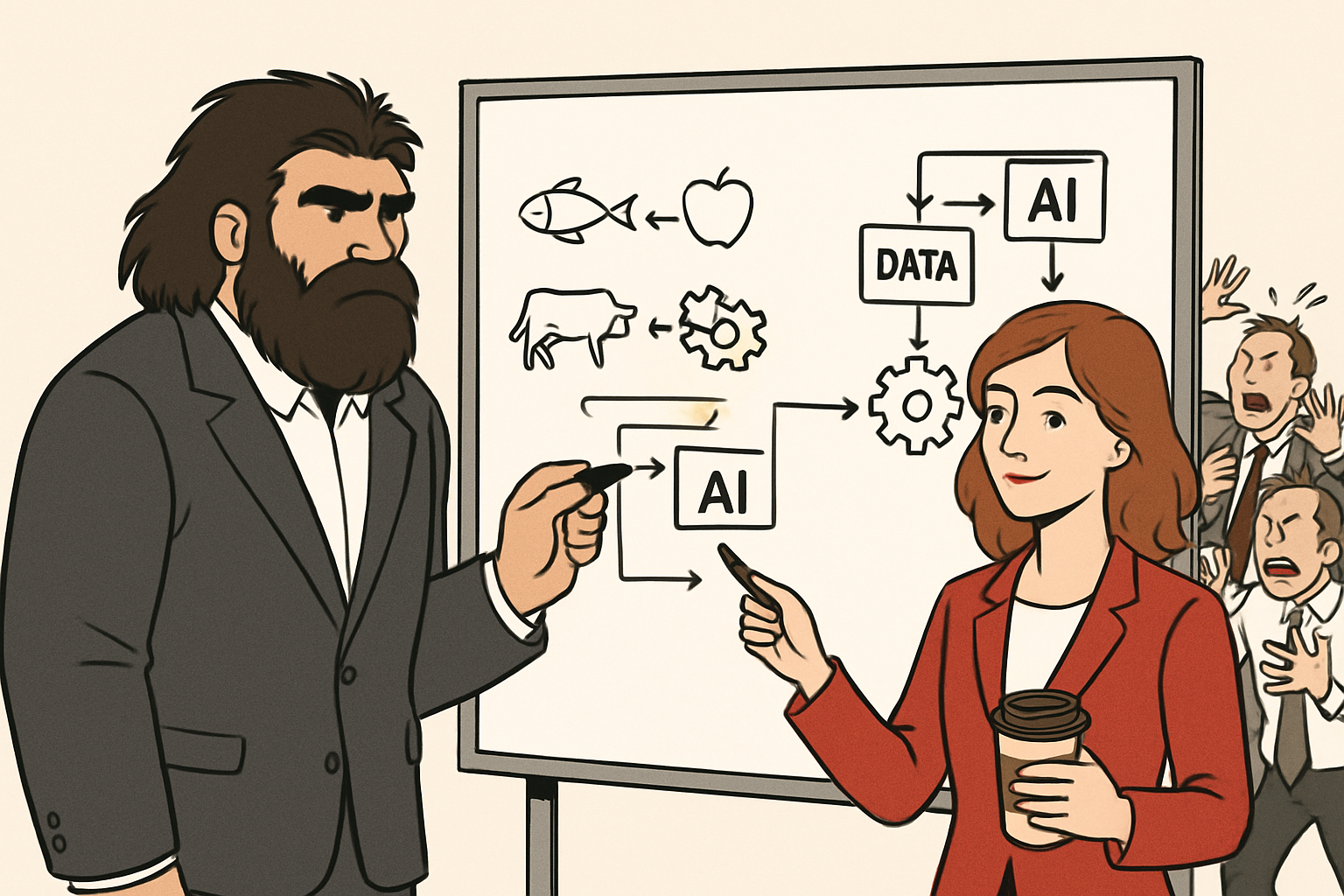
Every technological shift creates winners and losers, but AI economics operates on a fundamentally different structure than previous disruptions. When the printing press eliminated scribes in the 15th century, new jobs emerged. When automation hit manufacturing in the 1950s, service sector employment absorbed the displaced workers.
AI doesn’t just replace specific tasks — it replaces cognitive functions. That’s everything knowledge workers sell.
Look at the numbers. Between 1990 and 2020, software engineer salaries grew 127% adjusted for inflation. These were the knowledge workers who built the digital economy. Now GPT-4 can write better code than 60% of working programmers, and it improves every quarter.
The economic structure is simple: if an AI system can do your job for $0.02 per hour in compute costs, your hourly rate becomes irrelevant.
Think about that.
I know a graphic designer who spent 15 years building expertise in brand identity. She was billing $150 per hour until Midjourney started producing logo concepts in 30 seconds. Her clients didn’t fire her — they just stopped needing her. The demand dried up.
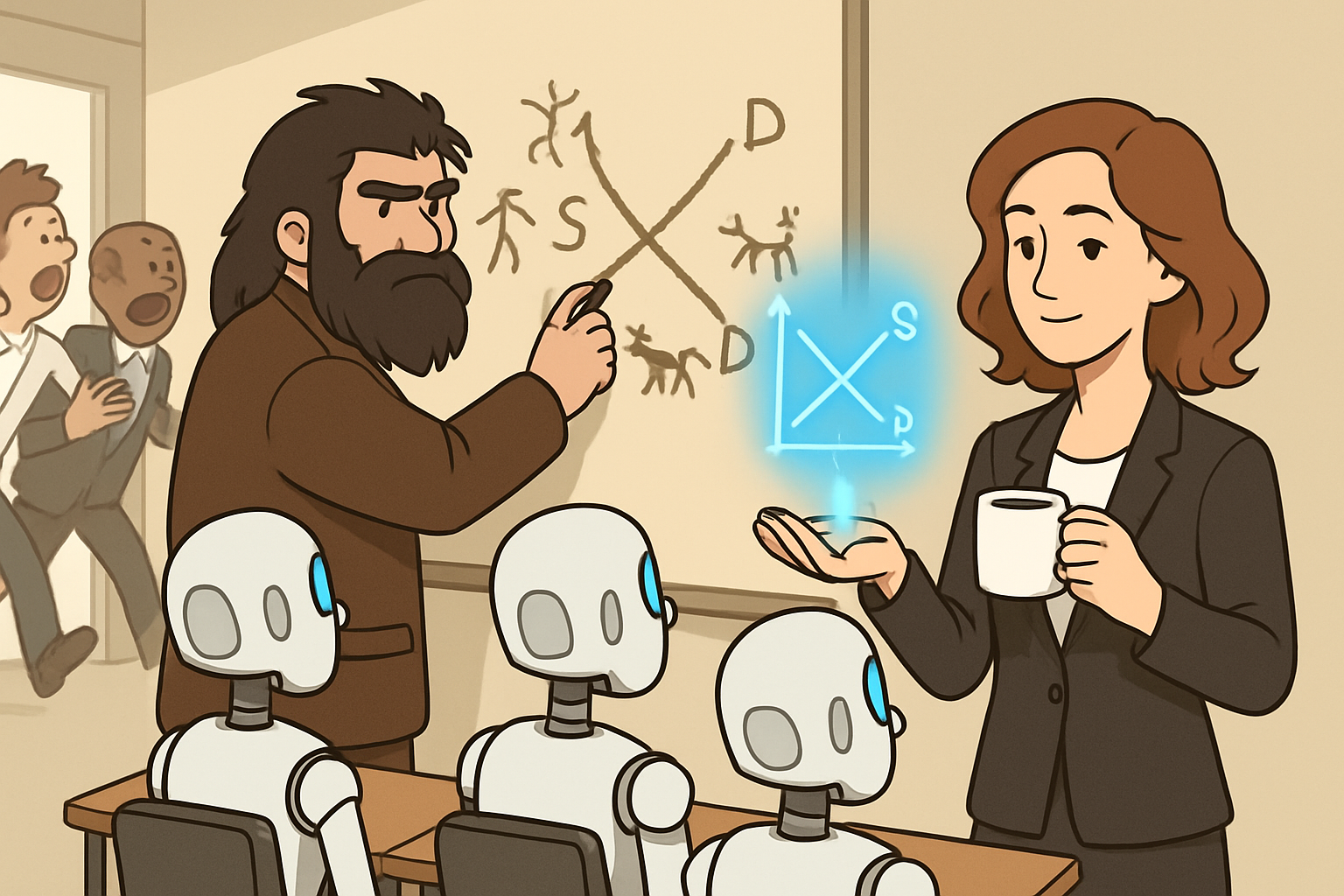
This isn’t creative destruction. It’s demand destruction.
The Capital Question Changes Everything
Most people ask: “How do I AI-proof my career?” That’s the wrong question. It assumes you’ll always trade time for money, just with different skills.
The right question is: “How do I own a piece of the AI productivity gains?”
Warren Buffett understood this principle before AI existed. When he bought Coca-Cola stock in 1988, he wasn’t buying bottles of soda. He was buying a permanent claim on human thirst. Every time someone anywhere chose Coke over water, Buffett’s capital captured a piece of that transaction.
AI economics works the same way, but faster. The companies that own AI systems capture productivity gains that used to go to human workers. If you own equity in those companies, you get paid when AI replaces labor. If you are that labor, you get replaced.
Look, I get it. This feels cold. I spent my early career believing that working harder and getting better at my job was the path to financial security. I optimized my resume, networked aggressively, and pushed for promotions. Classic wage-slave thinking.
Then I realized that every hour I spent making someone else’s company more valuable was an hour I didn’t spend building my own capital position.
Where The Money Actually Flows
Here’s what’s happening right now, while everyone argues about whether AI will kill jobs or create new ones:
Microsoft’s revenue per employee hit $877,000 in 2023, up 23% from the previous year. That’s not because Microsoft hired more productive humans. It’s because AI systems amplify the output of each human worker, and Microsoft captures that amplification through software margins.
Meanwhile, median household income in the United States grew 2.9% in the same period.
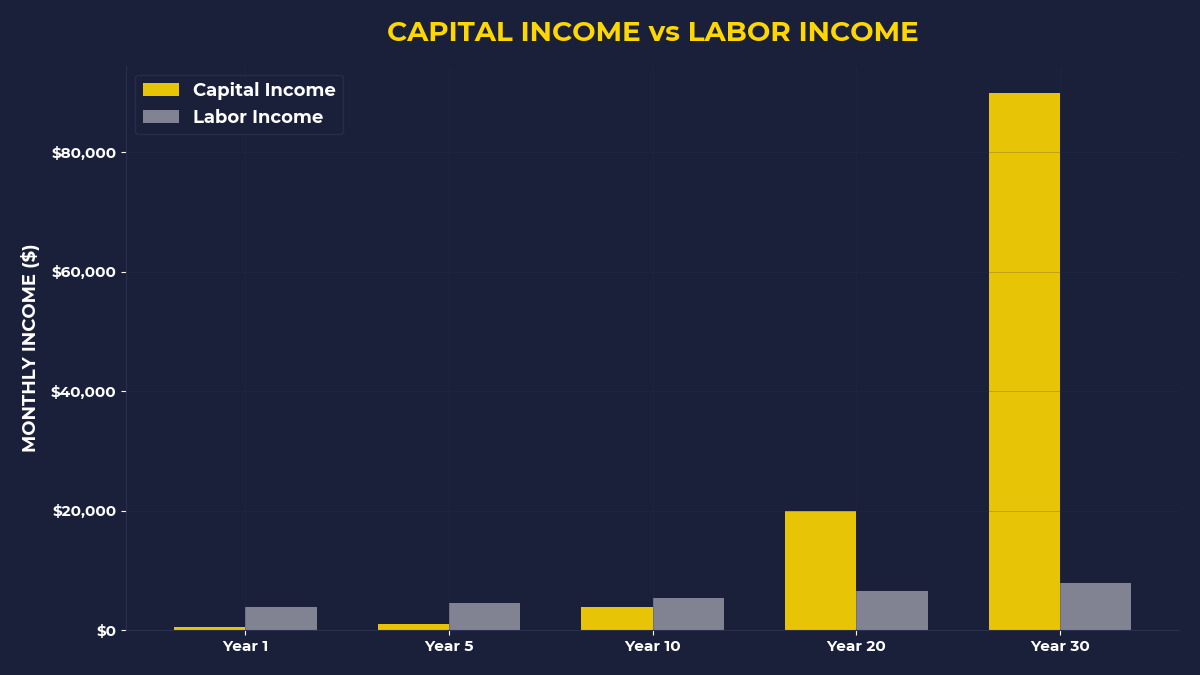
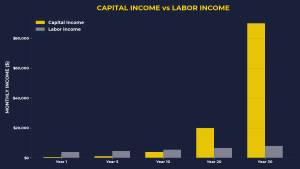
The gap widens every quarter. Capital owners get the productivity gains. Labor gets marginal wage increases that can’t keep pace with the value they’re creating.
This is the AI wealth transfer happening in real time. Most people miss it because they’re focused on keeping their jobs instead of owning the systems that might replace their jobs.
Your brain fights this reality because accepting it means admitting that your job security is an illusion. Loss aversion makes you cling to what you have instead of positioning for what’s coming.
The Ownership Advantage Compounds
AI systems get better exponentially while human capabilities improve linearly. That mathematical reality creates a widening gap between capital returns and labor returns.
If you own shares in companies deploying AI, your capital benefits from each improvement in AI capability. If you compete with AI systems, each improvement makes your human labor relatively less valuable.
I know a freelance writer who saw this coming in 2022. Instead of trying to write better than GPT, she used her last $3,000 to buy shares in Microsoft, Nvidia, and Alphabet. Her writing income dropped 70% over the next 18 months. Her portfolio gained 140%.
She stopped competing with AI and started owning it instead.
The compound returns accelerate because AI systems improve themselves. When Microsoft’s AI helps Microsoft build better AI, Microsoft shareholders benefit twice — from the current productivity and from the future improvements that current productivity enables.
Human workers can’t compete with exponential improvement curves. Capital owners don’t need to.
What The Primal Investor Takes Away
Are you positioning yourself to benefit from AI productivity gains, or are you hoping your human labor stays competitive with exponentially improving systems?
The choice feels stark because it is stark. AI economics creates a binary outcome: you either own systems that generate value without your direct labor, or you compete with systems that get better while you get older.
Here’s your action framework:
Stop optimizing your resume. Start optimizing your portfolio. The companies replacing human workers with AI systems are publicly traded. You can own them today.
Use remaining labor income to buy capital, not consumption. Every paycheck is an opportunity to purchase equity in the systems that might eventually replace your paycheck.
Own the platforms, not the output. Don’t compete with AI content creation — own the companies that sell AI content creation tools.
Think leverage, not skills. AI amplifies capital ownership. It commoditizes human skills. Position yourself on the amplification side.
Start before you feel ready. The wealth transfer is happening now, not in some hypothetical future when AI becomes “mainstream.”
Accept the uncomfortable truth. Your job skills depreciate against exponentially improving AI systems. Your capital ownership appreciates from the same improvements.
The AI revolution isn’t coming. It’s here. The only question is whether you’ll own a piece of it or compete against it.
Smart money chooses ownership.
🎬 Prefer watching? Check out the video version on YouTube: