Marcus — 31, software developer in Seattle — called me on a Tuesday in March, right around 11 p.m. He wasn’t panicking exactly. But there was something tight in his voice, the way a person sounds when they’ve been sitting alone with a bad thought for too long.
“They just announced the new AI coding tool at work,” he said. “It does in four minutes what I spend half my day doing.”
He paused. Then: “What am I actually worth now?”
Marcus makes $148,000 a year. He’s good at his job. He’s been good at his job for six years. He saves around 12% of his income, has a brokerage account with about $34,000 in it, pays $2,200 a month in rent, and by most measures looks like someone doing everything right.
And he was terrified.
I Know That Feeling. I’ve Been That Person.
When I first started thinking seriously about money — I was 26, living in a one-bedroom apartment I split with a roommate because I couldn’t swing the full rent alone — I had the same background dread Marcus was describing. I was working hard. I was learning. I was doing the things you’re supposed to do. And every month I’d look at my bank account the day before payday and feel that low, grinding anxiety of being exactly one bad week away from scrambling.
What I didn’t understand then — and this took me years longer than it should have — is that I was playing an entirely different game than the people getting rich around me. Not a harder game. A different one. I was optimizing my labor. They were acquiring demand.
That’s not a metaphor. It’s the actual mechanism. Stay with me here.
Every month, money left my apartment like water through a screen. Rent check — straight to a landlord who owned the building. Grocery bill — to a publicly traded food conglomerate. Netflix subscription — to a content platform worth over $250 billion. Car payment, phone plan, gym membership, the $6 coffee I told myself was fine. All of it flowing in one direction: away from me, toward people and companies that owned something I needed.
I was a source of demand. They were the storage tanks collecting it.
That’s what capital actually is. Not money sitting in an account. Capital is a structure that collects the demand of other people. A rental property. A software platform. A brand with a loyal following. An index fund holding stakes in 500 companies whose products you use every single day. When people need what you own, you have capital. When you need what others own — and you have nothing but your hours to trade — you’re on the other side of the ledger.
What AI Is Actually Doing to That Equation
Here’s the thing about Marcus’s situation that most people are getting wrong.
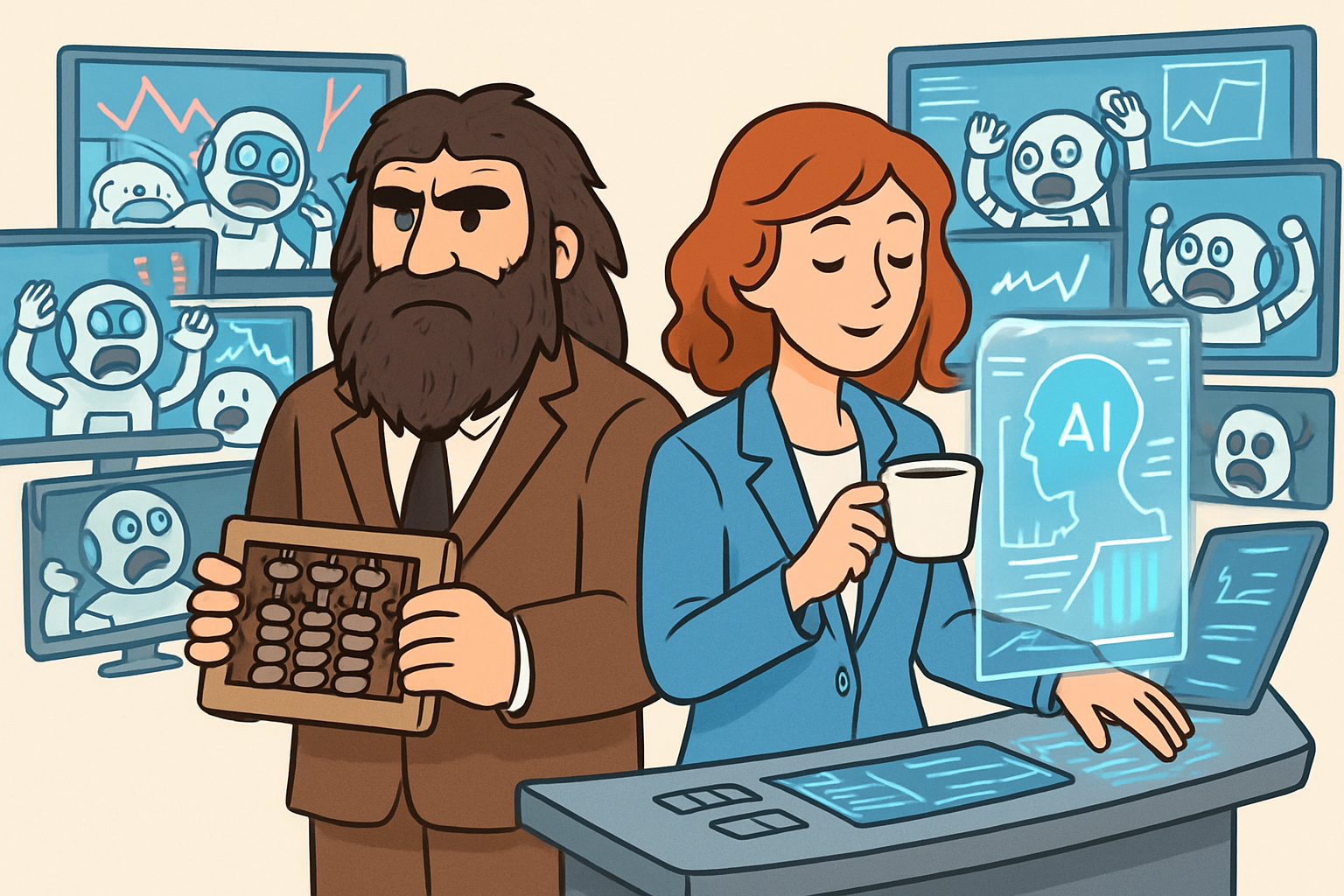
The risk isn’t that AI will take his job tomorrow. It might. It might not. That’s the wrong question. The real question is: when AI makes his skills 40% cheaper to replace, who captures that value? Not Marcus. The company that owns the AI tool does. The shareholders of that company do. The people with equity in the platform do.
Think about that. Marcus spent six years sharpening a skill. AI commoditizes that skill almost overnight. His labor gets cheaper. Someone else’s asset just got more valuable.
This is not new. It’s the oldest story in capitalism. Automation has always done this — shifted value from those who perform the labor to those who own the machinery. What’s new is the speed. Between 2022 and 2024, the market cap of the five largest AI-adjacent companies grew by roughly $5 trillion. That is stored demand, accumulated at an almost incomprehensible rate, flowing to people who owned equity in those systems.
Marcus doesn’t own any of that. He works for a company that uses it.
I remember the exact moment this clicked for me. I was sitting at my kitchen table, looking at my brokerage app at around midnight — this was maybe four years ago — and I finally understood the difference between the two columns on my monthly budget. The left side was everything I was doing. The right side was everything I owned. The left side was much, much longer.
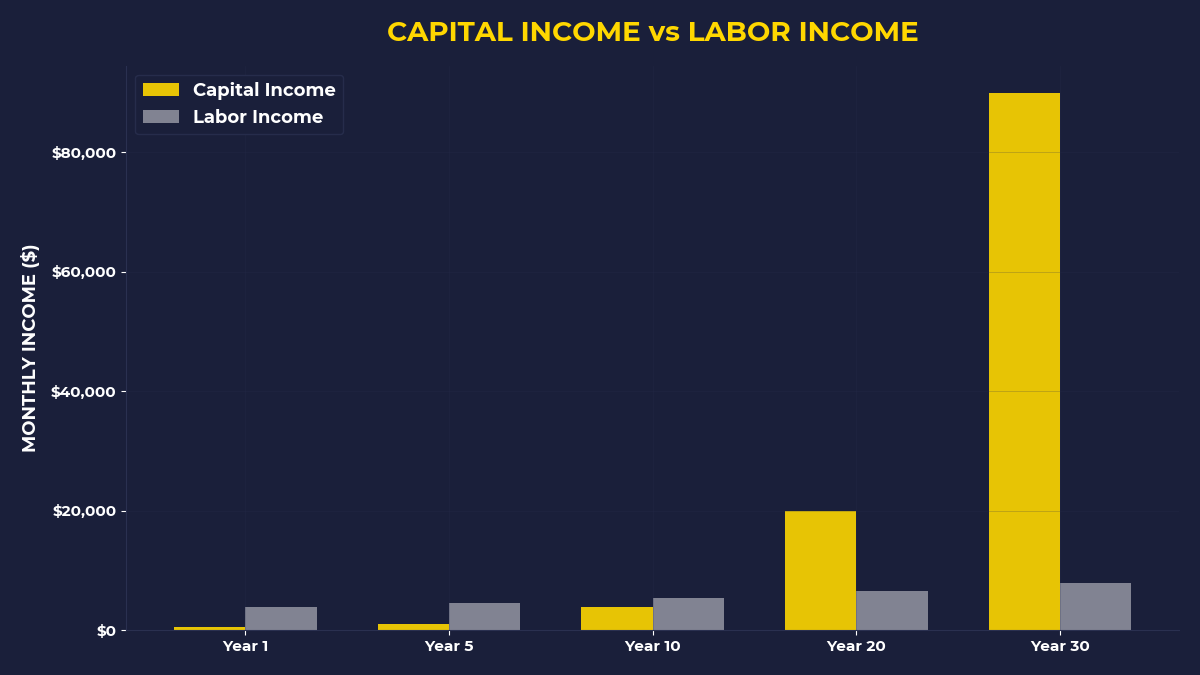
The doing column makes you tired. The owning column makes you free.
The Reframe That Changes Everything
Most of what we’re taught about money is framed around effort. Work harder. Learn more. Upskill. Get the promotion. Negotiate your salary. All of that advice lives inside one question: What should I do?
Capitalists ask a different question. They ask: What should I buy?
There’s a story about Warren Buffett — well-documented, told in multiple biographies — about when he was a kid collecting lost golf balls near a course and reselling them, a dozen for $6. He could have kept doing that forever. Instead, he used the money he earned to buy assets that earned money without him. A small farm. A pinball machine installed in a barbershop. Later, shares of businesses he believed would keep attracting customers for decades.
The golf balls were labor. The farm was capital.
Buffett wasn’t smarter than other kids in his neighborhood. He just had a different primary question. He wasn’t asking how to earn more per hour. He was asking what he could buy that would earn on his behalf while he slept.
Wild, right? Because that sounds obvious when you say it out loud. But 9 out of 10 financial conversations I’ve had with friends, colleagues, and people who message me through this blog — they’re entirely about the labor column. Salary negotiations. Career pivots. Certifications. Side hustles where they exchange more hours for more dollars.
Nobody’s asking what to buy.
A friend of mine — engineer, good salary, zero equity outside a 401(k) he hasn’t thought about in three years — told me last fall that he was thinking about learning prompt engineering to stay relevant in the AI shift. I told him that was fine. But I asked him: does the company that makes the AI tool know you exist? Does anyone whose demand you’re about to serve know your name?
He stared at me. Then he said, “That’s a different question.”
Yes. Exactly.
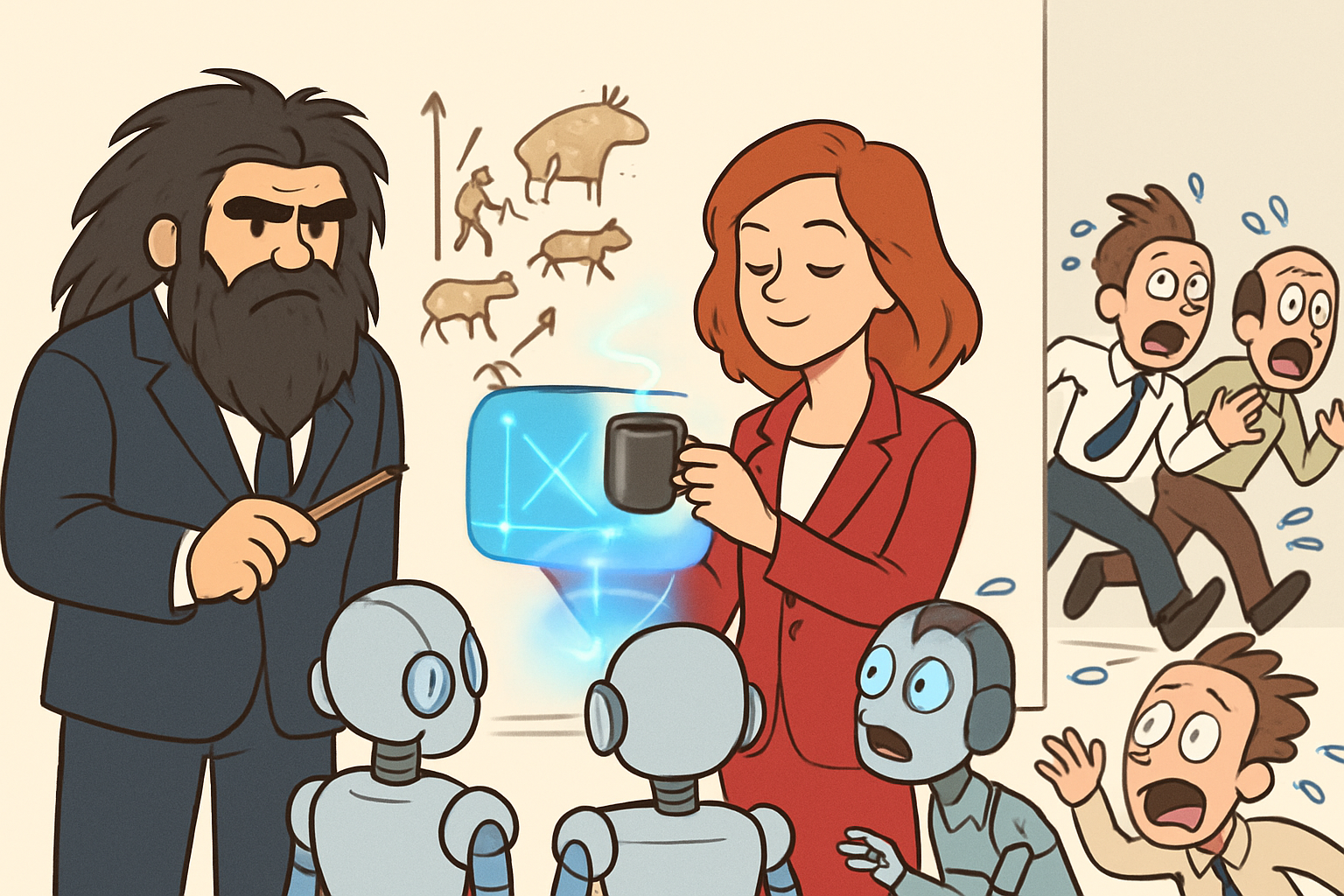
So What Do You Actually Do With This?
I’m not going to tell you to quit your job. I’m not going to tell you to go start a business by Friday. That’s not the move here, and it’s not where most people are starting from.
Here’s what I will tell you — and this is the thing I wish someone had said to me at 26:
Before you pay a single bill this month, move $100 into a brokerage account and buy one share of something that represents broad demand. An S&P 500 ETF. A total market index fund. A stake in the companies whose products you used before you finished reading this sentence. It doesn’t have to be $100. It can be $47. It can be whatever’s left over after your coffee run, as long as it goes to equity before it goes to anything else.
This isn’t about the $100. The $100 doesn’t move the needle financially. Not yet.
What it does is rewrite the first question you ask yourself when money arrives. Instead of “what do I owe?” you start asking “what do I own?” That shift — from labor orientation to ownership orientation — is the actual wealth-building mechanism. The dollars follow the mindset, not the other way around.
When I finally started doing this consistently — putting equity purchases ahead of discretionary spending, even in months where it was uncomfortable — I noticed something odd within about six months. I started paying attention to demand differently. I’d walk into a coffee shop and think: who owns the supply chain that makes this possible, and can I buy a piece of it? I’d pay my streaming bill and immediately move an equivalent amount into an ETF that held the company I just paid. Not because it was mathematically perfect. Because it trained me to think like someone on the other side of the invoice.
That’s the side that’s getting richer right now. As AI scales. As automation compresses the value of labor. As demand concentrates in platforms and systems and infrastructure that a small number of equity holders own.
You can own a piece of that. Today. With the money you have right now.
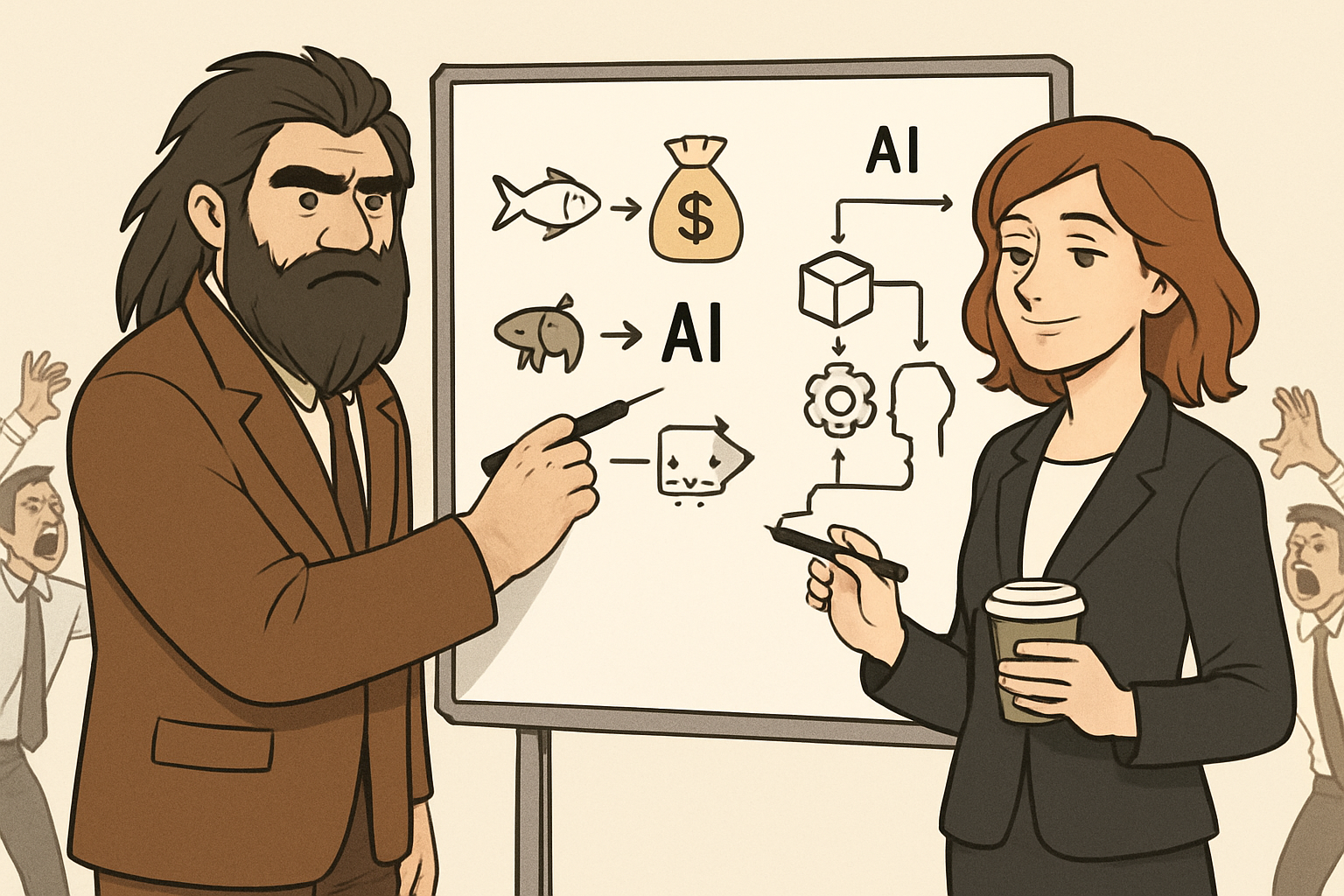
Who This Post Is Actually For
If you’re someone who has a job, a decent income, and a persistent feeling that you’re running on a treadmill — earning more each year but not actually getting further ahead — this is for you.
If you’ve looked at the AI headlines and felt that same tightness Marcus felt on that Tuesday night, some mixture of fear and irrelevance and “wait, where does this leave me?” — this is for you.
If you’ve read two paragraphs of most finance content and thought, “that’s not my world, that’s not how my life actually works” — you already understand the problem better than most. The standard financial advice was built by and for people who already have capital. It assumes the starting position. It doesn’t explain how to get there from here.
Look. The AI economy is not going to stop. The value transfer from labor to capital is accelerating. That is not a reason to despair. It is a reason to ask a different question than the one you’ve been asking.

The One Thing To Remember
Capital is not money. Capital is stored demand — a structure that collects what other people need and converts it into cash flow. AI is the most powerful demand-storage system ever built, and right now it is minting equity value at a speed that has no historical precedent. The people who will benefit are not necessarily the ones who understand AI best. They’re the ones who own a piece of it — any piece, however small — while everyone else just uses it as a tool to stay employed.
- This week: Open a brokerage account if you don’t have one. Transfer $50–$200 before you pay any discretionary expense. Buy a broad-market index fund — something that holds hundreds of companies and costs under 0.10% in annual fees. You are now a capital owner. Small, yes. But on the right side of the ledger.
- This month: Write down every recurring bill you pay. For each one, ask: who owns the demand I’m feeding? Then find out if you can buy equity in that company or sector. Your Netflix payment, your grocery bill, your phone plan — follow the money upstream and see if you can get a seat at that table.
- This year: Shift your primary question from “how do I earn more?” to “what should I buy next?” Not instead of working — alongside it. Let your labor fund your ownership. Then let your ownership slowly, compoundingly, reduce how much your labor has to carry.
Marcus, by the way, is fine. He’s still at his job. But three weeks after that call, he texted me a screenshot of his first ETF purchase. $200. It wasn’t the amount that mattered.
It was the question he finally started asking.
🎬 Prefer watching? Check out the video version on YouTube:
👉 https://www.youtube.com/@PrimalContrarian
Subscribe for daily insights on capital, wealth, and contrarian thinking.