The most dangerous thing about your investment philosophy is that you actually believe it’s yours.
Here’s what I mean. You sit down to build your “personal investment strategy.” You read Bogleheads forums, study Modern Portfolio Theory, maybe even crack open some Buffett letters. You craft this beautiful philosophy about long-term thinking, diversification, and compound returns. You feel smart. You feel prepared.
You have no idea you just copied the homework of people who want you to stay poor.
The Philosophy That Keeps You Buying Their Assets
I learned this the expensive way in 2018. I had what I thought was a sophisticated investment philosophy. Value investing mixed with index fund diversification. Buy the dip. Stay the course. All the greatest hits.
Then I noticed something weird about my portfolio statements.
Every month, I was sending money to Vanguard, Fidelity, and Charles Schwab. Every quarter, I got tiny dividends back. But when I looked at who was getting wealthy from the companies I owned, it wasn’t me. It was the founders, the venture capitalists, the private equity firms who owned chunks before the companies went public.
I was buying their exits. They were selling me their outcomes.
The average retail investor buys stocks at a 15-20x price-to-earnings ratio. Meanwhile, venture capitalists bought the same companies at 0.5x revenues when they were private. By the time your “buy and hold forever” philosophy kicks in, the people who built real wealth already took money off the table.
Your investment philosophy isn’t wrong. It’s just designed for people who don’t understand how capital actually works.
What Capital Owners Actually Do
Here’s the thing. The investment philosophy of actual capital owners looks nothing like what they teach in personal finance books.
Take Ray Dalio’s Bridgewater. While retail investors debate the merits of 60/40 stock-bond allocation, Bridgewater runs a $140 billion hedge fund using leverage, derivatives, and macroeconomic bets that would make your risk tolerance calculator explode.
Or look at Berkshire Hathaway’s actual strategy. Everyone knows Buffett preaches long-term holding. What they miss is that he buys entire companies, uses float from insurance premiums to fund acquisitions, and operates businesses that generate billions in free cash flow. He’s not just investing. He’s building a capital allocation machine.
The Rockefellers don’t diversify across index funds. They own direct stakes in energy companies, real estate developments, and private businesses across generations. Their investment philosophy is simple: own the cash flow, not the ticker symbol.
These people aren’t smarter than you. They’re asking different questions.
Why Your Brain Loves Bad Investment Philosophy
Your brain is hardwired to prefer investment philosophies that feel safe and make logical sense.
This is the herd instinct at work. When everyone agrees that “diversification reduces risk” and “time in the market beats timing the market,” it feels correct. Consensus feels safe. Going along with the crowd triggers the same neural reward as physical safety.
But here’s what your Stone Age brain doesn’t understand: financial safety and actual safety are opposites.
When you buy what everyone else owns at the price everyone else agrees is fair, you guarantee average returns. And average returns, after inflation, taxes, and fees, barely keep you middle class. The S&P 500 returned 10.5% annually between 1957 and 2021. After 2.5% inflation, 1.5% in fees, and 25% taxes on gains, your real return drops to about 4.8%. That’s not wealth building. That’s purchasing power preservation for people who already have wealth to preserve.
Meanwhile, loss aversion makes you obsess over downside protection instead of upside capture. You spend more mental energy avoiding 20% drawdowns than finding 10x opportunities.
Your investment philosophy becomes elaborate risk management instead of wealth creation.
The Real Investment Philosophy of Capital Owners
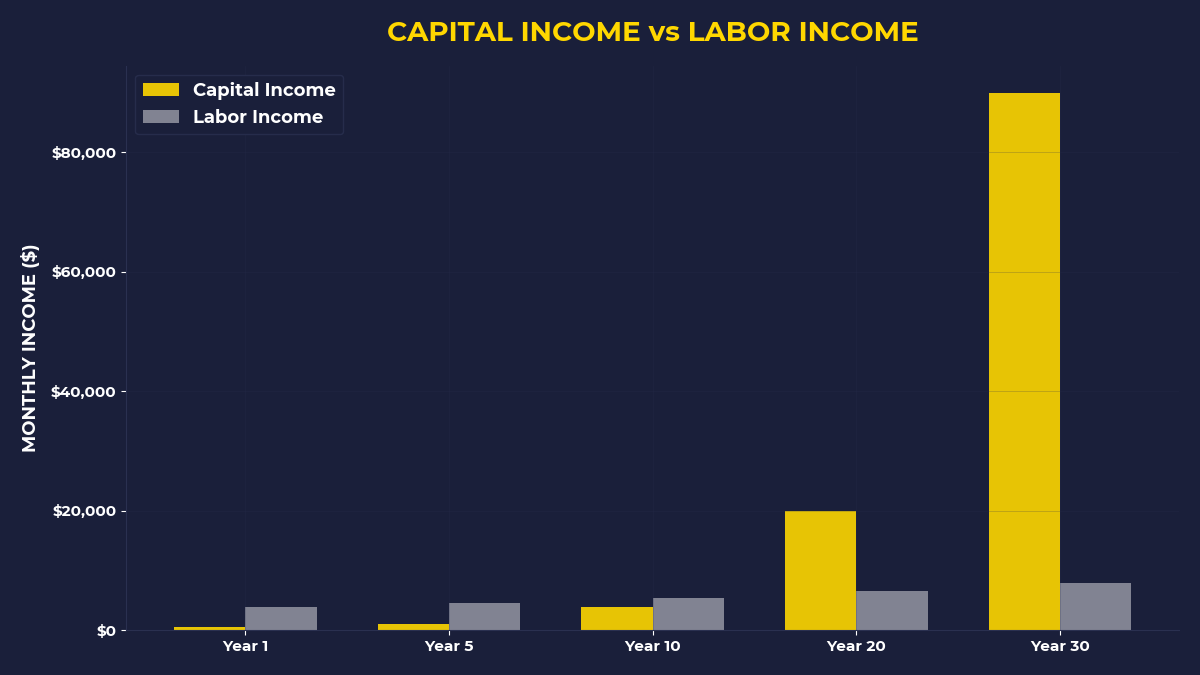
Want to know what investment philosophy actually builds wealth? Stop diversifying across asset classes. Start concentrating on cash flow sources.
I know someone who owns 47 laundromats across three states. His investment philosophy isn’t asset allocation. It’s demand monopolization. He doesn’t care about market volatility because people need clean clothes whether the S&P 500 goes up or down.
Another friend owns equity stakes in 12 software companies that sell to dentists. His philosophy isn’t risk-adjusted returns. It’s niche domination. Dental software companies compound at 25% annually because dentists hate switching systems and the market is too small for competition.
Both of them violate every rule in your investment philosophy textbook. Both are wealthier than 99% of diversified index fund investors.
Here’s why their approach works: they own demand, not diversification.
Warren Buffett didn’t get rich buying the S&P 500. He got rich by buying See’s Candies for $25 million in 1972 and watching it generate over $2 billion in profits over 50 years. One business. Concentrated bet. Sustainable demand.
How to Steal Their Investment Philosophy
You don’t need $25 million to buy a candy company. But you can steal the thinking framework that made Buffett rich.
Instead of asking “What should I diversify into?” ask “What demand can I own?”
Look at your monthly expenses. Every bill you pay is someone else’s cash flow. Your rent check goes to real estate owners. Your grocery spending goes to food distribution companies. Your Netflix subscription goes to content creators and platform owners.
The sophisticated investor investment philosophy is simple: flip the equation. Instead of sending cash flow to capital owners, become the capital owner receiving cash flow.
This means buying businesses that serve needs you personally understand. If you spend $200 monthly on software subscriptions, research which software companies have the highest switching costs and buy their stock. If you live in an area where everyone needs storage units, buy storage facility REITs or look into direct ownership.
Start small. But start thinking like someone who owns demand rather than someone who owns diversification.
What Most Sophisticated Investors Miss
Even sophisticated investors who understand this principle make one critical mistake. They think they need to become entrepreneurs or business buyers to access these returns.
Not true.
The stock market is full of companies that own sustainable demand but trade at reasonable prices because they’re boring. Waste Management owns trash collection routes that can’t be disrupted. Microsoft owns software dependencies that enterprises can’t eliminate. Visa owns payment processing infrastructure that can’t be replaced.
These aren’t growth stocks. They’re demand ownership plays disguised as public companies.
The key is concentration, not diversification. Own 8-12 companies that control demand in sectors you understand. Then hold them long enough for their competitive advantages to compound.
This requires patience and conviction that your diversified index fund philosophy never demanded. But it also produces returns that your diversified index fund philosophy could never achieve.
What The Primal Investor Takes Away
• Stop asking “How should I diversify?” Start asking “What demand can I own?” — The wealthy don’t spread risk across asset classes, they concentrate ownership of cash flow sources.
• Your monthly bills are someone else’s investment philosophy in action — Every expense you pay is proof someone else owns the demand you rent.
• Concentration beats diversification when you own sustainable competitive advantages — 8-12 companies that control demand outperform 500 companies that represent the market average.
• Public markets contain private equity returns if you think like an owner instead of a trader — Boring companies with monopolistic cash flows trade at reasonable prices because most investors chase growth instead of ownership.
The investment philosophy that builds real wealth isn’t the one they teach in finance textbooks. It’s the one used by people who own the textbook publishing companies. Stop building your philosophy from scratch. Start stealing theirs.
🎬 Prefer watching? Check out the video version on YouTube: