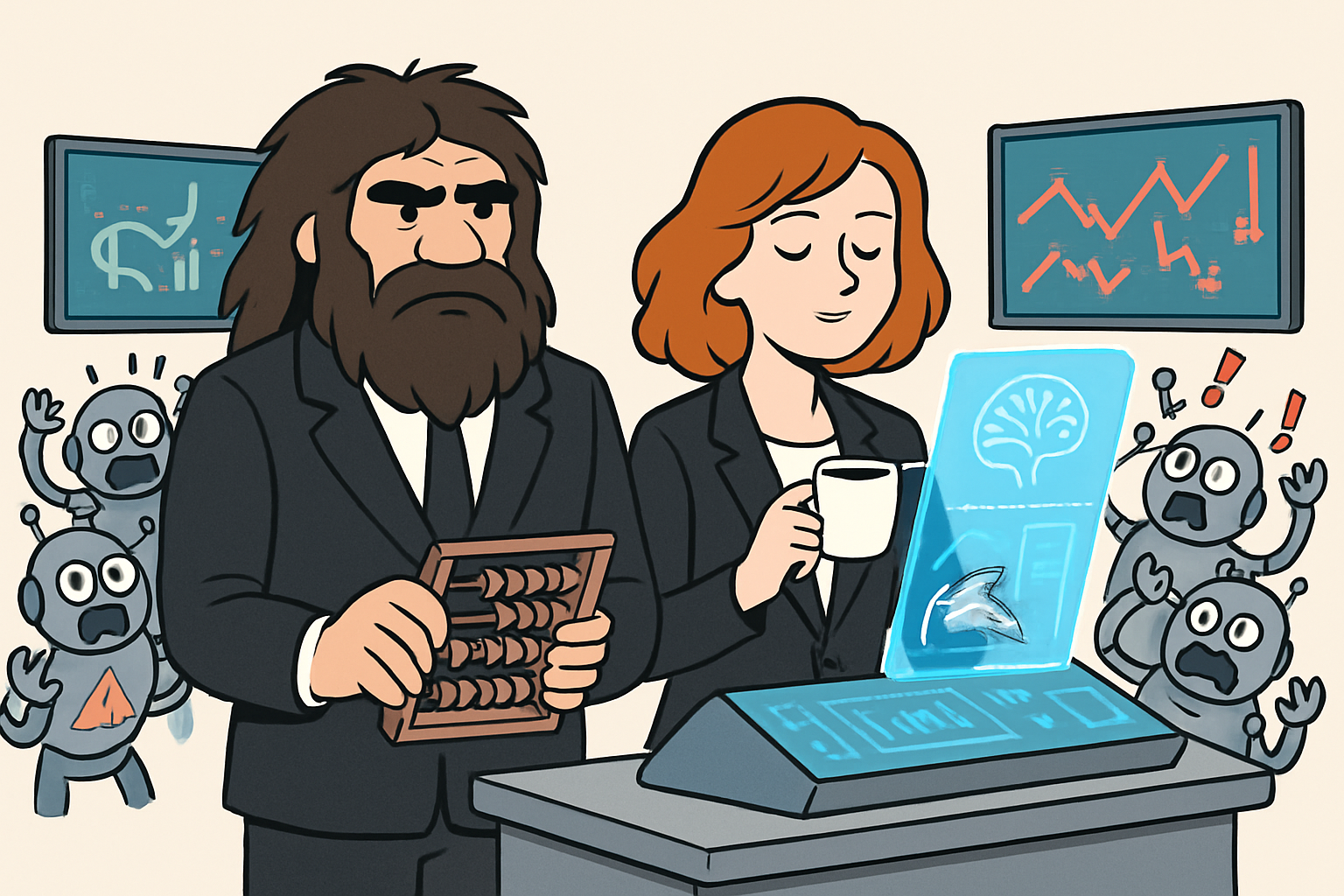
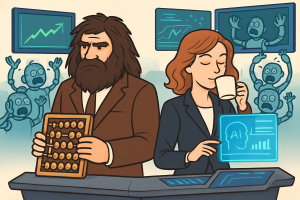
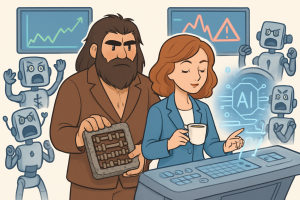
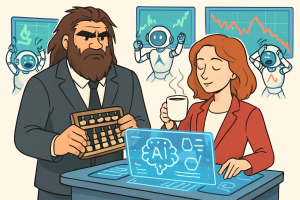
The smartest AI models in the world are getting dumber at making their owners money, while the dumbest humans are getting richer by owning them.
Think about that. ChatGPT can write code, analyze data, and solve complex problems better than 90% of knowledge workers. Yet the people getting wealthy from AI aren’t the ones using it to work faster. They’re the ones who own the companies that sell AI to everyone else.
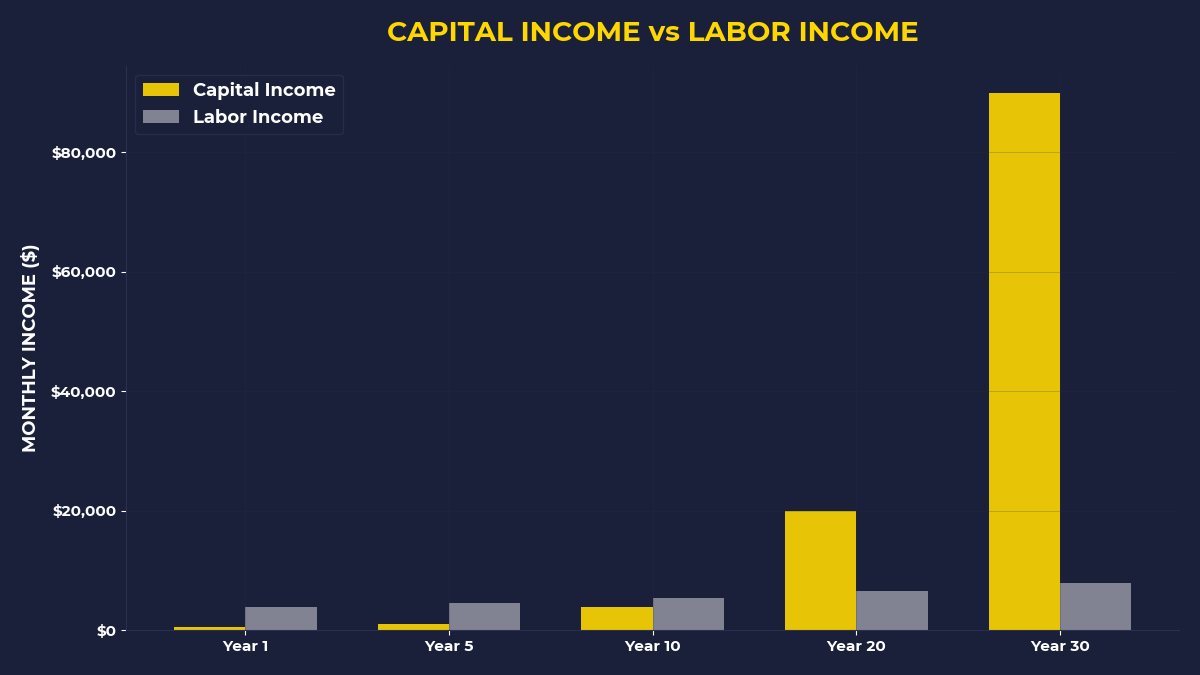
Here’s what most people miss about AI economics: artificial intelligence doesn’t create jobs. It creates capital. And if you don’t understand the difference, you’re about to get left behind in the largest wealth transfer in human history.
I Used to Think AI Would Make Me More Productive
When GPT-3 first launched in 2020, I was fascinated. I spent hours learning prompt engineering, experimenting with workflows, building AI-assisted investment research systems. I thought I was getting ahead.
I was actually falling behind.
While I was optimizing my use of AI tools, other people were buying the companies that make them. Nvidia’s stock price increased 2,340% between October 2022 and November 2024. Microsoft added $800 billion in market value in 18 months primarily from AI positioning. These weren’t productivity gains — they were capital gains.
The people getting rich from AI aren’t the best prompt engineers. They’re the ones who own the infrastructure that everyone else rents by the token.
Why AI Economics Breaks Every Wealth-Building Rule You Know
Traditional economics assumed human labor had irreducible value. Even in factory automation, humans supervised, maintained, and designed the systems. AI changes this fundamentally.
For the first time in history, we have tools that can think, create, and execute at superhuman levels while getting exponentially better and cheaper every year. The S&P 500’s top 7 companies — Apple, Microsoft, Alphabet, Amazon, Nvidia, Meta, and Tesla — now represent 32% of the index’s total value, up from 18% just five years ago. They’re not just big companies. They’re capital-amplification machines that AI makes more powerful every quarter.
Here’s the brutal truth: AI doesn’t make your job more valuable. It makes capital ownership more valuable while making human labor increasingly optional.
Consider this specific example. In 2023, Klarna announced their AI customer service chatbot handled the equivalent work of 700 full-time agents. The displaced workers lost their jobs. Klarna’s valuation increased by $2 billion. Same outcome, different beneficiaries.
The Two AI Economic Classes
AI economics is creating exactly two groups of people:
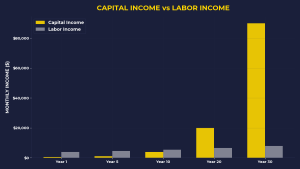
Capital Owners: People who own shares in companies that develop, deploy, or benefit from AI systems. They wake up richer every day as AI makes their assets more productive.
Labor Providers: People who compete with AI systems for work. They wake up less relevant every day as AI gets cheaper and more capable.
There’s no middle ground. You either own the systems that replace human work, or you are the human work being replaced.
The fear response here is predictable. Most people hear this and immediately think about learning new skills, pivoting careers, or becoming “AI-proof.” This is exactly backwards. You cannot out-learn exponential technological improvement. You can only own it.
What Does AI Actually Create?
Let me be specific about what AI creates versus what it destroys.
AI destroys individual human productivity advantages. If you’re a writer, AI writes. If you’re a coder, AI codes. If you’re an analyst, AI analyzes. Your personal skills become commoditized.
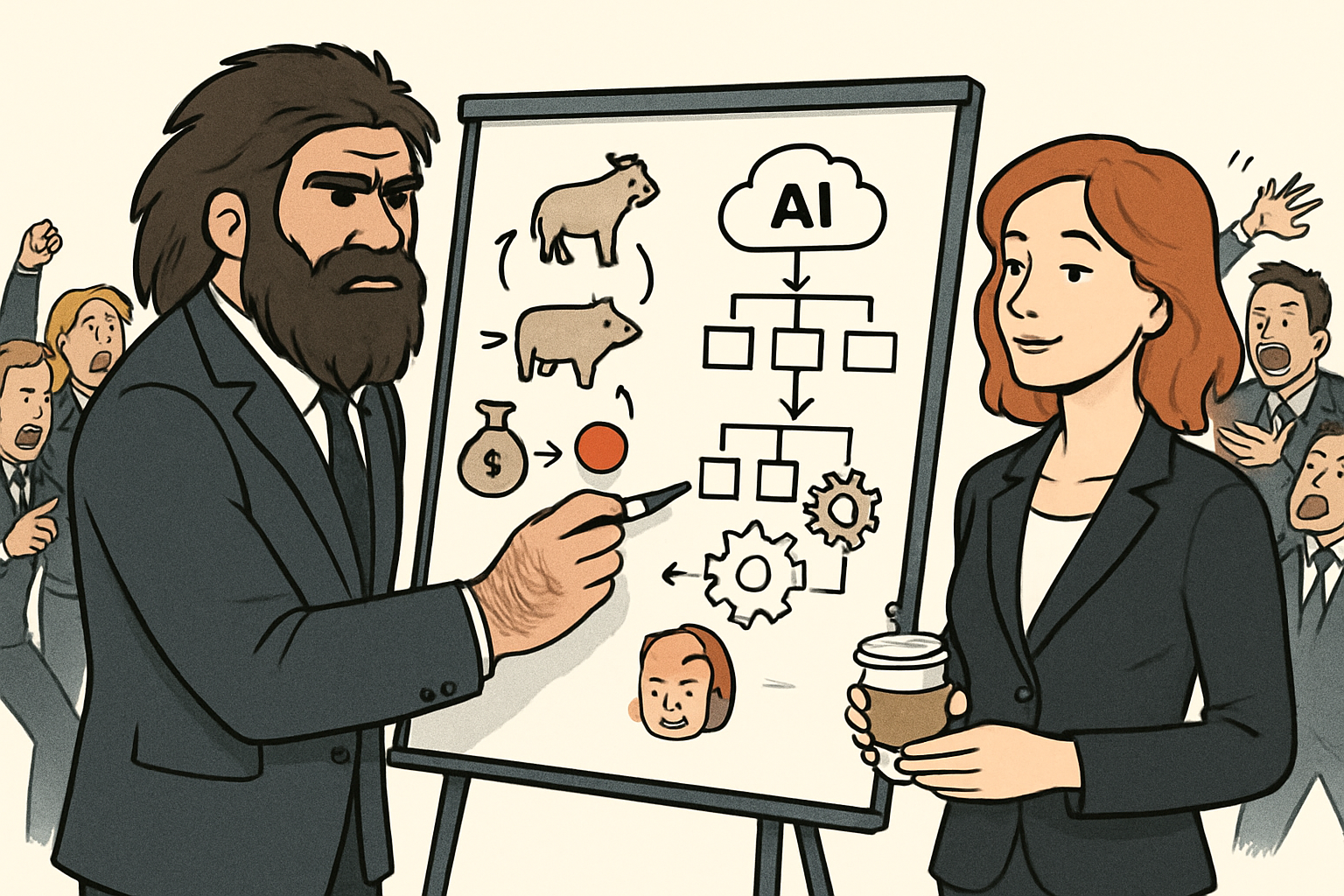
AI creates scalable demand-capture systems. Netflix’s recommendation algorithm doesn’t just suggest movies — it creates billions of hours of engagement that Netflix monetizes. Amazon’s logistics AI doesn’t just move packages — it creates a moat that keeps customers buying from Amazon instead of competitors.
The pattern is always the same: AI amplifies the value of owning the system while reducing the value of working within it.
Look at Uber. Their AI doesn’t make individual drivers more money — surge pricing algorithms extract maximum value from both drivers and riders while Uber keeps the spread. The AI creates capital for shareholders, not income for workers.
Why Smart People Miss the AI Wealth Transfer
The smarter you are, the more likely you are to focus on how AI can make you better at your job. This is the productivity trap.
I know engineers who’ve built incredible AI workflows that cut their coding time in half. They think they’re winning. Meanwhile, their companies are using similar AI systems to eliminate entire engineering teams. Productivity gains for individuals become cost reductions for capital owners.
The herd instinct drives people toward improving their labor value when they should be accumulating capital ownership. Everyone’s talking about “upskilling” and “AI literacy” when they should be talking about “which AI companies should I own?”
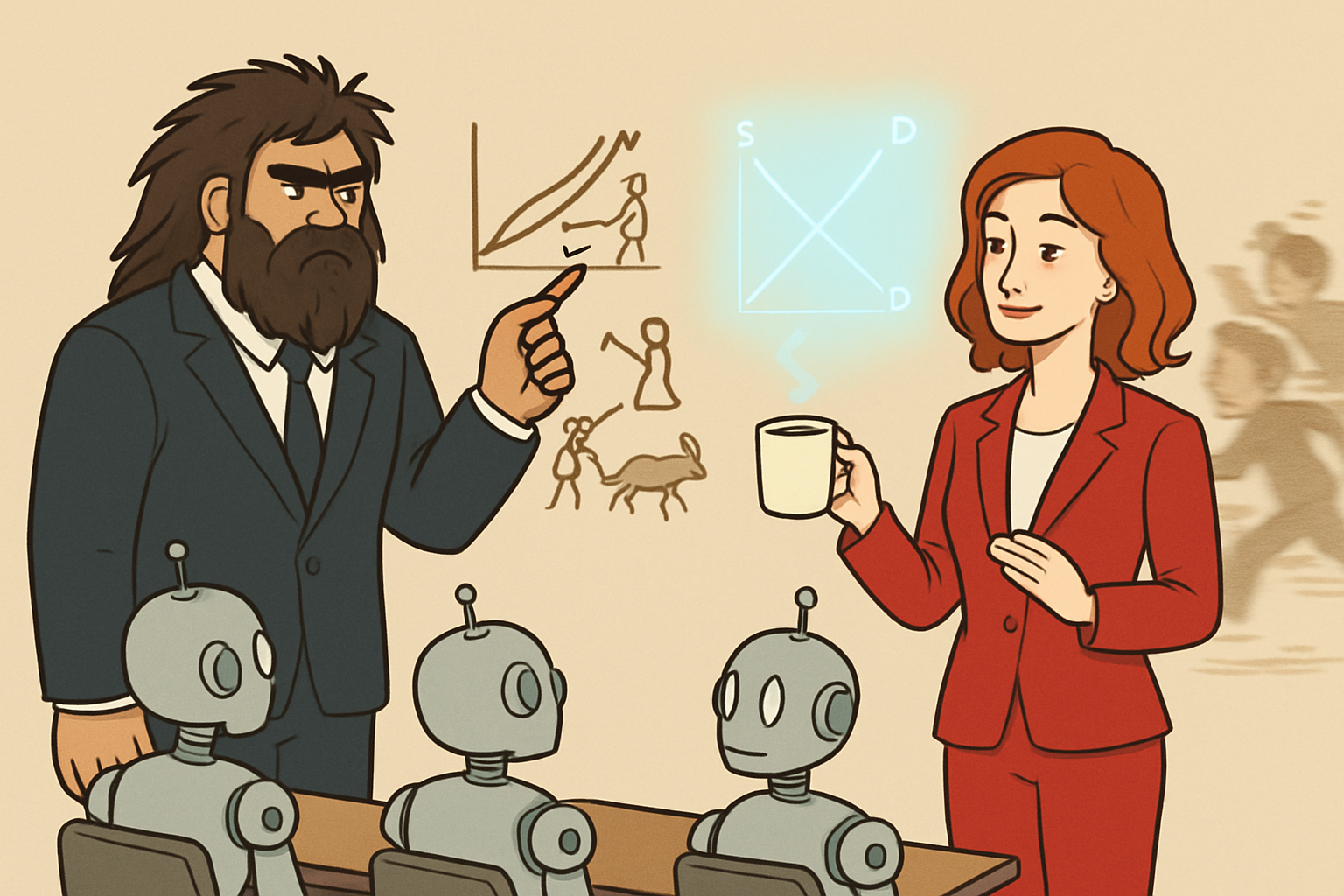
Here’s what’s actually happening: AI makes human skills more abundant (therefore cheaper) while making capital ownership more scarce (therefore more valuable).
How Capital Owners Use AI While Labor Providers Get Used By It
Capital owners use AI to amplify demand for their assets. They own the platforms, the data, the infrastructure, and the distribution. AI makes all of these more valuable.
Labor providers use AI to compete more effectively for work that AI is simultaneously making obsolete. They’re optimizing for efficiency in roles that won’t exist in five years.
The difference is structural, not personal. Smart people on both sides, but completely different economic incentives.
Consider content creation. A YouTuber who uses AI to edit videos faster is still trading time for money. A YouTuber who owns a network of AI-generated channels is building scalable capital. Same technology, different ownership structure.
The Question That Determines Your AI Economic Future
Are you asking “How can I use AI to do my job better?” or “How can I own the AI systems that replace jobs?”
The first question keeps you in the labor class. The second moves you toward capital ownership.
When I shifted from “How can I use AI for research?” to “Which companies benefit most from AI adoption?” my investment returns changed immediately. I stopped trying to compete with AI and started owning the companies that sell AI to everyone else.
This isn’t about becoming a tech expert. It’s about understanding that AI amplifies capital returns while compressing labor returns. The economic math is simple: own the amplifiers, don’t be the compressed.
What The Primal Investor Takes Away
• Stop optimizing your AI productivity, start accumulating AI capital ownership. The companies that build and deploy AI systems capture more value than the people who use them efficiently.
• AI creates two economic classes: owners and obsolete. Your skills become commoditized while ownership becomes more valuable. Choose your class deliberately.
• Labor productivity gains become capital cost reductions. When AI makes you 2x better at your job, it makes your job 2x less necessary for companies to hire humans to do.
• Ask “What should I own?” not “How should I use this?” AI tools are productivity theater. AI ownership is wealth creation.
• The AI wealth transfer is happening now, not later. Companies with AI advantages are pulling away from companies without them. Own the winners before the separation becomes obvious to everyone else.
The crowd is learning to use AI. The contrarian is learning to own it. In five years, this difference will determine who has capital and who needs a job.
🎬 Prefer watching? Check out the video version on YouTube: