The Philosophy That Keeps You Working
Marcus — 38, software engineer in Denver — sat in his financial advisor’s office last Tuesday, nodding as the man in the expensive suit explained diversification theory. “You want 60% stocks, 30% bonds, 10% alternatives,” the advisor said, pulling up a colorful pie chart. “It’s a balanced approach for someone your age.”
Marcus walked out with a portfolio designed to generate modest returns over decades. What he didn’t realize was that his “investment philosophy” had just been chosen for him by someone whose primary goal was collecting management fees for the next 30 years.
Most people think they’re building wealth when they’re actually funding someone else’s retirement plan.
I Built My Philosophy Backwards
I know exactly how Marcus felt because I spent five years following investment advice that kept me exactly where I started. Here’s the thing. Every investing book I read, every podcast I listened to, every advisor I met — they all started with the same question: “What’s your risk tolerance?”
Wrong question entirely.
I was 29, making decent money as a marketing manager, maxing out my 401(k), following the standard playbook. Dollar-cost averaging into index funds. Rebalancing quarterly. Thinking I was being responsible.
The wake-up call came when I calculated the numbers. Even with perfect market returns, I’d need to work until 65 to have enough to retire. Maybe 62 if I was lucky.
That’s when I realized my “investment philosophy” was actually someone else’s business model.
The Philosophy Built on Your Labor
Think about what happens when you follow conventional investment wisdom. You put money into broadly diversified funds that own everything. Tech companies, utilities, consumer goods — a little bit of every business model.
But here’s what nobody tells you: some of those business models depend on you staying exactly where you are.
Your landlord needs you to keep paying rent for 30 years. Your car company needs you to keep making payments. Your grocery chain needs you to keep showing up every week. The entire consumer economy depends on people who earn paychecks and spend them.
When you buy broad index funds, you’re literally investing in your own captivity.
Wild, right?
What Capital Owners Actually Do
Last year I had coffee with Sarah, a friend who sold her digital marketing agency for $2.4 million at age 34. I asked her how she thought about investing before the sale.
“I never diversified,” she told me. “Every dollar I could spare went back into the business. Equipment, team, systems. I was 90% concentrated in one asset — the thing I understood best and could control.”
Most financial advisors would have told Sarah she was taking crazy risks. Too concentrated. Not enough bonds. Where’s her emergency fund?
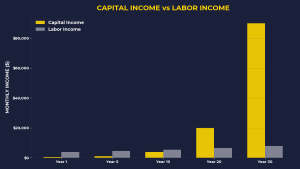
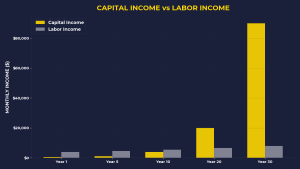
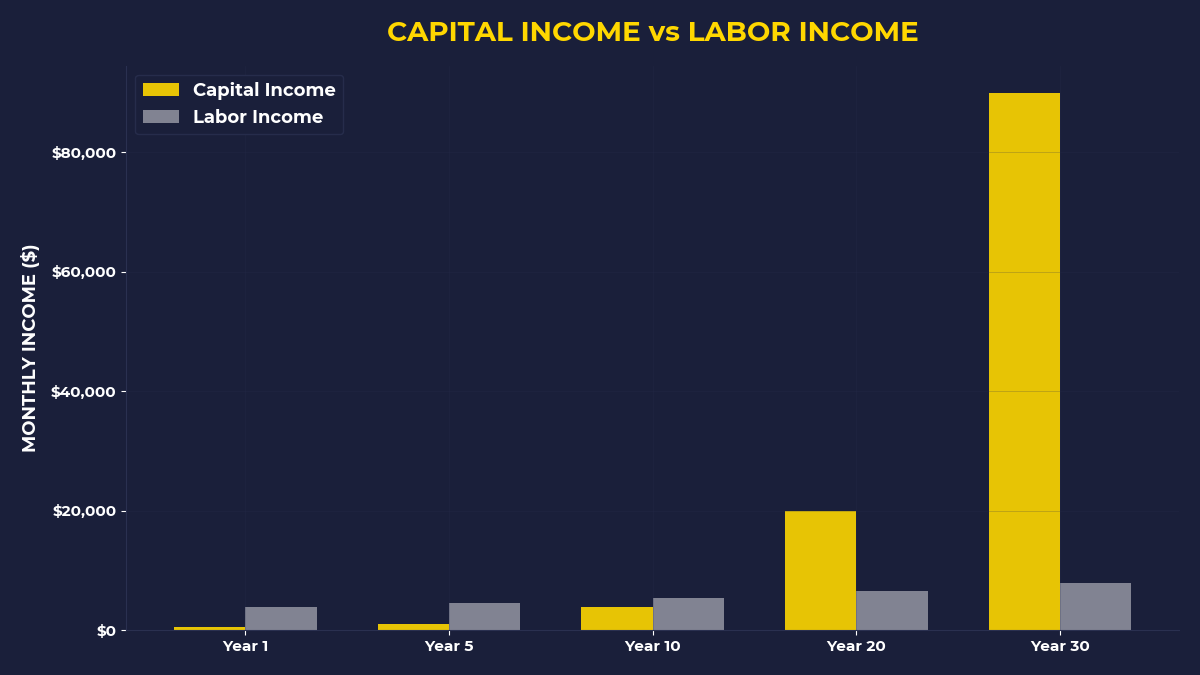
But Sarah understood something they didn’t: capital ownership beats diversification every time.
She didn’t build a balanced portfolio. She built a machine that generated cash while she slept.
The Question Nobody Asks You
Here’s the question that changed everything for me: What am I actually buying?
When you buy an S&P 500 fund, you’re buying tiny pieces of 500 companies. But those pieces are so small you have no control, no influence, no real ownership stake. You’re basically lending money to capital owners and hoping they give you some back.
When you buy a rental property, you’re buying a cash-generating machine. When you build a business, you’re buying the right to all future profits. When you develop a skill that others will pay for repeatedly, you’re buying leverage over your own time.
The traditional investment philosophy treats you like a passive participant in other people’s success stories.
A real investment philosophy makes you the main character.
The 80-Year Test
Warren Buffett once said something that stuck with me: “Our favorite holding period is forever.” Not because he’s sentimental, but because he only buys things that get more valuable over time without his constant attention.
Think about that for a second.
How many investments in your portfolio would you be happy to own for 80 years? More importantly, how many would still be paying you in 80 years even if you never touched them again?
Most people can’t answer that question because they’ve never been asked to think that way. The investment industry makes money from activity — trading, rebalancing, “optimizing.” They profit from your anxiety about holding the wrong thing.
But real capital owners think in generations, not quarters.
Building Your Own Philosophy
If you’re someone who’s tired of funding other people’s dreams while your own stay on hold, here’s how to think differently about investing:
Stop asking “What should I diversify into?” Start asking “What can I own that will pay me whether I show up or not?”
Stop thinking about your portfolio as a collection of tickers. Start thinking about it as a collection of cash-generating systems.
Stop trying to own a little bit of everything. Start trying to own a meaningful piece of something.
The One Thing To Remember
Your investment philosophy isn’t really about investing — it’s about what kind of life you want to live. The conventional approach keeps you dependent on paychecks and market returns controlled by other people. The capital-ownership approach gives you cash flow and time freedom that compounds without your constant effort. Most people build portfolios designed to support them in retirement. Smart people build systems designed to eliminate the need for retirement entirely.
- Before you invest another dollar, ask: “Am I buying ownership or just lending money to owners?”
- Identify one skill, business model, or asset you understand better than most — then concentrate there instead of diversifying
- Calculate how long your current investment plan requires you to work, then ask if that timeline serves your life or someone else’s business model
🎬 Prefer watching? Check out the video version on YouTube:
👉 https://www.youtube.com/@PrimalContrarian
Subscribe for daily insights on capital, wealth, and contrarian thinking.