The AI Economic Split Nobody Talks About
The smartest people I know are preparing for the wrong AI future.
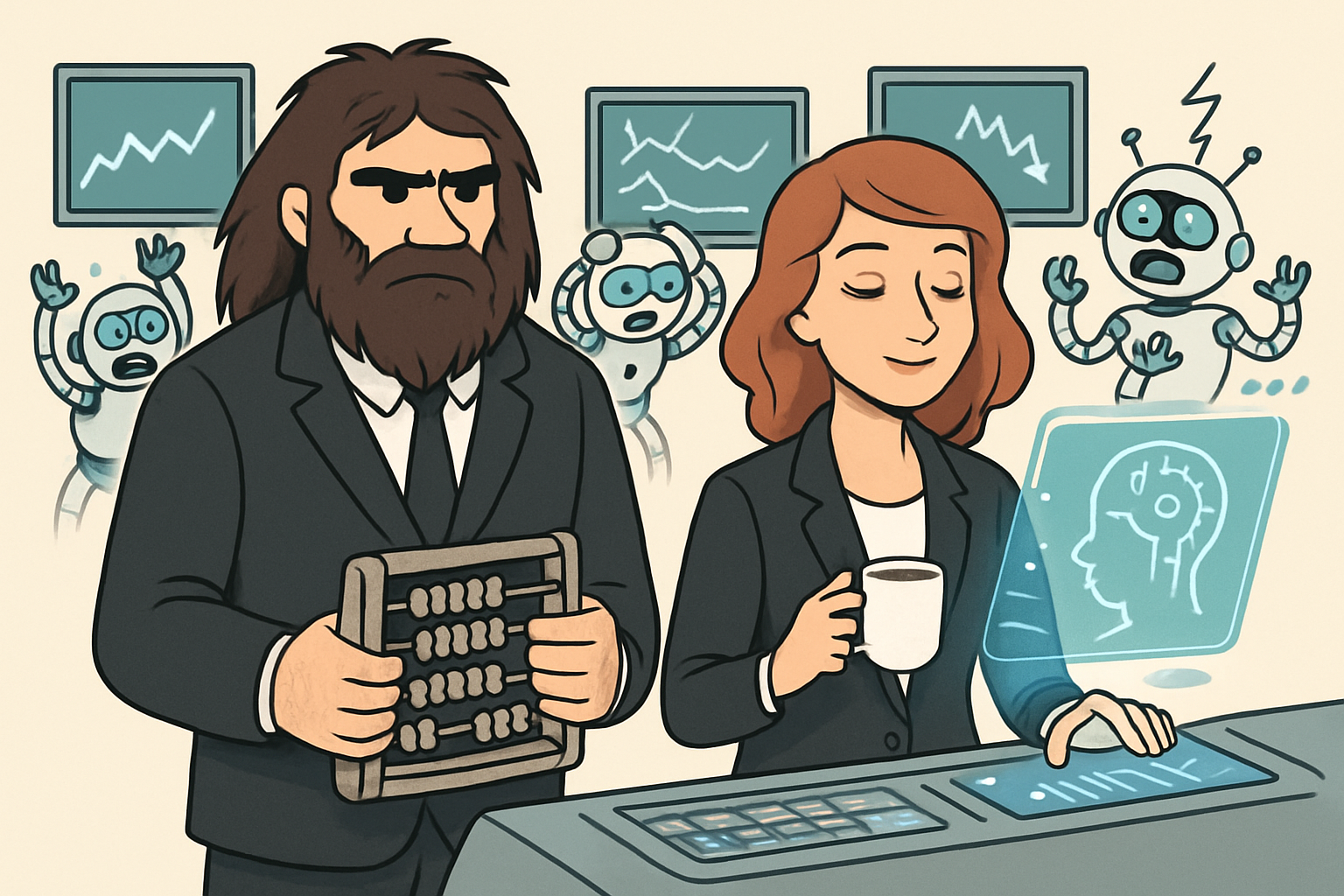
They’re learning to code. Taking data science bootcamps. Upskilling for “AI-adjacent” roles. They think the question is: “How do I become useful to AI?” But that’s the employee question. The capital question is completely different: “How do I own the systems that AI makes profitable?”
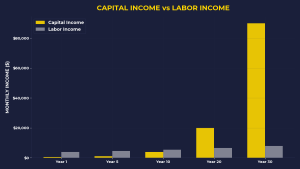
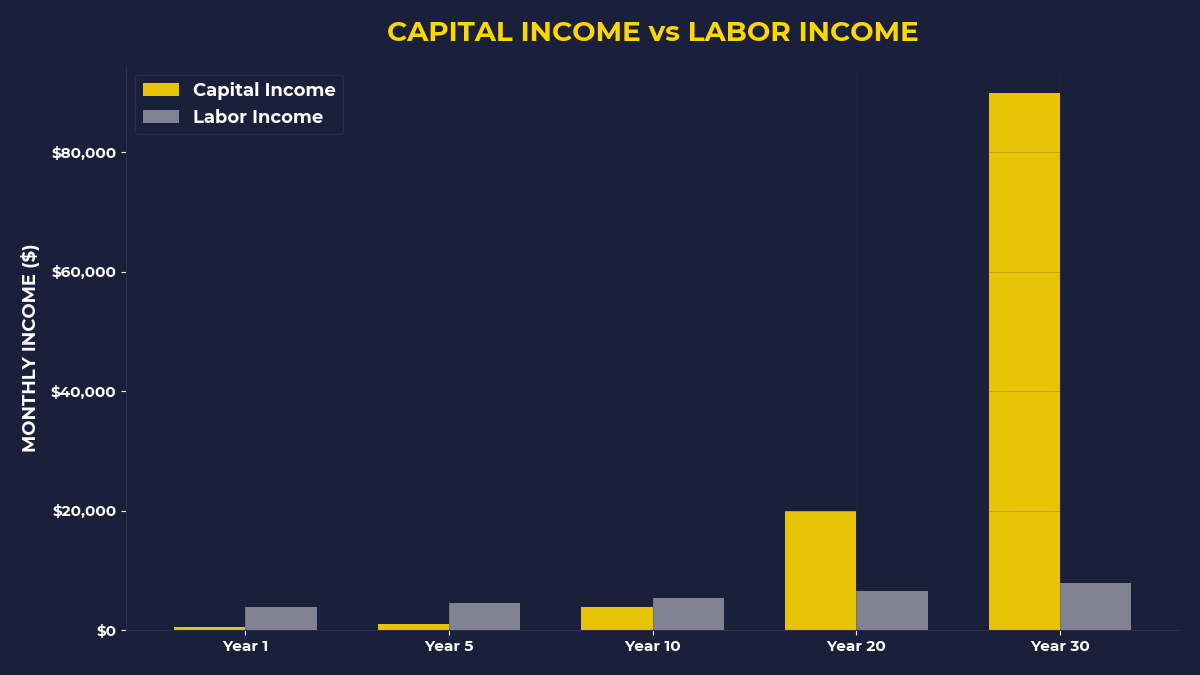
Look around. Every AI breakthrough creates two classes of people: those who own the demand-generating systems and those whose jobs get automated away. The wealth gap isn’t just widening — it’s accelerating at the speed of neural networks.
I used to think this was about technology disruption. It’s not. It’s about capital formation in the age of infinite leverage.
Why Your AI Strategy Keeps You Poor
Here’s what I see happening to smart people right now. They read about GPT-4 replacing writers, so they learn prompt engineering. They hear about AI replacing analysts, so they become “AI trainers.” They watch robots handle logistics, so they pivot to “human-AI collaboration” roles.
Every single strategy focuses on staying relevant to the machines.
But here’s the thing about relevance: it’s temporary. Every job you learn to do alongside AI is just a job AI will eventually do better, faster, and cheaper. The McKinsey Global Institute estimates that by 2030, up to 375 million workers globally will need to switch occupations due to automation. That’s not disruption — that’s replacement.
The people getting rich from AI aren’t trying to work with it. They’re trying to own it.
When Uber automated taxi dispatching, the wealth didn’t go to better dispatchers. It went to Uber’s shareholders. When Amazon automated retail operations, the money didn’t flow to more efficient retail workers. It flowed to people who owned Amazon stock. When Netflix automated video recommendations, the big winners weren’t video store employees who learned algorithms — they were Netflix investors.
The pattern is always the same: AI amplifies capital while it eliminates labor.
The Demand Storage Revolution
What most people miss about AI economics is that artificial intelligence doesn’t just automate tasks — it stores and amplifies human demand in ways we’ve never seen before.
Think about what ChatGPT actually does. It doesn’t just answer questions. It captures the demand for instant, personalized information and scales it infinitely. Every query that used to require a human expert can now be handled by a system that never sleeps, never asks for raises, and improves automatically.
That stored demand is capital.
When I first started thinking about this, I was 28 and working at a consulting firm. I watched senior partners bill $400 per hour for analysis that junior analysts actually performed. The partners weren’t smarter — they owned the client relationships and the methodology. They had captured the demand for strategic insights and systematized its delivery.
AI does the same thing, but with perfect leverage.
A single GPT-4 instance can handle thousands of conversations simultaneously. It never gets tired. Never has a bad day. Never quits to join a competitor. The company that owns that system captures 100% of the value it creates, minus the marginal cost of compute — which keeps falling.
Meanwhile, the human experts it replaces? They’re competing for the shrinking pool of jobs that still require flesh and blood.
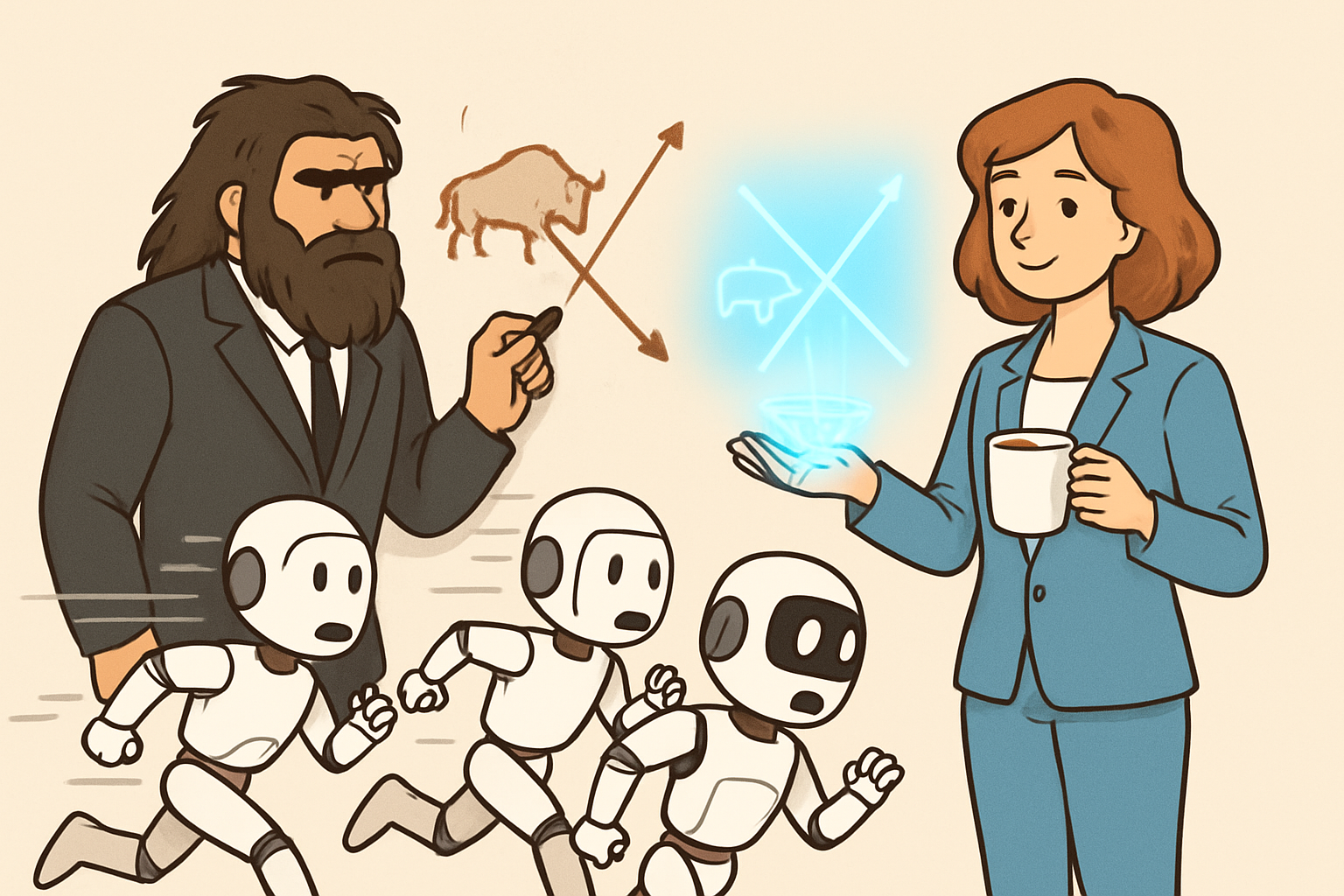
How Capital Owners Think About AI
Want to know the difference between labor thinking and capital thinking about AI? Listen to the questions they ask.
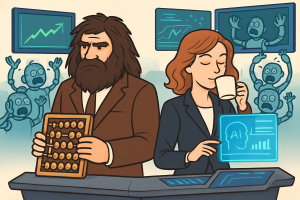
Labor thinking asks: “How do I stay relevant?” Capital thinking asks: “What demand can I capture and systematize?”
Labor thinking asks: “What skills do I need?” Capital thinking asks: “What assets should I own?”
Labor thinking asks: “How do I work with AI?” Capital thinking asks: “How do I own the systems that AI makes profitable?”
I learned this the hard way in 2016 when I spent six months learning machine learning fundamentals. I thought I was preparing for the future. Really, I was preparing to be expensive compared to the algorithms that were already getting better at pattern recognition than humans.
The real money wasn’t in understanding the technology. It was in owning the companies that deployed it at scale.
Between 2016 and 2023, NVIDIA stock returned over 4,000%. Not because their engineers were 40x better than in 2016, but because they owned the infrastructure that made AI possible. Tesla returned over 1,500% in the same period — not because their factory workers were 15x more productive, but because they systematized demand for electric vehicles with AI-enhanced manufacturing and self-driving capabilities.
The pattern is crystal clear: AI creates asymmetric returns for owners, not workers.
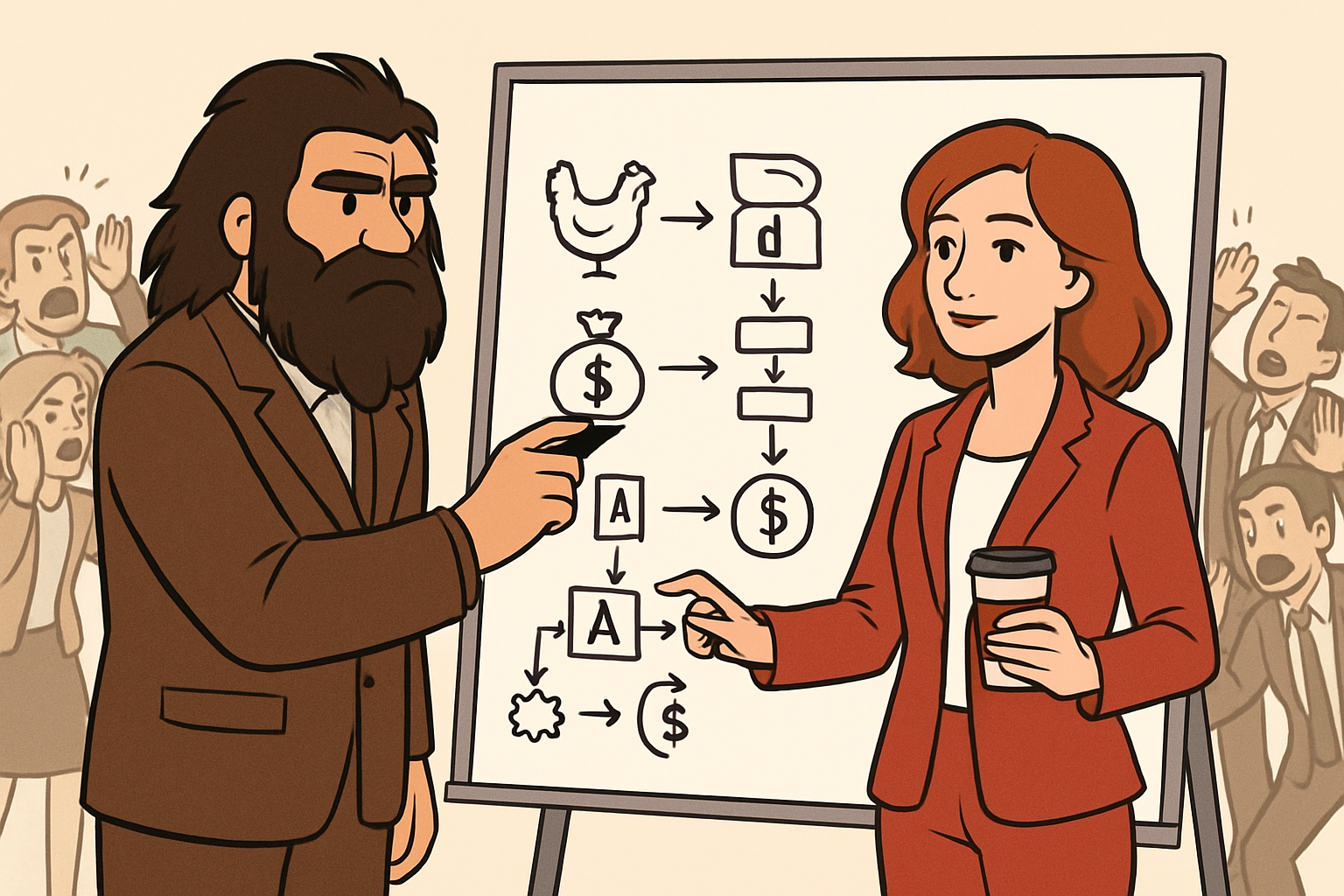
Why Your Brain Sabotages Your AI Strategy
Here’s the primitive instinct that’s destroying your AI wealth-building: **reciprocity bias**.
Your brain thinks the world owes you something for your effort. You see AI replacing jobs and think: “I’ll work harder. I’ll learn more. I’ll adapt faster.” You believe that more effort equals more reward.
But AI economics don’t reward effort. They reward ownership.
This reciprocity bias is why 73% of Americans live paycheck to paycheck even as the S&P 500 has returned over 200% since 2020. They keep trading time for money in a world where money increasingly flows to capital, not labor.
The uncomfortable truth is that AI makes most human effort economically irrelevant. Not because humans aren’t valuable, but because human effort doesn’t scale like code.
When I realized this, I stopped asking “How can I be useful?” and started asking “What demand am I seeing that could be systematized?” The first question keeps you employed. The second question makes you an owner.

The Capital Formation Opportunity
So what does AI capital ownership actually look like for regular investors?
First, understand that you don’t need to build the next OpenAI. You need to own pieces of the systems that AI makes more valuable.
The obvious play is the infrastructure layer: companies that provide the compute, data, and platforms that AI systems require. But the less obvious opportunity is in what I call “demand amplification” — businesses whose core value proposition gets exponentially better with AI.
Think about it this way: Netflix was already capturing demand for entertainment. AI makes their recommendation system better, their content creation cheaper, and their personalization more effective. Disney was already monetizing intellectual property. AI helps them create content faster and distribute it more efficiently.
These aren’t AI companies. They’re capital structures that AI makes more powerful.
Look for businesses that have three characteristics:
First, they own proprietary demand (customers who repeatedly pay them). Second, AI can reduce their marginal costs or increase their output quality. Third, they have defensible market positions that get stronger, not weaker, as AI proliferates.
The goal isn’t to predict which AI technology wins. It’s to own the structures that benefit from AI regardless of which specific technology dominates.
What The Primal Investor Takes Away
• Stop learning AI skills and start buying AI-enhanced businesses — your time is better spent researching ownership opportunities than developing capabilities that machines will soon exceed.
• Focus on companies that capture recurring demand, not one-time AI services — subscription models and platforms compound value as AI makes them more efficient.
• Own infrastructure and amplification plays, not pure AI companies — the companies that provide the picks and shovels, or get supercharged by AI, often outperform the AI companies themselves.
• Think systems, not skills — every hour spent upskilling for AI compatibility is an hour not spent building capital ownership.
• Buy during the fear phase of AI adoption — when headlines scream about job losses, that’s when AI-enhanced capital trades at discounts to its long-term value.
AI isn’t just changing how work gets done. It’s changing who captures the value from work. The question isn’t whether you’ll adapt to AI — it’s whether you’ll own the systems that AI makes profitable.
🎬 Prefer watching? Check out the video version on YouTube:
👉 https://www.youtube.com/@PrimalContrarian
Subscribe for daily insights on capital, wealth, and contrarian thinking.