Sarah — 29, marketing manager from Portland — called herself a contrarian investor. She’d read all the books. Buffett, Munger, Howard Marks. She bought when others sold, sold when others bought. At least, that’s what she thought she was doing.
Last Tuesday, she showed me her portfolio on her phone. “I’m different,” she said, scrolling through her positions. “I don’t follow the herd.” Yet every single holding looked exactly like what every other “contrarian” investor owns: value stocks, emerging markets, small-cap funds. The same contrarian crowd following the same contrarian playbook.
I Used To Think Being Different Made Me Contrarian
I made the exact same mistake for years. I thought contrarian investing meant zigging when everyone zagged. Buy what others hate. Sell what others love. Act opposite to the majority.
Here’s the thing I didn’t understand: there are two kinds of crowds in investing. The obvious crowd — people who buy whatever CNBC is pumping this week. And the subtle crowd — people who think they’re contrarian but all read the same books, follow the same gurus, and make the same “contrarian” trades.
Both crowds lose money for the same reason. They’re asking the wrong question.
I remember sitting in a coffee shop in 2019, watching a guy next to me day-trade on his laptop during lunch. Classic crowd follower, right? Meanwhile, I was researching “unloved” value stocks, feeling superior about my contrarian approach. We were both wrong. We were both asking “What should I trade?” instead of “What should I own?”
That’s when it hit me. Real contrarian thinking isn’t about being different from other investors. It’s about thinking differently about capital itself.
The Question That Separates Real Contrarians From Pretenders
Warren Buffett used to collect golf balls as a kid. Not because he loved golf — because golfers kept losing expensive balls in the woods and water hazards around Omaha’s country clubs. He’d find them, clean them up, and sell them back to other golfers at a discount.
Most people would ask: “What’s the best way to find golf balls?” Buffett asked: “How do I own the demand for golf balls?”
That’s the difference. The crowd asks what to do. Contrarians ask what to buy.
When Buffett made enough money from golf balls, he didn’t buy more golf ball inventory. He bought a Rolls-Royce and rented it out. When that made money, he bought farmland. Then stocks. Each time, he was buying a piece of ongoing demand — something people needed and would pay for repeatedly.
Think about your own life for a second. Your rent check goes to someone who owns real estate demand. Your Netflix subscription goes to someone who owns entertainment demand. Your coffee purchase goes to someone who owns caffeine demand.
Every dollar you spend is a vote for someone else’s capital.
Why Your “Contrarian” Portfolio Still Makes Other People Rich
Let me tell you about David — 34, UX designer in Austin — who thought he’d figured out contrarian investing. He avoided popular tech stocks and bought beaten-down energy companies instead. “Everyone hates oil,” he told me. “That’s exactly why I’m buying.”
Six months later, his energy stocks were down another 23%. Not because his analysis was wrong, but because he was still playing the speculation game. He was betting on price movements, not buying demand.
Here’s what David missed: real contrarian investing means doing what 97% of investors never do. It means buying pieces of businesses that people need regardless of market sentiment.
While David was buying unpopular stocks, his landlord was collecting his rent check every month. While David was waiting for energy to bounce back, Starbucks was collecting from his daily coffee habit. While David was being “contrarian” about stock prices, he was being completely conventional about capital ownership.
He owned zero pieces of the demand he created every single day.
The Real Contrarian Move Nobody Talks About
Want to know what actual contrarian behavior looks like? Pay yourself before you pay your bills.
I know that sounds insane. Stay with me.
Robert Kiyosaki tells a story about living in a friend’s garage after his business failed. Bills piling up. Creditors calling. Most people would use every dollar to stay current on payments. Kiyosaki did the opposite. When money came in, he bought assets first — stocks, real estate, anything that could generate cash flow. Then he worked extra jobs to cover the bills.
Why? Because paying bills first trains your brain to think like a consumer. Buying assets first trains your brain to think like a capital owner.
This is the kind of contrarian thinking that actually works. Not buying different stocks than everyone else, but structuring your entire financial life differently than everyone else.
Most people get their paycheck and immediately send it to capital owners: rent, car payment, credit cards, insurance. They keep whatever’s left over. Real contrarians flip this. They buy capital first, then figure out how to cover expenses.
What Does This Actually Look Like?
Sarah from Portland finally got it after our third conversation. Instead of researching the next contrarian stock pick, she started with a simple question: “What demand do I create every month?”
Her answer: rent to her landlord ($1,800), car payment to Toyota Financial ($340), groceries to Kroger ($450), coffee to Starbucks ($90), streaming services to various platforms ($65).
That’s $2,745 per month flowing from her to various capital owners. Her contrarian move wasn’t buying unpopular stocks. It was buying pieces of the companies she already paid every month.
She started small. Before paying any bill each month, she’d buy $200 worth of dividend-paying stocks in companies she was already a customer of. Real estate investment trusts. Consumer staples. Utilities. Boring stuff that generates demand regardless of market sentiment.
Was it scary? Absolutely. Did she have to scramble to cover rent a couple times? Yes. But something interesting happened after about eight months.
The dividends started adding up. $12 here, $18 there. Not enough to matter, except psychologically. For the first time in her life, she was on the receiving end of capital flows instead of just the sending end.
If You’re Someone Who Actually Wants To Build Wealth
This approach isn’t for everyone. If you’re someone who wants to feel smart by picking the next Amazon, this isn’t for you. If you’re someone who gets excited by trading strategies and market timing, this probably feels boring.
But if you’re someone who’s tired of being financially sophisticated while staying financially stuck — if you’re someone who wants to stop feeding the capital machine and start owning pieces of it — then this changes everything.
The most contrarian thing you can do in a world obsessed with investment strategy is to focus on capital ownership instead.
The One Thing To Remember
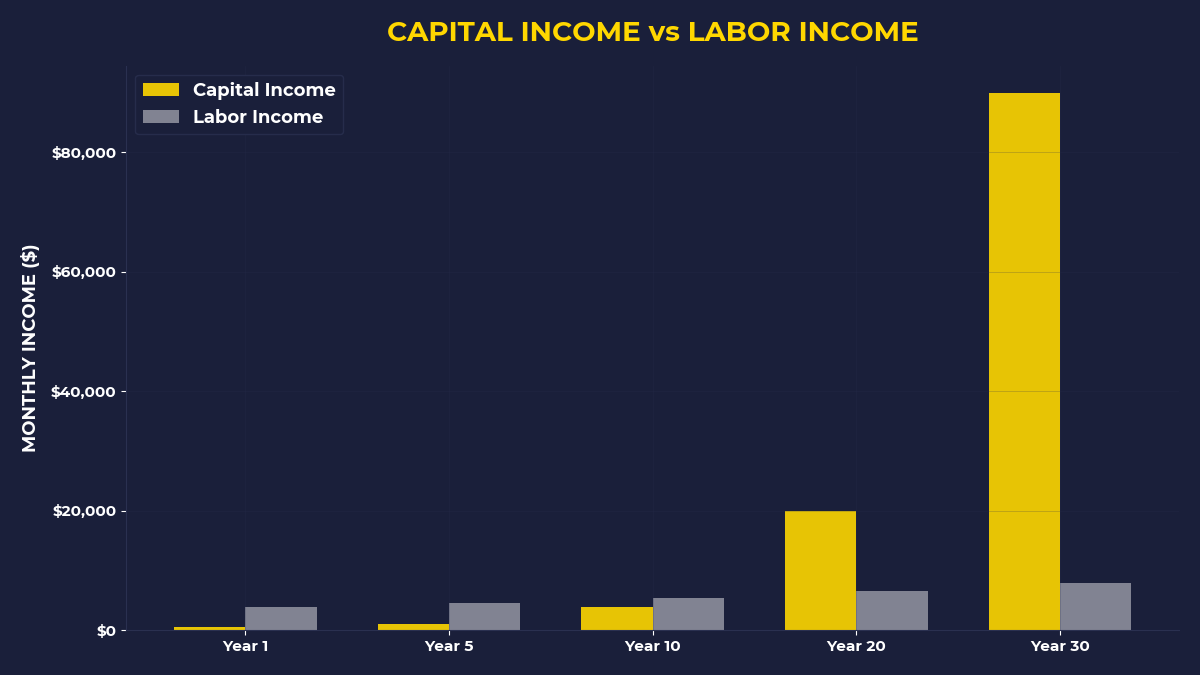
Real contrarian investing isn’t about being different from other investors. It’s about being different from other consumers. While everyone else sends their paycheck to capital owners and invests whatever’s left over, you do the opposite. You become a capital owner first, then figure out how to live. That’s not just contrarian — that’s revolutionary.
Here’s what you can do today:
List the five biggest bills you pay every month — identify which companies are already getting your money
Open a brokerage account and buy $50 worth of dividend-paying stock before paying any bill this month
Ask yourself: “What demand am I creating with my spending, and how can I own pieces of that demand instead?”
🎬 Prefer watching? Check out the video version on YouTube: