Marcus sat in the corner booth at Starbucks, laptop open, furiously typing his investment philosophy. Age 29, software engineer, making $85,000 a year in Denver. He’d read twelve investing books in six months. He’d built spreadsheets comparing value investing to growth investing to dividend investing. He’d written a 15-page document outlining his “systematic approach to long-term wealth building.”
And he was broke.
Not technically broke — he had $3,200 in his Vanguard account and another $1,800 in his checking. But broke in the way that matters. Every month, he sent $1,650 to his landlord. $350 to his car payment. $180 to student loans. $120 to his credit card. By the time he paid for groceries and utilities, maybe $200 made it to investments.
While Marcus crafted his investment philosophy, his landlord collected $19,800 from him every year. While Marcus debated whether to buy VTI or VTSAX, his bank earned interest on his loan. While Marcus optimized his asset allocation, every business owner whose products he bought got his cash flow.
Marcus was building the perfect investment philosophy to get rich slowly while everyone else got his money quickly.
I Built The Same Trap
I know exactly how Marcus felt because I spent three years doing the same thing.
I was 26, living in a studio apartment in Chicago, making decent money as a marketing coordinator. I had notebooks full of investment strategies. I’d memorized Warren Buffett quotes. I could explain the efficient market hypothesis and why it was wrong. I had strong opinions about expense ratios and tax-loss harvesting.
But every month, I watched my paycheck disappear to other people before I could invest it.
My rent check went to a real estate investment company. My grocery bill went to Kroger shareholders. My Netflix subscription went to Reed Hastings and his investors. My coffee money went to Starbucks. My car payment went to Toyota’s financing arm.
I was sending hundreds of dollars every month to capital owners while I saved $75 for my “long-term wealth building strategy.”
That’s when I realized something that changed everything: I wasn’t building an investment philosophy. I was building someone else’s retirement fund.
The Question Rich People Actually Ask
Here’s what I discovered by accident.
I was having lunch with my friend’s dad — let’s call him Robert. Robert owned three rental properties, had started two businesses, and sold one for $400,000. He wasn’t famous. Didn’t have an MBA. Just a regular guy who somehow never seemed worried about money.
I asked him about his investment philosophy, expecting to hear about his stock picks or his real estate strategy.
Instead, he said something that made no sense at first: “I don’t have an investment philosophy. I just ask one question: What should I buy that other people will pay me for owning?”
That’s it. No complex framework. No sophisticated analysis.
Think about that for a second.
While I was debating growth versus value, Robert was buying things that generate cash flow. While I was optimizing my portfolio allocation, Robert was acquiring assets that other people pay him to use. While I was building my investment philosophy, Robert was stealing money from people like me.
And it was completely legal.
What Capital Really Is (And Why You Don’t Own Any)
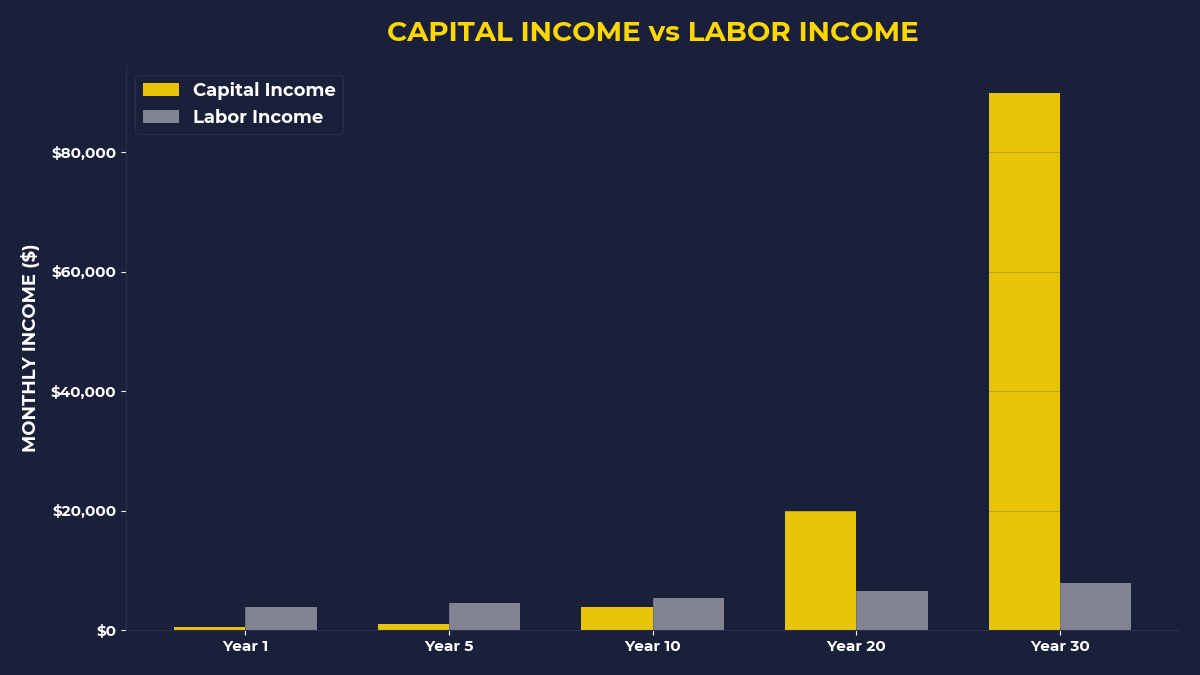
Capital isn’t money sitting in your account. Capital is stored demand.
When people need what you own, you have capital. When you need what others own, they have your money.
Robert’s rental properties? That’s stored demand for housing. Every month, tenants pay him because they need shelter. His self-storage facility? Stored demand for space. People pay him because they need somewhere to put their stuff.
My Vanguard account? That’s not capital. That’s me owning tiny pieces of capital that other people control.
The difference is massive.
Robert gets paid every month whether he works or not. I get paid only when I show up to the office. Robert’s income comes from owning things people need. My income comes from doing things my boss needs.
This isn’t about real estate versus stocks. It’s about understanding what you’re actually buying and why.
Why Your Investment Philosophy Keeps You Poor
Most investment philosophies focus on the wrong question.
They ask: “How should I invest my money?”
But the right question is: “What should I buy that will make me money?”
See the difference? The first question assumes you’ll always be sending money to investments. The second question assumes you’ll buy things that send money to you.
Warren Buffett didn’t get rich because he had a brilliant investment philosophy. He got rich because he bought pieces of companies that sell things people need. Coca-Cola makes money every time someone gets thirsty. See’s Candies makes money every Valentine’s Day. GEICO makes money because driving without insurance is illegal in most states.
Buffett bought stored demand. And demand pays dividends.
The golf ball story illustrates this perfectly. When young Warren found lost golf balls and sold them for $6 per dozen, he wasn’t investing. He was capturing demand. People needed golf balls. He found a way to own them at zero cost and sell them at market price.
Later, when he used that money to buy pinball machines and rent them to barbershops, he was scaling the same principle. People wanted entertainment. He owned the machines. They paid him quarters.
No complex investment philosophy required.
The Investment Philosophy That Actually Works
Here’s the framework that changed everything for me:
Before you pay any bill this month, buy something that generates income. Even if it’s just $20 worth of dividend-paying stock. Even if it means you eat ramen for a week.
This sounds backwards, but it’s not.
When you pay your rent first, you’re prioritizing your landlord’s cash flow over your own. When you buy income-generating assets first, you’re prioritizing your future cash flow over everyone else’s.
Most people do it backwards. They pay everyone else, then invest whatever’s left. Rich people invest first, then figure out how to pay everyone else.
It’s uncomfortable. It’s supposed to be.
When I started doing this, I had to pick up freelance projects to cover my bills some months. But something interesting happened. Because I was forced to find extra income, I started seeing opportunities I’d missed before.
And every month, my income-generating assets grew. Not much at first — maybe $5 or $10 in dividends. But the psychological shift was huge.
For the first time, money was coming to me instead of leaving me.
What To Buy When You’re Just Starting
You don’t need $50,000 to start buying capital.
You can buy fractional shares of companies that collect rent from millions of people every day. Apple collects a 30% tax on every app purchase. Microsoft collects subscription fees from nearly every business on earth. Visa collects a fee on almost every transaction.
These companies have turned human behavior into cash flow.
Start with $25. Buy a piece of a company that owns something people pay to use every day. Don’t worry about diversification or optimal allocation. Just buy one thing that generates cash flow.
Then do it again next month.
The goal isn’t to build the perfect portfolio. The goal is to start collecting cash from other people instead of only sending cash to them.
If You’re Tired Of Staying Poor While Working Hard
This approach isn’t for everyone.
If you’re comfortable sending your paycheck to other people’s assets every month, keep doing what you’re doing. If you enjoy crafting investment philosophies more than owning income-generating assets, that’s your choice.
But if you’re tired of building wealth for everyone except yourself, start asking different questions.
Stop asking: “What’s the best investment strategy?”
Start asking: “What can I buy that people will pay me for owning?”
The One Thing To Remember
Your investment philosophy doesn’t matter if you’re still sending all your money to other people’s investments. Rich people don’t get rich because they have better investment strategies. They get rich because they buy things that generate cash flow while poor people pay for things that generate cash flow for others. The question isn’t how to invest your money. The question is what to buy that makes you money.
• Before paying any bill this month, buy $50 worth of dividend-paying stock or REITs
• Replace one monthly subscription with fractional shares of the company that provides that service
• Ask yourself: “Am I buying something that pays me, or something that I pay for?”
🎬 Prefer watching? Check out the video version on YouTube: