Have you ever noticed how every success book asks the same question? They want to know what you should do to get rich.
What morning routine should you follow? What skills should you develop? What networking events should you attend? What side hustle should you start?
But there’s a different question that actual capital owners ask. And once you hear it, everything about money starts making sense.
The Question That Changes Everything
Warren Buffett learned this as a kid selling golf balls.
Young Warren would scour the woods around golf courses, fishing lost balls out of water hazards and thorny bushes. He’d clean them up and sell them for 50 cents each. Good money for a kid in the 1940s.
But here’s what made Warren different from other enterprising kids: he didn’t just ask “How can I work harder to find more golf balls?”
Instead, he asked: “What can I buy that will make money without me?”
That shift in thinking — from doing to buying — is what separated him from everyone else picking up golf balls that summer. And it’s the same shift that separates capital owners from workers today.
Warren used his golf ball money to buy assets. First a few shares of stock. Then a pinball machine he placed in a barber shop. Later, entire businesses.
Each purchase answered the same question: “What can I buy that people need?”
Why Most People Stay Stuck in the Doing Trap
Walk into any bookstore. The business section is packed with books telling you what to do.
Wake up at 5 AM. Learn to code. Master Excel. Build your personal brand. Hustle harder. Optimize your LinkedIn profile.
All of this advice assumes the same thing: that your labor is your primary asset.
But think about it differently for a moment. When you focus only on what you should do, you’re essentially asking: “How can I make myself more valuable to other people’s businesses?”
That’s not a bad question. It can lead to promotions, raises, even career changes that improve your life.
But it keeps you in the same fundamental relationship to money: trading your time for someone else’s dollars.
The Laundromat Test
Let me give you a concrete example of how these two questions lead to completely different outcomes.
Imagine you want to start a laundromat business.
The “what should I do” approach looks like this: You rent a space, buy some machines, and show up every day to collect quarters, help customers, and keep things running. You become a self-employed laundromat operator.
Nothing wrong with that. You might make decent money.
But the “what should I buy” approach looks completely different: You research locations with high foot traffic and low competition. You buy equipment that requires minimal maintenance. You hire someone to manage daily operations. You focus on systems that run without you.
Better yet, you look for existing laundromats that are profitable but poorly managed. You buy them, improve the systems, then use the cash flow to buy more.
Same business. Completely different relationship to your time and money.
In the first approach, you bought yourself a job. In the second, you bought an asset that pays you whether you show up or not.
The Invoice That Arrives Every Month
Here’s something that might surprise you: you already understand the power of the buying question. You just experience it from the wrong side.
Look at your monthly expenses. Rent or mortgage. Phone bill. Streaming subscriptions. Car payment. Groceries. Coffee. Gas.
Every single one of those bills is an invoice from someone who asked “What should I buy?” instead of “What should I do?”
Your landlord didn’t ask “How can I work harder?” They asked “What property can I buy that people need?”
Netflix didn’t ask “How can we work more hours?” They asked “What content can we buy or create that people will pay for monthly?”
Your phone company didn’t ask “How can we hustle harder?” They asked “What infrastructure can we buy that becomes essential to millions of people?”
Right now, you’re on the paying side of all these relationships. But there’s nothing stopping you from getting on the receiving side.
The Compound Interest of Asking the Right Question
Remember the story about Harry Larson and the coin-operated scales?
Harry was at a pharmacy when someone asked about his weight. He noticed a coin-operated scale nearby, dropped in a penny, and weighed himself. Over the next few minutes, he watched seven more people use the same machine.
Curious, he asked the store owner about it. The owner explained he rented the scale and kept 25% of the revenue — about $20 per month.
Harry went to the bank, withdrew $175, and bought three scales to place in different locations. Soon he was earning $98 per month.
But here’s the crucial part: Harry didn’t stop there. He used the coins from his first three machines to buy more machines. Eventually, he owned 70 scales across the city.
This is what happens when you consistently ask “What should I buy?” instead of “What should I do?”
Each purchase compounds. One scale becomes three. Three becomes ten. Ten becomes seventy. The cash flow from your purchases funds more purchases.
Compare that to the “what should I do” approach: working harder, getting better at weighing people, maybe opening your own scale-weighing service where you personally operate one scale at a time.
Same initial opportunity. Completely different outcomes.
What This Means for You Right Now
You don’t need to quit your job and buy a laundromat tomorrow. But you can start thinking like someone who asks the buying question.
If you work a regular job, the simplest version is buying shares of businesses instead of just earning wages from them. When you buy stock in Apple, you’re asking “What can I buy?” instead of “What can I do for Apple?”
Those Apple employees wake up Monday morning and make you money. You don’t.
But you can go further. Maybe you start a side business, but you approach it with the buying mindset: What can I purchase or create once that generates ongoing revenue?
A vending machine. A rental property. An online course. A small local business. Digital assets. Anything where people pay you repeatedly for something you bought or built once.
The One Thing to Remember
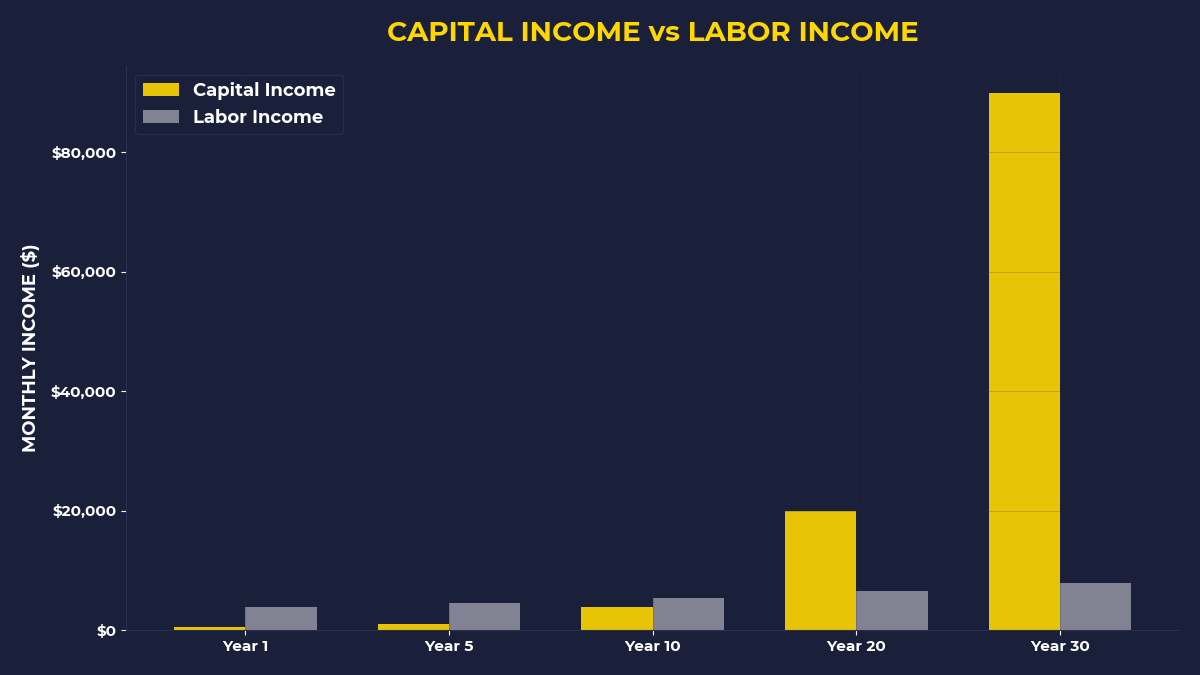
Every successful investor, from Warren Buffett to your local real estate mogul, made the same mental shift: they stopped asking what they should do and started asking what they should buy. This isn’t about having more money to start with — it’s about directing whatever money you have toward purchases that work for you instead of expenses that work against you. The moment you start asking “What can I buy that people need?” instead of “What should I do to make money?” is the moment you start thinking like a capital owner.
This week: List your monthly expenses and identify which ones are payments to capital owners (rent, subscriptions, car payments). Notice the pattern.
This month: Before paying all your bills, set aside 10% to buy something — even if it’s just one share of stock. Pay yourself first, then figure out how to cover the rest.
This quarter: Pick one small business or investment idea and ask: “What’s the smallest version I can buy or test?” Start there.
🎬 Prefer watching? Check out the video version on YouTube: